

How long does a vape pen battery last anyway
How Long Does a Vape Pen Battery Last? (Quick Answer)

How long does a vape pen battery last depends on two things: how long it lasts between charges, and how long before the battery wears out entirely.
Here's a fast breakdown:
| Battery Type | Per Charge | Total Lifespan |
|---|---|---|
| Rechargeable vape pen | 1 day to several days | 4 months to 2 years |
| Disposable vape | Single use | 1–7 days (300–600 puffs) |
| 510 thread battery | Half a day to 2+ days | 6–12 months typical |
Key numbers to know:
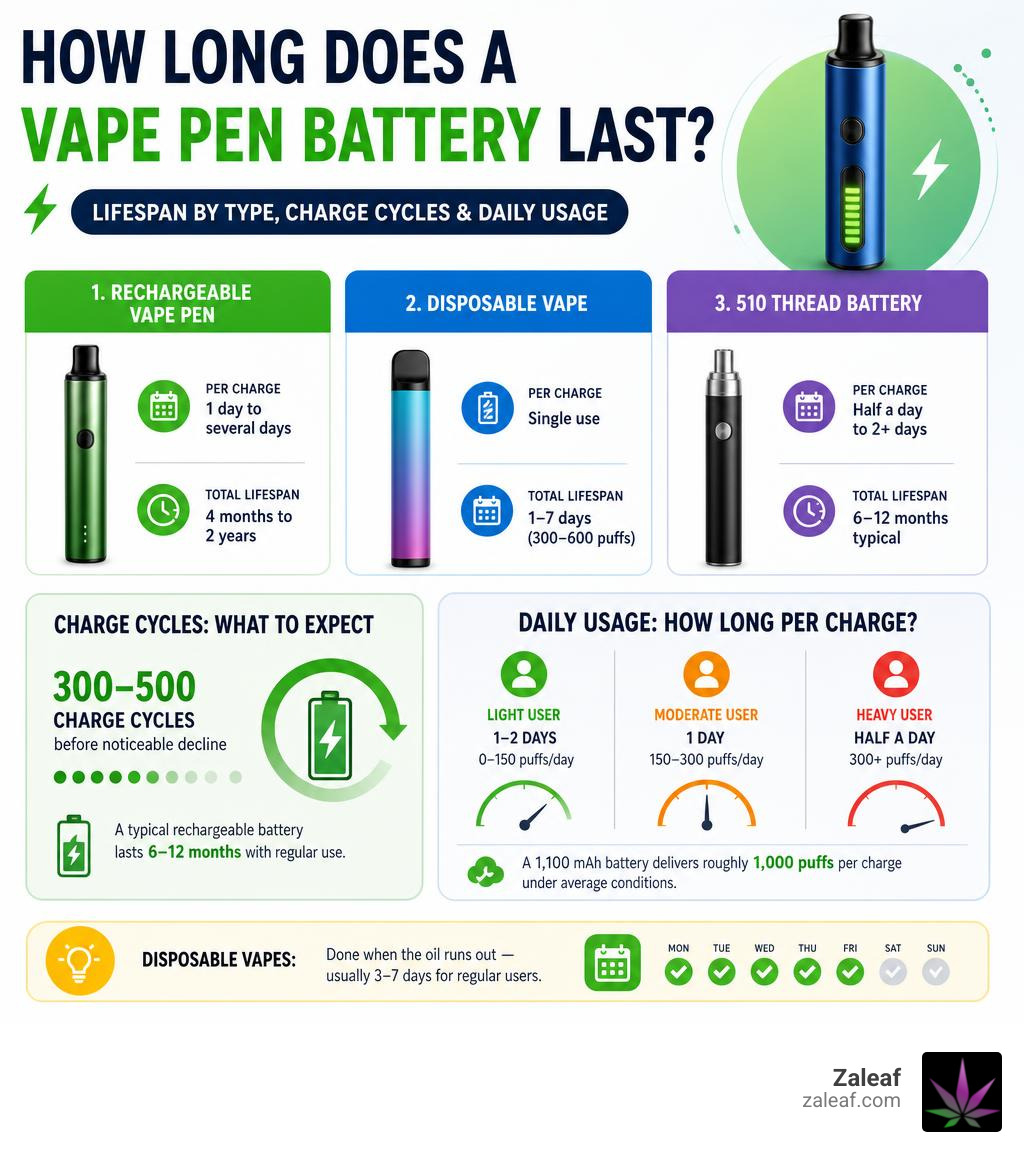
- Most vape pen batteries support 300–500 charge cycles before noticeable decline
- A typical rechargeable battery lasts 6–12 months with regular use
- A 1,100 mAh battery delivers roughly 1,000 puffs per charge under average conditions
- Disposable vapes are done when the oil runs out — usually 3–7 days for regular users
Your actual results will vary. Usage habits, battery capacity, voltage settings, and even the weather all play a role. Some users stretch a single charge across two or three days. Others drain the same battery twice before lunch.
This guide walks through everything that affects battery life — so you can get the most out of every charge and know when it's time to replace.
I'm Max Shemesh, founder of Zaleaf and a longtime operator in the hemp and cannabinoid industry — and questions about how long a vape pen battery lasts come up constantly from both new and experienced users. From years of hands-on experience sourcing and evaluating cannabis vape hardware, I'll give you straight answers without the marketing fluff.
Explore more about how long does a vape pen battery last:
Lifespan vs. Charge Duration: How Long Does a Vape Pen Battery Last in Total?
To understand how your device functions, we have to separate its daily runtime from its ultimate retirement date. Vapers often ask how long does a vape pen battery last and get confused because "lifespan" refers to two completely different metrics:
- Battery Charge Duration (Per Use): How many hours, days, or puffs you get from a single charge before you have to plug it back into the wall.
- Battery Lifespan (Total Longevity): The total number of months or years the battery will function before its internal chemistry degrades so much that it can no longer hold a charge.
Almost all modern vaping devices rely on lithium-ion chemistry. These batteries are incredibly efficient, but they are also subject to gradual, unavoidable chemical degradation. Inside the battery, lithium ions move between the cathode and anode. Over time, physical wear, microscopic structural changes, and chemical side-reactions reduce the cathode's ability to accept and retain a charge.
This degradation is measured in charge cycles. A single charge cycle is completed when you discharge the battery from 100% down to 0% (or near-empty) and charge it back to full.
A high-quality vape pen battery typically delivers 300 to 500 full charge cycles before its maximum capacity drops significantly (usually to about 80% of its original capacity). For a daily vaper who charges their device once a day, 300 to 500 cycles translates to roughly 10 to 12 months of regular use.
If you are a moderate or casual user who only plugs the device in once or twice a week, that same battery can easily last up to 2 years with proper maintenance. On the flip side, heavy users who chain-vape at high voltage settings may notice their battery starting to wear out after just 4 to 6 months.
To dive deeper into the hardware mechanics, check out our Vape Battery Lifespan Complete Guide and learn more about industry standards from this guide on How Long Does a Vape Pen Battery Last? Lifespan & Tips.
Understanding Battery Capacity (mAh) and Voltage
To demystify how your device performs, you need to understand the two main specifications printed on the box: milliampere-hours (mAh) and voltage.
Think of your vape battery like a car's engine and fuel system. The mAh rating is the size of the gas tank—the larger the tank, the further you can drive before stopping for fuel. Voltage is how hard you press the gas pedal—the higher the voltage, the more power you send to the engine, resulting in more heat, thicker clouds, and faster fuel consumption.
+-----------------------------------------------------------------+
| VAPE BATTERY ANALOGY |
| |
|  [ mAh Rating ]  ========================>   [ Gas Tank Size ]  |
|  (Capacity: How long it runs) (More fuel storage)|
| |
|  [ Voltage Setting ]  ===================>   [ Gas Pedal ] |
|  (Power: How hot the coil gets) (Faster consumption|
| for more speed)   |
+-----------------------------------------------------------------+
Most portable oil pens and cannabis vaporizers utilize a standard 510 thread connection. This is the industry-standard threading that allows you to screw a wide variety of pre-filled or refillable cartridges onto a single battery.
To help you visualize how capacity translates into actual usage, here is a comparison of typical battery capacities (mAh) and their expected real-world puff counts:
| Battery Capacity (mAh) | Typical Device Type | Expected Puffs Per Charge | Ideal User Profile |
|---|---|---|---|
| 150 – 350 mAh | Auto-draw keychain pens, slim stylus batteries | 100 – 200 puffs | Light / Occasional vapers who prioritize stealth |
| 500 – 650 mAh | Standard variable-voltage pocket batteries | 300 – 500 puffs | Moderate daily users who want a balance of size and power |
| 900 – 1100+ mAh | Heavy-duty pen mods, high-capacity concentrate pens | 800 – 1,000+ puffs | Heavy daily users or those who don't want to charge daily |
It is also important to consider coil resistance, which is measured in ohms. The resistance of your cartridge's heating element determines how much electrical current is drawn from the battery.
Standard oil cartridges typically have high resistance (usually between 1.0 and 1.5 ohms), which draws less current and preserves battery life. In contrast, sub-ohm coils (resistance below 1.0 ohm) are designed to vaporize massive amounts of material rapidly. Sub-ohm setups draw significantly more current, meaning even a large battery will drain much faster when paired with a low-resistance coil.
For a comprehensive breakdown of how these factors interact, explore An Essential Guide To Cannabis Vape Batteries. If you are feeling overwhelmed by all the choices on the market, we highly recommend reading Demystifying Vape Batteries Understanding The Differences and our guide on Different Vape Battery Types to find your perfect match.
How mAh affects how long does a vape pen battery last on a single charge
When it comes to daily runtime, your battery's mAh rating is the single most important factor. Milliamps measure the amount of electrical charge the battery can store.
As a general rule of thumb, 100 mAh translates to roughly one hour of moderate mouth-to-lung (MTL) vaping under standard conditions.
If you are using a compact 350 mAh battery, you can expect about 100 to 200 puffs before the LED indicator starts flashing to signal a dead battery. For a casual user who only takes 10 to 15 draws a day, this tiny battery can easily last over a week on a single charge. However, a heavy user might drain that same 350 mAh cell in just a few hours of consistent use.
If you hate being tethered to a charger, upgrading to a higher-capacity battery is a game-changer. An 1100 mAh battery can easily deliver up to 1,000 puffs per charge, allowing even heavy vapers to go several days without plugging in.
To explore some of the best high-performance hardware available today, check out our roundup of the Best 510 Battery. You can also consult The Essential 510 Thread Battery Buyers Guide and our list of Top Rated 510 Vape Batteries For An Unbeatable Experience to find a device that fits your routine.
How voltage settings impact how long does a vape pen battery last during use
Many modern 510-thread batteries feature variable voltage controls. This allows you to adjust the power output, typically ranging from a gentle 2.0 volts up to a punchy 4.8 volts.
While higher voltage settings produce larger clouds and stronger immediate effects, they also place a massive drain on your battery. Operating your pen at 4.0V or higher forces the battery to work significantly harder, accelerating chemical wear and depleting the charge in a fraction of the time compared to vaping at 2.5V.
[ Lower Voltage (2.0V - 2.8V) ]
 -> Cooler temperature, thinner vapor, preserves terpenes
 -> Minimal battery drain (battery lasts longer)

[ Higher Voltage (3.6V - 4.8V) ]
 -> Hotter temperature, thick clouds, intense hit
 -> Massive battery drain (battery dies faster)
Another feature that impacts battery consumption is the preheat feature. This setting gently warms thick, highly viscous cannabis oils or distillates before you take a draw, preventing clogs and ensuring smooth airflow. While incredibly useful, running the preheat cycle repeatedly draws continuous current without you even taking a puff, which can sneakily drain your battery in the background.
To learn how to balance flavor, vapor production, and battery efficiency, take a look at Power Up Your Vape Finding The Right Variable Voltage Battery and read our deep dive on the Variable Voltage Vape Battery. If you are curious about whether to use the warming cycle, we answer all your questions in Do You Really Need To Preheat Your Vape Pen The Truth About This Feature.
Rechargeable Vape Pens vs. Disposable Vapes: Longevity and Cost-Effectiveness
If you are trying to decide between a rechargeable vape pen setup and a single-use disposable vape, it helps to look at the long-term economics and environmental footprint of both options.
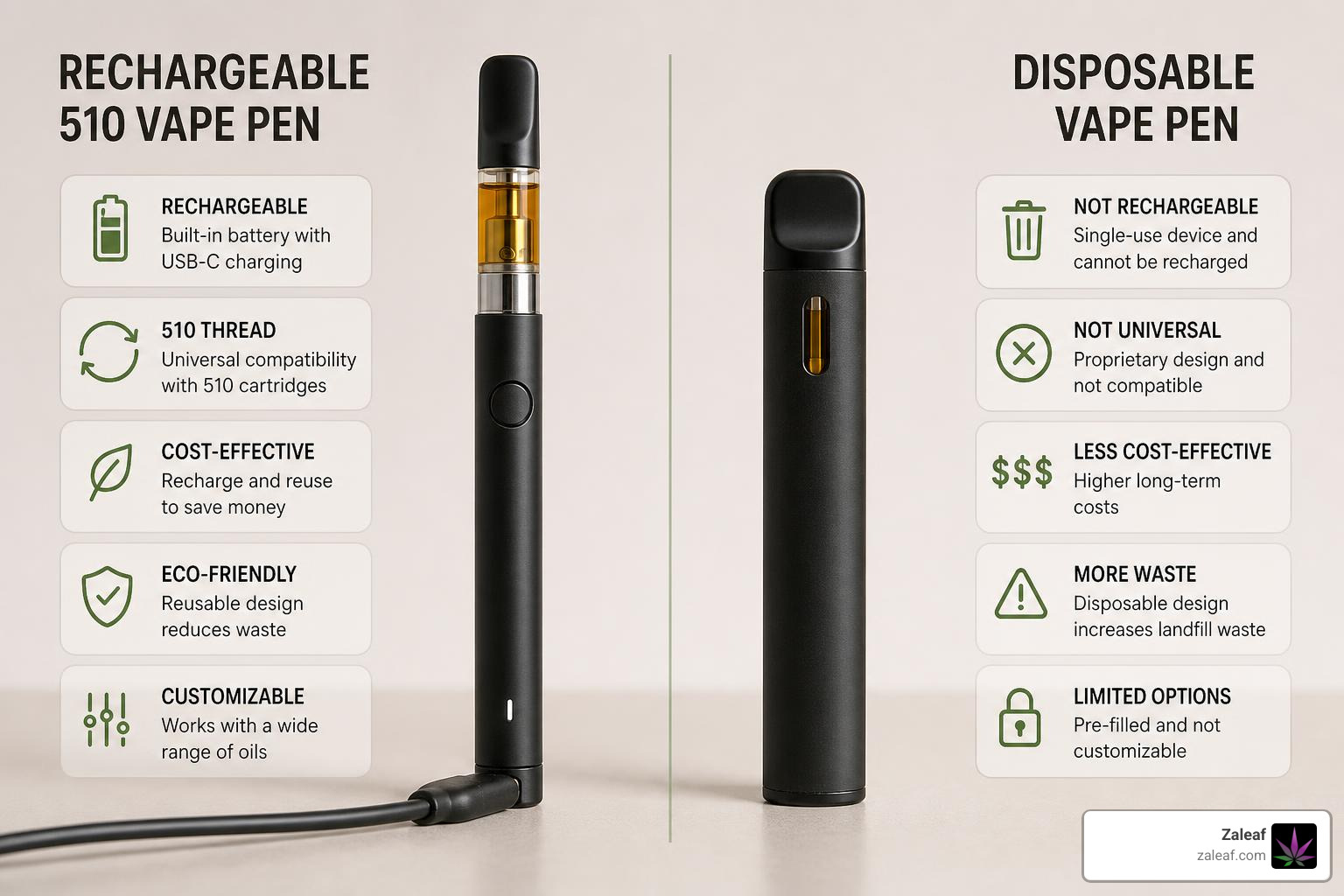
Disposable Vapes: Simple but Short-Lived
Disposable vapes are designed as all-in-one, closed-loop systems. They come pre-filled with a set amount of oil or e-liquid and a built-in battery.
Smaller, non-rechargeable disposables usually feature a 250 to 350 mAh battery calibrated to die right around the time the 0.5g or 1g oil reservoir runs dry—typically providing 300 to 600 puffs (about 3 to 5 days of regular use).
Larger-format disposables (often containing 2g to 5g of material) use rechargeable batteries because a standard pocket-sized battery cannot hold enough charge to vaporize that much oil on a single cycle. However, once the oil inside is completely depleted, the entire device—including the lithium battery, microchips, and plastic casing—must be thrown away.
Rechargeable Vape Pens: The Smart Long-Term Play
A rechargeable 510-thread battery is a reusable platform. You buy the battery once, and you only replace the cartridge when it runs out.
Because you aren't throwing the battery away every week, the cost-per-use drops dramatically after just a month or two of ownership. Instead of buying a new $30 to $40 disposable every few days, you simply purchase replacement cartridges or fill your own pods, saving hundreds of dollars over the course of a year.
From an environmental perspective, rechargeable devices are vastly superior. Throwing away dozens of lithium-ion batteries every year via single-use disposables contributes to hazardous electronic waste (e-waste). Using a single rechargeable battery for a year or more significantly reduces your carbon footprint and prevents toxic chemicals from leaching into landfills.
To understand the real-world performance of disposables, check out How Long Does a Disposable Vape Pen Last? Practical Guide and explore How Long Does a Vape Last? Real Lifespan by Puff Count (2026) to see how lab-tested puff counts compare to actual human usage.
Best Practices for Maintaining and Extending Your Battery Life
While lithium-ion batteries inevitably degrade over time, your daily habits have a massive impact on how quickly that degradation occurs. With proper care, you can easily extend the total lifespan of your vape battery from the standard 6 months up to a full 2 years.
Here are the most effective ways to protect your battery:
- Avoid Overcharging: Leaving your vape pen plugged in overnight is one of the fastest ways to kill its lifespan. Once the battery reaches 100%, disconnect it. Continuous trickle charging generates excess heat, which degrades the internal lithium-ion chemistry.
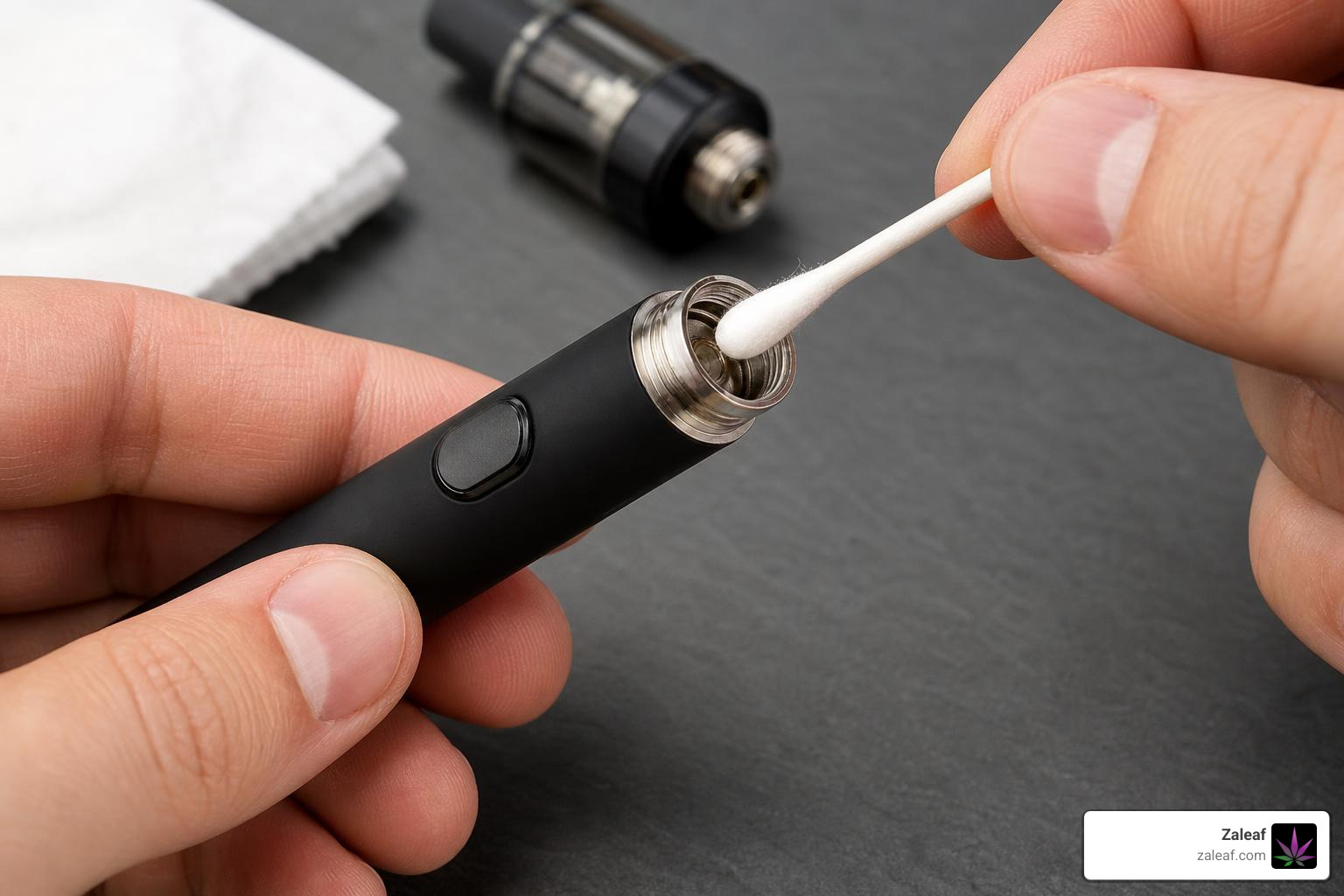
- Keep Connections Clean: Over time, tiny amounts of sticky cannabis oil, dust, or pocket lint can accumulate in the 510 threading. This creates electrical resistance, forcing the battery to work harder and drain faster. Every week or two, dip a cotton swab in isopropyl alcohol and gently clean the metal contacts.
- Manage Depth of Discharge: Try not to let your battery drain completely to 0% before charging. Deep discharges put high stress on lithium cells. Ideally, plug your device in when it drops to about 20% charge, and unplug it around 80% to 90% to maximize its cycle life.
- Store at Room Temperature: Lithium-ion batteries hate extreme temperatures. Avoid leaving your vape pen in a freezing car overnight or sitting in direct sunlight on a hot summer day. Extreme cold temporarily increases internal resistance (causing fast drain), while extreme heat can permanently damage the battery's capacity or cause safety hazards.
For a complete breakdown of maintenance habits, check out our guide on Optimizing Battery Life. To learn more about how to charge safely and efficiently, read Charge On Maximizing Your Vape Batterys Life And Speed and our step-by-step tutorial on 510 Thread Battery Charging.
How to Tell When Your Vape Pen Battery is Failing
Just like a smartphone or a laptop, your vape pen battery will eventually reach the end of its functional life. Because the degradation happens gradually, you might not notice it at first.
Keep an eye out for these clear warning signs that it's time for a replacement:
- Quick Depletion: If your battery used to last three days on a single charge but now dies after just a few hours of light use, the lithium cells have lost their ability to hold a charge.
- Excessive Heat: If the battery feels hot to the touch while you are using it or while it is plugged into the charger, this is a major red flag. Internal resistance has built up to dangerous levels, and you should stop using the device immediately.
- Abnormal Charging Speeds: If your battery charges to "full" in just 15 minutes (or, conversely, takes 8 hours to reach half-charge), the internal microchip and battery cells are no longer communicating properly.
- Weak Vapor and Low Hits: If you are getting thin, unsatisfying clouds even on a high voltage setting with a brand-new cartridge, the battery can no longer deliver a consistent current to the heating coil.
- Physical Swelling: If the metal or plastic casing of your vape pen looks slightly bloated, warped, or cracked, the battery has off-gassed and swelled. Stop using and charging the device immediately, and dispose of it safely at a local battery recycling center.
If you are experiencing issues with your current setup, consult our troubleshooting guide on Battery Not Charging. To understand the potential hazards of using damaged or cheap hardware, read Stay Safe Understanding Unprotected Vape Battery Risks and learn how to select a premium, reliable device in Dont Get Zapped Picking The Best Concentrate Pen Battery.
Frequently Asked Questions about Vape Pen Batteries
How long does it take to charge a vape pen battery?
On average, a standard vape pen battery takes 2 to 4 hours to reach a full charge.
The exact charging time depends on the capacity of the battery (mAh) and the charging port technology. Older devices utilizing Micro-USB connections typically charge at a slower rate (0.5A to 1.0A). Modern devices featuring USB-C ports support faster charging speeds (up to 2.0A or more), allowing a standard 500 mAh battery to charge completely in as little as 30 to 45 minutes.
To ensure your device charges safely, we always recommend using the charging cable that came with your battery. For more detailed instructions, check out Charging 510 Battery, our guide on Finding Your Vape Pen Charger Cable And Universal Options, and our insights on the Fast Charge Cannabis Battery.
Can you leave a vape pen charging overnight?
While almost all modern, high-quality vape batteries feature built-in overcharge protection chips that stop drawing current once the battery reaches 100%, we strongly advise against leaving your vape pen charging unattended overnight.
If the safety chip fails, continuous charging can lead to heat buildup, which degrades the battery cells and, in rare cases, can cause thermal runaway (battery fire). It is always safest to charge your device while you are awake and in the same room, and unplug it as soon as the LED indicator shows a full charge.
To learn more about charging safety, check out our guide: Juice It Up The Ultimate Guide To Charging Disposable Vape Pens.
Why does my vape battery die faster in the winter?
If you've ever noticed your vape pen dying rapidly on a cold winter day, you aren't imagining things.
Lithium-ion batteries rely on chemical reactions to generate electricity. Cold temperatures slow down these chemical reactions, which significantly increases the battery's internal resistance.
Because the battery has to work much harder to push current through the cold cells, its efficiency drops, causing the charge to deplete up to 50% faster than it would at room temperature. To prevent this, keep your vape pen in an inside jacket pocket close to your body heat when you are outdoors during the winter.
Conclusion
Understanding how long does a vape pen battery last is the key to getting the absolute most out of your vaping experience. By choosing the right battery capacity (mAh) for your daily routine, matching your voltage settings to your cartridge, and practicing smart charging habits, you can keep your device running smoothly for months or even years to come.
At Zaleaf, we specialize in high-quality, 100% legal cannabis products designed to enhance your wellness journey. All of our premium offerings undergo rigorous third-party laboratory testing to ensure unmatched purity, safety, and consistency.
We make shopping incredibly simple:
- No medical card or ID required to browse and order
- Fast, reliable shipping straight to your doorstep
- Discreet, plain packaging to protect your privacy
- Mood-specific terpene and cannabinoid profiles tailored to help you relax, focus, or energize
Ready to upgrade your setup? Read our comprehensive comparison: Choosing Your Vape: A Guide to Disposable and Non-Disposable Cannabis Pens to find the perfect hardware for your lifestyle, and explore our collection today!