

The Ultimate Guide to Vape Battery Safety and Storage
Understanding Vape Battery Lifespan and Capacity

Vape battery lifespan is something most people only think about when their device dies at the worst possible moment — mid-session, away from home, no charger in sight.
Here's the short answer:
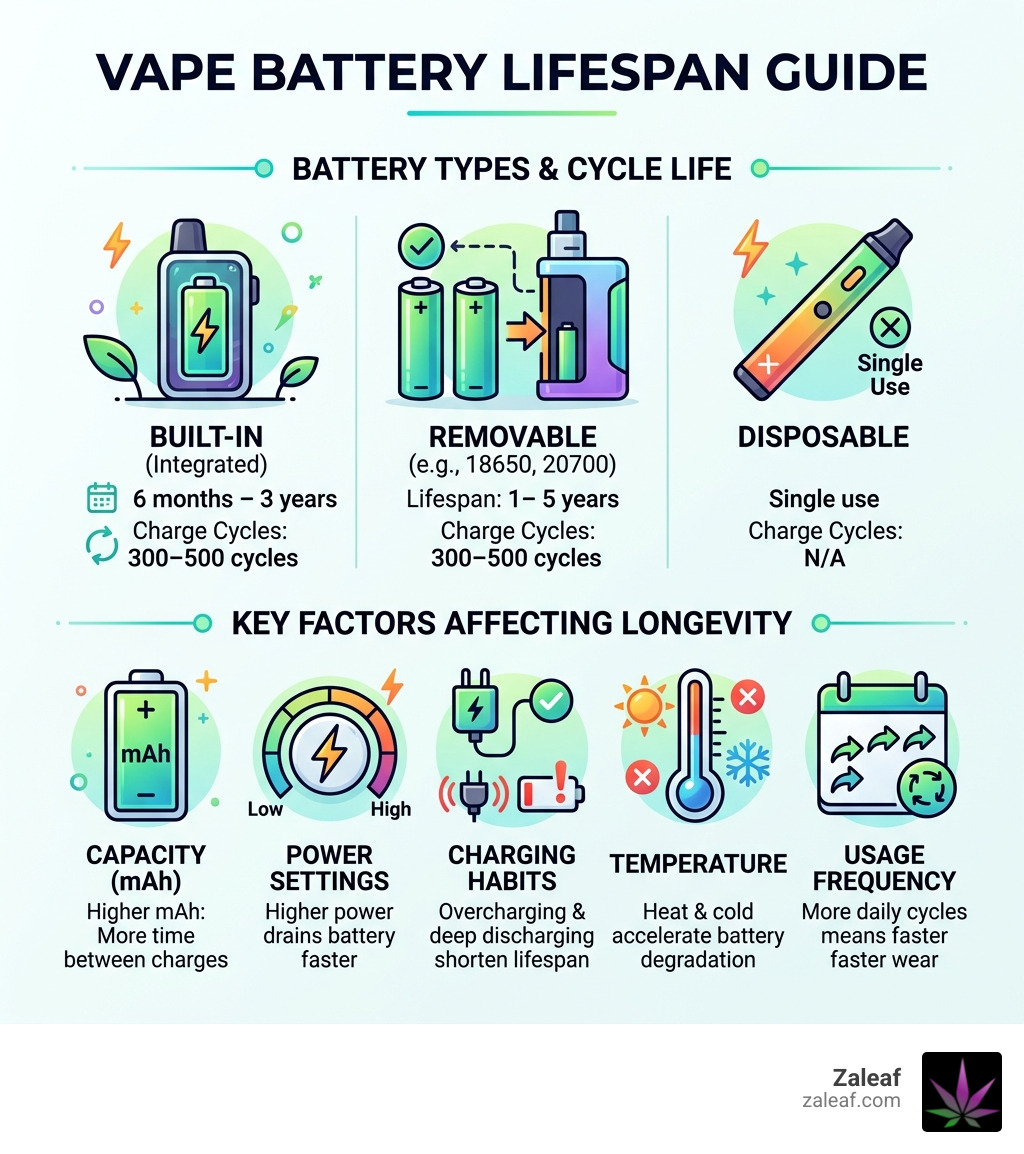
| Battery Type | Typical Lifespan | Charge Cycles |
|---|---|---|
| Built-in (integrated) | 6 months – 3 years | 300–500 cycles |
| Removable (18650, 20700) | 1 – 5 years | 300–500 cycles |
| Disposable | Single use | N/A |
Key factors that affect how long your vape battery lasts:
- Capacity (mAh) — higher mAh means more time between charges
- Wattage/voltage settings — higher power drains the battery faster
- Charging habits — overcharging and deep discharging shorten lifespan
- Temperature — heat and cold both accelerate battery degradation
- Usage frequency — more daily cycles means faster wear
With proper care, a quality lithium-ion vape battery can last anywhere from one to two years — sometimes longer. Without it, you might see significant decline in just a few months.
This guide covers everything you need to know: how to charge smarter, store safer, and get the most out of every battery you own.
I'm Max Shemesh, owner and CEO of Zaleaf, and I've spent years working directly with cannabinoid products and the hardware that delivers them — including the nuances of vape battery lifespan across different device types and usage patterns. That hands-on experience is what shaped this guide, so let's get into what actually makes a difference.
Vape battery lifespan terms to remember:
To understand how to keep your gear running, we first need to look at what's happening inside that metal tube. Most modern vapes use lithium-ion (Li-ion) chemistry. These are high-energy-density cells, meaning they pack a lot of power into a small space. However, they aren't immortal.
The industry standard for vape battery lifespan is measured in "charge cycles." A single cycle occurs when you use 100% of the battery's capacity—whether that's in one long session or several short ones over two days. Most high-quality batteries are rated for 300 to 500 charge cycles before their capacity drops to about 80% of its original strength.
Chemical degradation is a natural process where the internal components of the battery slowly break down over time. Every time you charge and discharge, tiny chemical changes occur. Eventually, the battery can't hold as many ions as it used to, leading to shorter sessions and weaker hits. By understanding different vape battery types, you can better predict how your specific device will age.
How mAh Impacts Your Daily Vape Battery Lifespan
If you've ever shopped for a battery, you've seen the "mAh" rating. This stands for milliampere-hour, and it’s essentially the size of your "fuel tank." The higher the number, the more energy the battery can store.
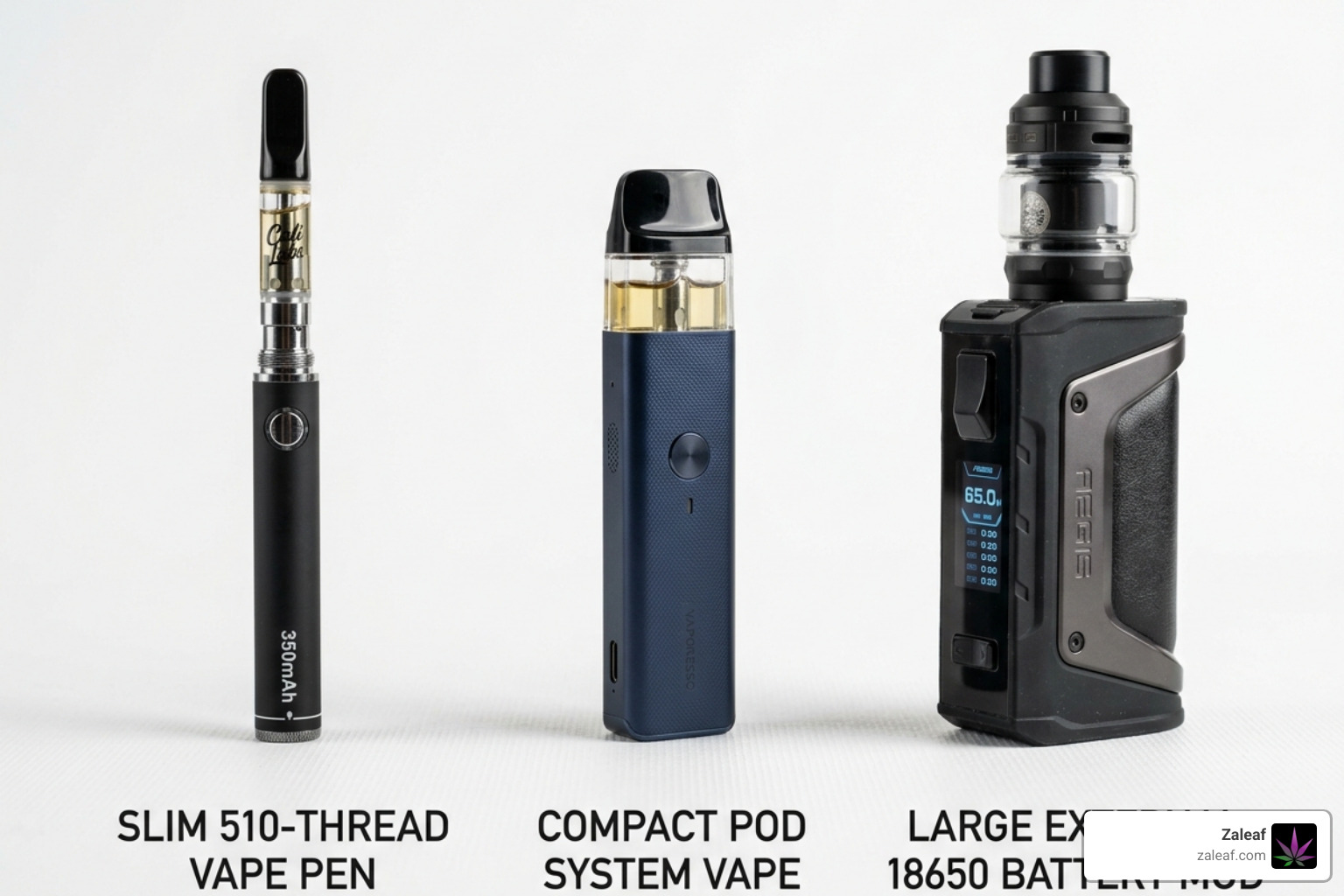
For example, a small 300mAh pen is discreet but might only last a casual user a single day. On the other hand, a beefy 3000mAh external battery could power a moderate user for several days. According to research, a 1100mAh battery typically provides around 1000 puffs, though this varies wildly based on how long you hold the button.
| Battery Capacity | Estimated Puffs | Typical Usage Time |
|---|---|---|
| 300 mAh | 200 - 300 | 4 - 6 hours (Heavy) / 1 day (Light) |
| 650 mAh | 400 - 600 | 1 - 2 days (Moderate) |
| 1100 mAh | 800 - 1000 | 2 - 3 days (Moderate) |
| 3000 mAh | 2000+ | 12+ hours (Heavy) / 4+ days (Light) |
It is important to note that while a higher mAh extends the time between charges, it doesn't necessarily mean the battery will last more years. In fact, if you're constantly draining a small battery to 0% because it lacks capacity, you'll hit that 300-cycle limit much faster than you would with a larger cell.
The Role of Voltage in Vape Battery Lifespan
Voltage is the "pressure" pushing the electricity through your coil. If mAh is the size of the tank, voltage is how wide you open the faucet. Many Zaleaf users prefer a variable voltage vape battery because it allows for a customized experience—lower voltage for flavor, higher for bigger clouds.
However, cranking up the voltage comes at a cost to your vape battery lifespan. Higher voltage increases heat generation and energy consumption. It forces the battery to work harder, which can accelerate chemical aging. If you consistently vape at the maximum setting (often around 4.8V), you are effectively "redlining" your battery.
To balance performance and longevity, we recommend finding the lowest voltage that still gives you a satisfying hit. This protects your oil's terpene profile and keeps your battery healthy for the long haul. If you're looking for the right balance, check out our tips on finding the right variable voltage battery.
Best Practices for Charging and Maintenance
How you charge your device is the single biggest factor in determining its total life. We've all been guilty of plugging in a vape and forgetting about it until the next morning, but modern lithium cells actually hate being kept at 100% for long periods.
The "Goldilocks Zone" for lithium-ion batteries is between 20% and 80% charge. Think of the battery like a pair of lungs—it's most stressed when it's completely empty or completely full. By keeping your battery in this middle range, you can often extend its total lifespan by 50% to 200%.
Essential Charging Habits to Extend Longevity
We always suggest treating your battery with a little bit of respect. Here are the non-negotiable habits for optimizing battery life:
- Use the Right Gear: Always use the cable that came with your device. While that "ultra-fast" tablet charger might fit, it could be pushing too many amps, causing the battery to overheat. A standard 5V/1A wall adapter is usually the safest bet.
- Avoid the "Overnight Trap": Most modern vapes have overcharge protection, but "trickle charging" (where the charger keeps topping off the battery as it naturally loses 1%) generates heat. Heat is the enemy of battery chemistry.
- Temperature Matters: Never charge a battery that is ice cold or hot to the touch. Charging in a room-temperature environment (around 70°F) ensures the chemical reactions inside happen smoothly.
- Clean Your Connections: Use a cotton swab with a tiny bit of rubbing alcohol to clean the "510" threads on your battery and charger. Dust, pocket lint, or leaked oil can create resistance, making the battery work harder to charge and discharge.
For a deeper dive, read our quick start guide to cartridge battery use or our detailed breakdown on maximizing vape battery life and speed.
Critical Safety Precautions and Storage Tips
Safety isn't just about making the battery last; it's about making sure it doesn't become a hazard. While "exploding vapes" are rare and almost always caused by user error, lithium batteries contain a lot of stored energy.
The most critical safety component is the battery wrap. On removable batteries (like 18650s), that thin plastic coating isn't just for decoration—it's insulation. If that wrap is torn, even a tiny bit, the metal body of the battery is exposed. If that exposed metal touches a key or a coin in your pocket, it can create a "hard short," leading to rapid overheating or "venting."
Proper Storage for Removable and Built-in Cells
If you aren't going to use your vape for a while—maybe you're taking a T-break or switching to a different device—don't just throw it in a drawer and forget it.
- The 50% Rule: Never store a battery completely empty (it might fall into a "deep discharge" state where it can never be recharged) or completely full (which causes chemical stress). Aim for about 50-60% charge.
- Cool and Dry: Store your gear in a cool, dry place. Avoid the glove box of your car, as summer temperatures can easily exceed 120°F, which can permanently damage the cells.
- Use a Case: For removable batteries, always use a plastic battery case. Never let loose batteries rattle around in a bag or pocket.
- Turn it Off: It sounds simple, but turning off your pen with five clicks when you're done prevents "pocket firing," which can burn out your coil and overheat your battery.
Check out our essential guide to cannabis vape batteries for more safety insights, or learn about unprotected battery risks to stay ahead of the curve.
When to Replace Your Vape Battery
Nothing lasts forever, and knowing when to say goodbye to an old battery is vital for both performance and safety. A degraded battery doesn't just "run out faster"—it can also provide inconsistent voltage, leading to a poor vaping experience.
Signs it’s time for a replacement:
- The "One-Hour" Rule: If you used to get a full day of use and now you're reaching for a charger after an hour, the chemical life is spent.
- Physical Distortion: If the battery looks "swollen" or "fat," stop using it immediately. This is a sign of internal gas buildup and is a major safety risk.
- Getting Hot: If the device gets uncomfortably hot during normal use or while charging, the internal resistance has likely become too high.
- Slow Charging: If it takes twice as long to reach a full charge as it used to, the battery is struggling to move ions.
- Damaged Threads or Pins: If the center pin is pushed in or the threads are stripped, you might experience charging issues.
Typically, a daily user should look at replacing their batteries every 6 to 12 months. If you're a light user, you might get two years out of a high-quality cell.
Frequently Asked Questions about Vape Power
How long does it take to charge a vape battery?
On average, most vape batteries take 2 to 4 hours to reach a full charge. Small 300mAh pens might finish in 45 minutes, while large 3000mAh mods can take several hours. Devices with USB-C ports often charge faster than older Micro-USB models, but always remember that "fast charging" generates more heat, which can slightly reduce your overall vape battery lifespan.
Can I use my vape while it is charging?
This is known as "pass-through" charging. While many modern devices support it, we generally advise against it if you want your battery to last. Using the device while it's charging creates a "tug-of-war" for energy, which generates significant heat. If you must use it, take short draws and give the device time to cool down between hits.
Why is my vape battery blinking?
A blinking light is usually your battery trying to tell you something. Common reasons include:
- Low Battery: The most common cause—it just needs a charge.
- Connection Issue: The battery can't "see" the cartridge. Try cleaning the contacts.
- Short Circuit: There might be an issue with the coil inside your cartridge.
- Overtime Protection: You held the button for too long (usually 10-15 seconds), and the device shut off to prevent overheating.
For a full walkthrough on troubleshooting these issues, see our beginners guide to cartridge battery use.
Conclusion
At Zaleaf, we know that the best cannabis experience requires more than just high-quality oil—it requires reliable hardware. Whether you're using our mood-specific terpene blends or your favorite local extract, your vape battery lifespan determines how consistent that experience will be.
By following the 20-80% charging rule, keeping your gear clean, and storing your batteries in a cool, dry place, you can ensure that your device is always ready when you are. All Zaleaf products undergo rigorous 3rd party testing and are 100% legal, shipping discreetly right to your door with no ID required.
Ready to level up your setup? Explore our buyer's guide to 510 thread batteries or dive deeper into the science of power with our guide on demystifying vape batteries. Stay safe, and happy vaping!