

The Secret Sauce to Longer Vaping Sessions: Optimizing Your Battery's Performance

Why Your Vape Battery is Your Most Valuable Player
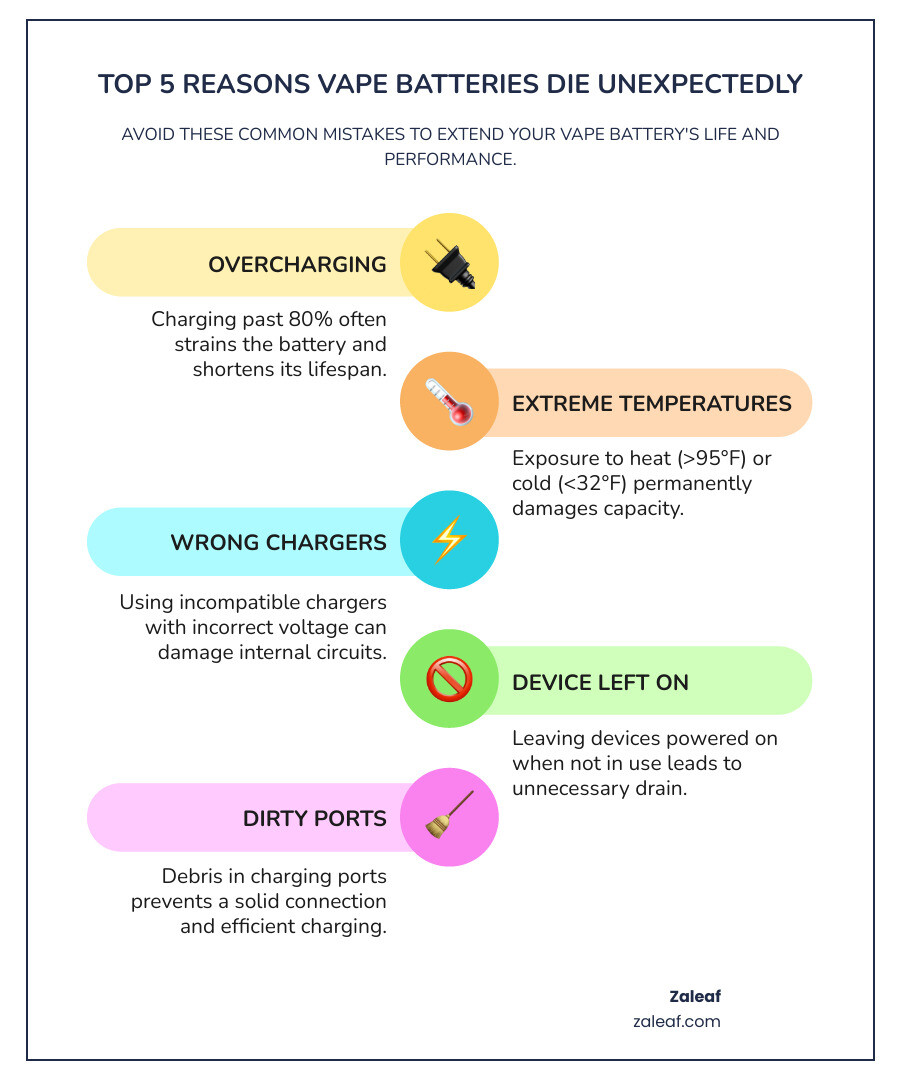
Optimizing battery life is essential for uninterrupted vaping sessions and protecting your investment in quality devices. Here's what you need to know:
Quick Battery Optimization Essentials:
- Charge between 20-80% to maximize battery lifespan
- Avoid extreme temperatures (keep devices between 50-95°F)
- Turn off your device when not in use
- Use the manufacturer's charger to prevent voltage issues
- Clean charging ports regularly to maintain proper connections
You've pulled out your vape for a quick relaxation break, only to find it completely dead. Sound familiar? The frustration of a dying battery mid-session is something every vape user has experienced. But here's the thing: most battery problems aren't about the battery itself—they're about how we use and care for it.
There's an important distinction to understand. Battery life is how long your device runs before needing a recharge. Battery lifespan is how long the battery lasts before it needs replacement entirely. Proper care affects both, extending your daily vaping sessions and the overall life of your device.
Your vape battery drains faster when exposed to heat, even when you're not using it. This kind of drain can actually damage your battery permanently. Overcharging, using incompatible chargers, and leaving your device on when not in use all chip away at your battery's performance over time.
The good news? Small changes in how you charge, store, and use your device can dramatically improve both daily performance and long-term durability.
As Max Shemesh, founder of Zaleaf, I've spent years helping customers get the most from their cannabinoid devices, and optimizing battery life is one of the most common questions I address. Through working with thousands of users, I've identified the practical steps that make the biggest difference in battery performance and device longevity.
Optimizing battery life vocab explained:
Understanding the Top Vape Battery Drainers
Before we dive into the solutions, let's get to the root of the problem. Why do our vape batteries seem to give up the ghost faster than we'd like? It often boils down to a few key culprits, many of which are within our control. Understanding these primary battery drainers is the first step towards optimizing battery life and ensuring our devices are always ready when we are.
Constant Use and High Power Settings
We get it – sometimes a session just hits the spot, and before you know it, you're chain-vaping. While enjoyable, constant use, often referred to as chain-vaping, puts immense stress on your battery. Each puff demands a burst of energy, and rapid, successive demands don't give the battery cells a chance to recover. This leads to a quicker drain and increased heat generation, which, as we'll discuss, is a battery's worst enemy.
Similarly, if your device allows for adjustable settings, cranking up the voltage or wattage might give you bigger clouds or more intense flavor, but it comes at a cost. High power settings require the battery to discharge at a much faster rate, consuming its stored energy far more rapidly than moderate settings. Features like pre-heat functions, while convenient, also draw significant power. Frequent activation and overworking the coil contribute to this accelerated depletion, pushing your battery to its limits and shortening its overall life.
Environmental and Storage Factors
Imagine leaving your favorite beverage out in the scorching sun or freezing cold – it wouldn't be very refreshing, would it? The same principle applies to your vape battery. Extreme temperatures are incredibly detrimental to battery health and can severely impact both its daily performance and long-term lifespan.
Heat is a known enemy of battery health. Exposing your device to direct sunlight, leaving it in a hot car, or even charging it inside certain styles of cases that trap heat can cause the battery to get excessively warm. High temperatures don't just lead to faster battery drain; they can permanently damage the battery's capacity, reducing its ability to hold a charge over time. We've seen instances where storing a battery in a hot environment has irreversibly damaged it.
On the flip side, extreme cold also affects battery performance. When using your device in a very cold environment, you might notice a temporary decrease in battery life. While this condition is usually temporary and performance returns to normal once the battery warms up, repeated exposure can still be stressful.
Improper long-term storage is another silent killer of battery health. If you store a device when its battery is fully discharged, it risks falling into a deep discharge state, rendering it incapable of holding a charge at all. Conversely, storing it fully charged for an extended period can lead to a loss of capacity. It's a delicate balance!
Charging Mishaps and Maintenance Issues
How we charge and maintain our devices plays a crucial role in their battery's well-being. Many battery issues stem from simple charging mistakes or neglected maintenance.
One of the most common culprits is using incompatible chargers. While it might seem like any USB charger will do, different devices have specific voltage and amperage requirements. Using a non-original power adapter could lead to improper voltage regulation, which can make your device hot and stress the battery. This not only causes faster battery drain but can also reduce its lifespan. Always prioritize using the charger that came with your device or a certified, compatible alternative.
Overcharging is another widespread issue. The idea that charging from 0% to 100% is ideal is a myth for modern lithium-ion batteries. Constantly pushing your battery to its absolute limits can wear it out over time. Similarly, allowing it to frequently drain to 0% before recharging can also be detrimental.
Finally, don't underestimate the power of cleanliness! Dirty connection points on your vape or charging cable can prevent a proper electrical connection, leading to inefficient charging or no charging at all. Dust, lint, and debris can accumulate in charging ports, acting as physical barriers. A clogged airflow, while not directly a charging issue, can cause the device to work harder and heat up, indirectly affecting battery performance. These small maintenance oversights can quickly add up to significant battery woes.
The Ultimate Guide to Optimizing Battery Life
Now that we understand what's draining our batteries, let's talk about how to fight back! Optimizing battery life isn't about magic; it's about smart habits and understanding your device. We've gathered our best advice to help you keep your vape powered up for longer.
Smart Charging: The Foundation for Optimizing Battery Life
Think of your vape battery like a finely tuned instrument – it performs best when treated with care, especially during its most crucial function: charging. The way we charge our devices forms the very foundation of their battery health and longevity.
One of the most impactful strategies for optimizing battery life is adopting the "20-80% rule." Modern lithium-ion batteries are happiest and last longest when their charge level is maintained between 20% and 80%. Constantly charging from 0% to 100% can wear out your battery over time, putting unnecessary stress on the internal chemistry. We recommend unplugging your device once it reaches the 80-90% mark. This small adjustment significantly reduces the chemical stress on the battery cells, prolonging their lifespan.
This also means avoiding overnight charging. While many devices have built-in safety features to prevent overcharging, leaving your vape plugged in for hours after it's full still keeps it at a high voltage state, which can contribute to long-term degradation. Plus, your device warms up when it's plugged in, and we already know that heat is a battery's enemy. Don't keep it charging more than needed.
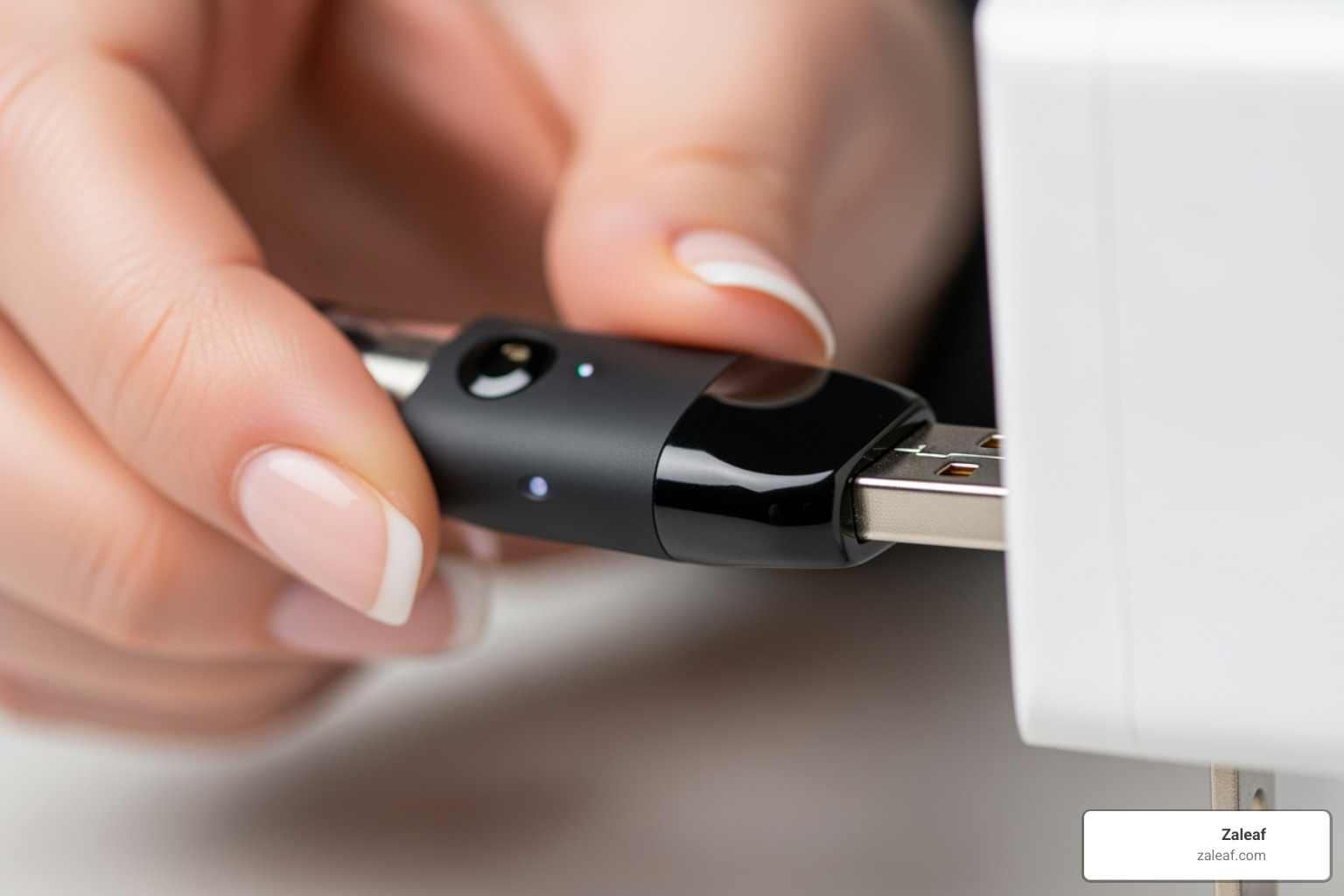
The importance of using the correct USB cable and adapter cannot be overstated. As we touched on earlier, a non-original power adapter might lead to improper voltage regulation, heating up your device and stressing the battery. Always use the charger recommended by the manufacturer or a certified alternative that matches your device's specifications. These are designed to provide the optimal current and voltage for safe and efficient charging.
Lastly, resist the urge to use your vape while it's charging. This practice, often called "pass-through vaping," can generate excess heat, which is detrimental to battery health. It forces the battery to both charge and discharge simultaneously, creating additional strain and potentially shortening its lifespan. Give your vape a break while it's recuperating.
Usage Habits for Optimizing Battery Life Day-to-Day
Beyond smart charging, our daily usage habits play a significant role in how long our vape batteries last. These are the small, consistent actions that collectively make a big difference in optimizing battery life.
First and foremost, get into the habit of powering off your device when it's not in use. Just like a light left on in an empty room, a powered-on vape still draws a trickle of power, even in standby. Turning it off completely eliminates this passive drain and saves battery for when you actually need it.
Where and how you store your device also matters. Always store your vape upright in a cool, dry place. Avoiding extreme temperatures is critical. Leaving it in direct sunlight, a hot car, or a freezing environment can severely impact battery performance and longevity. A moderate, stable environment is ideal for preserving battery health.
When you're actively vaping, consider taking breaks between puffs. Chain-vaping puts continuous strain on the battery, causing it to heat up and deplete faster. Giving it a moment to rest allows the battery cells to stabilize, reducing stress and potentially extending your session.
Regular cleaning of contacts and the mouthpiece isn't just for hygiene; it's also crucial for battery efficiency. Dirty or corroded contacts can impede the flow of electricity, making your device work harder and consume more power. A quick wipe-down can ensure optimal performance.
Finally, use lower power settings if your device offers them. While high voltage/wattage settings can provide an intense experience, they are major battery drainers. Experimenting with slightly lower settings can offer a satisfying vape while significantly extending your battery life. It's all about finding that sweet spot between performance and endurance.
Advanced Troubleshooting for a Finicky Battery
Even with the best habits for optimizing battery life, sometimes our vape batteries can be a bit finicky. When your device isn't cooperating, it's time to put on our detective hats and systematically troubleshoot the issue.
What to Do When Your Vape Won't Charge
The moment you plug in your vape and see no charging indicator light up, a wave of panic can set in. But don't despair! Most charging issues are easily fixable with a simple troubleshooting checklist.
Here's our step-by-step guide to get your vape charging again:
- Check the charging port for debris: This is a surprisingly common culprit. Over time, lint, dust, and other tiny particles can accumulate inside the charging port, preventing the cable from making a proper connection. Use a toothpick (gently!), a small brush, or a blast of compressed air to clear out any obstructions. Be very careful not to damage the delicate pins inside the port.
- Inspect the charging cable for damage: Frayed wires, bent connectors, or kinks in the cable can all disrupt the charging process. If your cable looks worn, try a different one. We always recommend using the original cable that came with your device or a high-quality replacement.
- Try a different power source: Sometimes the issue isn't your vape or cable, but the outlet or USB port you're using. Plug your charger into a different wall adapter, a different wall outlet, or a different USB port on your computer. This helps rule out a faulty power source.
- Ensure connection points are clean: Beyond the charging port, check the metal contacts on both your vape device and the cartridge or pod. E-liquid residue or dirt can sometimes build up on these contacts, interfering with power delivery. A cotton swab lightly dampened with rubbing alcohol can be used to gently clean these points. Ensure they are completely dry before reassembling and attempting to charge.
- Restart your device: A simple reboot can sometimes clear minor software glitches that might be preventing proper charging. If your vape has an on/off button, turn it off, wait a few seconds, and then turn it back on.
If you've gone through this checklist and your vape still refuses to charge, it might be time to consider the possibility of a more significant issue.
Recognizing When It's Time for a Replacement
Batteries don't last forever, and even with diligent care and optimizing battery life practices, they will eventually degrade. Recognizing the signs that your battery is nearing the end of its usable life is important for both performance and safety.
Here are the key indicators that it's time to consider a replacement:
- Significantly reduced capacity: If your vape used to last all day, but now it barely gets you through a few hours, even after a full charge, its internal capacity has likely diminished. Batteries tend to degrade over time, leading to reduced performance.
- Failure to hold a charge: When your device charges quickly but then drains almost instantly, or if it shows a full charge but dies unexpectedly, the battery is no longer able to retain power effectively.
- Physical damage to the device: Any visible damage, especially around the battery compartment, is a red flag. This includes dents, cracks, or punctures.
- Battery swelling or leaking: This is a critical safety concern. If you notice any bulging in your device or detect any liquid seeping out, stop using it immediately. Swelling is a sign of internal chemical reactions gone awry and can pose a fire hazard.
- Device getting excessively hot: While some warmth during use or charging is normal, if your vape consistently gets uncomfortably hot to the touch, even during light use or charging, it could indicate an internal battery problem.
If you're experiencing persistent battery issues despite trying all the troubleshooting steps, and especially if you observe any of the physical warning signs, it's always best to err on the side of caution. Consider replacing your device to ensure a safe and satisfying vaping experience.
Frequently Asked Questions about Vape Battery Performance
We hear a lot of questions about vape battery care, and that's a good thing! It shows you're invested in getting the most out of your device. Let's tackle some of the most common queries we receive about optimizing battery life.
Is it safe to leave my vape charging overnight?
This is a question we get all the time, and it's a valid concern. While modern vape devices, much like smartphones, often come with built-in protection circuits to prevent severe overcharging, we generally advise against leaving your vape charging overnight.
Here's why: constantly charging from 0% to 100% can still wear out your battery over time, as it keeps the battery cells at a high-stress voltage for extended periods. Even if the device stops actively "charging" once it hits 100%, it might trickle charge or maintain that full state, contributing to gradual battery degradation. We've also observed that your device warms up when it's plugged in, and we know that heat is a primary enemy of battery health.
Our best practice recommendation is to unplug your vape once it reaches 80-90% charge, or at least shortly after it indicates a full charge. This helps reduce the chemical stress on the battery and prolongs its overall lifespan. It's a small habit that makes a big difference in optimizing battery life.
How does temperature really affect my vape's battery?
Temperature is a major factor in battery performance and longevity, often more than people realize. Think of it as your battery's comfort zone.
Heat is a known enemy of battery health. High ambient temperatures, or even the internal heat generated by heavy use or charging, can significantly accelerate battery drain. This isn't just about daily usage; charging the device in high ambient temperatures (above 95° F or 35° C) can permanently damage its battery capacity. Even storing a battery in a hot environment, like a car on a sunny day, can irreversibly damage it. Software in some devices may even pause charging temporarily if extreme temperature conditions are detected, resuming only once the battery's temperature returns to its normal operating range. This kind of drain and stress can damage your battery, leading to shorter battery life.
On the other hand, very cold environments also impact performance. When you use your device in freezing temperatures, you might notice a temporary decrease in battery life. The chemical reactions inside the battery slow down, reducing its efficiency. However, this condition is usually temporary; the battery's performance typically returns to normal once it warms up. Prolonged exposure to cold, while less damaging than heat, can still be stressful.
For optimal performance and to truly excel at optimizing battery life, we recommend keeping your vape devices within a comfortable temperature range, ideally between 50-95° F (10-35° C).
Can I use any USB charger for my vape pen?
This is a critical question, and the short answer is: no, not just any USB charger will do. While many chargers might physically fit your vape pen, their electrical output (voltage and amperage) can vary significantly.
Using a non-original power adapter could lead to improper voltage regulation. If the charger delivers too much voltage or amperage, it can overheat your device, stress the battery, and potentially damage the internal charging circuit. This not only impairs the battery's ability to hold a charge but can also shorten its lifespan. Conversely, a charger with too low an output might charge your device very slowly, or not at all.
We strongly advise using the original charger that came with your vape pen. These chargers are specifically designed to meet the precise electrical requirements of your device, ensuring safe and efficient charging. If you need a replacement, always opt for a certified charger from a reputable source that matches the manufacturer's specifications. This simple step is vital for protecting your battery and for overall device safety, making it a cornerstone of optimizing battery life.
Conclusion: Power Up Your Vaping Experience
We've covered a lot of ground today, delving into the reasons behind rapid battery drain and providing you with a comprehensive toolkit for optimizing battery life in your vape devices. From understanding the impact of usage habits and environmental factors to implementing smart charging practices and troubleshooting common issues, the path to longer-lasting power is now clear.
The secret sauce lies in a combination of mindful use, proper charging, and diligent care. By embracing the 20-80% charging rule, avoiding extreme temperatures, using the correct chargers, and keeping your device clean, you're not just extending daily vaping sessions; you're significantly prolonging the overall lifespan of your battery and your device.
At Zaleaf, we believe that a superior vaping experience starts with quality. That's why our products are crafted with care, undergo rigorous 3rd party testing, and feature improved cannabinoid and terpene profiles for mood-specific effects. We ensure our devices are built to perform, but it's your commitment to these best practices that truly open ups their full potential.
So, go forth and vape with confidence, knowing you're equipped with the knowledge to keep your device powered up and ready for every moment.
To deepen your understanding of the powerhouse that drives your vape, we invite you to learn more about different vape battery types and find how Zaleaf's commitment to quality ensures you get the most out of every puff.