

From 510 to 21700: Your Ultimate Guide to Vape Battery Varieties

Understanding the Heart of Your Vape Device
Different vape battery types power your device, and choosing the right one makes all the difference in your vaping experience. Here's what you need to know:
Main Types of Vape Batteries:
- Internal (Integrated) Batteries - Built into the device, charged via USB, ideal for beginners
- External (Replaceable) Batteries - Removable batteries like 18650 or 21700, offering higher power and swappable use
- 510-Thread Batteries - The universal standard for oil cartridges, compact and affordable
- Pod System Batteries - All-in-one units with built-in batteries, simple and convenient
Key Specifications to Consider:
- Capacity (mAh): Determines how long your battery lasts (typically 500-3000mAh)
- Voltage: Controls heat and vapor production (usually 2.8V-4.8V)
- Threading: Most use 510 threading for universal compatibility
When I started vaping in 2014, the world was simpler—most devices came with basic built-in batteries. Today, the market offers thousands of options, from sleek 510-thread pens to powerful box mods with external batteries. The demand on vape batteries keeps increasing with each new device released.
Understanding battery types isn't just about performance—it's about safety, longevity, and getting the most value from your purchase. The wrong battery can mean a dead device mid-session, or worse, potential safety risks. The right battery means reliable power when you need it, whether you're unwinding after a long workday or enjoying a weekend evening.
Lithium-ion technology powers most modern vapes because these batteries are rechargeable, lightweight, and long-lasting. They can handle hundreds of charge cycles with minimal degradation, making them ideal for daily use. But not all lithium-ion batteries are created equal—different chemistries, sizes, and configurations serve different needs.
As Max Shemesh from Zaleaf, I've helped thousands of customers steer different vape battery types to find their perfect match, combining industry expertise with a commitment to quality and safety. Let me walk you through everything you need to know to make an informed choice.
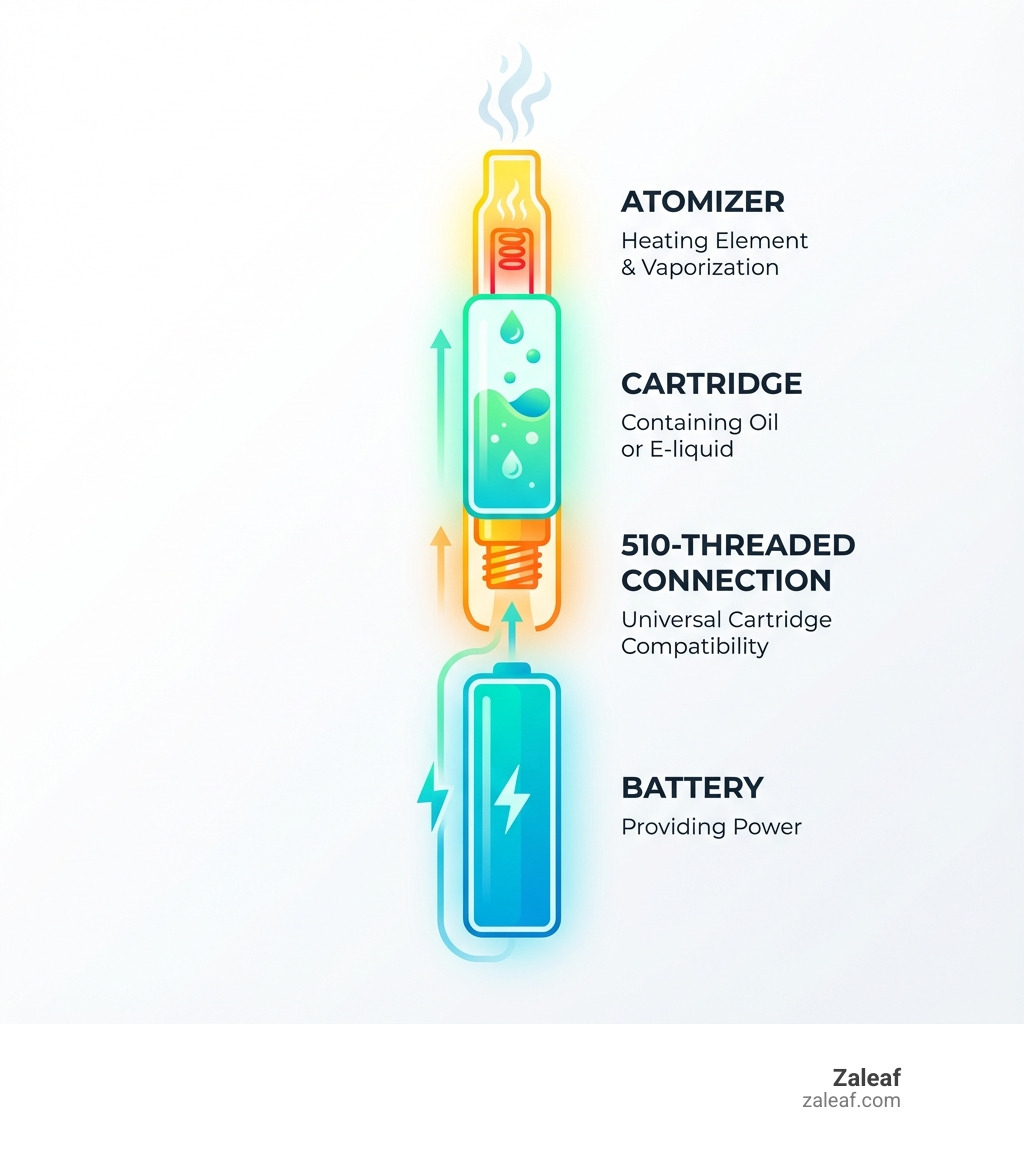
Different vape battery types terms to know:
Internal vs. External Batteries: The Great Divide
The first major distinction among different vape battery types is whether they are internal (built-in) or external (replaceable). This choice significantly impacts convenience, power, and how you interact with your device.
| Feature | Internal (Integrated) Batteries | External (Replaceable) Batteries |
|---|---|---|
| Convenience | High (charge device directly) | Moderate (requires external charger, swapping) |
| Power Output | Generally lower to moderate (suitable for most casual use) | High (preferred by advanced users for sub-ohm, high wattage) |
| Lifespan | Device's lifespan limited by battery's charge cycles | Extends device's lifespan (can replace worn batteries) |
| Maintenance | Minimal (no swapping, just charge) | More involved (safe handling, storage, external charging) |
| User Level | Beginner to intermediate | Intermediate to advanced (requires more battery knowledge) |
Internal (Integrated) Batteries
Much like a smartphone, internal batteries are built directly into the vape device. This integrated design makes for a sleek, user-friendly package. Convenience is their main appeal: you simply plug the entire device into a charger (usually USB-C or micro-USB) to power up. This simplicity makes them ideal for starter kits, pod systems, and vape pens. Many also offer "pass-through" charging, letting you vape while plugged in.
The main drawback is a finite lifespan. After hundreds of charge cycles, the battery will degrade. Since it can't be replaced, a failing battery often means the entire device is unusable. For beginners or those who value a hassle-free experience, internal batteries are an excellent, simple choice.
Find out more about selecting rechargeable vape pens with internal batteries: Power Up Your Vaping: Top Rechargeable Vape Pens Reviewed.
External (Replaceable) Batteries
Advanced vapers often prefer external batteries for their flexibility and power. These removable batteries can be charged separately and swapped out, offering two key advantages. First is higher power output. Larger formats like 18650s and 21700s deliver the high wattage needed for sub-ohm vaping and advanced mods, producing bigger clouds. Second is swappability. A dead battery doesn't mean your session is over; just pop in a fresh spare. This also extends the device's lifespan, as you only need to replace the battery, not the entire vape.
However, external batteries require more responsibility. Safe and efficient charging demands a dedicated external charger, and proper handling and storage are crucial to avoid risks. They are best for users with some technical knowledge.
Learn more about safely handling external batteries: Stay Safe: Understanding Unprotected Vape Battery Risks.
A Closer Look at the Different Vape Battery Types
Beyond the internal vs. external debate, different vape battery types come in various shapes, sizes, and functionalities custom to specific vaping needs. Let's dig into some of the most common form factors you'll encounter.
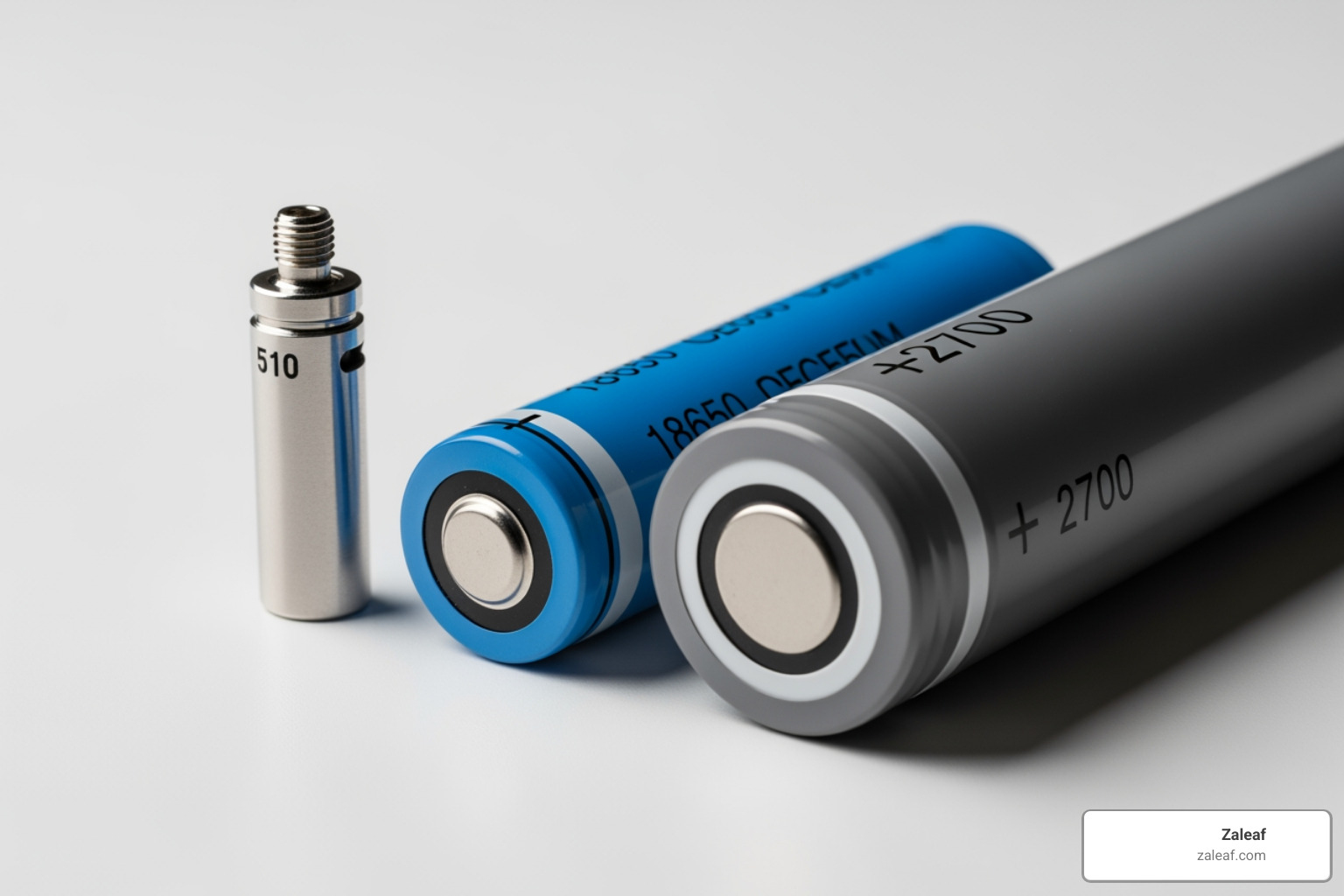
510-Thread Batteries: The Industry Standard for Carts
If you've ever used a vape pen, especially for oil cartridges, chances are you've encountered a 510-thread battery. This is arguably the most ubiquitous and accessible type of vape battery on the market.
The "510" in 510-thread refers to a universal threading standard: you've got 10 threads, and they're each spaced 0.5 millimeters apart. This ingenious design means that virtually any 510-threaded cartridge, regardless of the brand, will screw onto a 510-threaded battery. It's the ultimate in cross-compatibility, giving you immense freedom to mix and match.
These batteries are the standard for vaping oil cartridges, such as those containing distillate, resin, or rosin. Why? Because oil cartridges require significantly less energy compared to dry herb or dab vaporizers. This low energy requirement allows 510 batteries to be much smaller and more compact, making them incredibly discreet and portable.
You'll find them in various styles:
- Pen-style: Slim, elongated batteries that resemble a traditional pen, offering ultimate discretion.
- Concealed-style: Batteries where the cartridge is partially or fully enclosed within the device, offering protection for the cartridge and often a more stealthy appearance.
510 batteries are some of the most affordable and accessible options, with prices typically ranging from $15 to $70, depending on manufacturing quality and features. On average, a good 510 vape battery will last for around 4–5 hours of continuous use before needing a recharge, though this can vary based on usage patterns and temperature settings.
Explore our comprehensive guide to 510-thread batteries: The Essential 510 Thread Battery Buyers Guide.
Common External Battery Sizes: 18650, 21700, and More
When we talk about external, replaceable batteries, specific numerical designations become important. These numbers aren't just arbitrary; they tell us the physical dimensions of the battery. The most common sizes are the 18650 and the 21700.
Let's break down the naming convention:
- The first two digits represent the diameter of the battery in millimeters.
- The next two digits indicate the length of the battery in millimeters.
- The last digit, typically a '0', signifies that it's a cylindrical cell.
So, for example:
- An 18650 battery is 18mm in diameter and 65mm in length. It's the most common size for replaceable batteries in vaping devices and has been an industry workhorse for years.
- A 21700 battery is 21mm in diameter and 70mm in length. These are larger than 18650s and often offer higher capacity and discharge rates, leading to longer battery life and greater power output, making them a popular choice for newer, more powerful mods.
While 18650 and 21700 are dominant, you might also encounter:
- 18350 batteries: 18mm in diameter and 35mm in length. These are much smaller, offering lower capacity but allowing for extremely compact devices.
- 26650 batteries: 26mm in diameter and 65mm in length. These are larger and can provide very high capacity, though they are less common in modern vape devices due to their bulk.
The choice of battery size directly impacts the size and design of your vaping device. A mod designed for a 21700 battery will inherently be larger than one designed for an 18650. This is a crucial consideration for both performance and portability.
Understand more about the nuances of different vape battery types and their sizes: Demystifying Vape Batteries: Understanding the Differences.
Decoding Battery Specs: What the Numbers Mean
Navigating vape batteries can feel a bit like learning a new language, especially with all the acronyms and numbers thrown around. But understanding these specifications is key to making informed choices that ensure both optimal performance and safety. Let's break down what these crucial numbers mean for your vaping experience.
Capacity (mAh): How Long Your Battery Lasts
The "mAh" on your battery stands for milliampere-hour, and it's essentially a measure of your battery's storage capacity. Think of it like the size of your car's fuel tank: a larger tank (higher mAh) means you can drive longer (vape longer) before needing to refuel (recharge).
For vape batteries, capacities typically range from 500mAh to 3000mAh or even higher, depending on the model and size. For example, a compact vape pen battery will generally provide between 280-900mAh, while a larger external battery for a powerful mod could easily be 2500mAh or 3000mAh.
A higher mAh rating means your battery can supply power for a longer duration before requiring a charge. This is a critical factor if you're a heavy vaper or simply don't want to be constantly tethered to a charger. However, it's worth noting that batteries with higher mAh often have a slightly lower continuous discharge rate (amperage), which we'll discuss next. It's a trade-off between endurance and raw power.
For a deeper dive into how battery capacity works, check out this resource: More info on battery capacity.
Voltage (V): The Power of Your Hit
Voltage, measured in volts (V), determines the electrical "pressure" that pushes current through your coil. In simpler terms, it's how much power is sent to the atomizer to heat your material.
The common range for vape pen battery voltage is typically between 2.8V and 4.8V. Here's how it generally affects your experience:
- Lower voltage settings (e.g., 2.8V - 3.2V) usually result in a cooler, purer vapor with more emphasis on flavor. This is often preferred for delicate oils or those who enjoy a smoother, lighter hit.
- Higher voltage settings (e.g., 3.8V - 4.8V) produce more intense heat, leading to denser vapor clouds and a heavier hit. Some cartridges, like ceramic or wickless ceramic types, may require higher voltages to heat properly.
Many different vape battery types offer variable voltage settings, allowing you to adjust this power output to customize your vaping experience. This flexibility is fantastic, as it lets you fine-tune the temperature for different oils, enhancing specific cannabinoid and terpene profiles for your desired mood-specific effects. Whether you're chasing mellow flavors or rich, robust vapor, variable voltage puts you in control.
Master the art of variable voltage: Power Up Your Vape: Finding the Right Variable Voltage Battery.
Amperage (CDR): A Key Safety Metric
Amperage, specifically the Continuous Discharge Rating (CDR), is one of the most critical safety metrics for external vape batteries. Measured in amps (A), CDR indicates the maximum electrical current a battery can safely discharge continuously without overheating or causing damage.
This spec is particularly vital for users of advanced mods, especially those who build their own coils or use mechanical (unregulated) mods.
- Regulated mods have internal circuitry that manages the power draw from the battery, offering protections against over-discharge, short-circuits, and often preventing you from exceeding the battery's safe limits. Most modern vape kits come with built-in protections, such as short-circuit detection and overcharge cut-offs.
- Mechanical mods, however, take power directly from the battery without any regulating chip. This means the user must have a solid understanding of Ohm's Law and the battery's CDR to ensure they don't draw too much current for their coil resistance, which could lead to dangerous battery failure.
Always ensure your battery's CDR is sufficient for the wattage you plan to vape at. Exceeding a battery's CDR can cause it to overheat, vent, or even explode, posing serious safety risks. For a truly safe and enjoyable experience, always match your battery's capabilities to the needs of your device.
For an extensive source of knowledge on all areas of battery life and safety, consult: A deep dive into battery science.
Vape Battery Safety and Longevity
Batteries are the heart of your vaping device, and like any heart, they need proper care to function optimally and safely. Ignoring battery safety can lead to poor performance, shortened lifespan, or even dangerous incidents. We at Zaleaf prioritize your safety, so let's go over some essential practices.
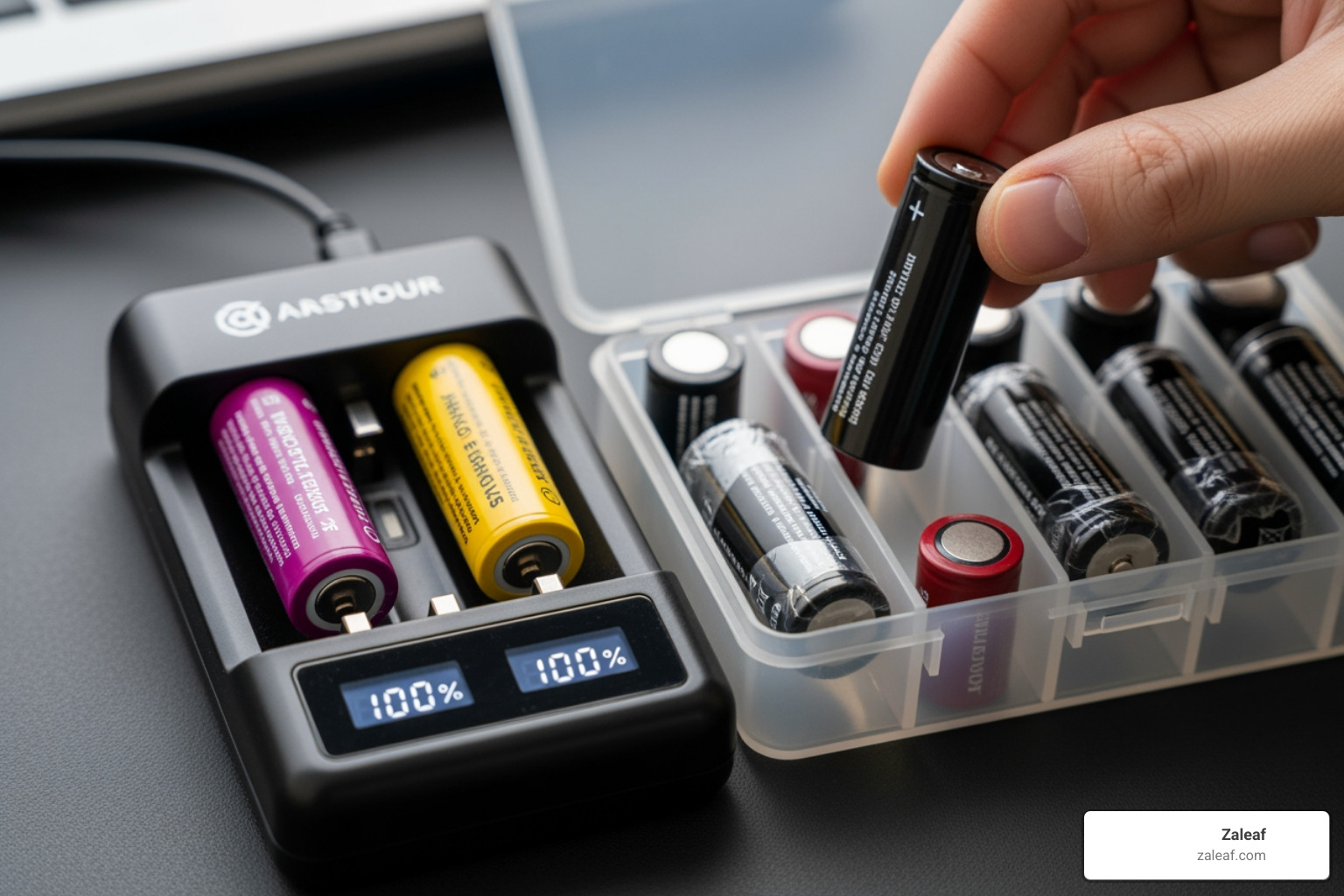
Best Practices for Charging and Use
Maximizing the lifespan and safety of your vape batteries isn't rocket science, but it does require adherence to a few simple rules:
- Use the Right Charger: Always use the charging cable that came with your device. For external batteries, a dedicated, good quality external battery bay charger is essential. Avoid using fast-charging phone cables or plugs, as they can deliver too much current and damage your vape battery.
- Don't Overcharge: While most modern devices and battery bay chargers have overcharge protection, it's generally not recommended to leave batteries charging unattended or overnight. Unplug your device once it's fully charged. Constantly topping up or leaving a battery plugged in for hours after it's full can stress the cells.
- Avoid Full Drain: Try to recharge your battery before it's completely empty. Allowing lithium-ion batteries to fully drain repeatedly can shorten their overall lifespan. Aim to recharge when the battery hits around 20%.
- Clean Contacts: Periodically clean the battery contacts on both your device and the battery itself (for external types) with a dry cotton swab or tissue. Dust or e-liquid residue can interfere with charging and power delivery.
- Lock Your Device: When not in use, especially when carrying your vape in a pocket or bag, always lock the device or turn it off. This prevents accidental firing, which can drain your battery, burn your coil, or potentially cause overheating.
- Proper Storage: Store your batteries in a cool, dry place, away from direct sunlight or extreme temperatures. Lithium batteries should ideally be stored at around 40% capacity if you're not going to use them for an extended period. For external batteries, always use a plastic or silicone protective case when carrying them to prevent contact with metallic items like keys or coins, which can cause a dangerous short circuit.
By following these simple steps, you can significantly extend the life of your batteries and ensure a safer vaping experience. For more tips on maximizing battery life and speed: Charge On: Maximizing Your Vape Battery's Life and Speed.
Health Concerns and Proper Handling
While our focus at Zaleaf is on providing 100% legal cannabis products that are third-party tested for purity and potency, it's important to be aware of broader health concerns related to vaping, particularly concerning unregulated products.
One such concern is EVALI (E-cigarette or Vaping Associated Lung Injury). This is a serious condition linked to vaping unregulated THC products, especially those containing Vitamin E acetate. Symptoms can include respiratory issues, chest pain, and gastrointestinal problems. To mitigate this risk, always purchase your cartridges and vape products from licensed and reputable sources like Zaleaf, where all products undergo rigorous third-party testing to ensure quality and safety.
Beyond product quality, proper handling of batteries is paramount:
- Damaged Batteries: Never use a battery that shows any signs of damage, such as dents, tears in the wrapper, bulging, or leaking. A damaged battery is a dangerous battery and should be immediately removed from use and disposed of properly.
- Unprotected Batteries: If you're using external, unprotected batteries, extreme caution is necessary. These lack internal safety circuits, making them more susceptible to over-discharge or short-circuit if mishandled. Always ensure you understand your device's power requirements and the battery's capabilities.
- Temperature Extremes: Avoid exposing your batteries to very high or very low temperatures. This can degrade battery performance, shorten its lifespan, and in extreme cases, pose a safety hazard.
Stay informed about health concerns related to vaping: Information on EVALI from the CDC.
How to Properly Dispose of Old Batteries
When your vape battery reaches the end of its life, proper disposal is crucial for both environmental protection and safety. Lithium-ion batteries, which power most vapes, should never be thrown in regular household trash.
Why?
- Environmental Impact: Batteries contain chemicals and heavy metals that can leach into the soil and water, causing pollution.
- Fire Risk: Damaged or improperly disposed of lithium-ion batteries can short circuit, leading to fires, especially in waste collection vehicles or landfills.
So, how do we dispose of them responsibly?
- Local Recycling Centers: The most common and accessible option is to take your old batteries to a local recycling center. Many communities have designated drop-off points for electronics and batteries. You can often find these with a quick online search for "battery recycling near me."
- Vape Shops/Electronics Stores: Many vape shops and electronics retailers offer battery recycling points. In some regions, like the UK, stores accept used batteries under schemes like the WEEE (Waste Electrical and Electronic Equipment) scheme.
- EPA Guidelines: Always follow official guidelines for lithium-ion battery disposal. These often emphasize not throwing them in the trash and seeking out designated recycling facilities.
By taking a few extra minutes to dispose of your batteries correctly, you're doing your part to protect our planet and prevent potential hazards. For detailed guidance on proper disposal, refer to the: EPA guidelines for Lithium-ion battery disposal.
Frequently Asked Questions about Different Vape Battery Types
We understand that diving into different vape battery types can bring up a lot of questions. Here are some of the most common inquiries we receive, along with our expert answers.
How long does a 510 battery last on a single charge?
The lifespan of a 510 battery on a single charge can vary quite a bit, but on average, a good quality 510 vape battery will last for around 4–5 hours before requiring a recharge. However, several factors play a significant role in this duration:
- mAh Rating: As we discussed, a higher milliamp-hour (mAh) rating means greater capacity. A 500mAh battery will generally last longer than a 280mAh battery.
- Usage Habits: How frequently you take puffs and the length of those puffs directly impact battery drain. A heavy user will deplete their battery faster than an occasional user.
- Voltage/Temperature Settings: Vaping at higher voltage or temperature settings requires more power, which will drain your battery more quickly. Lower settings conserve battery life.
- Coil Resistance: The resistance of your cartridge's coil also affects power draw. Lower resistance coils generally demand more power from the battery.
- Preheat Function: Using a preheat function, while beneficial for thick oils, consumes a small amount of battery power.
Essentially, it's a balance between your personal vaping style and the battery's specifications.
Can I use any charger for my vape battery?
No, you absolutely cannot use any charger for your vape battery, and doing so can be dangerous. This is a critical safety consideration.
- Use the Provided Charger: Always use the charging cable and/or adapter that came with your vape device. These are specifically designed to deliver the correct voltage and amperage for your battery.
- Avoid Rapid Chargers: Modern smartphone rapid chargers can deliver significantly higher power than what many vape batteries are designed to handle. Using them can overheat, damage, or even cause your vape battery to fail or catch fire. Stick to standard USB ports (like those on a computer or a low-wattage wall adapter).
- External Battery Chargers: For external (replaceable) batteries, a dedicated external battery bay charger is essential. These chargers are designed to safely charge individual cells, often with features like overcharge protection and automatic shut-off. They are far safer and more effective than charging external batteries inside a mod via a USB port, especially for multi-battery devices.
- Match Voltage: Ensure the charger's output voltage matches your battery's requirements. Mismatched chargers can lead to inefficient charging or damage.
Using the wrong charger is one of the most common causes of vape battery issues and safety incidents. When in doubt, err on the side of caution and use only the recommended charging equipment.
What do the flashing lights on my vape battery mean?
Flashing lights on your vape battery are usually a communication system, signaling various states or issues. While the exact patterns can differ slightly between brands, here are some common meanings:
- Low Battery: This is the most frequent reason for flashing lights. The battery is indicating that it's running low on power and needs to be recharged soon.
- Puff Limit Reached: Many devices have a built-in safety feature that limits the duration of a single puff (e.g., 10 seconds). If you hold the button down for too long, the device will cut off power and flash to indicate the puff limit has been reached.
- Short Circuit: If there's a short circuit in your cartridge or coil, the battery's safety features will kick in, preventing it from firing and often flashing a specific pattern (e.g., 3 or 5 flashes) to warn you. This is a crucial safety mechanism.
- Connection Issue: Sometimes, the light flashes if the cartridge isn't properly connected to the battery. Try unscrewing and re-screwing the cartridge, ensuring a snug but not overtightened fit.
- Over-Discharge/Over-Voltage: Less common, but some flashes can indicate that the battery has been discharged too far or that the voltage is too high for the connected coil, triggering a protection circuit.
If your battery is flashing and you're unsure why, consult your device's user manual. It will typically provide a detailed explanation of what each specific flash pattern indicates for your model.
Conclusion: Powering Your Perfect Vaping Experience
Navigating different vape battery types might seem daunting at first, but with a little knowledge, you're now equipped to make informed decisions that improve your vaping journey. We've explored everything from the fundamental differences between internal and external batteries to the precise meanings of mAh, voltage, and amperage.
The right battery is more than just a power source; it's a key component for safety, performance, and overall satisfaction. Whether you prefer the grab-and-go simplicity of a 510-thread battery for your cannabis oil cartridges or the robust power of external 18650s for a more advanced setup, understanding your options is the first step.
At Zaleaf, we're committed to providing not just exceptional, 100% legal cannabis products with improved cannabinoid and terpene profiles, but also the knowledge to use them safely and effectively. All our products undergo rigorous 3rd party testing, ensuring you receive quality you can trust, delivered fast and discreetly.
Always prioritize safety by using the correct chargers, handling batteries with care, and disposing of them responsibly. By doing so, you'll maximize the lifespan of your batteries and ensure every puff is a pleasant one.
Ready to open up your vape's full potential? Dive deeper into getting the most from your cartridge battery: Unlock Your Vape: A Beginners Guide to Cartridge Battery Use.