

CBD Rich Hemp Flower Explained for Beginners
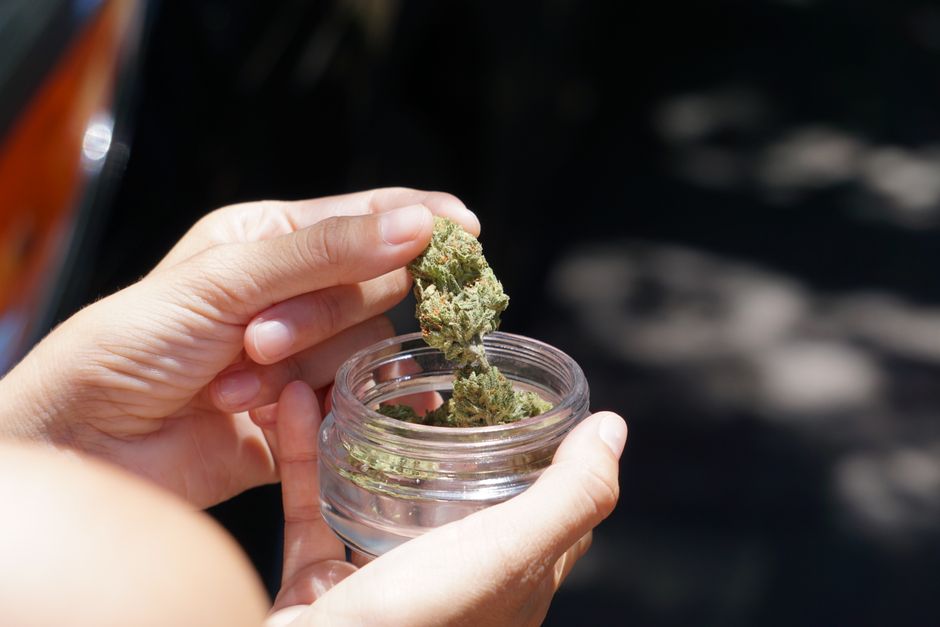
What Is CBD-Rich Hemp Flower?

CBD-rich hemp flower comes from cannabis plants grown for high levels of cannabidiol (CBD) and low levels of THC, the compound that causes a high. It is unlikely to make you feel high, but even a low-THC product may pose a drug-test risk.
People are interested in CBD for stress, pain, and other health concerns. The evidence varies by condition, though, and research on CBD medicine does not prove that hemp flower has the same effects. This guide explains what is in the flower, what the research says, and how to check an independent lab report before buying.
I’m Max Shemesh, owner and CEO of Zaleaf, with experience building products in the hemp and cannabinoid industry. My work with CBD-rich hemp focuses on clear cannabinoid profiles and third-party testing.
Cbd rich hemp glossary:
What Is CBD Rich Hemp and How Does It Differ From Marijuana?
To understand how high-cannabinoid botanical products work, we first need to clear up common misconceptions about taxonomy, genetics, and plant morphology.
Understanding CBD-Rich Hemp vs Industrial Hemp and Marijuana
Botanically, all hemp and marijuana belong to the exact same species: Cannabis sativa L. (Oriola et al., 2024). The defining distinction between them is legal and chemical rather than purely genetic. In most jurisdictions worldwide, cannabis plants containing 0.3% delta-9 tetrahydrocannabinol (THC) or less by dry weight are classified as industrial or CBD-rich hemp, while plants exceeding that 0.3% threshold are classified as marijuana.
Traditional industrial hemp is bred primarily for long, fibrous stalks and nutrient-dense seeds used in textiles, bioplastics, and food. These crops are planted densely and focus energy on vertical growth. In contrast, premium high CBD flower is cultivated much like artisan cannabis: female plants are spaced out to encourage bushy lateral branching and dense floral clusters coated in resinous glandular trichomes.
As explored in scientific reviews like Cannabis sativa as an Herbal Ingredient: Problems and Prospects, these trichomes act as specialized biochemical factories producing over 100 distinct cannabinoids along with volatile aromatic terpenes, delivering robust non-intoxicating therapeutic profiles without triggering psychoactive effects (Oriola et al., 2024).
Cannabinoids, Terpenes, and the Entourage Effect
The therapeutic versatility of CBD-rich hemp stems from the synergistic relationship between its active compounds, commonly called the entourage effect. While cannabidiol (CBD) is the dominant active compound, raw cannabis flowers contain a broader range of therapeutic precursors and minor cannabinoids (Oriola et al., 2024).
When examining the plant's profile, we see several primary players:
- CBD & Cannabidiolic Acid (CBDA): CBDA is the raw, unheated precursor found in live plant tissue that transforms into active CBD through heat (decarboxylation). Both interact with biological pathways to support balance (Hilderbrand, 2018).
- Cannabigerol (CBG): Known as the "mother cannabinoid," CBG is the foundational molecule from which other cannabinoids develop, showing strong affinity for gut and neuroprotective pathways.
- Cannabinol (CBN): A gently calming cannabinoid formed as THC ages and oxidizes over time.
- Trace Delta-9 THC: Kept below the legal 0.3% limit, this minute amount boosts the efficacy of other compounds without intoxicating the user.
Aromatic terpenes add to this experience. Monoterpenes like beta-myrcene impart earthy notes and promote relaxation; beta-caryophyllene acts as both a spicy terpene and a direct activator of CB2 receptors; and limonene delivers citrus notes associated with mood elevation. Gaining a better understanding of major CBDS and terpenes helps you tailor your wellness routine to your specific needs.
| Compound | Class | Primary Aroma / Flavor | Known Biological Role |
|---|---|---|---|
| CBD (Cannabidiol) | Major Cannabinoid | Mildly bitter, floral | Non-intoxicating, supports stress reduction, anti-inflammatory (Hilderbrand, 2018) |
| CBDA | Cannabinoid Acid | Raw green, herbal | Potent COX-2 pathway modulation and anti-nausea action (Oriola et al., 2024) |
| CBG (Cannabigerol) | Minor Cannabinoid | Woodsy, pine-like | Neuroprotection and gastrointestinal support |
| Beta-Myrcene | Monoterpene | Earthy, musky, herbal | Sedative properties, enhances cellular cannabinoid uptake |
| Beta-Caryophyllene | Sesquiterpene | Peppery, spicy, woody | Directly binds CB2 receptors to relieve discomfort |
| Limonene | Monoterpene | Citrus, sweet, tangy | Uplifting mood support and antioxidant properties |
Therapeutic Evidence and Health Benefits of CBD-Rich Hemp
Clinical Evidence for Chronic Pain, Anxiety, and Epilepsy
The human body possesses a vast regulatory framework known as the endocannabinoid system (ECS). Composed of endogenous lipid-based neurotransmitters, metabolic enzymes, and specialized receptors (CB1 primarily in the central nervous system and CB2 distributed throughout peripheral and immune tissues), the ECS regulates homeostasis, pain perception, immune signaling, and emotional processing (Hilderbrand, 2018).
CBD does not bind strongly to CB1 or CB2 receptors directly. Instead, it acts as a negative allosteric modulator, modifying how those receptors respond to other signals. It also acts as an agonist at the 5-HT1A serotonin receptor, which explains its rapid calming effects during acute stress (Hilderbrand, 2018).
The strongest clinical evidence for pure CBD centers on severe pediatric epilepsy syndromes like Dravet syndrome and Lennox-Gastaut syndrome, which led to standard regulatory drug approvals (Hilderbrand, 2018).
In broader wellness settings, people regularly use formulations like CBD oil drops for stress pain or CBD gummies no THC to help manage physical discomfort, ease joint tension, and unwind at the end of the day.
Veterinary Applications: Arthritis, Epilepsy, and Dermatitis in Dogs
Just like humans, our companion animals possess fully developed endocannabinoid systems. Over the past several years, veterinary universities and animal health organizations have evaluated full-spectrum and broad-spectrum hemp extracts in canine clinical trials.
Research demonstrates several measurable veterinary benefits:
- Osteoarthritis & Joint Mobility: Clinical trials have found that 1 to 2 mg/kg administered twice daily provides significant improvement in mobility scores and daily comfort for dogs with chronic joint wear.
- Canine Epilepsy Support: In clinical studies, a broad-spectrum hemp formulation reduced seizure frequency by 25% to 30% at 4.5 mg/kg twice daily. Furthermore, a full-spectrum CBD/CBDA blend administered at 2 mg/kg twice daily resulted in a 42% reduction in clinically significant seizures.
- Atopic Dermatitis & Pruritus: Canine skin allergies present a persistent challenge. Research indicates that approximately 65% of dogs with atopic dermatitis experienced a clinically significant reduction in itching and scratching when given a full-spectrum CBD/CBDA blend at 2 mg/kg every 12 hours.
Long-term safety monitoring shows that broad-spectrum products given at doses up to 10 mg/kg daily for up to 36 weeks are well tolerated by canines. According to the National Animal Supplement Council (NASC), pet CBD products average fewer than two adverse event reports per one million units sold.
If you are looking to support your four-legged companion, choosing clean formulations like specialized dog CBD oil or nutrient-dense pet hemp chews helps ensure reliable serving sizes and easy daily administration.
Delivery Methods, Bioavailability, and Human Dosage Guidelines
Exploring Consumption Methods from CBD-Rich Hemp Flower to Edibles
How you choose to take CBD changes how quickly it works, how much of it reaches your bloodstream (bioavailability), and how long its effects last.
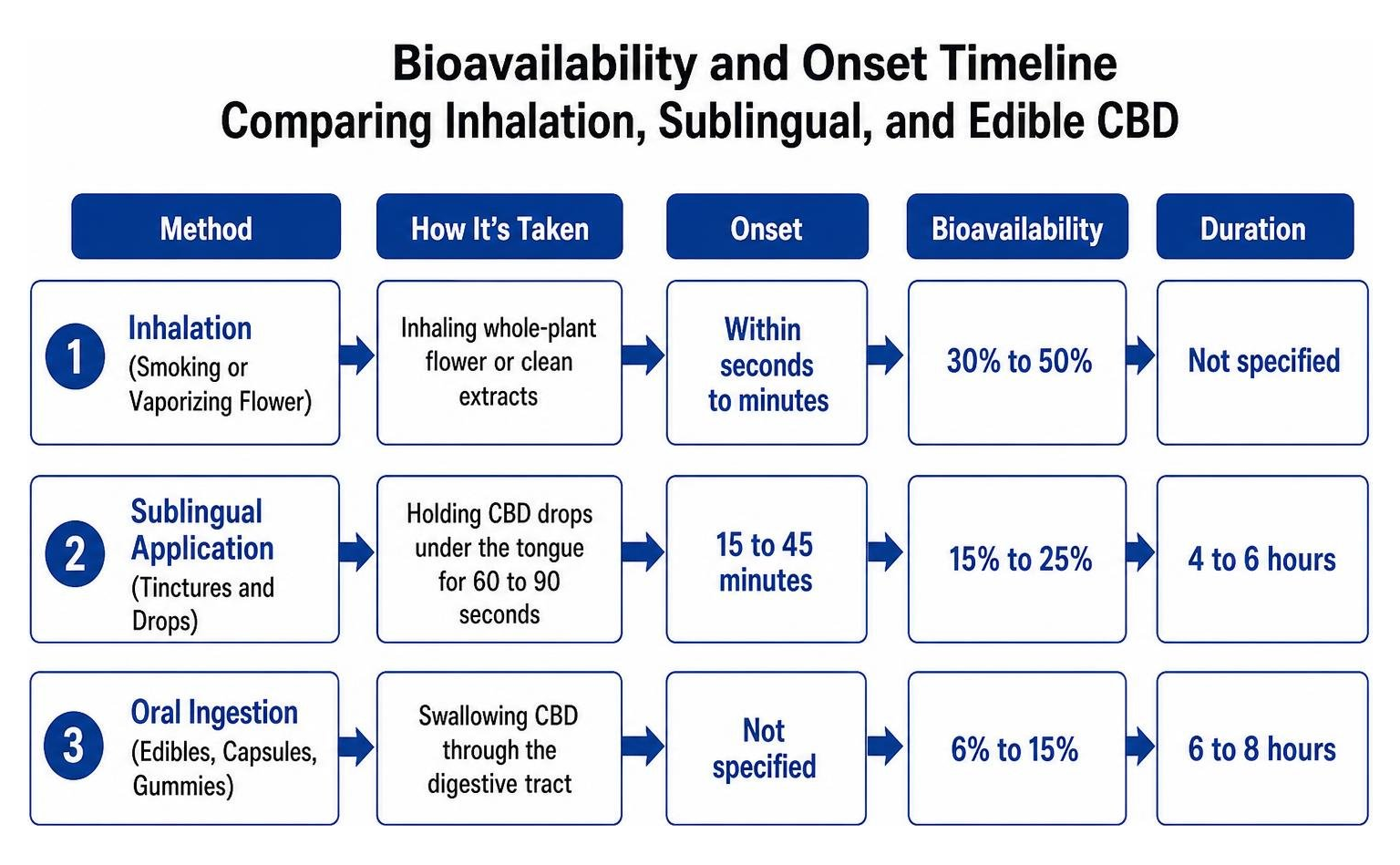
- Inhalation (Smoking or Vaporizing Flower): Inhaling whole-plant flower or clean extracts offers the highest systemic bioavailability (roughly 30% to 50%). Because active cannabinoids bypass liver metabolism and enter the bloodstream directly through lung capillaries, onset occurs within seconds to minutes, making CBD pre rolls online a popular choice for immediate relief.
- Sublingual Application (Tinctures and Drops): Holding CBD drops under the tongue for 60 to 90 seconds allows active ingredients to absorb directly through sublingual mucous membranes. Bioavailability ranges between 15% and 25%, with effects taking hold in 15 to 45 minutes and lasting 4 to 6 hours.
- Oral Ingestion (Edibles, Capsules, Gummies): Swallowing CBD subjects it to the digestive tract and first-pass hepatic metabolism in the liver. While systemic bioavailability drops to 6% to 15%, the converted metabolites offer an extended duration of effect, lasting 6 to 8 hours.
- Topical Application (Balms, Creams, Salves): Applied directly to skin over joints or sore muscle groups, topicals work locally without significant absorption into the bloodstream.
Safety Considerations, Drug Interactions, and Dosage Protocols
CBD is generally well-tolerated, but it is not completely free of side effects. High doses can cause mild drowsiness, dry mouth, changes in appetite, or temporary digestive upset.
The most important clinical safety consideration is CBD’s interaction with the cytochrome P450 (CYP450) enzyme family in the liver—particularly CYP3A4 and CYP2C19 (Hilderbrand, 2018). Because CBD temporarily slows down these metabolic pathways, it can alter how your body processes certain prescription medications (similar to the "grapefruit warning"). Always consult your physician before combining hemp extracts with prescription pharmaceuticals.
For human dosing, start low and go slow. A sensible starting routine begins with 10 to 20 mg of CBD daily. Track your response over 5 to 7 days before gradually increasing your serving size by 5 to 10 mg until you reach your desired level of comfort.
Quality Standards, Legal Landscape, and Cultivation Economics
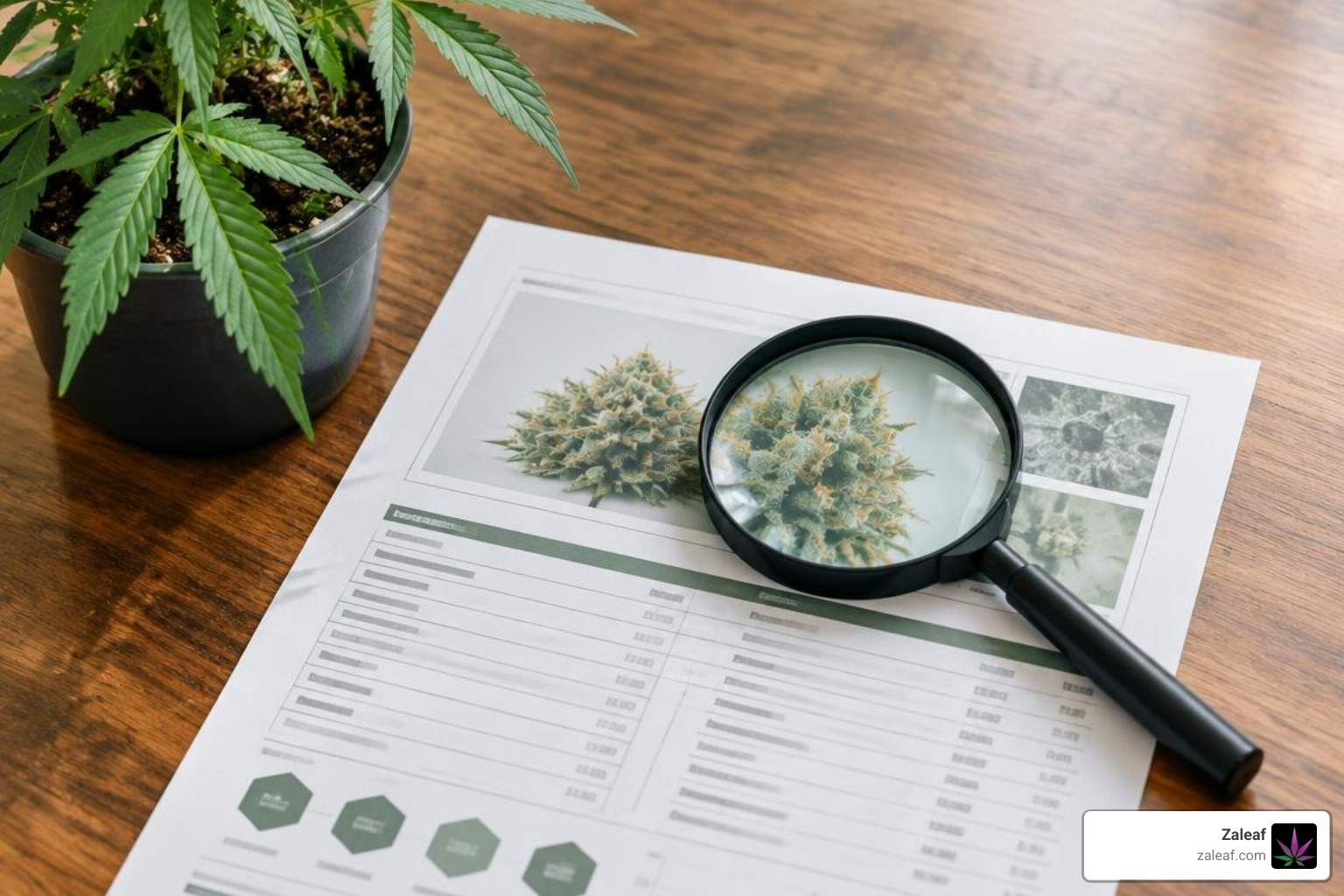
How to Read a Certificate of Analysis (COA) and Verify Purity
Because the retail hemp market features varying levels of manufacturing quality, learning how to review a Certificate of Analysis (COA) is essential. A COA is an analytical document issued by an independent, ISO/IEC-accredited testing laboratory.
When reviewing a COA, verify the following:
- Cannabinoid Profile & Potency: Ensure the measured milligrams of CBD, CBDA, and minor cannabinoids match what is printed on the product label.
- THC Thresholds: Confirm that Delta-9 THC levels do not exceed the legal limit of 0.3% on a dry-weight basis.
- Heavy Metal Screening: The test must confirm that lead, arsenic, cadmium, and mercury fall well below safe parts-per-billion (ppb) safety limits.
- Residual Solvent & Pesticide Analysis: Supercritical CO2 or clean ethanol extracts should show non-detectable levels of chemical solvents, agricultural pesticides, and fungicides.
- Microbiological Contaminants: Screenings must be clean of mold, yeast, salmonella, E. coli, and mycotoxins.
At Zaleaf, all our products undergo comprehensive third-party lab testing. Whether you are selecting loose whole-plant buds or specialized third party tested CBD vape cartridge options, you can count on clean, reliable formulas with no ID or medical card required.
Global Legal Status and Agricultural Trends in Hemp Cultivation
The agricultural footprint of CBD-rich hemp has expanded dramatically across the globe. In the United States, the 2018 Farm Bill permanently removed hemp containing up to 0.3% THC from the Controlled Substances Act, establishing a federally legal commercial framework.
Across Europe, hemp cultivation has grown just as quickly. European acreage increased from 8,000 hectares in 2011 to over 33,000 hectares in 2016, supported by updated regulations permitting up to 0.3% THC for certified industrial cultivars. Modern seed genetics demonstrate feminization rates of 99.9% and CBD biomass concentrations between 8% and 16%, minimizing the risk of crop loss from unwanted male pollination.
From an economic perspective, the broader cannabis and industrial hemp market was valued at USD 14.5 billion in 2018 and is projected to reach USD 107.67 billion by 2025. In the US alone, regulated cannabis channels generated nearly USD 3 billion in tax revenue in 2022, while nationwide legalization models suggest potential annual tax revenues of USD 8.5 billion across all states. In Canada, adult-use legal markets have generated roughly CAD 11 billion in sales since 2018, contributing an estimated CAD 43.5 billion to national GDP.
Frequently Asked Questions About CBD-Rich Hemp
Will CBD-rich hemp flower get you high?
No. CBD-rich hemp flower contains 0.3% or less Delta-9 THC by dry weight, which is not enough to cause an intoxicating high. Users typically report feeling clear-headed, grounded, and physically relaxed without mental fog or perceptual changes.
What is the difference between full-spectrum, broad-spectrum, and CBD isolate?
- Full-Spectrum: Contains the complete array of natural cannabinoids (including up to 0.3% legal THC), terpenes, and flavonoids to maximize the entourage effect.
- Broad-Spectrum: Undergoes specialized filtration to remove detectable THC while preserving other natural cannabinoids and terpenes.
- CBD Isolate: Pure, crystallized cannabidiol isolated from all other plant compounds, testing at 99%+ purity with zero THC.
How should beginners determine their ideal CBD dosage?
Start with a low baseline dose based on your body weight (around 0.2 to 0.5 mg of CBD per pound of body weight per day) or a flat 10 to 15 mg serving. Maintain that amount for several days while monitoring your sleep quality, comfort, and stress levels. If you need more support, step your serving size up gradually each week.
Conclusion
Understanding CBD-rich hemp begins with appreciating its rich botanical profile. By pairing dominant concentrations of non-intoxicating cannabidiol with rich terpene profiles, these versatile plants provide broad wellness support for both humans and our four-legged companions.
Whenever you explore CBD products, prioritize quality, transparency, and verified safety. At Zaleaf, we specialize in high-potency genetics with enhanced cannabinoid and terpene profiles tailored for specific moods and effects. We back everything we make with accredited third-party testing, fast shipping, and discreet packaging to ensure a smooth, dependable experience.
Discover what clean, high-terpene botanical products can do for your daily routine by exploring our premium, fresh collection of fresh cannabis flower today.
References
Hilderbrand RL. "Hemp & Cannabidiol: What is a Medicine?." Missouri medicine, 2018. PMCID PMC6140266. Ayodeji O. Oriola, Pallab Kar, Adebola O. Oyedeji. "Cannabis sativa as an Herbal Ingredient: Problems and Prospects." Molecules, 2024. DOI 10.3390/molecules29153605.