

Paws and Reflect on the Science of Dog CBD Oil

Why Dog CBD Oil Is Worth Understanding Before You Buy

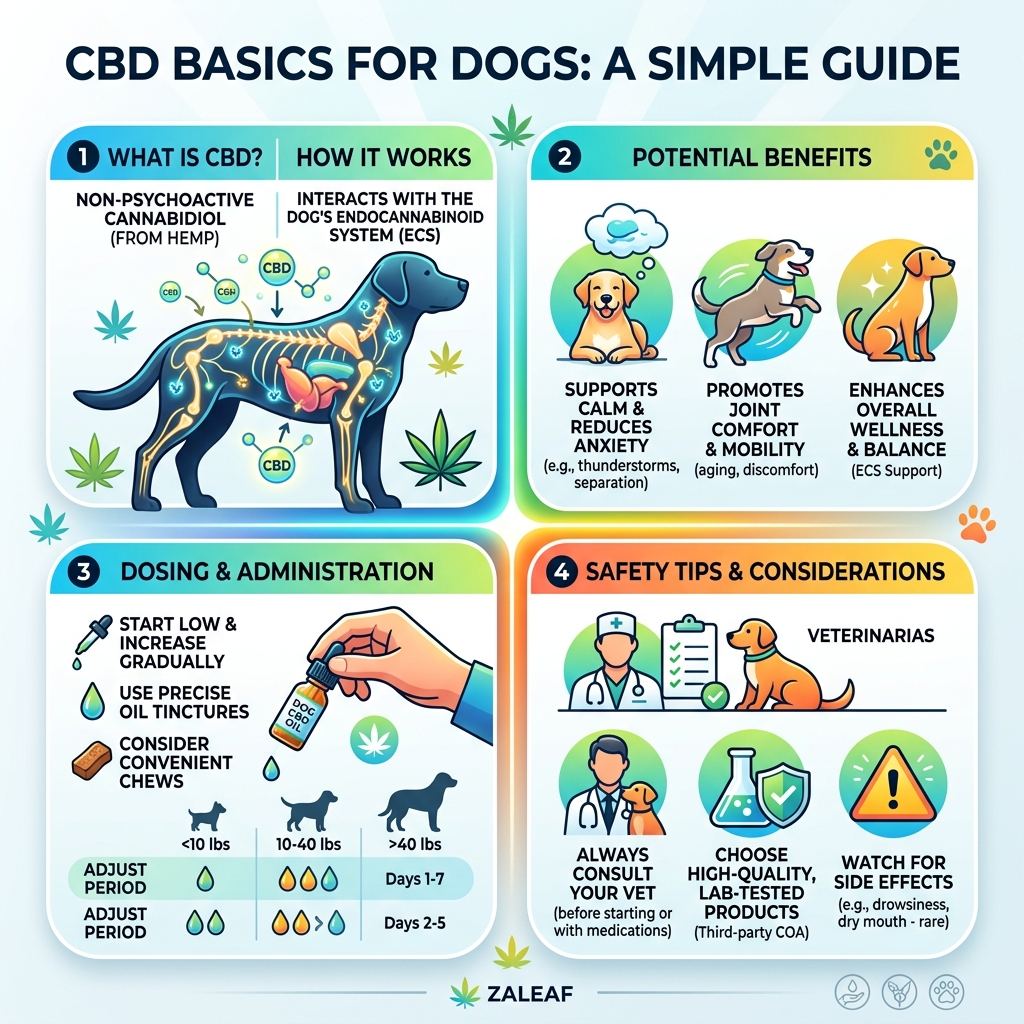
Dog CBD oil is a hemp-derived supplement that may help support your dog's calm, comfort, and overall wellness — without causing any "high."
Here's a quick snapshot of what you need to know:
| Topic | Key Facts |
|---|---|
| What it is | Non-psychoactive cannabidiol (CBD) from hemp plants |
| How it works | Interacts with your dog's endocannabinoid system (ECS) |
| Main uses | Anxiety, joint discomfort, mobility, general wellness |
| Safety | Generally well-tolerated; start low, increase gradually |
| Legal status | Federally legal under the 2018 Farm Bill (under 0.3% THC) |
| Best form | Oil tinctures for precise dosing; chews for convenience |
| When to see a vet | Always consult before starting, especially if your dog is on medication |
More pet owners than ever are turning to CBD to help their dogs cope with everyday stress, aging joints, and anxious moments like thunderstorms or car rides. The science is still developing, but early research and millions of real-world experiences point to real potential — when you choose the right product and dose it correctly.
This guide breaks down exactly how CBD works in dogs, what the research actually says, and how to choose and use it safely.
I'm Max Shemesh, founder and CEO of Zaleaf, and I've spent years in the hemp and cannabinoid industry helping pet owners find high-quality, lab-tested dog CBD oil they can trust. My focus has always been on transparency and formulation quality — because what goes into your dog's body matters just as much as what goes into yours.
Dog cbd oil further reading:
The Science of the Endocannabinoid System and Dog CBD Oil
To understand why dog cbd oil works, we first have to look at a biological system that every mammal—from humans to Great Danes—possesses: the Endocannabinoid System (ECS). Think of the ECS as the body’s "master regulator." Its primary job is to maintain homeostasis, which is a fancy scientific way of saying "keeping everything in balance."
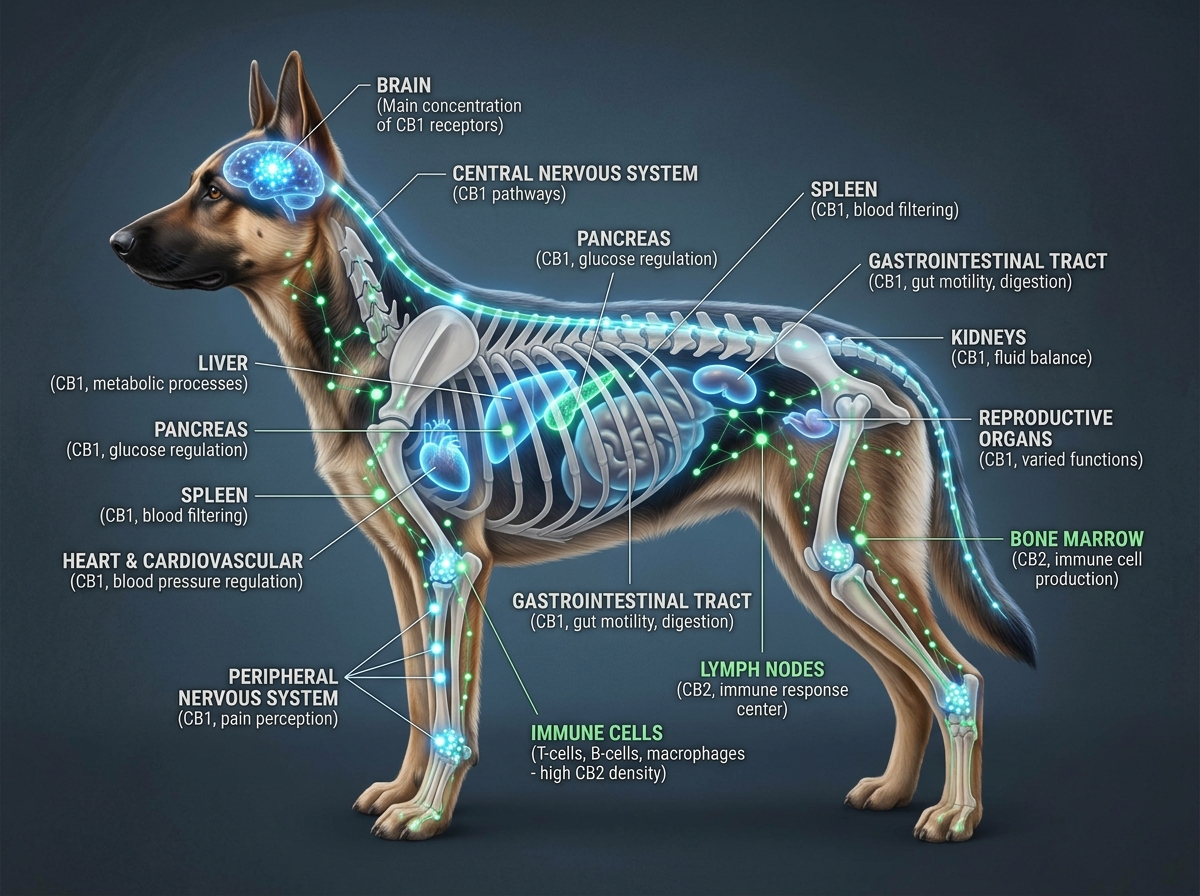
The ECS is made up of a vast network of receptors located throughout your dog's brain, central nervous system, organs, and immune cells. When your dog's body faces a challenge—like a scary thunderstorm or a long hike that leaves their joints stiff—the ECS kicks in to help the body return to its normal, peaceful state.
How CBD Interacts with the ECS
Unlike THC (the compound in cannabis that makes you feel "high"), CBD does not bind directly to the main receptors in the ECS. Instead, it acts more like a friendly assistant. It encourages the body to use its own natural endocannabinoids more effectively and interacts with other vital receptors:
- CB1 Receptors: Mostly found in the brain and nervous system; they handle mood and pain.
- CB2 Receptors: Primarily in the immune system; they manage inflammation.
- TRPV1: These are "vanilloid" receptors that play a role in pain perception and inflammation.
- 5-HT1A: These are serotonin receptors. By activating these, CBD can produce an anti-anxiety effect without the grogginess of traditional sedatives.
By supporting these pathways, dog cbd oil helps your pet maintain a steady internal environment, which is why it’s often used for such a wide variety of conditions. For a deeper dive into the mechanics, check out our comprehensive guide on CBD oil for dogs.
Safety and Tolerability: What the Research Says
As pet parents, our first question is always: "Is it safe?" Fortunately, the scientific community has been hard at work answering that. Recent clinical studies have provided a wealth of data regarding how well dogs tolerate hemp-derived supplements.
Key Scientific Findings
Research published in the American Journal of Veterinary Research conducted a study on healthy Beagles. They found that repeated oral administration of CBD at doses ranging from 1 mg/kg up to a massive 12 mg/kg was well-tolerated over 28 days, with no clinically significant adverse effects observed. You can read the full study here.
Furthermore, the National Animal Supplement Council (NASC) conducted a 90-day study showing that broad-spectrum CBD, as well as blends containing CBG and CBDA, were well-tolerated in healthy dogs at 5 mg/kg body weight. This is a significant milestone for the industry, as it proves that daily, long-term use is generally safe for our furry friends. More details on the NASC study are available here.
Another 2024 study found that even giving broad-spectrum CBD at 4 mg/kg twice daily for a full six months resulted in no significant adverse effects on clinical health parameters. Read the 2024 study on PubMed Central.
Potential Side Effects to Watch For
While dog cbd oil is remarkably safe, some dogs may experience mild side effects, especially when first starting or if given a very high dose:
- Drowsiness: Your dog might take an extra-long nap.
- Dry Mouth: You might notice them drinking more water.
- Gastrointestinal Upset: Occasionally, the carrier oil (like MCT oil) can cause soft stools.
- Lowered Blood Pressure: High doses can cause a temporary drop in blood pressure, which might make the dog feel slightly lightheaded.
If you are caring for an older pup, it's worth looking into how these supplements can specifically help with the challenges of aging. Explore our resources on senior dog CBD for more specialized advice.
Therapeutic Benefits for Mobility and Anxiety
Why are people actually buying dog cbd oil? While the ECS helps with overall balance, two areas stand out in the research: joint health and emotional wellness.
Support for Joints and Mobility
As dogs age, the wear and tear on their joints can lead to stiffness and discomfort. A randomized, double-blind, placebo-controlled study showed that daily consumption of CBD helped support joint health and comfort in canines. In fact, some reports indicate that up to 80% of dogs become more active after starting a high-quality CBD regimen.
By addressing the underlying inflammation through the CB2 receptors, CBD helps maintain fluid movement, whether your dog is a high-energy athlete or a senior who just wants to make it up the stairs more easily. View the study on joint support here.
Calming the Anxious Mind
Separation anxiety, car travel, and noise phobias (like fireworks) are incredibly common. Research in Frontiers in Veterinary Science shows that CBD positively influences dogs during stressful events like car rides or being left alone.
Unlike some pharmaceutical options that "knock a dog out," CBD encourages a calm, relaxed demeanor without inducing heavy lethargy. It helps them feel "chill" rather than sedated. Read more on CBD for separation stress.
Benefit Comparison Table
| Condition | Primary Goal | How CBD Helps |
|---|---|---|
| Mobility | Improved Movement | Supports healthy inflammatory response in joints |
| Anxiety | Relaxation | Interacts with serotonin receptors to lower stress |
| Wellness | Homeostasis | Balances the ECS for better sleep and appetite |
| Senior Care | Quality of Life | Manages the "aches and pains" of graceful aging |
How to Choose and Administer High-Quality CBD
Not all dog cbd oil is created equal. Because the pet supplement market is less regulated than human medicine, the burden of quality control often falls on the manufacturer—and the pet parent.
Identifying Premium Dog CBD Oil Quality
When shopping, you should look for several "gold standard" markers of quality:
- Full-Spectrum vs. Broad-Spectrum: Full-spectrum contains all the natural cannabinoids and terpenes of the hemp plant (including <0.3% THC), which creates an "entourage effect" where the compounds work better together. Broad-spectrum is similar but has the THC completely removed.
- USDA Organic: This ensures the hemp was grown without pesticides, heavy metals, or synthetic fertilizers. Hemp is a "bioaccumulator," meaning it soaks up whatever is in the soil—so clean soil is mandatory.
- Third-Party Testing (COA): Never buy a product that doesn't have a Certificate of Analysis (COA) available. This lab report verifies that what is on the label is actually in the bottle.
- CO2 Extraction: This is the cleanest method for extracting oil. It doesn't use harsh solvents like butane or ethanol that could leave toxic residues behind.
- NASC Quality Seal: This seal indicates the company has passed a comprehensive facility audit and maintains strict quality control standards.
For those who find oil tinctures a bit messy, there are other options. You can read the complete guide to pet CBD treats to see if bites or soft chews are a better fit for your lifestyle.
How to Dose Dog CBD Oil Effectively
Dosing isn't a "one size fits all" situation. It depends on your dog's weight, metabolism, and the severity of the issue you're trying to address.
- The Golden Rule: Start low and go slow.
- Standard Starting Dose: A common recommendation is 0.1 to 0.2 mg of CBD per pound of body weight, given twice daily.
- Titration: Give the starting dose for about 5–7 days. If you don't see the desired results, slightly increase the amount and observe for another week.
- Administration: For the fastest absorption, apply the oil sublingually (under the tongue) or onto the gums. If your dog is wiggly, using it as a food topper works too, though it may take slightly longer to kick in (45–90 minutes).
If you're ready to start your journey, you can shop the best CBD for cats and dogs to find a formula that fits your pet's needs.
Frequently Asked Questions
How long does it take for CBD to work in dogs?
It depends on the method of administration and the condition. For situational anxiety (like a thunderstorm), you might see a "chill" effect within 30 to 90 minutes if given on an empty stomach. For chronic issues like joint stiffness, it may take 2 to 4 weeks of consistent daily use for the CBD to build up in the system and show significant results.
Is CBD oil legal for pets?
Yes, hemp-derived CBD is federally legal in the United States under the 2018 Farm Bill, provided it contains less than 0.3% THC. However, state laws can vary slightly, so it is always a good idea to check your local regulations. At Zaleaf, we ensure all our products meet federal standards for legal transport and use.
Can I give my dog human CBD oil?
Technically, CBD is CBD, but we strongly advise against using human products for dogs. Human CBD oils often contain Xylitol (an artificial sweetener that is highly toxic to dogs) or flavorings like chocolate or grape that can be harmful. Additionally, the concentration in human bottles is often much higher, making it very easy to accidentally overdose a small pet. Stick to pet-specific formulas that use dog-friendly carriers like MCT oil or wild Alaskan salmon oil.
Conclusion
At Zaleaf, we believe that every dog deserves to live their best, most comfortable life. Whether you’re looking to soothe a nervous pup during a move or help an old friend rediscover their "zoomies," dog cbd oil offers a natural, science-backed path to wellness.
Our commitment to you is simple: 100% legal cannabis products, fast shipping, and discrete packaging. We specialize in enhancing cannabinoid and terpene profiles for mood-specific effects, ensuring your pet gets exactly what they need. All our products undergo rigorous 3rd party testing, and because we follow federal hemp guidelines, no ID or medical card is required to help your dog feel their best.
Ready to explore how cannabinoids can improve the lives of both you and your pet? Explore the best of both worlds and see how our tailored profiles can make a difference today.