

CBD Oil for Dogs: Top Picks for Calming, Joint & Digestion Support

Why CBD Oil for Dogs Is Gaining Scientific Attention

CBD oil for dogs has become one of the most talked-about wellness supplements for pets, but separating evidence from hype requires understanding what the research actually shows. If you're considering CBD for your canine companion, here's what matters most:
Quick Guide to CBD Oil for Dogs:
| What You Need to Know | Key Facts |
|---|---|
| Legal Status | Hemp-derived CBD with ≤0.3% THC is federally legal under the 2018 Farm Bill |
| Research-Backed Benefits | Studies show promise for osteoarthritis pain (80%+ improvement), seizure reduction (33-42%), and anxiety relief (83% stress decrease) |
| Safety Concerns | No FDA approval for pets; product quality varies significantly—only 10 of 29 tested products contained accurate CBD levels |
| Top Consideration | Always consult your veterinarian before starting CBD, especially if your dog takes other medications |
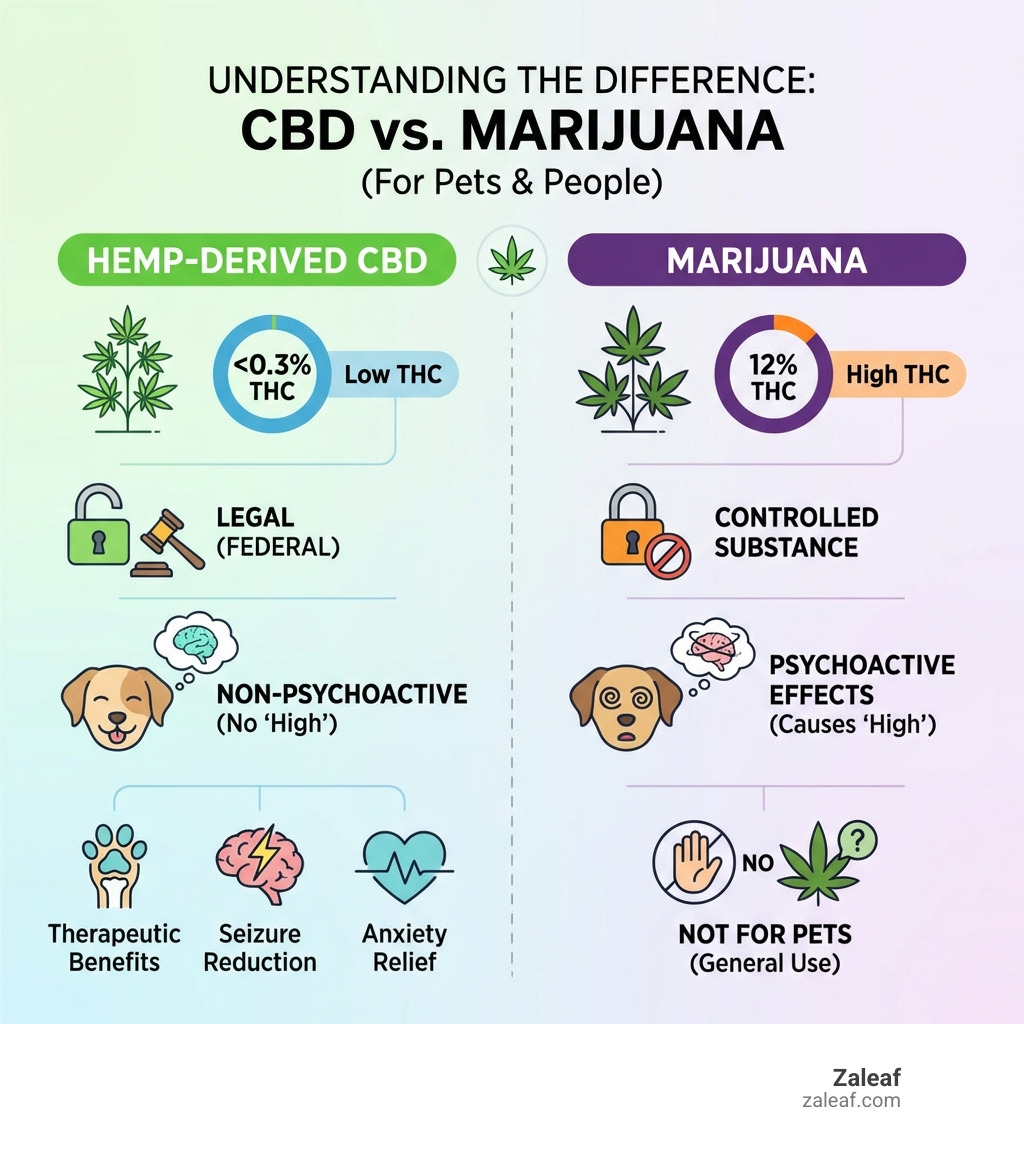
CBD (cannabidiol) is extracted from hemp plants containing no more than 0.3% THC—dramatically different from marijuana's 12% THC content. This distinction matters because CBD doesn't cause a "high" but may interact with your dog's endocannabinoid system to support pain management, reduce inflammation, and promote calm behavior.
The science is compelling but incomplete. Cornell researchers found that more than 80% of dogs with osteoarthritis experienced decreased pain when given CBD oil. Another study showed 65% of dogs with atopic dermatitis (itchy skin allergies) had at least a 50% reduction in symptoms. For dogs with anxiety, 83% showed decreased stress behaviors when given CBD chews before stressful events.
But here's the catch: CBD products for pets aren't regulated by the FDA. A study examining 29 CBD pet products found heavy metal contamination in four products, no cannabinoids whatsoever in two products, and only 10 products within 10% of their label claims. This quality inconsistency makes choosing a trustworthy product critical.
I'm Max Shemesh, Owner & CEO of Zaleaf, and I've spent years in the cannabinoid industry ensuring every product meets rigorous third-party testing standards—especially when it comes to cbd oil for dogs where quality directly impacts your pet's health. My focus has always been on transparency and purity, which is why Zaleaf products undergo independent lab verification for every batch.
Cbd oil for dogs word list:
Understanding the Basics of CBD for Pets
When we talk about CBD for our furry friends, the first thing we need to clear up is the plant source. Most high-quality cbd oil for dogs is derived from the hemp plant. By law, industrial hemp must contain no more than 0.3% THC (tetrahydrocannabinol). In contrast, the marijuana plant typically contains around 12% THC. This is a massive difference! THC is the psychoactive component that makes people feel "high," and it can actually be quite toxic to dogs in large amounts.

So, how does it work? Dogs, like humans, have an endocannabinoid system (ECS). This is a complex cell-signaling system that plays a role in regulating a range of functions and processes, including sleep, mood, appetite, and pain. The ECS consists of receptors (CB1 and CB2) located throughout the body, particularly in the nervous system and immune system. When we introduce cannabinoids like CBD, they interact with these receptors to help maintain bodily balance (homeostasis).
Research into the scientific research on CBD pharmacokinetics has shown that dogs metabolize CBD differently than we do. For instance, their oral bioavailability is often lower than 19%, and they produce specific metabolites like 6-OH-CBD that aren't as prevalent in humans. This is why using a product specifically formulated for pets is so important—we can't just guess based on human data.
Is cbd oil for dogs Legal and Approved?
Navigating the legal landscape of CBD can feel like trying to find a lost ball in tall grass. The 2018 Farm Bill federally legalized hemp and its derivatives, provided they stay under that 0.3% THC threshold. However, this doesn't mean the FDA has given its "stamp of approval" for CBD in pet food or supplements.
Currently, CBD is not FDA-approved for use in animals, and it cannot be legally marketed as a dietary supplement for pets. This creates a "gray area" where regulations vary by state. In some states, veterinarians are strictly prohibited from recommending or even discussing CBD with clients. In others, they can discuss it but not "prescribe" it.
The bottom line for us? Always check your local state laws and, most importantly, talk to your vet. Even if they can't give you a specific brand recommendation, they can help monitor your dog's health and check for potential issues.
Scientific Benefits of CBD for Canine Health
We love our dogs, and seeing them in pain or distressed is heartbreaking. Fortunately, modern science is starting to back up the anecdotal stories we've heard for years. Clinical trials have investigated CBD for several major conditions.
| Condition | Research Finding | Key Study Source |
|---|---|---|
| Osteoarthritis | 80%+ dogs showed significant pain reduction and increased activity. | Cornell University |
| Epilepsy | 33-42% reduction in seizure frequency when used as an adjunct therapy. | Colorado State / Garcia et al. |
| Atopic Dermatitis | 65% of dogs had a 50%+ reduction in itching and chewing. | Clinical Research Study |
| Anxiety | 83% reduction in stress-related behaviors during triggers. | Cornell / Morris et al. |
Whether you have a puppy struggling with separation or a senior dog CBD user looking for mobility support, the evidence suggests that CBD can be a powerful therapeutic adjunct.
Managing Anxiety and Stress with cbd oil for dogs
Does your dog hide under the bed during thunderstorms? Or perhaps they turn into a "velcro dog" the second you pick up your car keys? Anxiety is a major issue for many pups. CBD interacts with the receptors in the nervous system to promote a sense of relaxation without the heavy sedation associated with some pharmaceutical "doggy downers."
In a Cornell study, researchers found that 83% of dogs given CBD chews prior to a stressful event showed a decrease in stress or anxiety-related behaviors. This is a game-changer for owners dealing with noise phobias or separation anxiety. For a deeper dive into the mechanics of this, check out our detailed guide to CBD oil for stress effectiveness.
Support for Mobility and Joint Health
As dogs age, their joints often start to creak. Osteoarthritis is one of the most common reasons pet parents seek out cbd oil for dogs. The Cornell study mentioned earlier is particularly famous in the vet world because it showed that over 80% of dogs with osteoarthritis experienced a decrease in pain, allowing them to be more active and enjoy a better quality of life.
While we focus on dogs here, it's worth noting that our feline friends suffer too. If you also have a cat at home, you might find our feline arthritis and mobility guide helpful for managing their golden years.
Safety, Side Effects, and Potential Risks
Is CBD safe? Generally, yes—but it isn't without risks. The biggest concern isn't the CBD itself, but the lack of regulation in the industry. As we noted in the intro, a study on CBD product contamination and labeling found that some products contained heavy metals like lead or arsenic, while others had absolutely no CBD in them at all.
Common side effects in dogs include:
- Dry Mouth: CBD can decrease the production of saliva, making your dog extra thirsty.
- Drowsiness: Especially at higher doses, CBD can cause slight lethargy or somnolence.
- Lowered Blood Pressure: High doses can cause a temporary drop in blood pressure, which might lead to a brief feeling of lightheadedness.
- Appetite Changes: Some dogs might get the "munchies," while others might show a slight decrease in interest in food.
Perhaps most importantly, CBD can affect liver enzymes, specifically the cytochrome P450 family. These enzymes are responsible for metabolizing many common medications.
Potential Drug Interactions
If your dog is on other medications—especially phenobarbital for seizures or certain NSAIDs for pain—you must be cautious. Because CBD "occupies" the liver enzymes needed to break down these drugs, it can cause the levels of other medications in the bloodstream to rise to potentially toxic levels.
We always recommend regular bloodwork to monitor liver values (specifically ALP) if your dog is on long-term CBD. While an elevation in ALP is common and often reversible, it's something your vet needs to keep an eye on to ensure your dog's liver is functioning happily.
Choosing the Best cbd oil for dogs
With thousands of brands out there, how do you pick a winner? At Zaleaf, we believe in the "three pillars" of pet CBD quality:
- 3rd Party Testing: Never buy a product that doesn't have a Certificate of Analysis (COA) available. This document proves the product was tested by an outside lab for purity and potency.
- Heavy Metal Screening: Because hemp is a "phytoremediator" (meaning it sucks up everything in the soil), it's prone to heavy metal contamination. Ensure the lab report specifically clears the product of lead, mercury, and arsenic.
- Label Accuracy: Research shows only about 34% of pet CBD products are accurately labeled. Look for brands that guarantee their cannabinoid concentration within 10% of the label claim.
If you're unsure whether to go with an oil or a snack, our complete guide to pet CBD treats breaks down the pros and cons of each format.
How to Administer CBD Safely
Dosing isn't "one size fits all." A general rule of thumb is to start with 0.1 to 0.2 mg of CBD per pound of body weight, twice daily.
- Tinctures (Oils): These are the gold standard for precision. You can adjust the dose drop-by-drop. For the fastest absorption, try "oral transmucosal delivery"—basically, dropping the oil directly onto the gums or under the tongue.
- Edibites/Chews: These are great for dogs who are picky or for situational stress (like a car ride). They usually take longer to kick in (60-90 minutes) compared to oils (15-30 minutes).
Consistency is key. CBD builds up in the system over time, so you'll see better results with daily use than with sporadic dosing. Ready to find the perfect fit? You can shop the best CBD for cats and dogs right here at Zaleaf.
Frequently Asked Questions about Canine CBD
Can CBD oil make my dog feel "high"?
No. As long as you are using hemp-derived CBD with less than 0.3% THC, your dog will not experience psychoactive effects. They might feel a bit sleepy or "mellow," but they won't be intoxicated.
How long does it take for CBD to work in dogs?
For oils administered to the gums, you might see effects in 20 to 30 minutes. For treats that need to be digested, it usually takes 60 to 90 minutes. The effects typically last between 4 to 8 hours, though this varies based on your dog's metabolism and activity level.
Can I give my dog CBD oil made for humans?
Technically, CBD is the same molecule, but we strongly advise against it. Human products are often much more concentrated, making it easy to accidentally overdose a small dog. Furthermore, some human CBD oils contain sweeteners like Xylitol, which is highly toxic to dogs. Always stick to pet-specific formulations to be safe.
Conclusion
At Zaleaf, we know your dog is more than just a pet—they're family. That’s why we’ve dedicated ourselves to providing 100% legal, high-quality cannabis products that you can trust. Every bottle of our cbd oil for dogs undergoes rigorous 3rd party lab testing to ensure it’s free from contaminants and accurately dosed.
We specialize in enhancing specific cannabinoid and terpene profiles to help you achieve the exact "mood" your dog needs—whether that’s calming a nervous pup or supporting a senior dog’s morning walk. With our fast shipping and discrete packaging, getting the support your dog needs has never been easier. Plus, no ID or medical card is required to order.
If you’re interested in how different cannabinoids work together, you might want to explore the best of both worlds with CBD and Delta-8. While Delta-8 is for the humans in the house, understanding the full spectrum of hemp can help you make better choices for your entire family!