

Shop the Best CBD for Cats: Drops, Tinctures, and Treats
Why Cat Owners Are Turning to CBD for Natural Wellness
CBD for cats is a go-to natural wellness option for pet parents. Whether you want to support your cat's mobility, ease anxiety, or promote overall wellness, CBD products for cats—like oils, tinctures, and treats—offer a promising solution.
Quick Guide to CBD for Cats:
- What it is: Cannabidiol (CBD) is a non-intoxicating compound from the hemp plant that interacts with your cat's endocannabinoid system
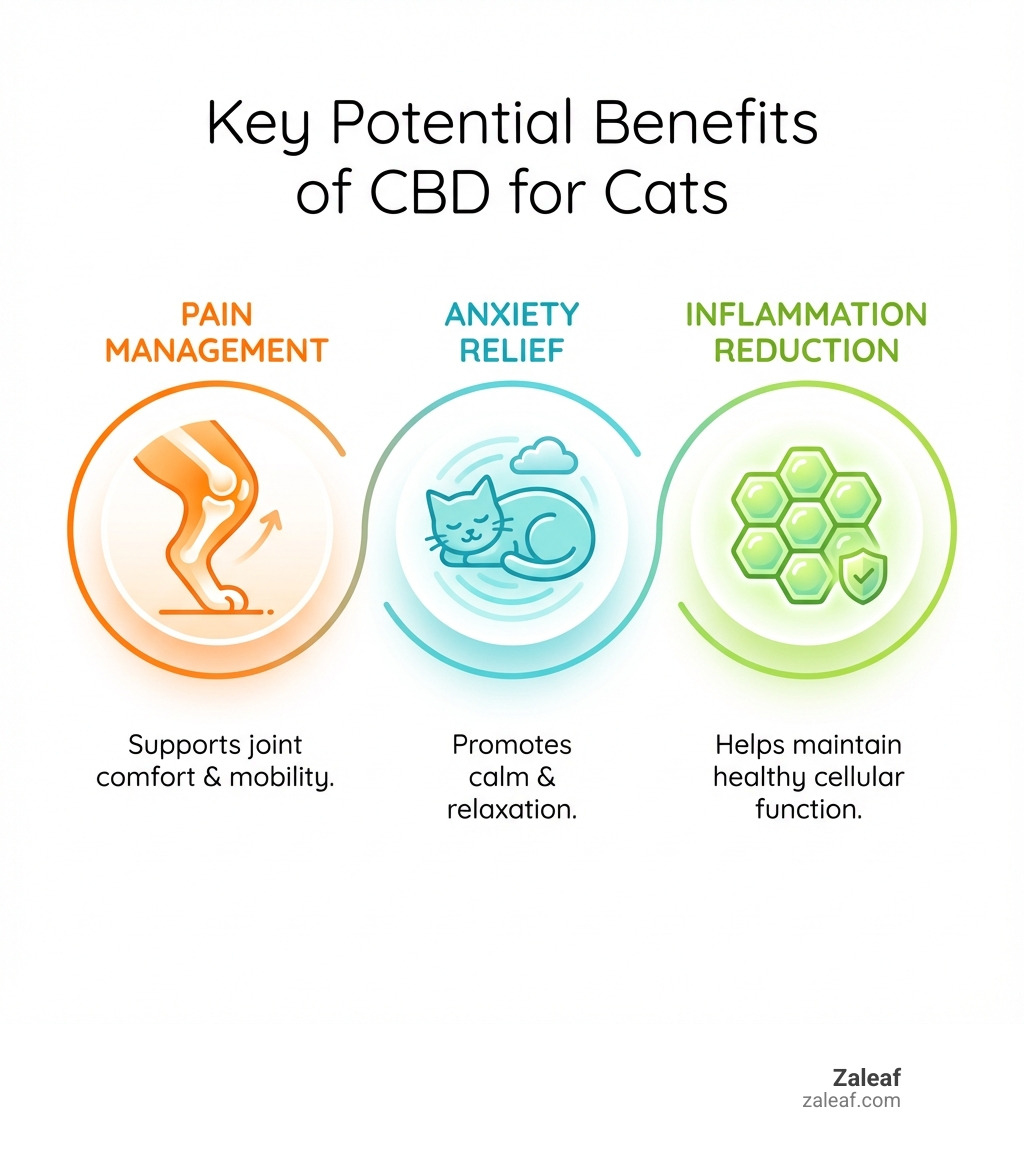
- Potential benefits: May help with pain, inflammation, anxiety, stress, and appetite issues
- Product types: Oils/tinctures (flexible dosing), treats (easy administration), and topical balms
- Safety: Generally safe when used correctly; choose products with less than 0.3% THC and third-party lab testing
- Dosage: Start low and go slow; consult your veterinarian for personalized guidance
Watching a beloved cat struggle with discomfort, anxiety, or age-related issues is heartbreaking. Many owners now seek natural alternatives to traditional medications that support wellness without harsh side effects.
Studies suggest that CBD displays anti-inflammatory, antioxidant, anti-anxiety, and pain-relieving qualities in animals. A 2018 study on veterinary CBD use found oil extracts and edibles were most helpful for pain relief, reducing anxiety, and addressing neurological issues. While research on cats is emerging, evidence from dogs with similar conditions—like osteoarthritis—shows promising results for improved mobility and reduced pain.
The challenge? Not all CBD products are equal. With minimal FDA oversight, choosing a safe, effective option requires care. You need third-party tested products formulated for pets with the right cannabinoid profile for your cat's needs.
I'm Max Shemesh, Owner & CEO of Zaleaf, and I've spent years in the hemp and cannabinoid industry ensuring pet parents have access to the highest-quality CBD for cats through transparent testing and innovative formulations. Let me guide you through everything you need to know to make an informed choice for your feline friend.
Basic CBD for cats terms:
Understanding CBD and Your Cat's Body
Before we dive into the exciting world of CBD for cats, let's clarify what CBD is and how it interacts with your feline friend's unique physiology. Understanding these basics will empower you to make informed decisions for their well-being.
What is CBD?
CBD, short for cannabidiol, is a natural phytochemical agent derived from the Cannabis sativa plant, commonly known as hemp. Unlike its more famous cousin, tetrahydrocannabinol (THC), CBD is non-intoxicating. This means it won't get your cat "high." Instead, it's celebrated for its potential therapeutic properties, which include anti-inflammatory, analgesic (pain-relieving), and anti-anxiety effects. It's one of over 100 chemical compounds, called cannabinoids, found in the cannabis plant.
The Endocannabinoid System (ECS)
So, how does CBD work its magic in our feline companions? The answer lies in something truly fascinating: the Endocannabinoid System (ECS). This complex biological system is present in all animals with backbones, including our beloved cats. Think of the ECS as a master regulator, constantly working to maintain balance, or homeostasis, throughout the body. It influences crucial physiological processes such as:
- Mood and emotional responses
- Appetite and digestion
- Pain perception
- Sleep
- Immune function
- Inflammation
The ECS consists of endocannabinoids (cannabinoids produced naturally by the body), receptors (CB1 and CB2, found throughout the brain, organs, and immune cells), and enzymes that break them down.
When we introduce external cannabinoids like CBD, they don't directly bind to these receptors in the same way THC does. Instead, CBD interacts with the ECS indirectly, gently nudging it to make better use of its own naturally occurring endocannabinoids. This subtle interaction helps to optimize the ECS's function, supporting the body's natural healing and balancing processes. This indirect action is also why the effects of CBD may take some time to manifest, as it's encouraging the body's own systems to work more efficiently.

Want to dive deeper into how this system works in animals? Explore the endocannabinoid system in animals.
CBD vs. THC: Why the Distinction Matters for Cats
The distinction between CBD and THC is paramount, especially when it comes to our pets. While both are cannabinoids from the cannabis plant, their effects are vastly different:
- CBD (Cannabidiol): As we've discussed, CBD is non-intoxicating and primarily works to support the ECS in maintaining balance. It's associated with therapeutic benefits without any psychoactive effects.
- THC (Tetrahydrocannabinol): This is the psychoactive compound responsible for the "high" associated with marijuana. For cats, THC can be toxic. Cats are particularly sensitive to THC, and even small amounts can cause adverse reactions. Symptoms of THC toxicity can include lethargy, disorientation, drooling, vomiting, tremors, and in severe cases, seizures or coma.
This is why, at Zaleaf, we emphasize the critical importance of choosing CBD for cats products that are derived from hemp and contain less than 0.3% THC. This trace amount is federally legal and ensures that our products are non-habit-forming and will not negatively affect your cat. We prioritize your cat's safety and well-being above all else.
Potential Wellness Benefits of Using CBD for Cats
Seeing our cats happy and healthy is every pet parent's dream. As research on CBD's therapeutic potential grows, many owners are finding it can significantly improve their cat's quality of life.
Studies suggest that CBD for cats displays a remarkable array of beneficial qualities, including anti-inflammatory, antioxidant, anti-anxiety, and pain-relieving properties. A 2018 survey of veterinarians found oil/extracts and edibles most helpful for chronic and acute pain, anxiety, and neurological issues. While much formal research starts with dogs, similar biological systems suggest comparable benefits for cats.
Pain and Inflammation
A compelling reason owners turn to CBD is for pain and inflammation management. Aging cats often suffer from conditions causing discomfort, such as:
- Joint stiffness: Like humans, cats can develop arthritis. A 2018 study on dogs with osteoarthritis showed that CBD oil reduced pain and improved mobility. Since osteoarthritis is also common in cats, this suggests similar benefits for felines. Our older cat friends might find a new spring in their step!
- Mobility issues: Reduced mobility from difficulty jumping or a reluctance to move can impact a cat's happiness. CBD's anti-inflammatory properties may reduce pain by decreasing inflammatory responses and pain perception, making movement more comfortable.
Imagine your senior kitty comfortably jumping onto a low surface again. It’s a wonderful thought!
For a deeper dive into feline mobility issues, check out our guide on Feline Arthritis: A Comprehensive Guide to Your Cat's Mobility.
Anxiety and Stress
Cats are creatures of habit, and routine changes can cause stress and anxiety. Triggers like vet visits, loud noises, or a new pet can lead to hiding, excessive grooming, or even aggression.
CBD for cats may offer a calming effect, helping to alleviate stress and anxiety and promoting a more relaxed disposition. Studies suggest CBD may help manage anxiety in animals, taking the edge off their nervousness. This can be a game-changer for cats who struggle during stressful events.
Appetite Stimulation and Nausea Relief
When a cat loses its appetite, it's often a sign something is amiss. Whether due to illness, stress, or treatment side effects, getting a cat to eat can be a challenge. CBD may help by:
- Improving appetite: Adding CBD oil to a cat's regimen may improve their appetite. (Always rule out underlying health issues with a vet first!)
- Relieving nausea: Studies on humans and rodents suggest CBD may help with nausea, which could translate to benefits for cats with gastrointestinal upset.
General Wellness Support
Beyond specific ailments, CBD for cats is a valuable tool for maintaining overall wellness. It may help:
- Boost the immune system: Some suggest CBD can support a healthy immune response.
- Support healthy aging: By addressing inflammation and discomfort, CBD can improve quality of life for aging cats.
- Maintain healthy joints: Proactive use can help keep inflammation at bay, potentially fending off arthritis symptoms.
For a broader understanding of CBD's scientific validation for managing various conditions in animals, including cats, you can refer to this scientific validation of cannabidiol for management of dog and cat diseases.
Common Conditions CBD for cats May Help Manage
Based on current understanding and anecdotal evidence, CBD for cats may help manage a range of conditions:
- Arthritis symptoms: Managing joint pain and inflammation, especially in older cats.
- Age-related discomfort: General aches and stiffness of senior years.
- Separation anxiety: Helping cats cope when owners are away.
- Situational anxiety: Easing fear during fireworks, car rides, or vet visits.
- Inflammatory bowel disease (IBD): Potentially reducing gut inflammation.
- Chronic pain: From various underlying conditions.
- Diminished appetite: Encouraging eating during illness or recovery.
- General wellness support: Maintaining a healthy, balanced state.
A Buyer's Guide to the Best CBD for Cats
Navigating CBD for cats can feel overwhelming, especially with so many products available. But don't worry, we're here to help you choose the best for your feline companion. At Zaleaf, we believe in transparency and quality, ensuring our products meet the highest standards.
Full-Spectrum, Broad-Spectrum, and CBD Isolate for Pets
When choosing a CBD product, you'll often encounter these three terms. Understanding their differences is key to selecting the right option for your cat:
- Full-Spectrum CBD: This type contains all the cannabinoids, terpenes, flavonoids, and other beneficial compounds naturally found in the hemp plant, including trace amounts of THC (less than 0.3%). The idea here is the "entourage effect," where these compounds work synergistically to improve each other's therapeutic benefits. For many, this is considered the most effective option.
- Broad-Spectrum CBD: This is similar to full-spectrum but goes through an additional process to remove all detectable traces of THC. It still offers the benefits of other cannabinoids and terpenes, providing a milder version of the "entourage effect" without any THC concerns.
- CBD Isolate: This is pure CBD, with all other cannabinoids, terpenes, and plant materials removed. It's 99% pure CBD. While it offers the benefits of CBD, it lacks the "entourage effect" that many believe improves efficacy.
Here's a quick comparison:
| Feature | Full-Spectrum CBD | Broad-Spectrum CBD | CBD Isolate |
|---|---|---|---|
| Cannabinoids | All natural cannabinoids (including <0.3% THC) | All natural cannabinoids (THC removed) | CBD only |
| Terpenes | Yes | Yes | No |
| Flavonoids | Yes | Yes | No |
| "Entourage Effect" | Full | Partial | None |
| THC Content | < 0.3% | 0.0% (non-detectable) | 0.0% |
| Ideal for | Maximum therapeutic benefit, low THC sensitivity | THC-sensitive pets, desire for broad benefits | THC-sensitive pets, pure CBD benefits only |
What to Look For in a High-Quality CBD Product for Your Pet
With the market flooded with options, how can you discern the best from the rest? Here's what we prioritize at Zaleaf and what you should always look for:
- Third-Party Lab Testing & Certificate of Analysis (COA): This is non-negotiable. Reputable brands will send their products to an independent lab to verify the cannabinoid content (ensuring accurate CBD and THC levels) and check for contaminants like pesticides, heavy metals, and residual solvents. Always look for an easily accessible Certificate of Analysis (COA) on the product's website or packaging. This transparency is crucial for safety and efficacy.
- Organic Hemp Source: The quality of the hemp directly impacts the quality of the CBD. Look for products made from organically grown hemp, which means it's free from harmful pesticides and herbicides.
- Safe Extraction Methods: The way CBD is extracted matters. CO2 extraction is generally considered the cleanest and safest method, as it doesn't use harsh chemical solvents.
- Pet-Specific Formulation: Always choose products specifically formulated for pets. Human CBD products might contain ingredients that are harmful to cats or have concentrations that are too high. Additionally, ensure the THC content is consistently below 0.3%.
- Clear Labeling: The product label should clearly state the amount of CBD per serving, the total CBD content, and a full list of ingredients. This helps with accurate dosing.
Product Types: Finding the Right CBD for cats
The best way to administer CBD for cats often depends on your cat's preferences and the specific situation. We offer a variety of options to suit even the most discerning feline palates:
- CBD Oils & Tinctures: These are perhaps the most versatile. Administered with a dropper, oils allow for superior flexibility and precise dosage adjustments. You can give it directly into their mouth (if your cat tolerates it!), mix it into their food, or even gently rub it into their ear tips for absorption. Oils are often faster-acting than treats because they can be absorbed sublingually or through the mucous membranes.
- CBD Treats: For our finicky feline overlords, treats are a fantastic option. They offer convenience and ease of administration, especially for cats who view treats as a reward. Treats are pre-dosed, which is great for consistency, though it can make micro-adjustments a bit trickier. Flavored treats can mask the natural taste of hemp, making them highly palatable. Want to learn more about pet CBD treats? Check out The Complete Guide to Pet CBD Treats.
- Topical Balms: While less common for systemic effects, topical balms can be useful for localized relief. If your cat has a specific area of discomfort on their skin or paws, a CBD-infused balm could provide targeted soothing.
At Zaleaf, we specialize in enhancing cannabinoid and terpene profiles for mood-specific effects, ensuring that whether you choose an oil or a treat, you're getting a product designed for optimal efficacy and your cat's specific needs.
Safe Administration, Dosage, and Side Effects
As responsible pet parents, our cat's safety is paramount. While CBD for cats shows great promise, approach its use with knowledge and caution.
Is CBD Safe for Cats?
Generally, CBD has been shown to be quite safe and helpful to cats when used correctly. Pet-specific CBD products are typically formulated with lower concentrations of CBD compared to human products, which helps minimize the risk of adverse reactions.
However, it's crucial to understand the regulatory landscape: the FDA has not approved most CBD products. This means many supplements haven't been evaluated by the FDA for efficacy, dosage, or safety. You can visit the FDA's page on FDA Regulation of Cannabis Products for more information. This lack of regulation underscores the importance of choosing high-quality, third-party tested products from reputable brands like Zaleaf.
Potential Side Effects
While generally safe, cats can potentially experience adverse effects, especially if given excessive amounts. Adverse reactions are rare but can include:
- Sedation or drowsiness: Your cat might seem unusually sleepy or less active.
- Gastrointestinal upset: This can manifest as nausea, vomiting, or diarrhea.
- Behavioral changes: Though rare, some cats might exhibit pacing or restlessness.
If you observe any unexpected or concerning symptoms after administering CBD, discontinue use and seek guidance from your veterinarian immediately.
Importance of Veterinary Consultation
Always consult your veterinarian before introducing any new supplement, including CBD for cats. This is critical if your cat is on other medications or has pre-existing health conditions. Your vet can provide personalized advice and monitor for potential interactions.
Dosing Guidelines: Start Low, Go Slow
Determining the right dosage for your cat is key to achieving the desired benefits safely. There's no one-size-fits-all answer, as dosage is influenced by several factors:
- Cat's size and weight: Larger cats typically require more CBD than smaller ones.
- Individual response: Every cat is unique; some may be more sensitive to CBD than others.
- Condition being addressed: More severe conditions might require a slightly higher dose than general wellness support.
- Product strength: The concentration of CBD in the product (e.g., mg per ml) will dictate how much you need to administer.
Our best advice? Start low and go slow. Begin with the lowest recommended dose and observe your cat. If you don't see the desired effects after a week, you can gradually increase the dose. This helps you find the "sweet spot" for your cat without overdoing it. While a fatal overdose is unlikely, excessive amounts can increase side effects like drowsiness or an upset stomach.
How to Administer CBD
Getting your cat to take anything can be a challenge! Here are common administration methods:
- Oils/Tinctures: The most common way is placing the oil directly into your cat's mouth with the dropper. If that's a battle, mix it into their favorite wet food or a treat. For finicky cats, you can also gently massage the oil into the inside of their ear tips for absorption.
- Treats: CBD-infused treats are often the easiest method, as they combine the benefits of CBD with a palatable snack. Simply offer it as you would any other treat.
Can CBD Interact with Other Medications or Treatments for Cats?
Yes, CBD for cats can potentially interact with other medications. CBD is metabolized by the liver's cytochrome P450 enzyme system, which is also responsible for metabolizing many other drugs. This means CBD could:
- Increase the levels of other medications: By inhibiting the enzymes that break down certain drugs, CBD could lead to higher concentrations of those medications in your cat's system, potentially increasing their effects or side effects. This has been noted with some blood thinners (like Warfarin) and certain anti-epileptic drugs.
- Decrease the levels of other medications: In some cases, CBD could theoretically speed up the metabolism of other drugs, making them less effective.
This is why veterinary consultation is essential if your cat is on other medications. Your vet can assess potential drug interactions and advise on how to safely incorporate CBD. Always inform your vet about all medications and supplements your cat is taking before starting CBD.
Frequently Asked Questions about Feline CBD
We know you have questions, and we're here to provide clear, straightforward answers about CBD for cats.
Can a cat overdose on CBD?
While the likelihood of a fatal overdose from hemp-derived CBD for cats is relatively low, it is possible for cats to experience adverse effects if given excessive amounts. "Overdose" in this context typically means administering more CBD than your cat's system can comfortably process, leading to exaggerated side effects rather than a life-threatening event.
If your cat receives too much CBD, you might observe intensified side effects such as:
- Significant drowsiness or lethargy
- Increased gastrointestinal upset (vomiting, diarrhea)
- Temporary loss of balance or disorientation
It's important to differentiate between these adverse effects and the severe toxicity seen with THC. Always adhere to recommended dosages and consult your veterinarian if you suspect your cat has ingested an unusually large amount of CBD or is showing concerning symptoms. Our goal is always wellness, not discomfort!
How long does it take for CBD to work in cats?
The time it takes for CBD for cats to show effects can vary based on several factors, including the product type, the cat's metabolism, and the condition being addressed.
- CBD Oils/Tinctures: When administered directly into the mouth, especially if absorbed sublingually, effects can sometimes be noticed within 30 minutes to an hour. If mixed with food, it might take a bit longer as it needs to go through the digestive system. Studies on dogs show that CBD in various oral preparations typically reaches maximum plasma concentration within 3 hours post-dose. Formulations like nanoemulsions tend to be absorbed more rapidly.
- CBD Treats: Because treats need to be fully digested, they generally take a bit longer to take effect, usually 1 to 2 hours.
Consistency is key. While you might see acute effects for anxiety or pain relatively quickly, for conditions like chronic inflammation or general wellness, it's often a cumulative effect that builds over several days or even weeks of consistent daily use. CBD interacts indirectly with the ECS, nudging it to make better use of its own cannabinoids, which is why effects may take time to manifest fully.
Will CBD make my cat "high"?
No, CBD for cats will not make your feline friend "high." This is one of the most common misconceptions, and it's important to clarify.
The "high" associated with cannabis comes from THC, the psychoactive compound. High-quality CBD for cats products are derived from hemp, which by law, contains less than 0.3% THC. This trace amount is not enough to cause any intoxicating effects in your cat. Our products at Zaleaf are specifically formulated to be non-intoxicating, ensuring your cat receives the therapeutic benefits of CBD without any psychoactive side effects. We want them calm, not confused!
Conclusion: Give Your Cat the Gift of Wellness
We understand that our cats are more than just pets; they are cherished members of our families. Watching them experience discomfort, anxiety, or the natural slowing down that comes with age can be truly heartbreaking. That's why we're passionate about offering natural, supportive solutions like CBD for cats.
Throughout this guide, we've explored how CBD interacts with your cat's natural Endocannabinoid System, potentially offering relief from pain, inflammation, and anxiety, while also supporting appetite and general well-being. We've emphasized the importance of choosing quality products, understanding different formulations, and prioritizing safety through proper dosing and veterinary consultation.
At Zaleaf, our commitment to your cat's health is unwavering. We ensure that all our products undergo rigorous 3rd party testing, guaranteeing accurate cannabinoid profiles and freedom from contaminants. We specialize in enhancing cannabinoid and terpene profiles for mood-specific effects, so you can find the perfect match for your cat's unique needs. Plus, with our fast shipping and discrete packaging, getting the best for your feline companion has never been easier – and no ID or medical card is required.
Empowering cat owners to make informed choices is at the heart of what we do. By choosing high-quality, trusted CBD for cats products and consulting with your veterinarian, you can confidently give your cat the gift of improved wellness, comfort, and a happier, healthier life.
Ready to explore how different cannabinoids can support your pet's wellness? Explore the differences between cannabinoids like CBD and Delta-8.