

Why Are We Throwing Away Perfectly Good Disposable Vape Pen Batteries?
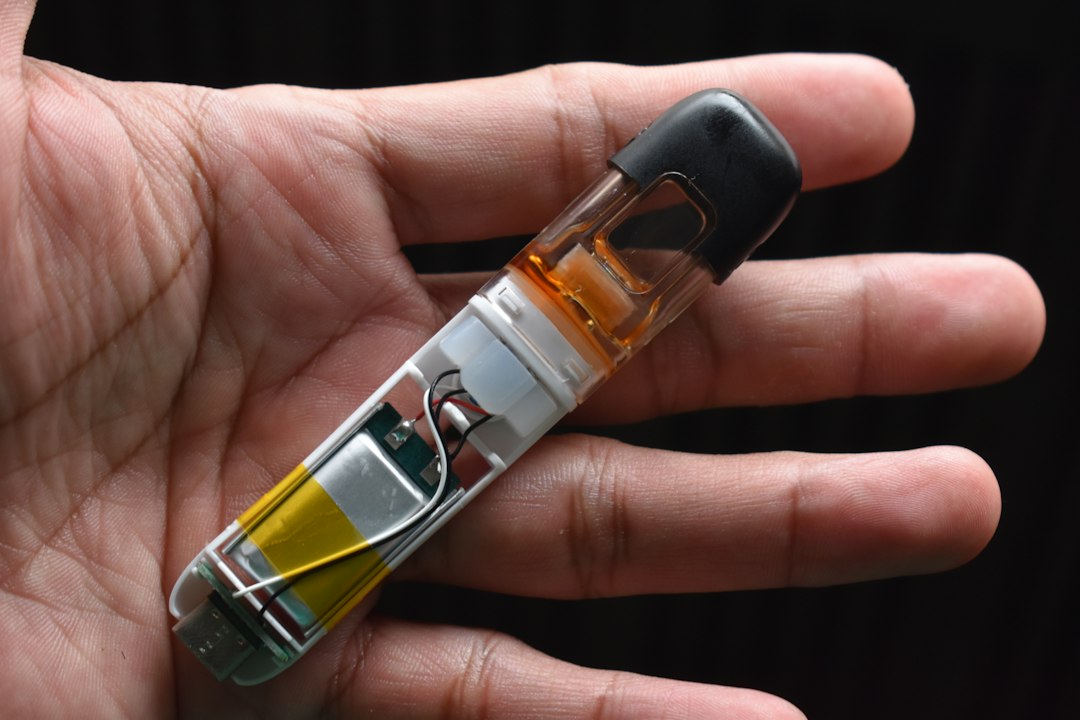
Are You Throwing Away a Perfectly Good Disposable Vape Pen Battery?

Most people toss their disposable vapes in the trash without a second thought. But the small disposable vape pen battery inside is often still functional — and worth saving.
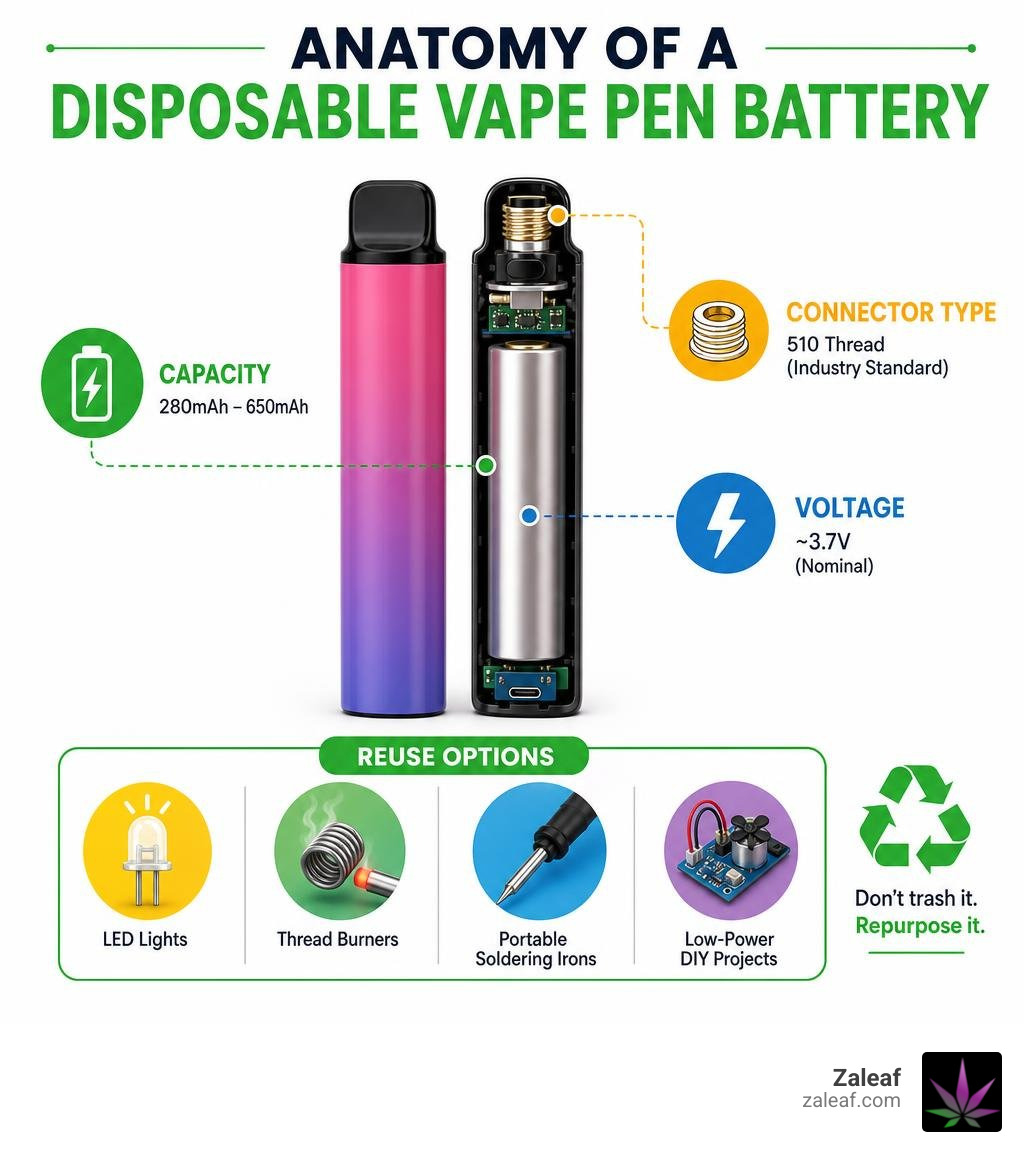
Quick answer: Disposable vape pen batteries are small lithium-ion cells, typically:
- Capacity: 280mAh to 650mAh
- Voltage: ~3.7V nominal
- Connector: 510 thread (industry standard)
- Reuse potential: Low-power DIY projects like LED lights, thread burners, or portable soldering irons
- Disposal risk: Lithium-ion cells in landfills leach heavy metals and pose fire hazards
These batteries don't stop working just because the vape liquid runs out. In many cases, there's usable charge left — and even when depleted, the cell itself can be extracted, recharged, and repurposed.
This guide walks you through exactly how to do that safely.
I'm Max Shemesh, Owner & CEO of Zaleaf, and my experience scaling a cannabinoid brand across 10+ U.S. markets has given me a deep, hands-on understanding of how disposable vape pen battery technology works — and where it's being wasted. In the sections below, I'll show you how to change that.
The Environmental Impact of Discarding Vape Batteries
Every year, millions of disposable vape pens wind up in landfills. It is a massive environmental crisis hiding in plain sight. When we toss a disposable device, we aren't just discarding a piece of plastic and a bit of leftover e-liquid; we are throwing away a highly valuable, energy-dense lithium-ion battery.
When these batteries are buried in landfills, they do not simply decompose. Over time, the outer casings corrode, releasing hazardous heavy metals like lithium, cobalt, and nickel into the surrounding soil and groundwater. According to EPA guidelines on lithium battery recycling, improper disposal of lithium-ion cells poses severe environmental hazards and can even trigger persistent landfill fires that are incredibly difficult to extinguish.
At the same time, mining for raw lithium and cobalt is an incredibly resource-intensive process with its own heavy ecological footprint. Reclaiming and reusing these materials is vital for a sustainable future. As highlighted in Scientific research on lithium-ion battery recycling, recovering lithium-ion cells directly reduces the demand for raw mining, preserving natural ecosystems.
By taking the time to extract and repurpose a disposable vape pen battery, you are directly participating in resource recovery. Understanding the Vape Battery Lifespan Complete Guide reveals that these cells are engineered to survive hundreds of charge-discharge cycles. Tossing them out after a single use is a massive waste of energy. Learning about the Different Vape Battery Types helps us realize that the lithium cells inside disposables are fundamentally the same as those powering our premium rechargeable electronics.
Understanding the Disposable Vape Pen Battery: Specs and Capabilities
To safely repurpose a disposable vape pen battery, we first need to look at its technical specifications. These are not weak, single-use alkaline batteries. They are rechargeable lithium-ion cells, usually cylindrical (such as the 13300 or 14300 form factors), with performance metrics that closely match standard rechargeable electronics.
| Battery Type | Nominal Voltage | Capacity Range | Rechargeable? | Best DIY Use Cases |
|---|---|---|---|---|
| Disposable Vape Battery | 3.7V (4.2V max) | 280mAh – 650mAh | Yes (with external charger) | LEDs, thread burners, mini soldering irons, pocket fans |
| Standard AA Alkaline | 1.5V | 1500mAh – 2500mAh | No | Remote controls, clocks, low-drain toys |
| Rechargeable 18650 Cell | 3.7V | 1500mAh – 3500mAh | Yes | Laptops, power tools, high-drain flashlights |
While a capacity of 280mAh to 650mAh may seem modest compared to a massive 18650 cell, it is more than enough to power low-draw DIY electronics for hours. The nominal 3.7V output (which peaks at 4.2V when fully charged) is the sweet spot for driving microcontrollers, small sensors, and bright LED chips.
To learn more about how these specs influence performance, check out An Essential Guide to Cannabis Vape Batteries. Additionally, reading through Demystifying THC Vape Batteries A Comprehensive Guide provides excellent context on how voltage curves affect energy output over time.
How to Safely Extract and Repurpose Your Vape Battery
Extracting a lithium-ion cell from a plastic or metal housing requires patience, a steady hand, and the right tools. Because lithium-ion batteries store a concentrated amount of energy, treating them with respect is paramount.
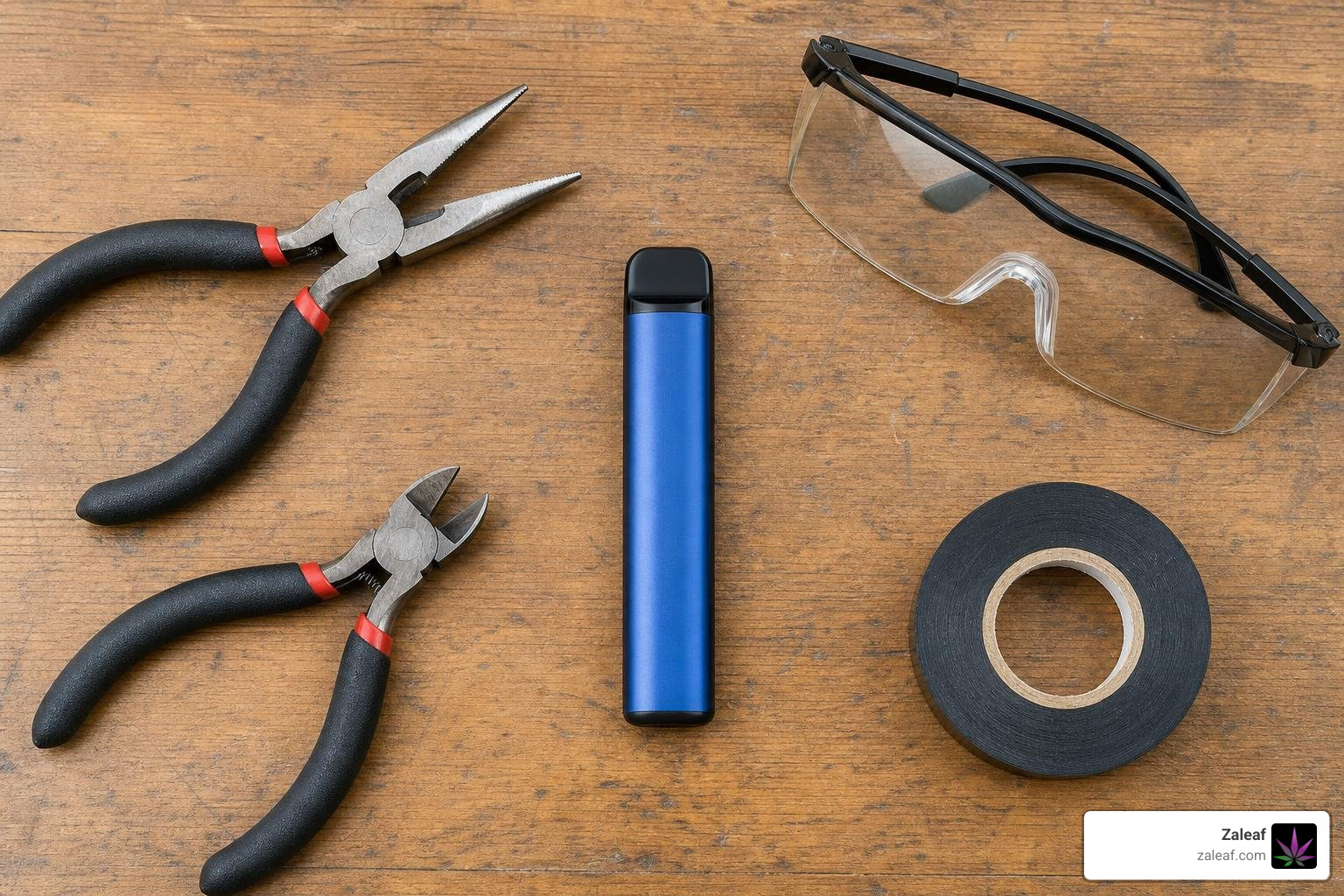
Before you begin, gather the following tools:
- A pair of sturdy pliers (needle-nose work best)
- Precision wire cutters or flush cutters
- Safety glasses (to protect against accidental sparks or flying plastic)
- Non-conductive tape (electrical tape)
- A fire-safe container or a small bucket of dry sand (just in case)
Step-by-Step Guide to Extracting a Disposable Vape Pen Battery
Extracting the battery is a straightforward process, but you must follow each step carefully to avoid short-circuiting the cell.
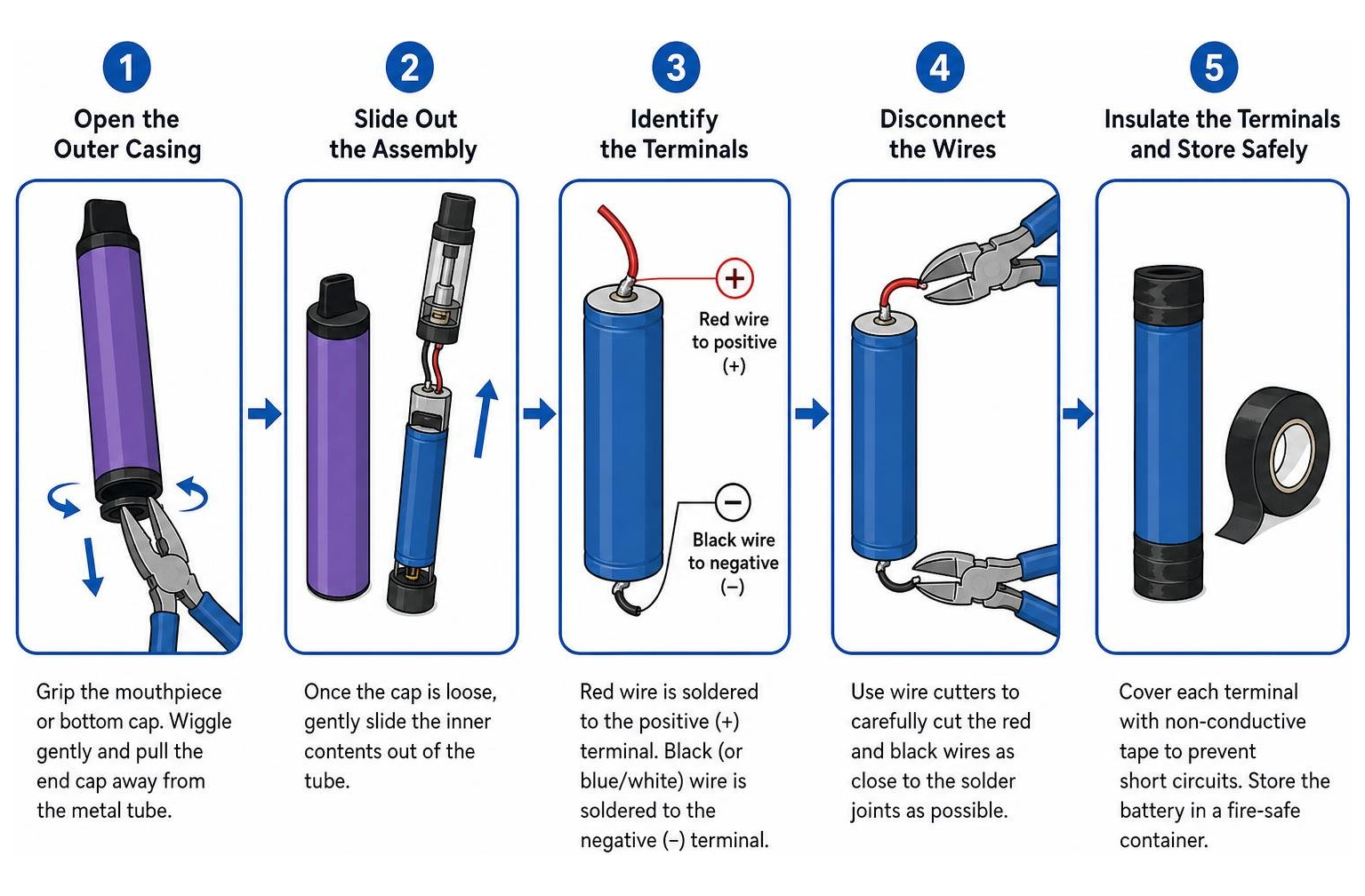
- Open the Outer Casing: Use your needle-nose pliers to firmly grip the mouthpiece or the bottom cap of the disposable vape. Wiggle it gently back and forth. Most disposables are pressure-fitted or held together with light adhesive. Slowly pull the end cap away from the metal tube.
- Slide Out the Assembly: Once the cap is loose, gently slide the inner contents out of the tube. This assembly typically includes the battery cell, a small microphone-style pressure sensor (which detects when you inhale), a heating coil/tank assembly, and some connecting wires.
-
Identify the Terminals: Look closely at the battery cell. It is usually wrapped in a colored plastic sleeve. You will see two wires soldered to the metal terminals on either end of the cell:
- Red wire: Connected to the positive (+) terminal.
- Black (or occasionally blue/white) wire: Connected to the negative (-) terminal.
- Sever the Connections Safely: Using your wire cutters, cut the wires to free the battery from the sensor and heating coil. CRITICAL SAFETY RULE: Cut only one wire at a time. Never cut both wires simultaneously, as the metal blades of your cutters will bridge the positive and negative terminals, causing an immediate short circuit, sparks, and potential battery damage.
- Insulate the Exposed Wires: Immediately wrap the exposed ends of the positive and negative wires with small pieces of electrical tape. This prevents them from accidentally touching each other and shorting out while the battery sits on your workbench.
For a deeper look at how these components interact before extraction, see Juice It Up The Ultimate Guide to Charging Disposable Vape Pens.
Safety Precautions When Handling a Disposable Vape Pen Battery
Working with salvaged lithium-ion cells carries inherent risks. If a battery is punctured, crushed, or short-circuited, it can enter a state known as thermal runaway. This is a rapid, self-sustaining chemical reaction that generates extreme heat, toxic gas, and open flames.
To keep your workspace safe, always observe these rules:
- Wear Protective Eyewear: Always wear safety glasses when prying open casings or cutting wires.
- Work on a Non-Conductive Surface: Work on a wooden, plastic, or silicone mat. Avoid metal workbenches where a stray wire could easily make contact and short out.
- Never Puncture or Crush the Cell: If the battery casing appears swollen, dented, or punctured, do not attempt to reuse it. Dispose of it immediately at a designated battery recycling drop-off.
- Keep a Fire Suppressant Nearby: Always have a bucket of dry sand or a Class D fire extinguisher within arm's reach. Never use water on a lithium-ion fire.
For more essential safety tips on handling loose batteries, read through Stay Safe Understanding Unprotected Vape Battery Risks.
Creative DIY Projects for Repurposed Vape Batteries
Once you have successfully and safely extracted your disposable vape pen battery, a world of fun DIY electronics opens up. Because these batteries are lightweight and output a steady 3.7V, they are perfect for powering low-power, portable devices.
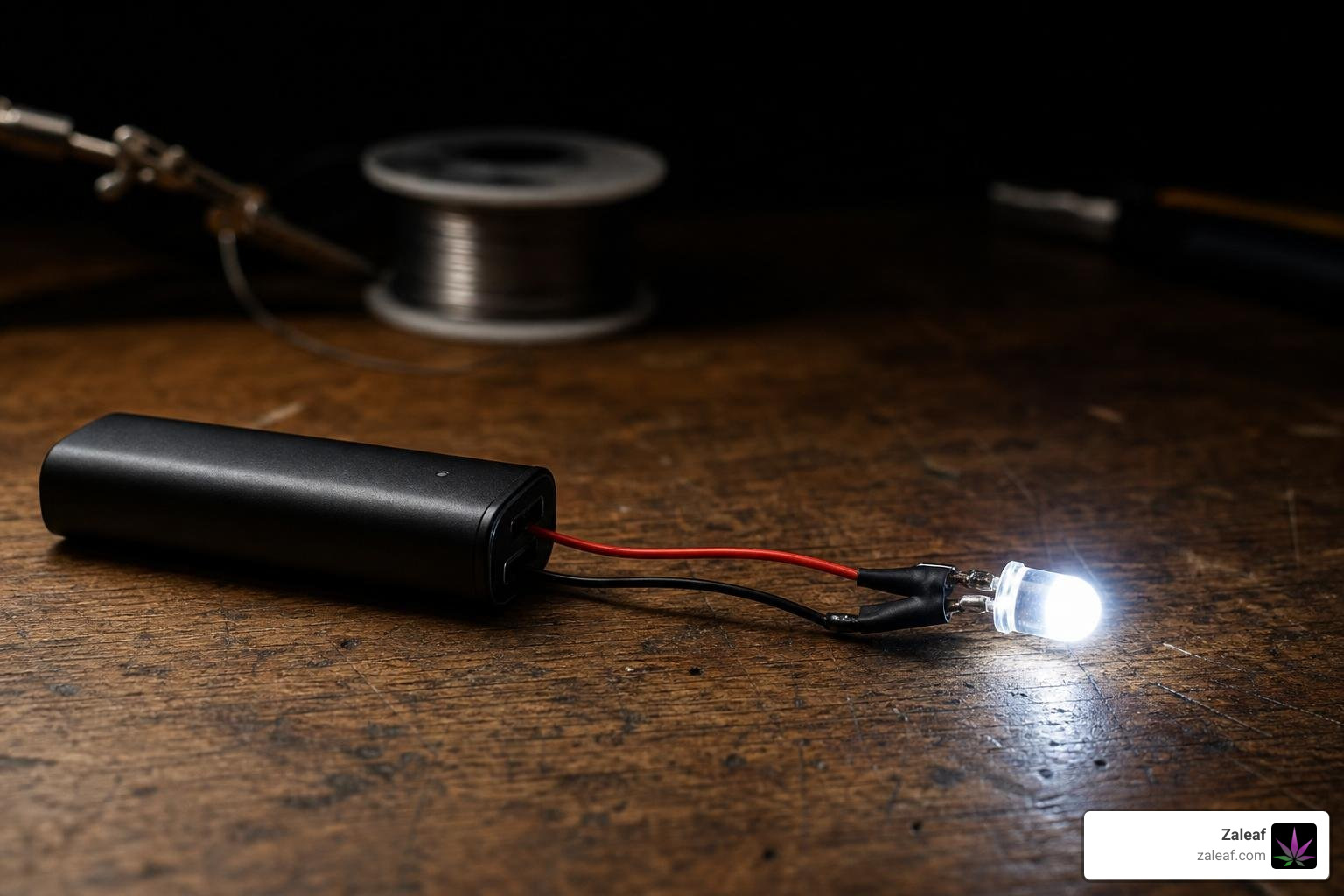
Here are some of our favorite ways to give these salvaged cells a second life:
- Emergency LED Pocket Lights: By wiring a salvaged battery to a cheap TP4056 charging board and a 3V LED bead, you can build a highly compact, rechargeable flashlight.
- Rechargeable Thread Burners: Crafters, jewelry makers, and leatherworkers use thread burners to melt the ends of synthetic threads. A salvaged vape battery provides the perfect amount of power to heat a micro-filament tip.
- DIY Portable Soldering Irons: Did you know that portable soldering iron pens are highly popular right now? In fact, over 2,000 units of portable soldering iron pens were purchased in the past month online alone. Many of these devices leverage the exact same 510-threaded battery technology found in vapes to heat up miniature soldering tips for quick electronics repairs.
- Miniature Desk Fans: A salvaged 650mAh battery can easily power a small 3V DC toy motor with a plastic propeller, giving you a rechargeable personal fan for hot days.
To understand how these battery designs compare to retail vape hardware, you can explore the 510 Vape Battery Guide and check out Power Up Your Vaping Top Rechargeable Vape Pens Reviewed.
Frequently Asked Questions About Reusing Vape Batteries
Can I use a disposable vape battery to power a soldering iron?
Yes, you can, though it depends on how the battery is configured. Standard portable soldering iron pens use 510 thread universal connectors, allowing them to screw directly onto rechargeable vape batteries. If your salvaged battery has a capacity of 500mAh to 650mAh, it has enough output to heat a micro-soldering tip for light-duty electronics repair or jewelry making. For more on high-performance 510 systems, see our guide on the Best 510 Battery.
How do I safely recharge an extracted disposable vape battery?
To recharge an extracted battery, you must use a dedicated lithium-ion charging module, such as a TP4056 board. These modules are incredibly inexpensive, widely available, and usually feature a convenient USB-C port.
Connect the positive (red) wire of your battery to the B+ pad on the TP4056 board, and the negative (black) wire to the B- pad. The board regulates the charging cycle, stopping the current automatically when the cell reaches 4.2V to prevent overcharging. Never connect a bare lithium-ion cell directly to a USB cable without a charging controller, as this will cause the battery to explode. For more context on safe charging practices, check out Vape Pen Charging and Vape Charger Type C.
What should I do if the battery gets hot during extraction?
If the battery begins to feel warm or hot to the touch during extraction, it is likely short-circuiting. Immediately drop the battery into a non-conductive, fire-safe container or a bucket of dry sand. Move the container outdoors, away from flammable materials, and let it sit for at least 24 hours until the chemical reaction has completely stopped. Do not attempt to salvage or use a battery that has overheated.
Conclusion
Repurposing a disposable vape pen battery is a highly rewarding way to reduce e-waste, learn the basics of DIY electronics, and get extra value out of everyday devices. Instead of letting these valuable lithium-ion cells leach heavy metals in our landfills, we can transform them into functional tools like pocket flashlights, thread burners, and mini fans.
At Zaleaf, we are deeply committed to sustainability and responsible enjoyment. We offer 100% legal cannabis products with fast shipping and discrete packaging, specializing in enhancing cannabinoid and terpene profiles for mood-specific effects. All of our products undergo rigorous 3rd party testing, and no ID or medical card is required to order.
If you want to learn more about disposable vapes, check out our Disposable Vape Pens 101: A Comprehensive Guide. Let's work together to keep our passion eco-friendly, one recycled battery at a time!