

How to Master Your 510 Vape Battery Without Blowing It Up
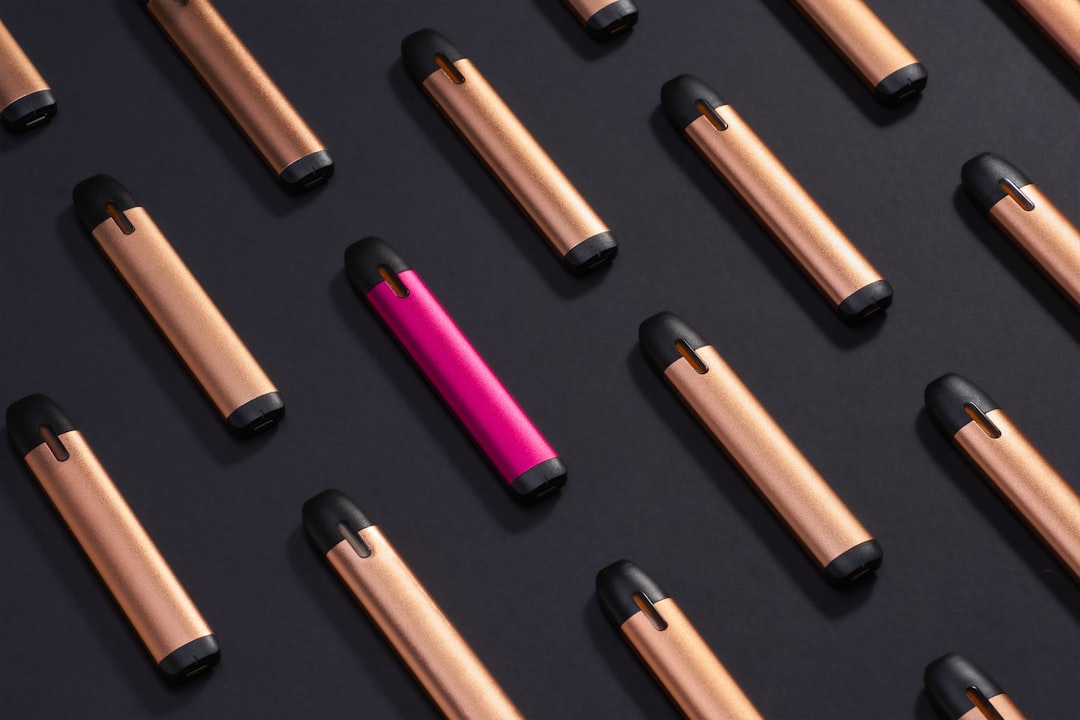
What You Need to Know About Your 510 Vape Battery (Before Your First Hit)

This 510 vape battery guide covers everything a first-time or returning user needs to get started safely and confidently.
Quick answer — how to use a 510 battery:
- Charge the battery fully before first use (60–90 minutes via USB-C)
- Attach your cartridge by screwing it on gently — finger-tight only, don't force it
- Power on by clicking the button 5 times rapidly
- Adjust voltage with 3 quick clicks — green (low), blue (medium), red (high)
- Inhale by holding the button while drawing slowly and steadily
- Store upright in a cool, dry place when not in use
The 510 thread connection has been the industry standard for over a decade, and in 2026 it's still the most widely used format for oil cartridges — from CBD to THC distillate to live resin. That popularity makes sense: one battery works with nearly any cartridge, from any brand.
But a lot of people pick up their first cart and have no idea what the blinking lights mean, why their hit tastes burnt, or whether it's safe to charge overnight. Those small knowledge gaps lead to wasted oil, damaged hardware, and frustrating sessions.
This guide fixes all of that — clearly and quickly.
I'm Max Shemesh, owner and CEO of Zaleaf, and I've spent years in the hemp and cannabinoid industry helping customers get the most out of their vaping experience with a 510 vape battery guide they can actually use. Let's get into it.
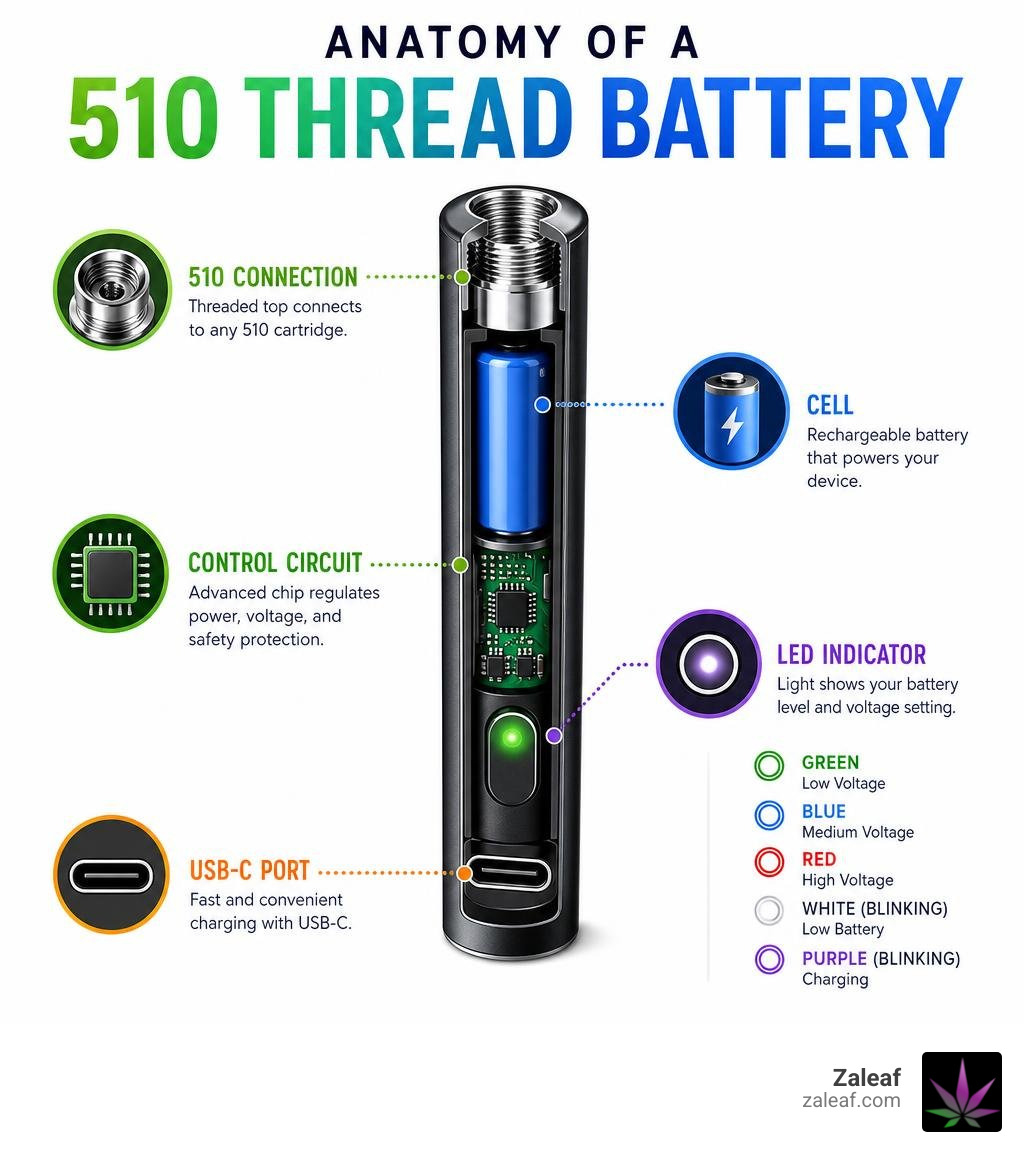
Important 510 vape battery guide terms:
Understanding the 510 Thread Standard and How It Works
To master your vape, you first need to understand the hardware. The term "510" isn’t just a random marketing buzzword; it has a literal engineering definition.
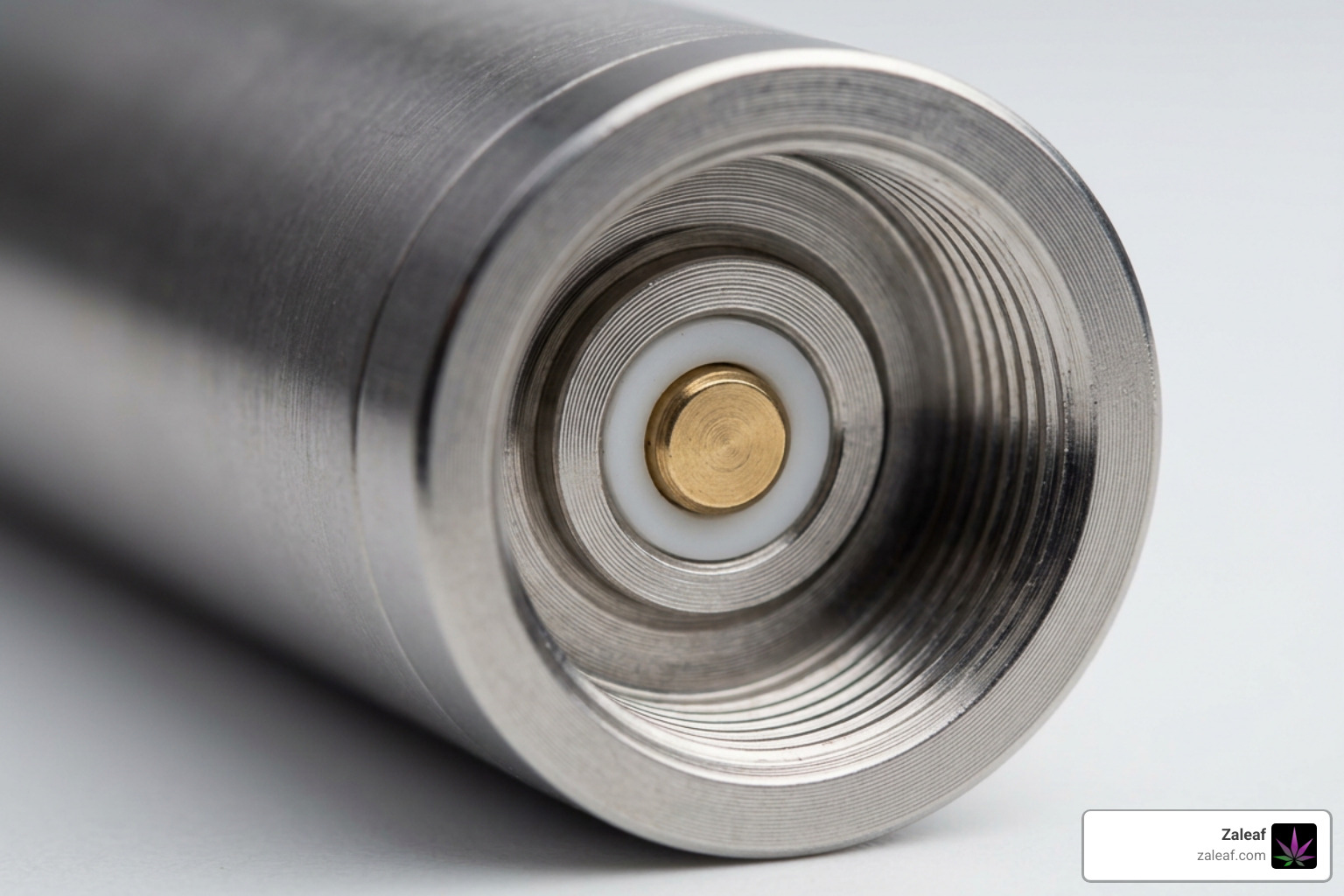
The name refers to the threading specification: 10 threads measuring exactly 0.5 millimeters each (making the connection port 5mm in diameter). Originally introduced in early e-cigarette models, this threading standard became the dominant format because of its sheer simplicity and reliability. Today, virtually all oil cartridges—whether they contain CBD, THCa, Delta 8, or live resin—rely on this universal connection.
When you look inside a standard 510 battery, you are looking at three core components working in harmony:
- The Lithium-Ion Cell: This is the powerhouse. It stores the electrical energy and is measured in milliampere-hours (mAh), which determines how long your battery will last between charges.
- The Control Circuit: This tiny internal computer regulates the voltage output, runs safety checks (like short-circuit protection and automatic draw cutoffs), and translates your button clicks into actions.
- The 510 Connection & Contact Pin: This is where the magic happens. The center pin (usually brass or gold-plated) transfers power from the battery to the cartridge's internal coil. High-quality modern batteries feature a spring-loaded contact pin to ensure a perfect electrical connection even if different cartridge brands have slightly varied thread lengths.
By standardizing this physical connection, the industry has made it incredibly easy to swap cartridges at will. You can use the exact same battery to enjoy different terpene profiles, potencies, and cannabinoid blends without having to buy proprietary pod systems or throw away perfectly good hardware.
The Ultimate 510 Vape Battery Guide: Voltage, Flavor, and Vapor Production
One of the most common mistakes people make when using a vape pen is ignoring their voltage settings. They crank the power to maximum, take a massive draw, and end up coughing uncontrollably while tasting burnt metal.
Your voltage setting directly controls the temperature of the heating element inside your cartridge. Because different concentrates have different viscosities and boiling points, matching your voltage to your oil is critical for a great experience.
| Voltage Range | Temperature Level | Flavor Quality | Vapor Density | Best Oil Types |
|---|---|---|---|---|
| 2.0V – 2.5V | Low | Exceptional (Terpene-rich) | Light / Thin | Live Resin, Rosin, High-Terpene Full Spectrum |
| 2.5V – 3.0V | Medium | Balanced | Medium | Standard Distillate, Delta 8, CBD Oils |
| 3.0V – 3.5V | Medium-High | Mildly Diminished | Thick / Dense | Thick Viscosity Distillate, CO2 Oils |
| 3.5V – 4.2V | High | Burnt / Harsh | Extremely Dense | Heavy Oils, Wax/Dab Attachments |
Choosing the Right Settings in This 510 Vape Battery Guide
As a rule of thumb, lower temperatures preserve flavor, while higher temperatures produce thicker clouds. Terpenes—the aromatic compounds that give cannabis strains their distinct smell, taste, and mood-specific effects—are highly delicate. If you vaporize live resin or live rosin at 3.8V, you will instantly scorch those terpenes, ruining the flavor profile and potentially breaking down the oil into harsh, irritating compounds.
Conversely, thick, high-viscosity distillates require slightly more energy to vaporize efficiently. If your voltage is set too low on a thick oil, you might experience weak hits, or worse, the oil might flood the ceramic coil and cause a clog.
Most modern 510 cartridges use high-resistance ceramic coils (typically ranging from 1.0Ω to 2.5Ω). Because of this high resistance, you do not need massive wattage to get a satisfying hit. Understanding how to adjust your hardware settings for peak performance will help you get the absolute most out of your cartridge.
How to Operate, Charge, and Maintain Your Vape Pen
Operating a 510 battery is incredibly straightforward once you learn the basic "click codes." While some ultra-discreet devices are draw-activated (meaning you simply inhale to activate the heating element), the vast majority of high-quality batteries use a single-button control scheme.
Here is the universal button playbook for almost every 510 battery on the market:
- Power On/Off: Click the button 5 times rapidly (within two seconds). This acts as a safety lock to prevent the pen from firing accidentally in your pocket or bag.
- Adjust Voltage: Click the button 3 times rapidly to cycle through the power presets.
- Preheat Mode: Click the button 2 times rapidly to trigger a low-voltage warming cycle.
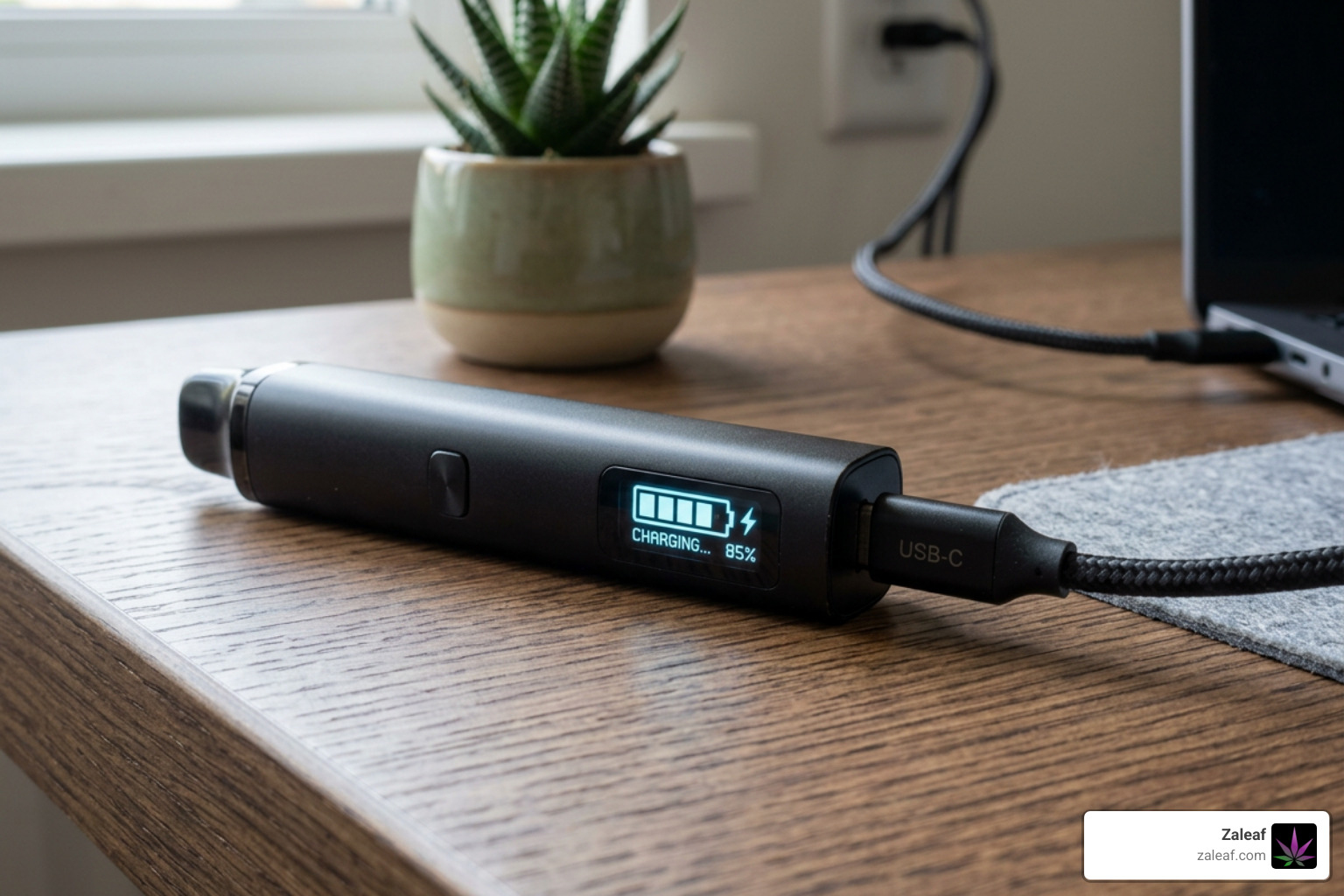
When it comes to charging, the landscape has improved dramatically. In 2026, USB-C has officially become the standard charging interface for quality 510 batteries, replacing the fragile micro-USB ports and outdated screw-in USB adapters. USB-C ports are rated for over 10,000 insertions, offer superior durability, and can fully charge a standard battery in just 60 to 90 minutes, compared to the 2 to 3 hours required by older legacy chargers.
To choose a battery that fits your lifestyle, pay close attention to the milliampere-hour (mAh) rating:
- 280 – 350 mAh (Slim/Pen-Style): Extremely portable, lightweight, and discreet. Best for occasional or light users, providing about 80 to 120 puffs per charge.
- 400 – 650 mAh (Medium/Palm-Style): The sweet spot for the average user. Easily lasts a full day of moderate use (150 to 200 puffs) while remaining highly pocketable.
- 800 – 1100 mAh+ (Heavy Duty/Box Mods): Designed for heavy use, travel, or powering wax atomizer attachments. These can easily support multi-day sessions without needing a charge.
Attaching Cartridges and Using Preheat Mode
When connecting your cartridge to your battery, turn it clockwise until it is finger-tight. A very common amateur mistake is overtightening the cartridge. Forcing the cartridge down too hard can strip the delicate metal threads or permanently depress the battery's spring-loaded contact pin, rendering the device useless. Screw it on until you feel resistance, then stop.
If you are using thick distillate or vaping in cold weather, you might find that your cartridge is hard to draw from on your first hit. This is where preheat mode (sometimes called "Prep Mode") comes in. By clicking the power button twice, the battery delivers a gentle, low-voltage current for 10 to 15 seconds. This warms the exterior of the cartridge and thins the oil just enough to saturate the ceramic coil, preventing dry hits, burnt coils, and airflow blockages.
Safety First: Charging Best Practices and Troubleshooting
Lithium-ion batteries pack a lot of power into a tiny space. While modern 510 batteries are equipped with built-in safety circuits—such as overcharge protection, short-circuit detection, and automatic overheat cutoffs—they still require proper care to prevent failures or thermal runaway.
To maximize safety and extend your battery's overall lifespan, follow these core charging habits:
- Avoid Overnight Charging: Even with automatic shutoff features, leaving your battery plugged in for 8+ hours generates minor heat cycles that degrade the lithium-ion cells over time. Unplug it once the light indicates it is full.
- The 20-80 Rule: Lithium-ion cells experience the most physical stress when they are completely empty (0%) or entirely full (100%). To maximize your battery's lifespan (which typically ranges from 300 to 1,000 full charge cycles), try to plug your device in when it hits around 20% battery, and unplug it shortly after it reaches a full charge.
- Charge on Hard, Flat Surfaces: Never charge your vape pen on a bed, sofa, or under a pillow. If a battery malfunctions, soft materials can trap heat and create a serious fire hazard.
- Inspect for Damage: Regularly check your battery for physical warping, swelling, discoloration, or extreme heat during charging. If your battery feels hot to the touch or looks bloated, dispose of it safely at a battery recycling center immediately.
Troubleshooting Tips for Your 510 Vape Battery Guide
Is your vape pen acting up? Don't throw it in the trash just yet. Most common issues can be fixed in under two minutes with a little troubleshooting:
- The LED Light is Blinking and It Won't Fire: This is almost always a connection issue or a short circuit. First, try loosening the cartridge by a quarter-turn. If it is screwed on too tightly, it can cause a short. If that doesn't work, unscrew the cartridge and inspect the connection point.
- Cleaning Dirty Contact Pins: Over time, tiny amounts of sticky vaporized oil can leak from the bottom of the cartridge and coat the battery's contact pin. This creates an insulating barrier that blocks the electrical current. Dip a cotton swab in 90%+ isopropyl alcohol, squeeze out any excess liquid, and thoroughly wipe down the threads of both the battery and the cartridge. Let it dry completely before reassembling.
- The Cartridge is Clogged: If you pull on your vape and nothing happens, the airway is likely blocked by cold, hardened oil. Do not try to force it by pulling as hard as you can—this will pull raw oil into your mouth. Instead, run a 10-second preheat cycle to warm the oil, or gently insert a thin sewing needle or safety pin down the mouthpiece to clear the obstruction.
Frequently Asked Questions About 510 Batteries
How long does a 510 battery last on a single charge and over its lifetime?
On a single charge, a standard 500 mAh battery will easily last a moderate user a full day of vaping (roughly 150 to 200 puffs). Over its entire lifetime, a quality lithium-ion vape battery will typically last between 300 and 1,000 charge cycles depending on how well you care for it. You will know your battery is reaching the end of its life when it takes significantly longer to charge, dies rapidly after only a few hits, or struggles to maintain a consistent voltage.
What do the different LED light colors mean?
While color schemes can vary slightly by manufacturer, most variable voltage 510 batteries use a standardized set of LED indicators:
- Green Light: Typically indicates the lowest voltage preset (2.0V – 2.8V), which is ideal for preserving delicate flavors and terpenes. It can also signify a fully charged battery when plugged in.
- Blue Light: Indicates the medium voltage preset (2.8V – 3.2V), offering a balanced mix of solid flavor and moderate vapor production.
- Red Light: Indicates the highest voltage setting (3.4V – 4.2V), designed for maximum vapor density and thick oils. If your light flashes red rapidly while you are trying to take a hit, it usually means your battery is completely dead or detecting a short circuit.
- White Light: Depending on the model, a white light can indicate a low-voltage setting or flash to signal an open circuit (meaning the battery cannot detect the cartridge).
How do I choose the best 510 battery for my needs?
When selecting a 510 battery, consider three main factors:
- Form Factor: Pen-style batteries are slim, highly portable, and mimic the feel of a traditional joint. Palm-style (or box mods) are shorter and wider, fitting completely in the palm of your hand for ultimate discretion. Concealed designs completely hide the cartridge inside the battery body, protecting the fragile glass cartridge from breaking if dropped.
- Activation Method: Draw-activated pens are incredibly simple and intuitive for beginners, but they lack a preheat function. Button-activated models give you complete control over your hits, preheating, and voltage settings.
- Portability & Capacity: If you vape occasionally at home, a small 350 mAh pen is perfect. If you travel frequently or don't want to worry about charging every day, opt for a robust 650 mAh+ device.
Conclusion
Mastering your 510 vape battery guide doesn't require an engineering degree—it just takes a little bit of respect for the hardware. By keeping your voltage low to protect those rich terpenes, cleaning your connection points regularly with isopropyl alcohol, and practicing safe charging habits, you will enjoy smoother hits, better flavor, and hardware that lasts for years.
At Zaleaf, we believe that a premium vaping experience starts with premium products. We specialize in offering 100% legal, high-quality cannabis products with fast shipping and highly discrete packaging right to your door. Our unique formulations focus on enhancing specific cannabinoid and terpene profiles to deliver reliable, mood-specific effects—all backed by rigorous 3rd party laboratory testing. Best of all, there is no medical card or ID registration required to order.
Ready to take your vape game to the next level? Explore our latest collection of premium cartridges, hardware, and expert educational resources on the Zaleaf News and Guides page today!