

A Clean Connection: The Ultimate Guide to Scrubbing Your Battery Threads
The Dirty Little Secret That's Killing Your Vape's Performance

How to clean threads on your 510 vape battery is simpler than you might think. Here's a quick overview:
- Turn off your battery before cleaning.
- Dip a cotton swab in isopropyl alcohol.
- Scrub the threading on both the battery and cartridge.
- Use a toothpick or pin to dislodge stubborn residue.
- Let it dry completely before reattaching your cartridge.
Picture this: you finally sit down to unwind after a long day, you grab your vape — and get nothing. Weak draw, barely any vapor, total letdown. Nine times out of ten, the culprit isn't your cartridge or your battery. It's dirty threads.
The 510 threading that connects your battery to your cartridge is tiny. And that small connection point is surprisingly easy to gum up with oil residue, dust, and debris. When it gets dirty, the electrical connection weakens — and your whole vaping experience suffers.
The good news? A quick clean takes less than two minutes.
I'm Max Shemesh, owner and CEO of Zaleaf, and my experience sourcing and delivering high-quality cannabinoid products has given me insight into how to clean threads and why proper maintenance is one of the most overlooked habits among vape users. In the sections below, I'll walk you through everything you need to keep your connection clean, consistent, and performing at its best.
Related content about how to clean threads:
Why Learning How to Clean Threads is Essential for Your Vape
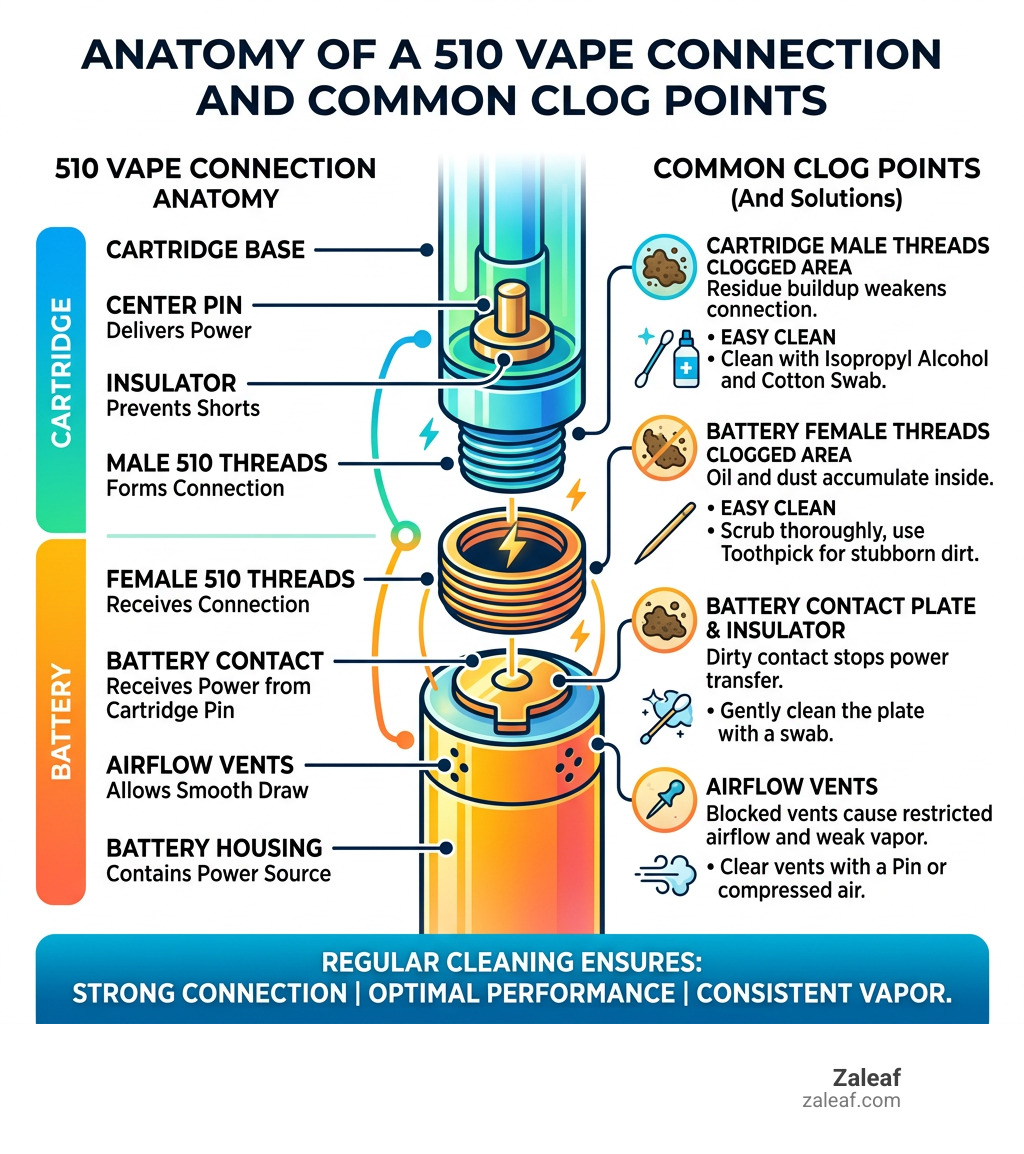
When we talk about the "510 connection," we are referring to the industry standard for vape hardware. The "510" specifically describes the threading—ten threads at 0.5mm each—that joins the battery to the cartridge. Because this is the bridge where electricity travels from the battery to the heating element (the atomizer), any barrier in that path spells trouble.
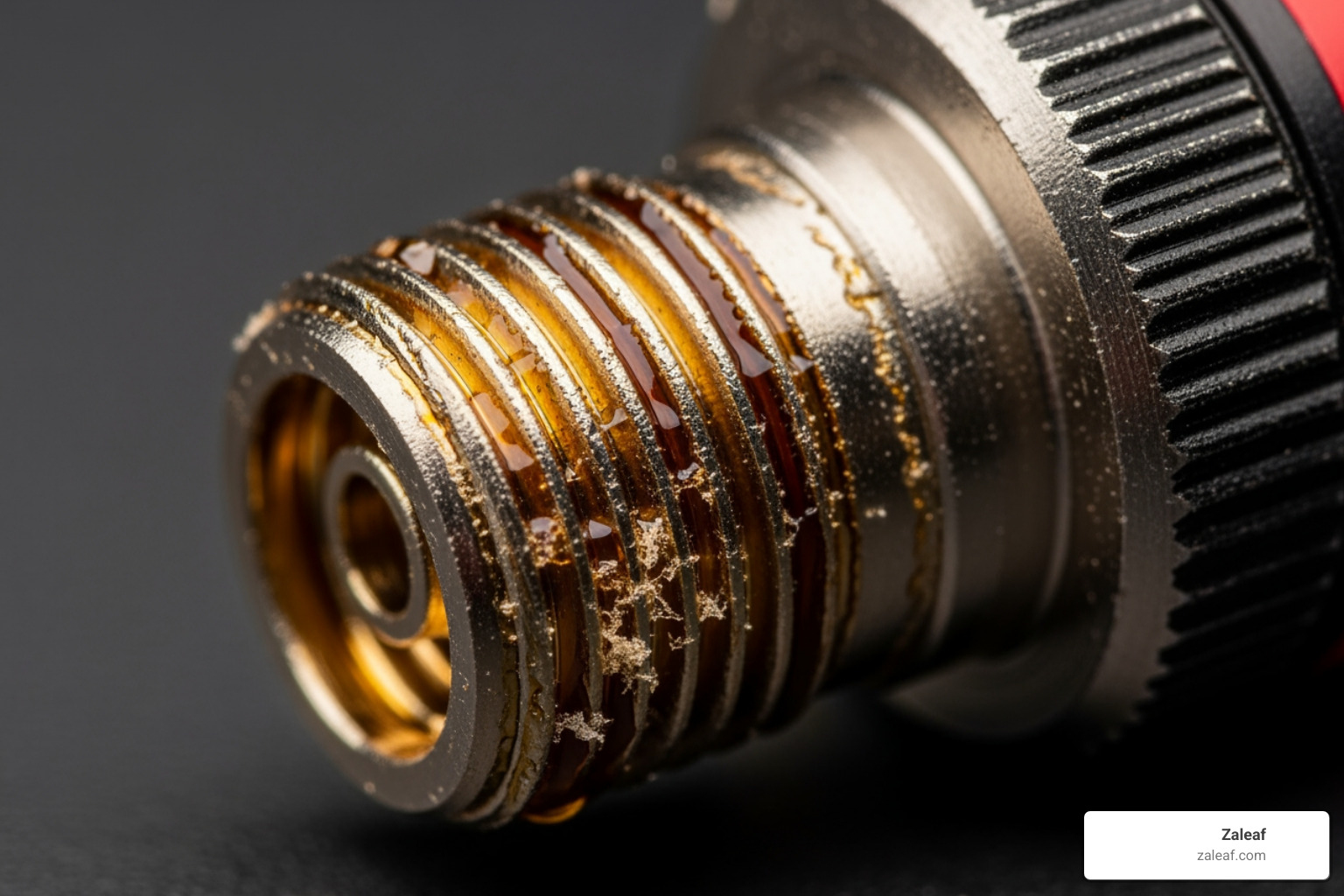
As we use our devices, tiny amounts of oil can leak from the bottom of the cartridge. This oil is thick and sticky by design. Once it hits the threads, it acts like a magnet for pocket lint, dust, and grime. Over time, this creates a layer of insulation. This leads to a "voltage drop," meaning your battery might be set to 3.7V, but because of the gunk, the atomizer is only receiving 3.0V. You end up with weak clouds and wasted oil.
Furthermore, if residue builds up enough, it can cause a total connection failure. This is often why you’ll see a device blinking green or another error color; the battery "thinks" there is no cartridge attached because the circuit is broken by debris. For those seeking the best 510 battery, even the most premium device requires a clean contact point to function.
Understanding the essential 510 thread battery buyers guide is the first step, but maintenance is what ensures longevity. Proper thread care also facilitates better heat transfer, preventing your battery from overworking itself to compensate for a poor connection.
How to clean threads using household items
You don’t need a professional laboratory to get your vape back in tip-top shape. In fact, the most effective tools for how to clean threads are likely sitting in your bathroom cabinet right now.
- Isopropyl Alcohol (Rubbing Alcohol): This is the gold standard. It dissolves stubborn cannabis oil almost instantly and evaporates quickly, leaving no residue behind. Aim for 70% concentration or higher.
- Cotton Swabs (Q-Tips): These are perfect for reaching into the circular grooves of the battery's female connection.
- Microfiber Cloth: Use this to wipe down the exterior and the flat "mating" surface of the battery to ensure a flush fit.
- Toothpick or Needle: Sometimes oil becomes "carbonized" or hardened. A gentle scrape with a non-conductive toothpick can dislodge these flakes without scratching the metal.
If you find your battery not charging, the first thing we recommend is a deep clean of the threads. Often, the charger can't make a solid connection for the same reason the cartridge can't: a wall of sticky residue.
Identifying when threads are too damaged for cleaning
Sometimes, no amount of cleaning will save a connection. It is important to know when to stop scrubbing and start shopping for a replacement.
- Cross-Threading: This happens when a cartridge is forced on at an angle, cutting new, incorrect paths into the soft metal threads. If your cartridge feels "crunchy" when spinning or sits crooked, the threads are likely toast.
- Stripped Metal: If the cartridge spins infinitely and never tightens, the threads have been worn flat. This is a common issue with cheaper, zinc-alloy batteries.
- Permanent Galling: This is a mechanical "cold welding" where the metal from the cartridge and battery have bonded or torn each other apart.
When fixing a non-working disposable vape pen, you might find that the internal connections are the issue, but for reusable 510 batteries, physical thread deformation is a clear sign that the device has reached the end of its life.
Mechanical vs. Chemical: Advanced Thread Cleaning Methods
While a Q-tip and alcohol work for 90% of situations, some restorations require a more "industrial" approach. This is especially true if you are a collector of vintage hardware or have a high-end mod that has seen years of heavy use.
The Difference Between Chasing and Tapping
In professional mechanics, there is a big difference between a "tap" and a "thread chaser." A standard tap is a cutting tool; it is designed to carve brand-new threads into raw metal. You should never use a standard tap to clean your vape threads, as it will remove metal and make the connection loose and "wobbly."
Instead, professionals use a thread chaser (or thread restorer). These are designed to follow the existing path, pushing displaced metal back into place and scraping away dirt without removing the structural material of the thread itself.
| Feature | Thread Chaser | Standard Tap |
|---|---|---|
| Purpose | Cleaning and straightening | Cutting new threads |
| Material Removal | Minimal to none | Significant |
| Thread Fit | Maintains original tolerances | Can make threads "loose" |
| Best For | Maintenance and restoration | Manufacturing |
For more on these tools, you can look into thread restorer definitions and types. While most vapers won't need a full machine shop, understanding that "cleaning" shouldn't mean "grinding" is vital.
How to clean threads without damaging the finish
If you are dealing with a limited-edition battery or a device with a delicate plated finish (like gold or chrome), you have to be careful. Harsh abrasives can strip the aesthetic coating right off.
- Brass Brushes: Brass is a "soft" metal. It is harder than gunk but softer than most steel or high-quality plated threads. A small brass-bristled brush can scrub away oxidation without leaving deep gouges.
- Nylon Picks: These are even safer than brass and are excellent for detailing the "valleys" of the threads.
- Chemical Soaks: For external bolts or non-electronic threaded parts, solutions like white vinegar or specialized rust removers can work wonders. However, never soak your battery in any liquid. Only apply chemicals to a swab or cloth.
- Ultrasonic Cleaners: If you have a removable threaded adapter or a purely mechanical mod (no electronics), an ultrasonic cleaner with a mild detergent can reach places a brush never could. This is a favorite method for unclogging your disposable vape pen components that are safe for immersion.
When dealing with a clogged THC vape pen, the "clog" is often a combination of internal airway blockages and external thread residue.
Using improvised tools for internal thread maintenance
Sometimes you're in a pinch and don't have a dedicated cleaning kit. We've seen some ingenious DIY solutions for how to clean threads in the community:
- The Slotted Bolt Hack: Mechanics often take a spare bolt, cut three or four vertical slots into the threads using a Dremel, and run it into a dirty hole. The slots act as "gutters" to catch and pull out debris.
- The Paperclip Method: For the tiny air holes in the center of the 510 pin, a straightened paperclip can be used to gently clear out a blockage. This is often the key to solving a vape pen's drawing dilemma.
- Compressed Air: A quick blast of canned air can blow out loose dust or "pocket sand" before it has a chance to mix with oil and become a permanent sludge.
Step-by-Step Guide to Maintenance and Prevention
The best way to clean threads is to never let them get dirty in the first place. Consistency is the name of the game.
Vertical Storage: Your First Line of Defense
Why do vapes leak? Usually, it's because they are left on their side in a hot car or a pocket. Gravity pulls the oil through the atomizer and out the bottom intake holes. By storing your device vertically, you keep the oil where it belongs—in the tank. This simple habit is essential for optimizing battery life and keeping your threads pristine.
Temperature Control
Heat makes oil thin and runny. If you keep your vape in a place that fluctuates in temperature, the oil will expand and contract, eventually forcing its way out of the cartridge seals. Keep your gear in a cool, dry place. This is a fundamental part of cartridge battery use.
Best practices for preventing debris contamination
- Dust Caps: Most cartridges come with a small silicone cap on the bottom threads. Don't throw these away! If you are carrying a spare cart in your pocket, put the cap back on.
- Regular Swabbing: Make it a habit to wipe the battery's contact point every time you swap out a cartridge. This prevents "layering," where new oil traps old dirt.
- The "Goldilocks" Tightness: Do not over-tighten your cartridge. You want it "finger-tight." Over-tightening can crush the rubber O-rings inside the 510 connection, leading to leaks and permanent thread damage. This is a common tip when learning how to unclog your disposable vape pen.
- Silicone Covers: Many batteries now come with protective sleeves that cover the charging port and the thread area when not in use.
The role of lubrication in thread longevity
In the automotive world, people use "anti-seize" or conductive grease to keep threads moving smoothly. In the vape world, we generally recommend keeping threads dry and clean.
However, if you have a high-end mechanical mod with large, coarse threads, a tiny amount of specialized conductive grease (like DeoxIT) can improve electrical conductivity and prevent the metal from "binding." For standard 510 batteries, stick to alcohol and a dry wipe. Keeping the threads dry ensures that the friction is "just right" to hold the cartridge in place without it backing out. For more on hardware compatibility, check out our guide to vape compatibility.
Frequently Asked Questions about Thread Cleaning
What is the difference between a thread chaser and a standard tap?
As mentioned earlier, it comes down to "cutting" versus "cleaning." A tap is like a knife; it cuts through metal to create a new shape. A thread chaser is like a comb; it straightens out the existing shape and removes tangles (dirt and burrs). For your vape pen rescue, always opt for the gentlest method first.
Is it safe to use a wire wheel on small battery threads?
Generally, no. A wire wheel on a bench grinder is much too aggressive for the delicate 510 threads of a vape battery. It can easily "fling" the battery across the room or strip the plating entirely. If you must use a wire brush, use a small, hand-held brass brush and wear safety glasses to protect against any flying bristles or debris.
How often should I clean my 510 threads?
We recommend a quick visual inspection every time you change your cartridge. A deep clean with isopropyl alcohol should happen at least once a month, or immediately if you notice a leak. If you shop smart for your vape cartridge battery, you'll want to protect that investment with regular maintenance.
Conclusion: A Better Experience Through Maintenance
At the end of the day, knowing how to clean threads isn't just about being "neat"—it's about getting the most out of your cannabis experience. A clean connection means more accurate temperature control, better flavor, and bigger clouds. It means your battery lasts longer and your cartridges perform exactly as the extractors intended.
At Zaleaf, we take pride in offering 100% legal cannabis products that are designed for specific moods and effects. Whether you're looking for relaxation or a boost in creativity, our products undergo rigorous 3rd party testing to ensure safety and potency. We provide fast shipping and discrete packaging, and the best part? No ID or medical card is required to enjoy our premium selections.
Don't let a little bit of pocket lint stand between you and a perfect session. Grab a Q-tip, some alcohol, and give your battery the love it deserves. For more deep dives into hardware, don't miss our comprehensive guide to THC vape batteries.
Stay clean, stay elevated, and happy vaping!