

Elevate Your Everyday: Cannabis for Holistic Wellness
Why Cannabis for Wellness Is Changing How We Approach Everyday Health
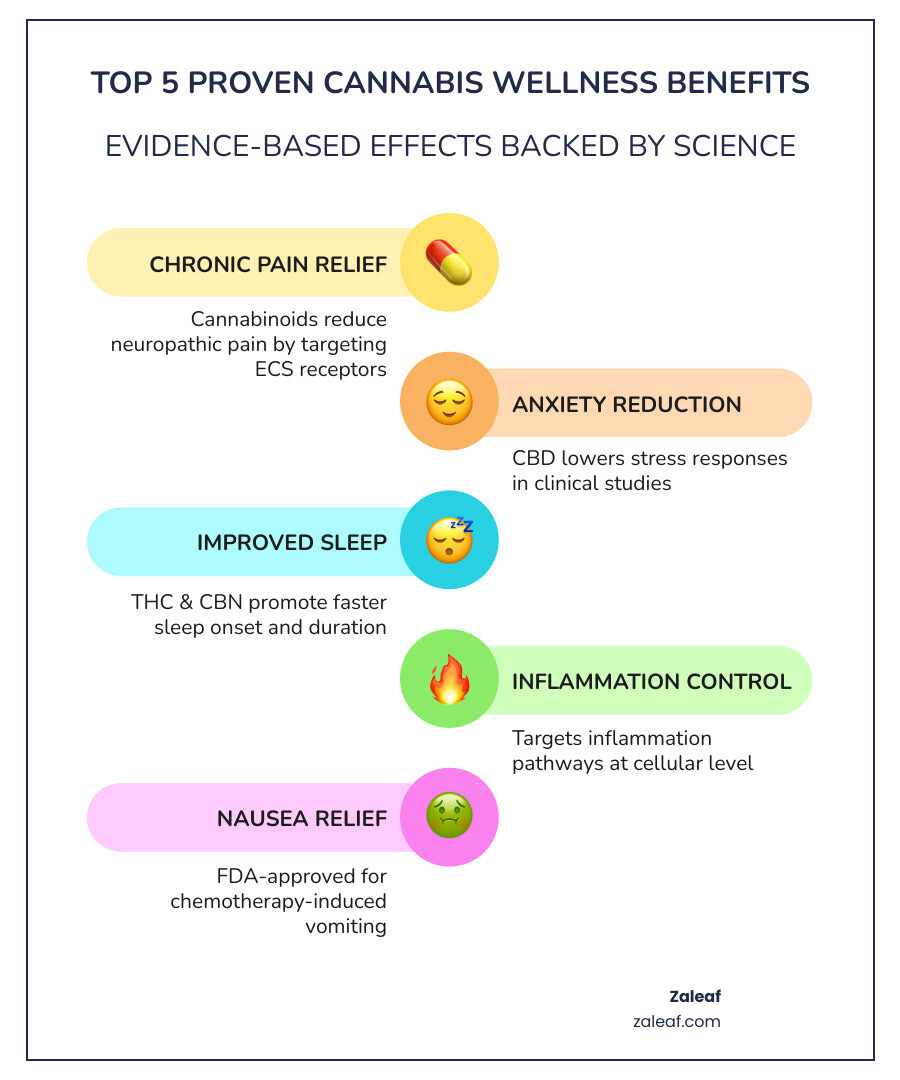
Cannabis for wellness is one of the fastest-growing areas in natural health, and for good reason. Here's a quick look at what it can help with:
- Pain relief - Studies show cannabinoids can reduce chronic and neuropathic pain
- Stress and anxiety - CBD shows promise in lowering stress-induced responses
- Better sleep - THC and CBN may help you fall and stay asleep
- Reduced inflammation - Cannabinoids target inflammation at the source
- Appetite support - THC stimulates hunger and enhances food enjoyment
- Nausea relief - Oral cannabinoids are proven effective for chemotherapy-related nausea
Cannabis has been used medicinally for thousands of years. Yet only recently has science started to catch up with what many people already knew anecdotally.
Today, research from major health institutions confirms real, measurable benefits for a wide range of conditions — from chronic pain to epilepsy to anxiety. And with hemp-derived CBD now legal under the 2018 Farm Bill, more people than ever can explore these benefits without a medical card.
Still, the space is noisy. Misinformation is everywhere. And not all products are created equal.
This guide cuts through the confusion. You'll get a clear, evidence-based look at what cannabis can (and can't) do for your health — plus practical guidance on how to use it safely and effectively.
I'm Max Shemesh, Owner and CEO of Zaleaf, and I've spent years in the hemp and cannabinoid industry helping people find high-quality, tested products that genuinely support their wellness goals. My work with cannabis for wellness has given me a front-row seat to both the science and the real-world results that keep customers coming back.
Quick look at Cannabis for wellness:
Understanding the Science: Cannabinoids and the ECS
To truly appreciate how Cannabis for wellness works, we need to look under the microscope. The cannabis plant is a complex biological factory, containing more than 120 different components known as cannabinoids. While many of us are familiar with the "big two"—THC and CBD—the plant's true power lies in how these compounds interact with our own biology.
Every human being (and most animals!) possesses an Endocannabinoid System (ECS). Think of the ECS as a vast regulatory network that acts like a thermostat for your body. Its primary goal is homeostasis—maintaining a stable internal environment despite what’s happening outside.
The ECS consists of three main parts:
- Endocannabinoids: Molecules our bodies naturally produce.
- Receptors: Found throughout the brain, organs, and immune system (specifically CB1 and CB2 receptors).
- Enzymes: Which break down cannabinoids once they’ve done their job.
When we consume cannabis, the plant’s cannabinoids "plug into" these receptors. This interaction is the foundation of understanding cannabis and its therapeutic potential. Beyond just cannabinoids, the plant also produces terpenes—aromatic compounds that give different strains their unique scents and contribute to the overall effect. By choosing products with specific terpene profiles, we can tailor our wellness routine to be more energizing or more relaxing.
The Role of THC and CBD
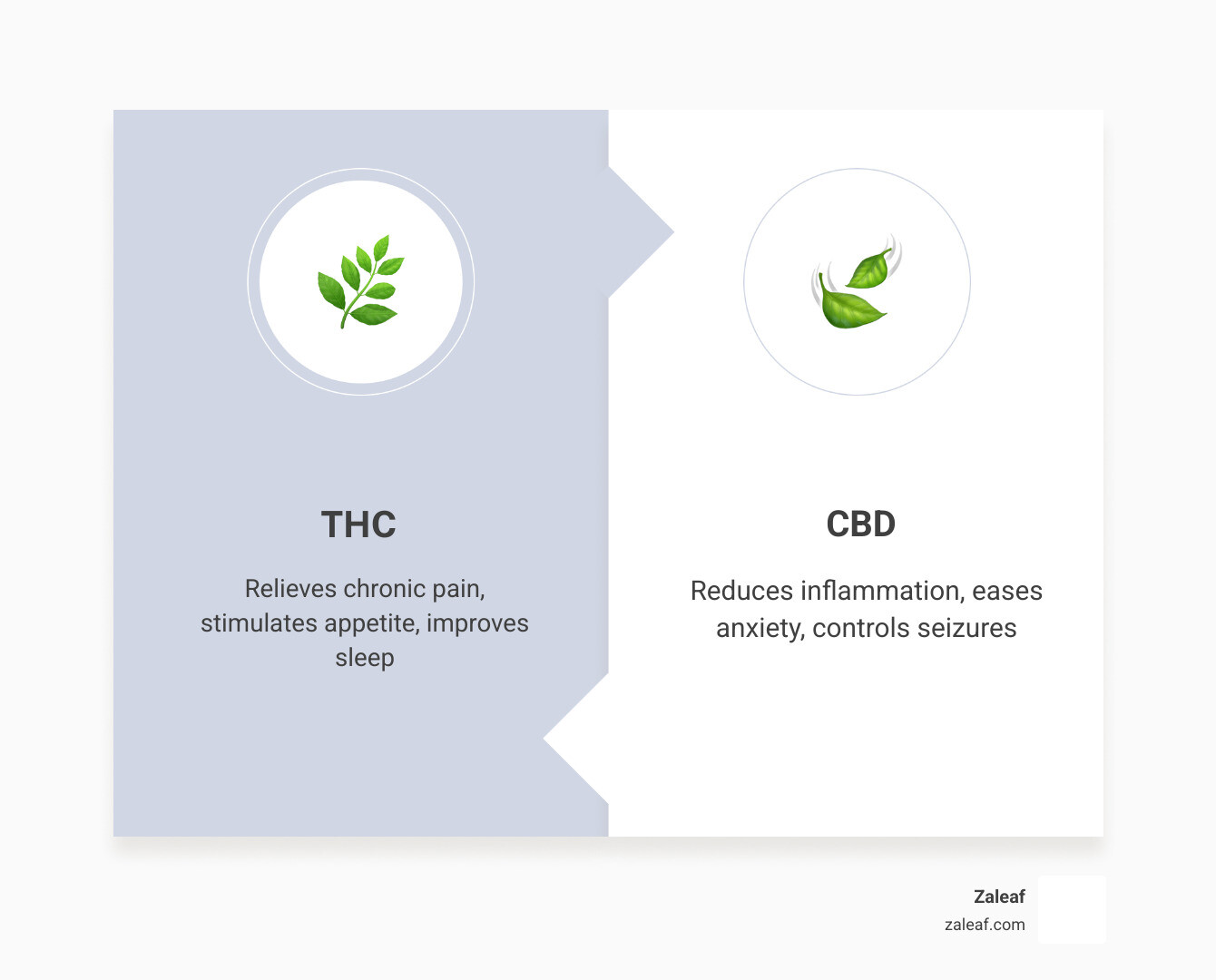
The two most famous cannabinoids play very different roles in our wellness journey. THC (Tetrahydrocannabinol) is the primary psychoactive compound. It’s what produces the "high" by binding directly to CB1 receptors in the brain. However, in a wellness context, THC is valued for more than just its buzz; it’s a powerful tool for pain management and appetite stimulation.
CBD (Cannabidiol), on the other hand, is non-intoxicating. It doesn't bind directly to receptors in the same way, which is why it doesn't make you feel "stoned." Instead, it helps prevent your natural endocannabinoids from being broken down, extending their balancing effects.
We often talk about the "Entourage Effect." This is the idea that cannabinoids and terpenes work better together than they do in isolation. By using full-spectrum products, we find a "therapeutic window" where the relief is maximized while unwanted side effects are minimized.
Proven Therapeutic Benefits of Cannabis for Wellness
The shift toward Cannabis for wellness isn't just a trend; it's backed by a growing mountain of clinical evidence. From state registries to international systematic reviews, the data shows that cannabis is making a tangible difference in people's lives.
One of the most striking statistics comes from Colorado, where 94% of medical marijuana ID cardholders cited "severe pain" as their primary reason for use. Furthermore, a study of pain patients found that medical cannabis use was associated with a staggering 64% reduction in opioid use. This suggests that cannabis isn't just an alternative; for many, it's a safer way to manage long-term discomfort.
Managing Chronic Pain and Inflammation
Pain is often the root cause of decreased quality of life. Whether it's the sharp sting of neuropathic pain or the dull ache of arthritis, cannabinoids offer a multi-pronged approach to relief. Research, including a study by the Rockefeller Institute of Medical Research, has shown that CBD can effectively reduce inflammation and the resulting pain.
For those of us dealing with physical recovery, unlocking wellness with CBD can mean faster bounce-back times after exercise and reduced muscle soreness. When it comes to deep, structural pain, many of our community members find that indica strains for pain provide the heavy-duty relaxation needed to finally get some rest.
Relief from Chemotherapy-Induced Nausea and Vomiting
One of the most well-established medical uses for cannabis is as an antiemetic (an anti-nausea agent). For patients undergoing chemotherapy, traditional medications sometimes fall short. There is "conclusive evidence" that oral cannabinoids are effective for treating chemotherapy-induced nausea and vomiting.
In fact, the FDA has already approved synthetic formulations like Dronabinol and Nabilone for this exact purpose. Patient-reported outcomes frequently show that cannabis is not only effective but often preferred over standard treatments due to its ability to also improve mood and appetite during difficult treatments.
Support for Epilepsy and Multiple Sclerosis
The impact of Cannabis for wellness on neurological disorders has been nothing short of life-changing for many. In the realm of epilepsy, particularly rare childhood forms, CBD has shown a 36.5% median reduction in motor seizures. This discovery led to the first FDA-approved cannabis-derived drug, Epidiolex.
Similarly, for those living with Multiple Sclerosis (MS), cannabis can help manage spasticity (muscle stiffness). While clinician measures sometimes vary, patient-reported symptoms often show significant improvement in mobility and comfort. Products like Nabiximols (a 1:1 THC/CBD spray) are used internationally to help MS patients regain control over their daily movements.
Appetite Stimulation and Weight Gain
We’ve all heard of the "munchies," but for someone suffering from HIV/AIDS wasting syndrome or cancer-associated anorexia, this effect is a medical miracle. THC interacts with the brain’s reward system, not only inducing hunger but actually enhancing the flavors of food.
Research has shown that inhaled cannabis can lead to significant weight gain in HIV patients—an average of 3.0 kg compared to a placebo group. By helping people enjoy food again, cannabis edibles and other products play a vital role in nutrient intake and overall recovery strength.
Emerging Research: Mental Health and Neurodegenerative Conditions
While physical ailments get much of the spotlight, the role of Cannabis for wellness in mental health is a major area of exploration. Anxiety disorders affect an estimated 18% of the U.S. adult population annually, and many are looking for natural alternatives to traditional pharmaceuticals.
A preclinical study found that CBD could be effective for generalized anxiety disorder, social anxiety, and even PTSD. For those struggling with PTSD, research into synthetic cannabinoids has shown a reduction in the frequency and intensity of nightmares, allowing for more restorative sleep. If you're looking to calm a racing mind, CBD oil for stress has become a go-to tool for many in our community.
Neuroprotection and GI Health
The "neuroprotective" properties of cannabinoids are currently being studied in relation to Parkinson's disease, ALS, and Tourette syndrome. While we need more large-scale trials, early results suggest that cannabis may help manage the motor tremors and tics associated with these conditions.
We also can't ignore the gut-brain connection. Approximately 11% of the world's population suffers from Irritable Bowel Syndrome (IBS). A recent study found that CBD and other non-psychoactive cannabinoids can help treat GI disorders by reducing inflammation in the colon and regulating digestive speed.
Addiction Recovery and Relapse Prevention
It might seem counterintuitive to use one substance to treat another, but a 2018 study discovered that CBD could help prevent relapse in drug and alcohol addiction. In preclinical trials, CBD reduced stress-induced cravings and improved impulse control in subjects. This research opens the door for cannabis to be used as a supportive tool in tobacco cessation and alcohol withdrawal programs, helping individuals maintain their sobriety by managing the underlying anxiety of recovery.
Navigating the Landscape: Legality, Safety, and Quality
The world of Cannabis for wellness can be confusing because the laws are constantly shifting. At the federal level, the 2018 Farm Bill changed everything by legalizing hemp-derived CBD products containing less than 0.3% THC. However, "marijuana" remains a Schedule I drug, which creates significant hurdles for researchers and limits the types of products available in certain states.
This legal "grey area" means that the burden of quality control often falls on the consumer. Many over-the-counter products have been found to contain inaccurate levels of CBD or even unwanted contaminants. This is why we emphasize the importance of Texas THC laws and understanding what you are buying.
Choosing Quality Products
When we select products for our own wellness, we look for four non-negotiables:
- Third-Party Lab Testing: Every product should have a Certificate of Analysis (COA) proving its potency and purity.
- Organic Ingredients: You don't want pesticides in your medicine.
- Label Accuracy: The milligrams on the bottle should match what's inside.
- Reputation: Look for brands that are transparent about their sourcing.
For beginners, we always recommend the "Start low, go slow" method. Start with a small dose (perhaps 2.5mg to 5mg of THC or 10mg of CBD) and wait at least two hours to see how you feel before taking more. This cautious approach helps you find your "sweet spot" without any overwhelming experiences. For more on this, check out our guide to cannabis supplements.
Frequently Asked Questions about Cannabis for Wellness
Is Cannabis for Wellness legal in Texas?
Yes, but with specific rules. Under the 2018 Farm Bill and Texas state law, hemp-derived CBD and THC products are legal as long as they contain less than 0.3% Delta-9 THC by dry weight. Texas also has a Compassionate Use Program (CUP) for patients with specific incurable neurodegenerative diseases, though many people find the relief they need through legal, hemp-derived options available over the counter.
How do I incorporate Cannabis for Wellness into my daily routine?
There is no one-size-fits-all answer, but many people find success with:
- Microdosing: Taking very small amounts of THC throughout the day to maintain focus and reduce anxiety without feeling "high."
- Tinctures: Placed under the tongue for fast absorption.
- Topicals: Creams or balms applied directly to sore joints.
- Edibles: Great for long-lasting relief, especially for sleep. Many of our customers use Delta-8 for wellness as a milder alternative to traditional THC.
Are there side effects to using cannabis?
While generally well-tolerated, some people may experience dry mouth, fatigue, or changes in appetite. It's also important to be aware of potential drug interactions, especially if you are on blood thinners or seizure medications. If you find your "tolerance" is getting too high, a 21-day break can help reset your system. Always consult with a healthcare provider if you have concerns about your liver health or pre-existing mental health conditions.
Conclusion
At Zaleaf, we believe that Cannabis for wellness should be accessible, safe, and effective. We’ve dedicated ourselves to providing 100% legal cannabis products that meet the highest standards of quality. Our products are specifically formulated to enhance cannabinoid and terpene profiles, helping you achieve the exact mood or relief you’re looking for.
With fast shipping, discrete packaging, and mandatory 3rd party testing, you can shop with total confidence. The best part? No medical card or ID is required to start your journey toward a more balanced, holistic lifestyle.
Ready to see how the right cannabinoid profile can change your day? Shop legal cannabis for wellness and join the thousands of people who are elevating their everyday health with Zaleaf.