

From Novice to Nugs: A Comprehensive Guide for Cannabis Beginners
Why Cannabis for Beginners Starts with Understanding the Basics
Cannabis for beginners can feel overwhelming—with hundreds of products, confusing terminology, and conflicting information everywhere you look. But here's the good news: understanding cannabis doesn't have to be complicated.
Quick Answer for Cannabis Beginners:
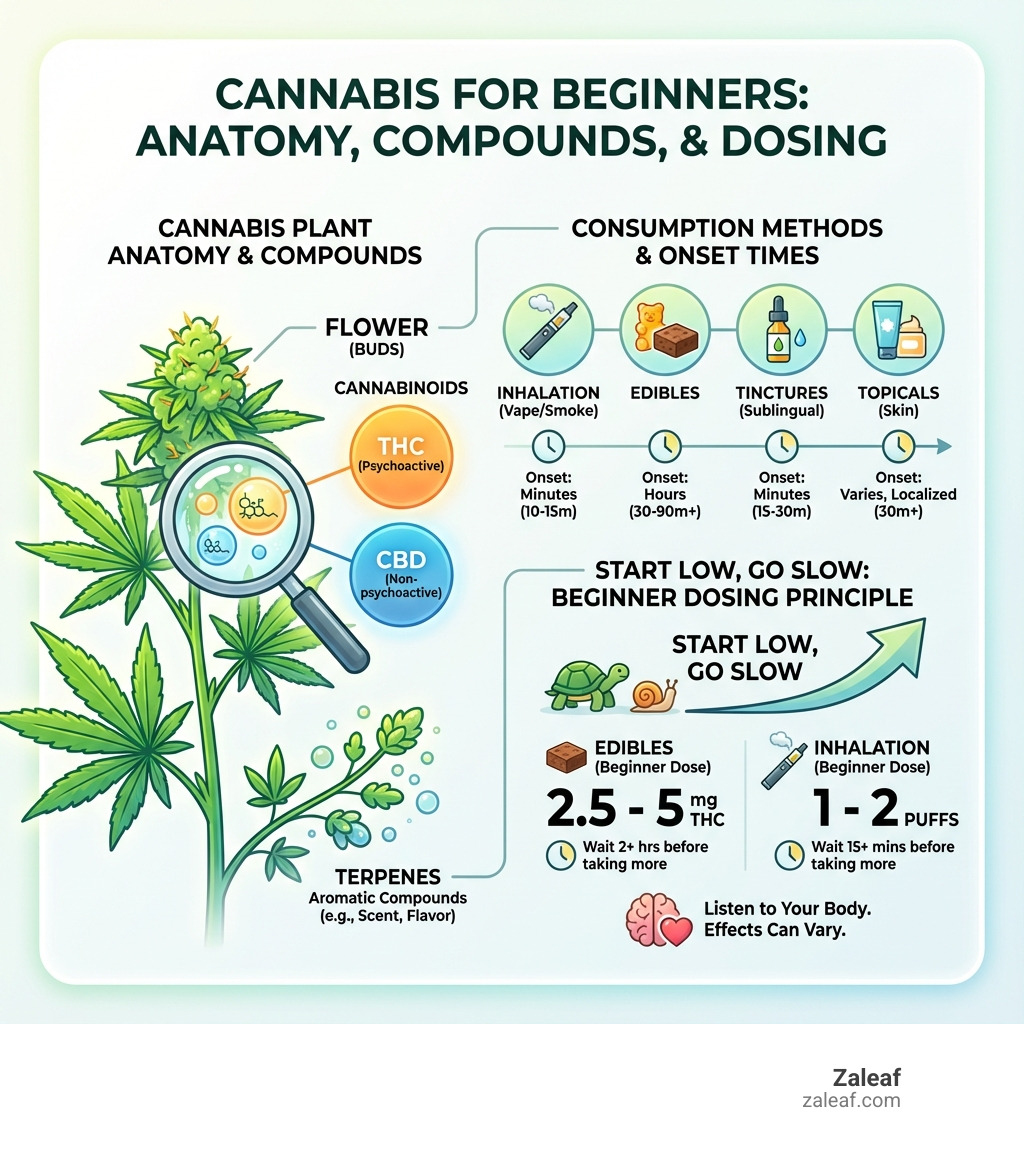
- What it is: Cannabis is a plant containing compounds called cannabinoids (like THC and CBD) that interact with your body's endocannabinoid system
- Main types: Hemp (less than 0.3% THC, federally legal) and marijuana (higher THC, state-dependent legality)
- How to use: Smoking, vaping, edibles, tinctures, or topicals—each with different onset times and durations
- Key rule: Start low and go slow—especially with edibles (2.5-5mg THC) or inhalation (1-2 puffs)
- Effects last: 2-4 hours for smoking/vaping, 4-8+ hours for edibles
The cannabis landscape has changed dramatically. As of 2025, half of US states have legalized recreational or medical programs. More than half of American adults have tried cannabis at least once. Yet many people still don't know where to start or how to choose products that are safe, tested, and right for their needs.
This guide cuts through the confusion. You'll learn what cannabis actually is, how it works in your body, the real differences between strains, and which consumption methods make sense for beginners. You'll also find how to dose safely, avoid common mistakes, and find high-quality products you can trust.
Whether you're exploring cannabis for relaxation, stress relief, better sleep, or simple curiosity, the key is education. Understanding the plant, its compounds, and how they affect you puts you in control of your experience.
I'm Max Shemesh, Owner & CEO of Zaleaf, and I've spent years helping people steer their cannabis journey through quality products and transparent education. This guide for cannabis for beginners reflects what I've learned from thousands of customers who started exactly where you are now—curious, cautious, and looking for reliable information.
What is Cannabis? The Essential Breakdown
At its core, cannabis is a plant, specifically a variety of the Cannabis Sativa genus. This remarkable psychoactive plant has been cultivated and used for thousands of years across various cultures for religious, medicinal, and recreational purposes. In fact, historically, the use of marijuana has been documented in ancient China, India, Greece, the Middle East, and beyond. Recent research even suggests its origins trace back to early Neolithic times in East Asia.
The world of cannabis can seem complex, especially with terms like "hemp" and "marijuana" thrown around interchangeably. Let's clear that up. While both come from the Cannabis sativa species, the U.S. legal difference hinges on one crucial factor: THC content.
According to US law, cannabis plants that produce less than 0.3% delta-9 THC by dry weight are considered industrial hemp. This 0.3% THC rule, enshrined in the 2018 Farm Bill, federally legalized hemp and hemp-derived products. If a cannabis plant contains more than 0.3% THC, it's regulated as marijuana. This distinction affects everything from cultivation to sales and consumption.
Despite the rapid state-level legalization, cannabis remains federally illegal and is still categorized as a Schedule I drug under the Controlled Substances Act of 1970. This creates a complex legal landscape. For beginners, understanding the law and your edibles: what's legal in the world of Delta-9 and hemp is crucial for safe and responsible use.
How Cannabis Interacts with Your Body
So, how does this plant actually affect us? The answer lies in a fascinating biological system within our bodies called the Endocannabinoid System (ECS). Think of your ECS as your body's master regulator, responsible for maintaining balance (homeostasis) across various functions.
How the ECS works is truly remarkable. It's composed of endocannabinoids (cannabinoids your body naturally produces), receptors (CB1 and CB2), and enzymes that break them down. These receptors are found throughout your brain, central nervous system, immune system, and other organs. The ECS is believed to be responsible for regulating sleep, memory, mood, appetite, pain, and immune function.
When you consume cannabis, the cannabinoids from the plant—known as phytocannabinoids—interact with your ECS. THC and CBD, for example, attach to these CB1 and CB2 receptors. Once this happens, these compounds influence your ECS, leading to the various effects we associate with cannabis. The strength and duration of these effects can vary widely from person to person, depending on individual body chemistry and the specific product consumed.
Decoding the Experience: Strains, Terpenes, and Effects
For many cannabis for beginners guides, you might hear about "Indica for relaxation" and "Sativa for energy." While these classifications offer a starting point, the reality of cannabis effects is far more nuanced. The complexity of a strain goes far beyond a simple label; it's about the unique chemical profile of each plant.
The effects you experience from cannabis are a symphony played by hundreds of compounds, not just one or two. That's why we focus on enhancing cannabinoid and terpene profiles for mood-specific effects in our products.
The Building Blocks: Cannabinoids and Terpenes
The cannabis plant is a treasure trove of compounds. Among the most important are cannabinoids and terpenes.
There are over 100 cannabinoids, each with its own potential effects. The two most well-known are:
- THC (Tetrahydrocannabinol): This is the cannabinoid primarily responsible for the psychoactive effects, or the "high," that cannabis is famous for. THC interacts strongly with CB1 receptors in the brain, leading to changes in perception, mood, and appetite. To learn more about its impact, dive into how THC shapes the cannabis experience: a deep dive.
- CBD (Cannabidiol): Unlike THC, CBD is non-intoxicating, meaning it won't produce a "high." It's often sought after for its potential therapeutic benefits, such as promoting relaxation and reducing discomfort. For a comprehensive overview, check out CBD oil: your guide to its potential health advantages.
Beyond cannabinoids, cannabis also contains terpenes. These are the aromatic oils found in many plants that give them their unique smell and taste—think of the distinctive scent of pine, citrus, or lavender. In cannabis, terpenes contribute to the effects by interacting with cannabinoids and the ECS. They influence everything from the aroma of your flower to the specific feelings a strain might evoke.
Indica, Sativa, and Hybrid: What's the Real Difference?
While the scientific community acknowledges Cannabis sativa as a single species, the terms Indica, Sativa, and Hybrid are still widely used in dispensaries and by consumers to describe general characteristics and anticipated effects.
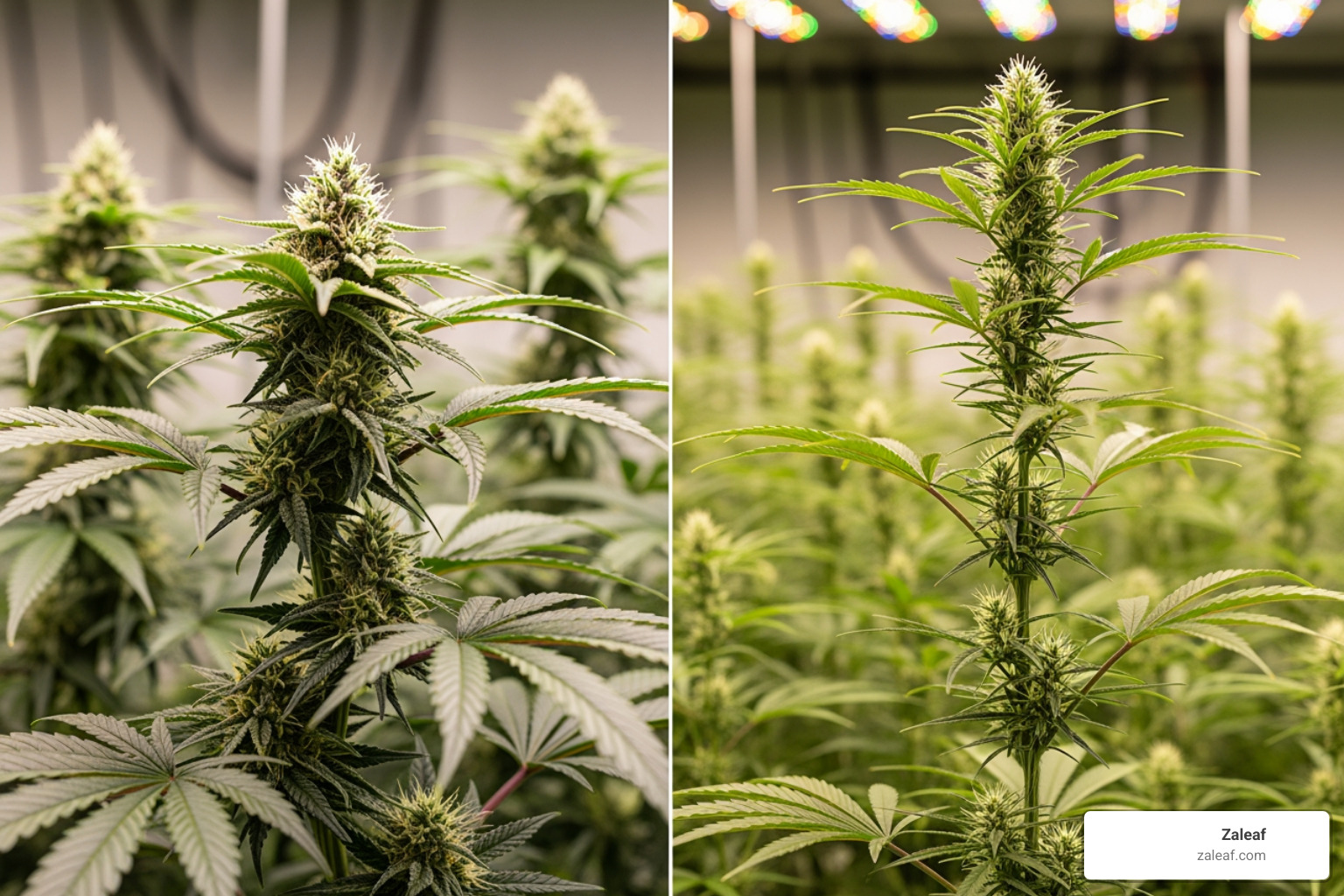
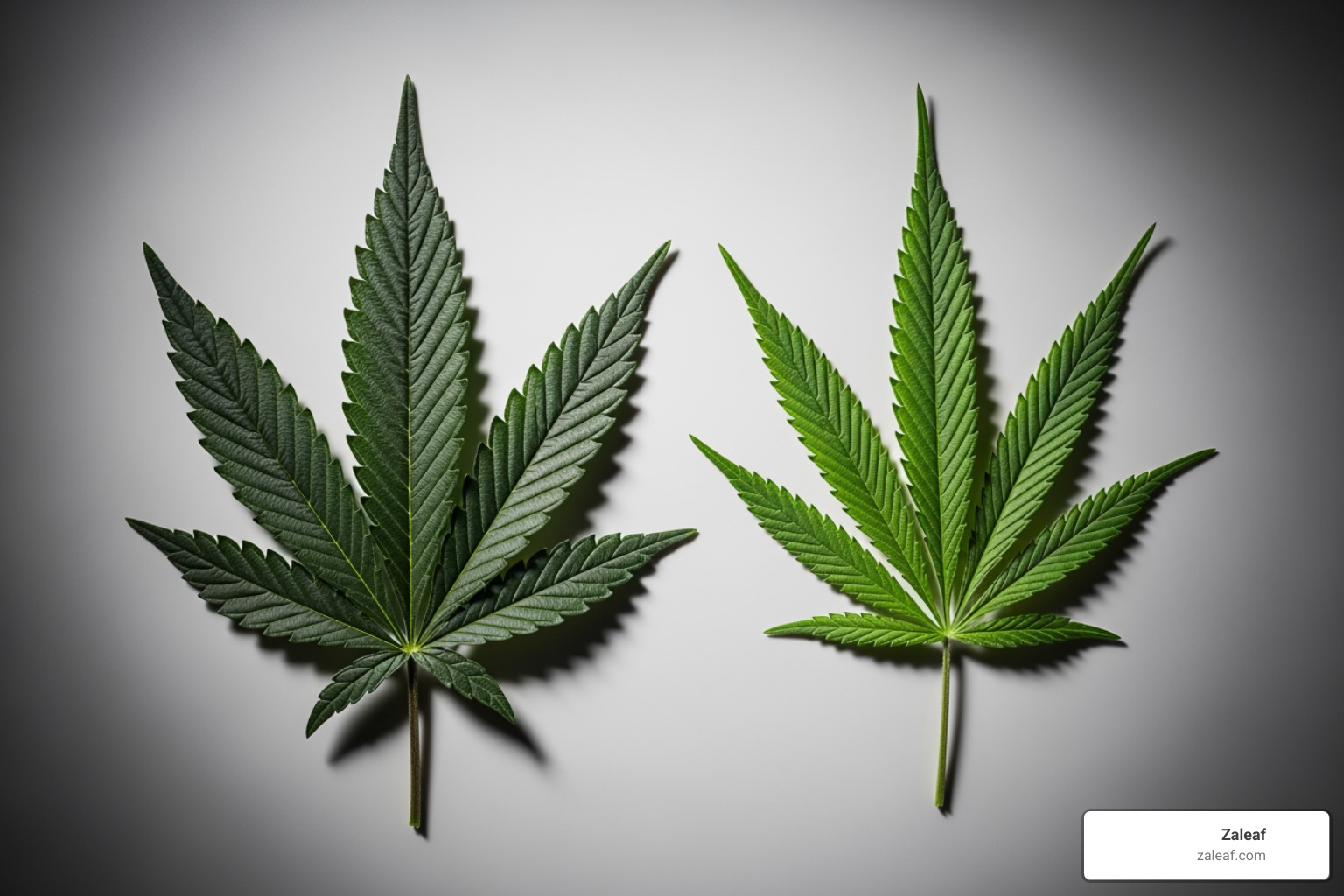
- Indica Strains: Traditionally described as short, bushy plants with wide leaves, Indica strains are often associated with relaxing, body-specific effects. Many users seek them out for evening use, believing they promote calm and aid sleep.
- Sativa Strains: Characterized by tall, thin plants with narrow leaves, Sativa strains are frequently described as energizing and cerebral. Users often choose them for daytime use, creativity, and uplifting effects.
- Hybrid Strains: As the name suggests, hybrids are a cross between Indica and Sativa strains, offering a blend of effects. They can be Sativa-dominant, Indica-dominant, or a balanced mix, allowing for a wider spectrum of experiences.
However, as we mentioned, the true effects are more complex than just these categories. The specific combination of cannabinoids and terpenes in a given product, known as the Entourage Effect, often plays a more significant role. This theory suggests that these compounds work synergistically, enhancing each other's benefits and moderating potential side effects. That's why at Zaleaf, we focus on crafting products with specific cannabinoid and terpene profiles to deliver targeted mood-specific effects, helping you find your perfect experience. For more on selecting the right vape, see choosing your pen: a deep dive into Indica, Sativa, and hybrid vapes.
Potential Therapeutic and Wellness Benefits
Beyond recreational use, cannabis has a growing number of potential therapeutic and wellness applications. While research is ongoing, many users report significant benefits.
Managing discomfort is the most common application of medical marijuana. Cannabis has been explored for its potential to alleviate various types of pain, reduce inflammation, and ease muscle spasms. Many people turn to it for stress relief, finding that certain strains can promote a sense of calm and well-being. For a deeper look, explore cannabis for wellness: exploring its role in relaxation, pain, and stress.
Other reported benefits include:
- Sleep Aid: Many find cannabis helps them fall asleep faster and stay asleep longer.
- Appetite Stimulation: Often referred to as "the munchies," cannabis can increase appetite, which is beneficial for those struggling with eating disorders or side effects from certain medical treatments.
- Mood Improvement: Some users report an uplifted mood, increased creativity, and reduced feelings of anxiety or depression.
It's important to consult with a healthcare professional before using cannabis for medical conditions.
How to Use Cannabis: A Beginner's Guide to Consumption Methods
As a cannabis for beginners guide, we want to help you steer the many ways to enjoy this plant. Each method offers a different experience in terms of onset time, duration, and intensity. Finding what works best for you is part of the journey!
Inhalation: Smoking and Vaping
Inhalation methods are popular for their rapid onset of effects, making them easier to control for beginners (if you take small doses).
-
Smoking: This is the most traditional method, typically involving dried cannabis flower rolled into joints, packed into pipes, or filtered through water in bongs.
- Pros: Fast onset (minutes), easy to titrate (take small puffs and wait).
- Cons: Can be harsh on the lungs, smoke odor, combustion byproducts.
- Onset Time: Within minutes.
- Duration: 2-4 hours.
- Gear: Grinder, lighter, rolling papers/pipe/bong.
-
Vaping: Vaporizers heat cannabis oil or flower to a temperature that vaporizes the cannabinoids and terpenes without burning the plant material. This creates a vapor, not smoke. Vape pens and cartridges are discreet and convenient options.
- Pros: Smoother on the lungs than smoking, less odor, fast onset, precise dosing with some devices.
- Cons: Can be expensive initially, requires charging.
- Onset Time: Within minutes.
- Duration: 2-4 hours.
- Gear: Vape pen (battery) and cartridge. For more details, explore the ultimate guide to cannabis vape carts: from THC to CBD.
Ingestion: Edibles and Tinctures
Ingestion methods offer a different experience, characterized by delayed onset but longer-lasting effects.
-
Edibles: These are cannabis-infused food or drink products, like gummies, chocolates, and beverages. They're discreet and come in pre-measured doses.
- Pros: Discreet, long-lasting effects, no lung irritation.
- Cons: Delayed onset (can lead to overconsumption), effects can be more intense and harder to predict.
- Onset Time: 30 minutes to 2 hours (or longer).
- Duration: 4-8 hours (or longer in some cases).
- Gear: None, just your appetite! For a tasty introduction, check out an essential guide to cannabis chocolates. It's vital to understand edible expectations: when will your cannabis snack kick in? to avoid overdoing it.
-
Tinctures: These are liquid cannabis extracts, usually taken sublingually (under the tongue) using a dropper.
- Pros: Faster onset than edibles (due to sublingual absorption), precise dosing, discreet.
- Cons: Taste can be strong for some.
- Onset Time: 15-45 minutes (sublingually), longer if swallowed directly.
- Duration: 4-6 hours.
- Gear: None.
Other Methods: Topicals and Concentrates
These methods serve more specific purposes and may not be ideal for all beginners.
-
Topicals: Cannabis-infused creams, balms, and lotions applied directly to the skin.
- Pros: Localized relief for discomfort or inflammation, non-psychoactive (typically), no "high."
- Cons: Effects are limited to the application area.
- Onset Time: Varies, from minutes to an hour.
- Duration: Varies, several hours.
- Gear: None.
-
Concentrates: Highly potent forms of cannabis, such as dabs, wax, shatter, and oils. They have very high THC levels.
- Pros: Very potent, intense effects for experienced users.
- Cons: Extremely potent, easy to overconsume, specialized gear often required. Generally not recommended for beginners.
- Onset Time: Immediate.
- Duration: 2-4 hours.
- Gear: Dab rig or specialized vaporizer. If you're curious, dabs demystified: a beginner's guide to dabbing offers more info, but again, save this for later!
Starting Safely: Dosing, Side Effects, and Best Practices
The most important advice for cannabis for beginners is to prioritize safety and responsible use. The goal is to have a positive experience, and that starts with smart choices.
The Golden Rule for Cannabis Beginners: 'Start Low and Go Slow'
This isn't just a catchy phrase; it's the single most crucial piece of advice for anyone new to cannabis. Your individual body chemistry, tolerance, and even your mood can influence how cannabis affects you.
- For Edibles: Begin with a very low dose, typically 2.5-5mg of THC. Dose like a pro: mastering THC gummies dosage for beginners explains this in detail. After consuming, wait at least 2 hours (and preferably longer, up to 4 hours) before considering taking more. The effects can take a long time to kick in, and you don't want to overdo it.
- For Inhalation (Smoking/Vaping): Take 1-2 small puffs and then wait 10-15 minutes to assess the effects. Inhalation provides almost immediate effects, making it easier to gauge your response in real-time.
This "titration" method—slowly increasing your dose until you reach the desired effect—helps prevent an uncomfortable experience. You can always take more, but you can't take less!
Potential Effects and How to Handle Them
Cannabis affects everyone differently, but there are some common short-term effects:
- Euphoria and Relaxation: The desired effects for many.
- Sensory Improvement: Colors might seem brighter, music might sound richer.
- Dry Mouth ("Cottonmouth"): Very common, easily remedied by staying hydrated.
- Red Eyes: Also common, often relieved with eye drops.
- Increased Appetite ("Munchies"): Be prepared with snacks!
While many effects are positive, it's possible to experience some less pleasant ones, especially if you consume too much. These can include anxiety, paranoia, dizziness, or nausea. Potential side effects are real, but usually temporary.
What to do if you get "too high":
- Stay Calm: Remind yourself that the feeling is temporary and will pass.
- Hydrate: Drink water or juice. Avoid alcohol, as it can intensify effects.
- Find a Safe Space: Go to a quiet, comfortable place where you feel secure.
- Distract Yourself: Listen to calming music, watch a lighthearted show, or talk to a trusted friend.
- Consider CBD: Some users find that consuming CBD can help mitigate the intensity of a THC high.
- Rest: If possible, try to lie down and sleep it off.
For more on managing an intense experience, read the unwanted trip: common side effects of cannabis edibles.
Common Mistakes for Cannabis Beginners to Avoid
Learning from others' missteps can save you a lot of discomfort. Here are some common beginner mistakes to steer clear of:
- Overconsumption, Especially with Edibles: This is the most frequent mistake. Because edibles take longer to kick in, beginners often assume they haven't taken enough and consume more, leading to an overwhelming experience later. Patience is key!
- Mixing with Alcohol or Other Substances: Combining cannabis with alcohol can intensify effects unpredictably and increase the risk of adverse reactions. It's best to experience cannabis on its own first.
- Unsafe Environment: Your "set and setting" matter. Your first few experiences should be in a comfortable, familiar, and safe environment where you feel relaxed and have no pressing responsibilities.
- Driving Under the Influence: Never drive or operate heavy machinery after consuming cannabis. It impairs judgment and reaction time.
- Buying from Unregulated Sources: Unregulated products may contain harmful additives, pesticides, or inaccurate cannabinoid levels. Always purchase from reputable vendors who provide third-party lab testing. At Zaleaf, all our products undergo 3rd party testing, ensuring purity, potency, and safety. This is a critical aspect of beyond the label: demystifying third-party testing.
Frequently Asked Questions for the Canna-Curious
We hear a lot of questions from cannabis for beginners! Here are some of the most common ones to help further your understanding.
How do I know which cannabis product is right for me?
Choosing the right product depends entirely on your desired experience, lifestyle, and preferences. Consider these factors:
- Desired Effect: Are you looking for relaxation, energy, creativity, or pain relief? Review the cannabinoid and terpene profiles to match your goals.
- Onset Time Preference: Do you need immediate effects (vaping/smoking) or are you okay with a delayed onset for longer duration (edibles/tinctures)?
- Duration Needed: How long do you want the effects to last?
- Discretion: Do you need a discreet method (edibles, tinctures, vapes) or is odor not a concern (smoking)?
- Potency: Start with lower potency products as a beginner.
Our team at Zaleaf specializes in enhancing cannabinoid and terpene profiles for mood-specific effects, making it easier to find what you're looking for. For a deeper dive into edible choices, check out high standards: ranking the best cannabis edibles.
Is it legal to buy cannabis online?
The legality of buying cannabis online is a bit of a gray area and depends heavily on the product type and your location. Thanks to the 2018 Farm Bill, hemp-derived products (those with less than 0.3% delta-9 THC) are federally legal and can often be purchased online and shipped across state lines. This includes many CBD products and some Delta-8 THC products, which are derived from hemp.
However, state-specific laws vary significantly. Even if a product is federally legal, some states have their own restrictions. It's crucial to understand your local regulations. At Zaleaf, we offer 100% legal cannabis products, ensuring compliance with federal guidelines. We also provide fast shipping and discreet packaging, and in many cases, no ID or medical card is required for our hemp-derived offerings. For more on this topic, read high times ahead: finding legal edibles online. Always buy from reputable vendors who clearly state their products' legality and provide third-party lab results.
Will cannabis make me anxious?
While many people use cannabis to reduce anxiety, it can sometimes induce anxiety or paranoia, especially in beginners or if too much is consumed. Several factors play a role:
- Dosage: High doses of THC are more likely to cause anxiety. Sticking to the "start low and go slow" rule is paramount.
- Strain and Terpene Profile: Some strains, particularly those high in THC and certain terpenes, might be more prone to causing anxiety. Others, often those with higher CBD content or specific terpene profiles (like limonene or linalool), are often associated with calming effects.
- Individual Sensitivity: Everyone reacts differently. What calms one person might make another anxious.
- Set and Setting: Your current mood and environment significantly influence your experience. If you're already feeling anxious or in an uncomfortable setting, cannabis might amplify those feelings.
If you're prone to anxiety, consider starting with products that have a balanced THC:CBD ratio or are CBD-dominant. Explore chill out: discover the top cannabis strains for anxiety relief for more guidance on selecting appropriate strains.
Conclusion: Your Cannabis Journey Begins Now
Stepping into cannabis can be an incredibly enriching experience, opening doors to new avenues of relaxation, wellness, and self-findy. As a cannabis for beginners guide, our goal is to empower you with knowledge, turning confusion into confidence.
Remember the golden rules: understand the plant, know your body, and always start low and go slow. By making informed choices about product types, consumption methods, and dosage, you can ensure a safe and enjoyable journey.
At Zaleaf, we're committed to making your cannabis experience positive and accessible. We offer 100% legal cannabis products, specializing in enhancing cannabinoid and terpene profiles for mood-specific effects. All our products undergo rigorous 3rd party testing, and we pride ourselves on fast shipping and discreet packaging, often without the need for an ID or medical card.
Your cannabis journey is unique, and it begins now, armed with knowledge and a sense of curiosity. We encourage you to explore responsibly, listen to your body, and find the many ways cannabis can improve your life.
For more detailed information on cannabis laws and products, including state-specific insights, visit learn more about cannabis laws and products.