

Don't Be a Lab Rat: Why You Need Lab Tested THCa
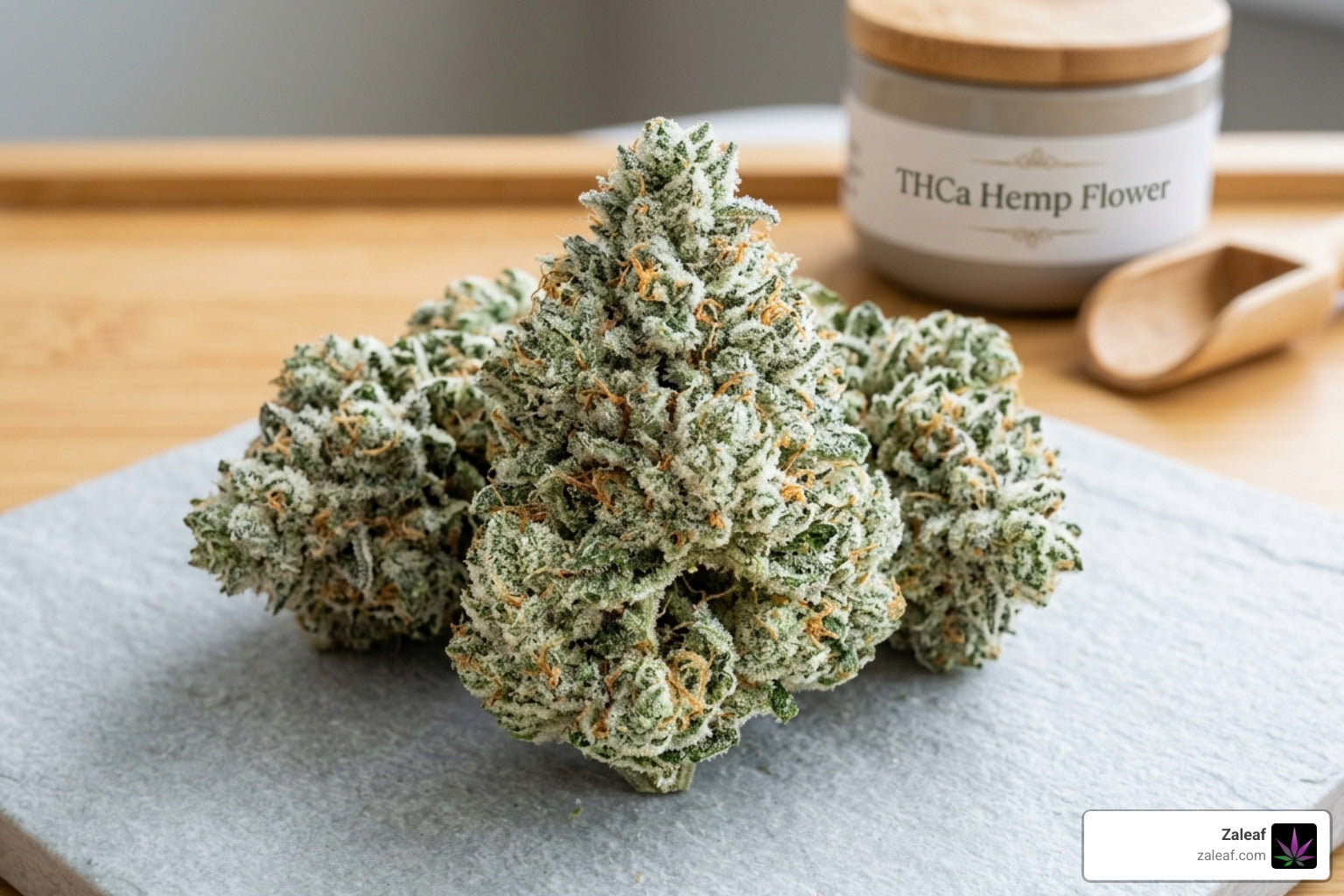
Why Lab Tested THCa Is the Only Safe Way to Shop
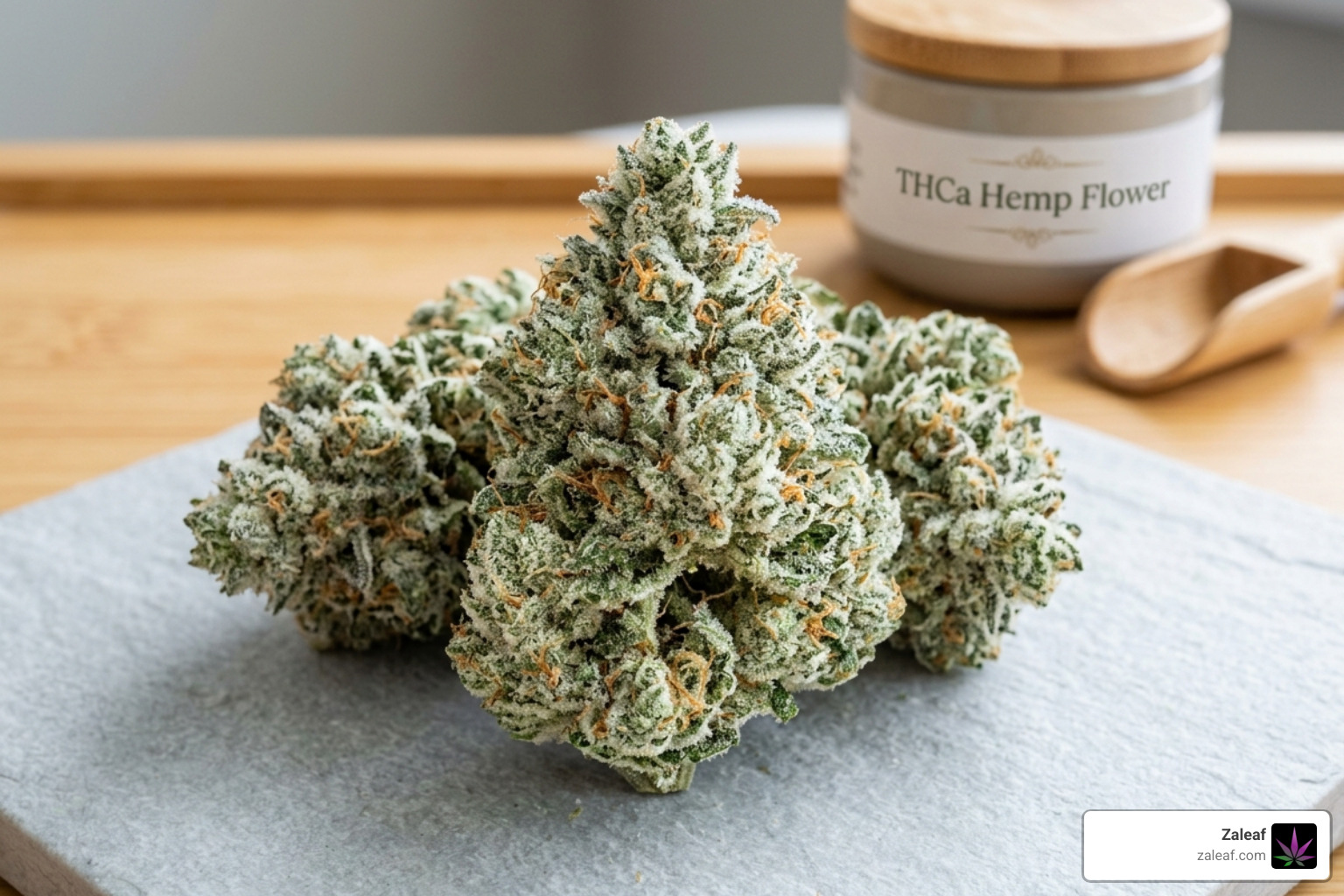
Lab tested THCa is hemp-derived flower that has been verified by an independent laboratory for potency, purity, and legal compliance — giving you proof of exactly what you're consuming before you ever light up.
Here's what lab testing confirms at a glance:
| What's Tested | Why It Matters |
|---|---|
| THCA percentage | Tells you actual potency (high-quality flower: 25%+) |
| Delta-9 THC level | Must be under 0.3% to be federally legal |
| Heavy metals | Prevents exposure to lead, arsenic, mercury |
| Pesticides & mycotoxins | Ensures the flower is safe to inhale |
| Terpene profile | Predicts effects and aroma |
The hemp market is growing fast. And with that growth comes a flood of products making big claims with zero proof to back them up. Some products are mislabeled. Others contain contaminants that have no business going into your lungs. A 2022 analysis found that 49 out of 53 hemp samples exceeded legal THC limits when THCA conversion was properly accounted for.
If you're spending real money on a product that's supposed to help you unwind after a brutal week — you deserve to know what's actually in it.
That's exactly what third-party lab testing solves. A Certificate of Analysis (COA) from an accredited lab doesn't just confirm potency. It tells you whether your flower is clean, compliant, and worth your trust.
I'm Max Shemesh, owner and CEO of Zaleaf, and I've spent years in the hemp and cannabinoid industry building a company around one core principle: transparency through verified quality, including every batch of lab tested THCa we carry. In that time, I've seen how much damage untested products can do — and how much confidence a clean COA creates. Let's break down exactly what you need to know.
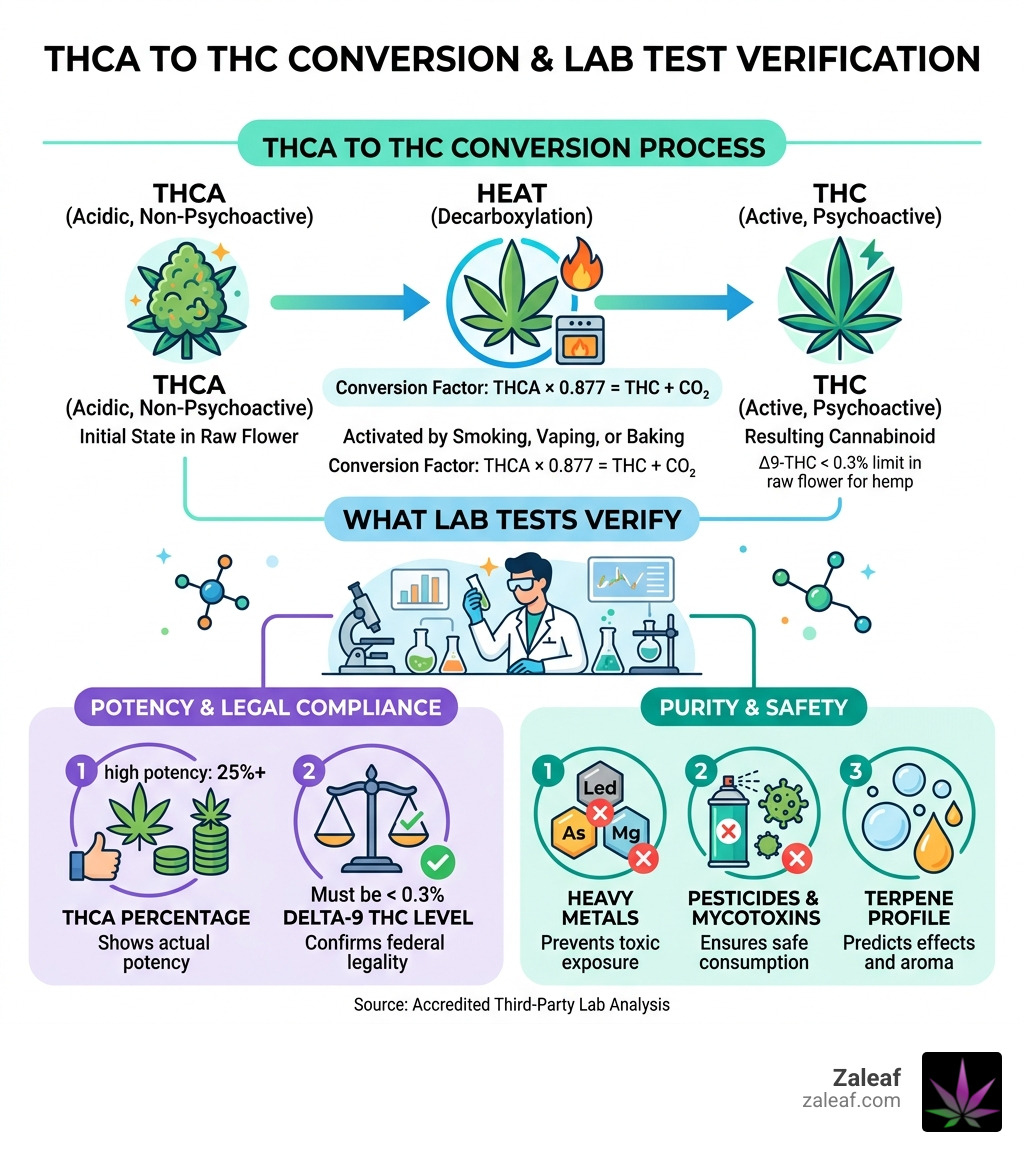
Terms related to lab tested THCa:
Understanding the Conversion: From Raw THCA to Psychoactive THC
To understand why lab tested THCa is so important, we first need to look at what THCA actually is. THCA, or tetrahydrocannabinolic acid, is the natural, non-intoxicating precursor to THC found in raw cannabis and hemp plants. In its raw form, THCA has a different molecular structure than THC—it contains an extra carboxyl group (an "acid" chain) that prevents it from fitting into the CB1 receptors in your brain.
Because it doesn't bind to these receptors, eating raw cannabis won't get you high. However, once you apply heat, a chemical reaction called decarboxylation occurs. This process "breaks off" that extra carboxyl group, transforming the non-psychoactive THCA into the delta-9 THC that provides the classic cannabis experience. If you've ever wondered what is THCa, think of it as the "raw" version of the cannabinoid that is just one spark away from activation.
According to research on THCA flower effects and benefits at ACS Laboratory, this conversion is exactly why THCA flower has become so popular. It offers a legal way to access potent cannabinoids that behave exactly like traditional cannabis once they are heated.
| Feature | Raw THCA | Heated THC |
|---|---|---|
| Psychoactive | No | Yes |
| Molecular Structure | Acidic (Extra CO2 group) | Neutral |
| Receptor Binding | Weak (Non-intoxicating) | Strong (CB1 activation) |
| Common Uses | Juicing, Tinctures, Wellness | Smoking, Vaping, Edibles |
The Science of Decarboxylation
The conversion from THCA to THC isn't a 1:1 swap in terms of weight. When that carboxyl group is removed, the molecule loses some mass. Scientists use a specific formula to calculate the "Total Potential THC" of a product. The standard conversion ratio is approximately 87.7%.
For example, if you have a high potency THCa strain that tests at 20% THCA, the math looks like this: (20% x 0.877) = 17.54% Total THC. This is why lab testing is so vital—it allows us to provide you with the exact potency you can expect once you light up or vaporize the flower. Whether you are smoking a bowl, using a dry herb vaporizer, or baking it into brownies, heat is the key that unlocks the psychoactive potential.
Therapeutic Potential of Raw Cannabinoids
While most people seek out THCA for its conversion to THC, there is a growing community interested in the benefits of the raw cannabinoid itself. Because it is non-psychoactive, some users juice raw hemp leaves or take THCA tinctures to access its neuroprotective and anti-inflammatory properties without the "high."
Choosing quality THCa flower ensures that whether you are using it for its raw benefits or for its activated effects, you are getting a product free from synthetic additives. High-quality, organically grown flower preserves the integrity of these cannabinoids, ensuring you get the full therapeutic potential of the plant.
Why Lab Tested THCa is the Gold Standard for Safety
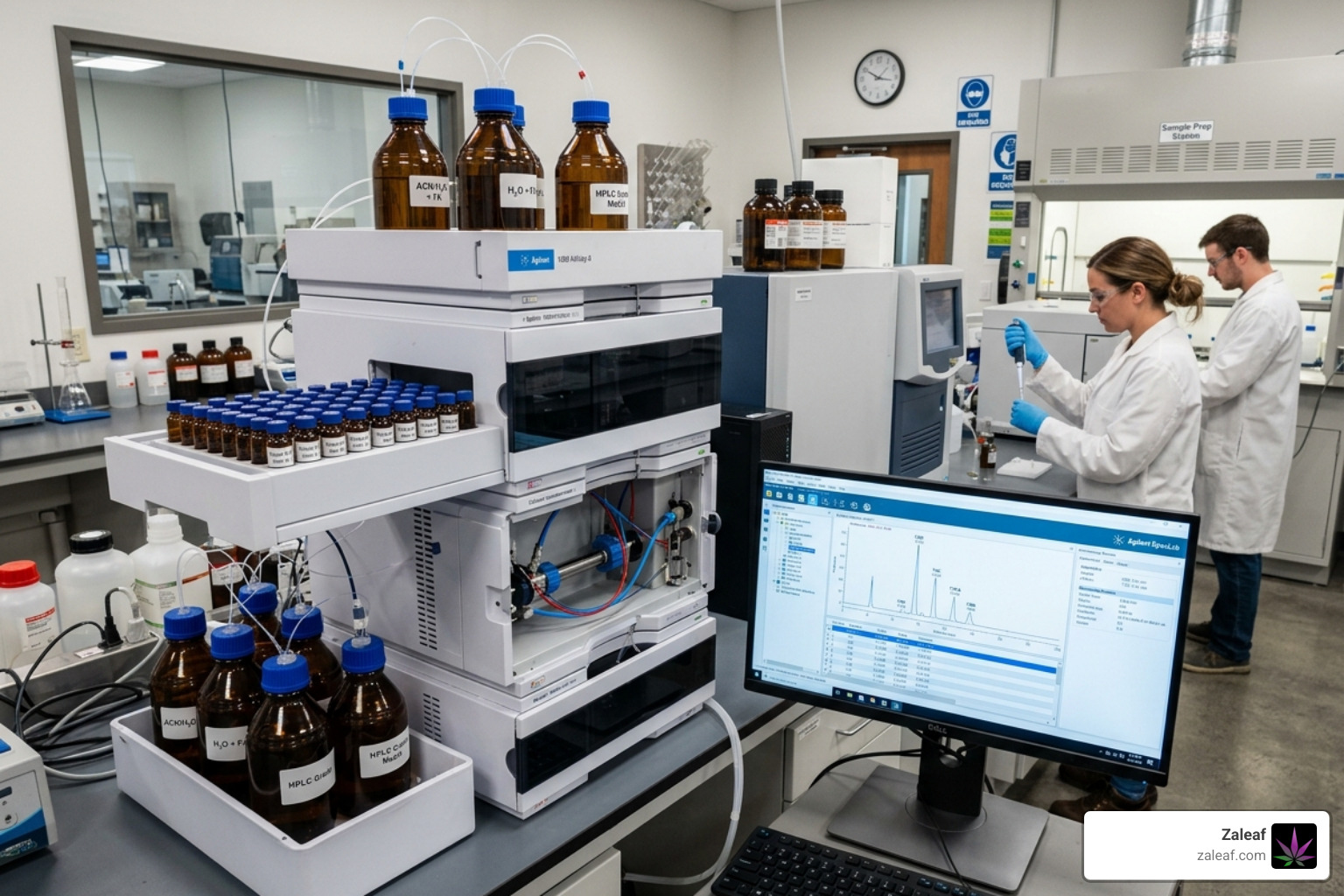
In an industry that is still finding its feet regarding regulation, lab tested THCa stands out as the only way to ensure you aren't being treated like a "lab rat" by unscrupulous sellers. We use high-performance liquid chromatography (HPLC) to test our products. This is the gold standard because it analyzes the cannabinoids at room temperature. Other methods, like gas chromatography, use heat which can accidentally convert the THCA into THC during the test, leading to inaccurate results.
The Risks of Skipping Lab Tested THCa
When you buy untested products, you are taking a gamble with your health. Hemp is a bioaccumulator, meaning it acts like a sponge, soaking up everything in the soil where it grows—both the good and the bad. Without cannabis third-party testing, you have no way of knowing if your flower contains:
- Heavy Metals: Lead, arsenic, and mercury can seep into the plant from contaminated soil.
- Pesticides: Chemicals used to ward off bugs can be toxic when inhaled.
- Mycotoxins: These are toxic compounds produced by fungi or mold that can grow during improper drying or storage.
- Residual Solvents: In the case of concentrates like diamonds or vapes, testing ensures no harmful chemicals like butane or ethanol are left behind.
Using lab tested cannabis is the only way to mitigate these risks. As we discuss in our guide on demystifying third-party testing, a "Pass" status on a lab report for these contaminants is non-negotiable for a premium experience.
Legal Compliance in May 2026
As of May 2026, the legal landscape for hemp has become more nuanced. Under the 2018 Farm Bill, hemp is defined as cannabis containing less than 0.3% Delta-9 THC by dry weight. Lab tested THCa flower is unique because it often contains very high levels of THCA (sometimes 25-30%) while remaining under that 0.3% Delta-9 threshold at the time of sale.
However, many states have moved toward "Total THC" requirements, which use the 87.7% conversion formula to determine legality. This makes it more important than ever to verify the COA before you buy THCa flower for sale. We stay ahead of these regulations to ensure that every product we ship is compliant and safe to land on your doorstep.
Decoding the COA: How to Verify Your Product
A Certificate of Analysis (COA) is the "birth certificate" of your cannabis. It provides a transparent look at the chemical makeup of the specific batch of flower you're holding. Understanding the ins and outs of third-party lab testing is the best way to become an empowered consumer.
Most reputable products will have a QR code on the packaging. When you scan it, you should be taken to a PDF that includes:
- The Lab Name: Ensure it is an accredited, independent third-party lab.
- Batch ID: This should match the number on your bag.
- Date of Testing: Freshness matters! Look for tests conducted within the last few months.
For a deeper dive, check out our essential guide to third-party lab testing.
Verifying Potency in Lab Tested THCa
When you look at the cannabinoid profile on a COA, you’ll see a list of various compounds. The most important for your experience is the THCA percentage. Premium, high-potency THCa usually sits between 20% and 30%. You should also look at the moisture content; flower that is too dry (under 8%) will be harsh to smoke, while flower that is too wet (over 15%) is at a high risk for mold growth.
We regularly provide detailed reviews of the top 10 third-party tested products to help you understand how these percentages translate to your actual experience.
Understanding Terpene Profiles
Potency isn't the only thing that matters. If you've ever noticed that two different strains with the same THC level give you completely different vibes, you're experiencing the "Entourage Effect." This is the synergy between cannabinoids and terpenes—the aromatic oils that give cannabis its smell and flavor.
Common terpenes found in lab tested THCa include:
- Limonene: Citrusy aroma; often associated with uplifting, anti-anxiety effects.
- Myrcene: Earthy/musky; known for sedation and the "couch-lock" feeling.
- Caryophyllene: Spicy/peppery; the only terpene that also acts as a cannabinoid, providing potential anti-inflammatory benefits.
By checking the terpene profile on your COA, you can choose a strain that matches the specific mood or effect you’re looking for.
Selecting Premium Strains Based on Lab Results
Choosing the right strain is about more than just picking a cool name. You want to look at the cultivation method and the lab results to ensure you're getting quality THCa flower. Indoor-grown flower usually offers the highest potency and terpene density because the environment is perfectly controlled.
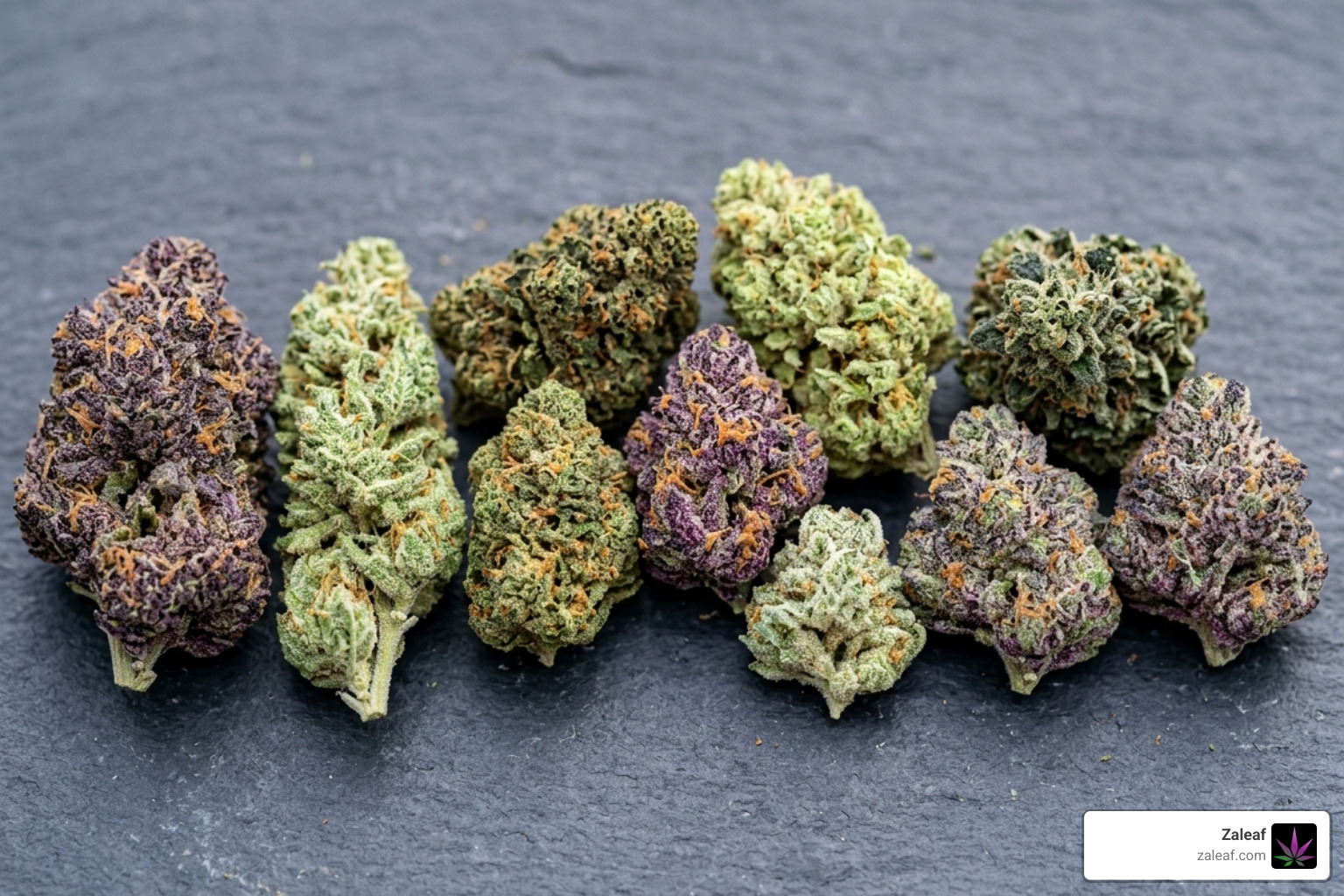
Daytime vs. Nighttime Lab Tested THCa
The lab report can help you categorize strains for different times of the day:
- Sativa (Daytime): Look for strains with high Limonene or Pinene. These are great for creative projects, social gatherings, or getting chores done with a smile.
- Indica (Nighttime): Look for high Myrcene or Linalool. These are your go-to for movie nights, deep relaxation, and a good night's sleep.
- Hybrid (Balanced): These offer a mix of both, perfect for those who want a mellow experience that doesn't put them straight to bed.
Identifying High-Purity Concentrates
If you're looking for the strongest experience possible, you might move beyond flower into concentrates. Lab tested THCa isolates and diamonds are the peak of purity, often reaching 99% THCA.
These are typically made through solventless extraction or highly refined processes that remove all plant matter, leaving only the crystalline cannabinoids. Because they are so concentrated, verifying the lab results is even more critical to ensure no residual solvents from the purification process remain.
Frequently Asked Questions about THCA
Is lab-tested THCA legal to ship to my state?
As of May 2026, THCA flower that contains less than 0.3% Delta-9 THC is federally legal under the 2018 Farm Bill. However, state laws vary. Some states have "Total THC" laws that effectively ban high-THCA hemp. We stay updated on all state regulations and only ship to jurisdictions where it is legal to do so.
Will THCA show up on a drug test?
Yes. Most drug tests look for the metabolite THC-COOH, which your body produces after processing both Delta-9 THC and THCA. Additionally, since most people heat THCA (converting it to THC) before consuming it, it will absolutely show up on a standard drug screen.
How do I know if a lab report is authentic?
Always check for a signature from the lab director and an accreditation seal (like ISO 17025). You can also contact the laboratory directly with the Sample ID found on the COA to verify that the results haven't been altered.
Conclusion
At Zaleaf, we believe you shouldn't have to guess what's in your cannabis. We specialize in enhancing cannabinoid and terpene profiles to give you mood-specific effects that you can actually rely on. Every product we offer undergoes rigorous 3rd party testing to ensure it is 100% legal, potent, and pure.
Whether you're looking for a sativa to spark your creativity or an indica to help you sink into the couch, we provide the lab tested THCa you need with fast shipping and discrete packaging. No medical card or ID is required—just a commitment to quality.
Ready to experience the difference that verified quality makes? Check out our guide on navigating online cannabis purchases and join the thousands of customers who trust us for their legal cannabis needs. Don't be a lab rat—shop tested, shop Zaleaf.