

How to Ensure Your Cannabis is Lab Tested and Safe
Why Lab Tested Cannabis Matters for Your Safety

Lab tested cannabis is cannabis that has been analyzed by an accredited third-party laboratory to verify its potency, purity, and safety before it reaches consumers.
Here's what lab testing covers at a glance:
| Test Type | What It Checks |
|---|---|
| Cannabinoid Potency | THC, CBD, and other cannabinoid levels |
| Pesticides | Up to 66 analytes screened in California |
| Heavy Metals | Lead, mercury, cadmium, arsenic |
| Microbial Impurities | Bacteria, yeast, mold, pathogens |
| Mycotoxins | Aflatoxins, Ochratoxin A |
| Residual Solvents | Benzene, butane, and other processing chemicals |
| Terpene Profile | Flavor, aroma, and effect indicators |
| Foreign Materials | Insect fragments, filth, physical contaminants |
Without this testing, there is no reliable way to know what is actually in a cannabis product — or whether it is safe to consume.
The cannabis market has grown fast. But not every product on the shelf has been verified. Many over-the-counter products are not tested as rigorously as regulated cannabis. That gap matters, especially if you are using cannabis for stress relief or relaxation and want consistent, predictable results.
I'm Max Shemesh, owner and CEO of Zaleaf, and throughout my career scaling cannabinoid brands into 300+ retail locations nationwide, lab tested cannabis has been the non-negotiable foundation of every product I've built. In the sections below, I'll walk you through exactly what lab testing involves, how to read the results, and what to look for when choosing a product you can trust.
Lab tested cannabis definitions:
The Essential Guide to Lab Tested Cannabis
When we talk about lab tested cannabis, we aren't just talking about a sticker on a jar. True safety begins with ISO 17025 accreditation. This is a global standard that ensures a laboratory has the technical competency to produce valid, reliable results. In states like California, this accreditation is mandatory for any lab handling compliance testing. It’s the difference between a "guess" and a scientific fact.
Third-party verification is the backbone of consumer trust. It means the people making the product aren't the ones grading their own homework. An independent lab acts as a neutral judge, ensuring that what’s on the label is actually inside the package. This process is vital because it protects you from "label inflation"—where companies might exaggerate THC levels—and, more importantly, from hidden dangers like mold or lead.
Understanding the ins and outs of third-party lab testing helps you navigate a crowded market. Whether you are looking for flower, vapes, or edibles, seeing that a product has been vetted by an outside source gives you the peace of mind that we prioritize at Zaleaf. For a deeper dive into why this matters, you can explore more info about third-party testing.
Why Lab Tested Cannabis is Critical for Consumer Safety
Public health is the primary driver behind strict testing mandates. Cannabis plants are "bioaccumulators," meaning they are incredibly good at sucking up whatever is in the soil—including heavy metals and pesticides. Without comprehensive contaminant screening, you could unknowingly be inhaling concentrated toxins.
In California, for example, the Bureau of Cannabis Control outlines strict requirements for labs to ensure that no harmful substances reach the shelf. These tests look for things you can’t see, smell, or taste. From microscopic fungal spores to trace amounts of butane left over from the extraction process, lab testing is the only shield between the consumer and potential illness.
Potency accuracy is another huge factor. If a label says 20% THC but the product is actually 30%, an inexperienced user could have a very uncomfortable afternoon. Conversely, if it’s only 10%, you aren't getting what you paid for. Beyond the label: demystifying third-party testing is about ensuring that your experience is exactly what you planned for.
How to Verify Lab Tested Cannabis Using a COA
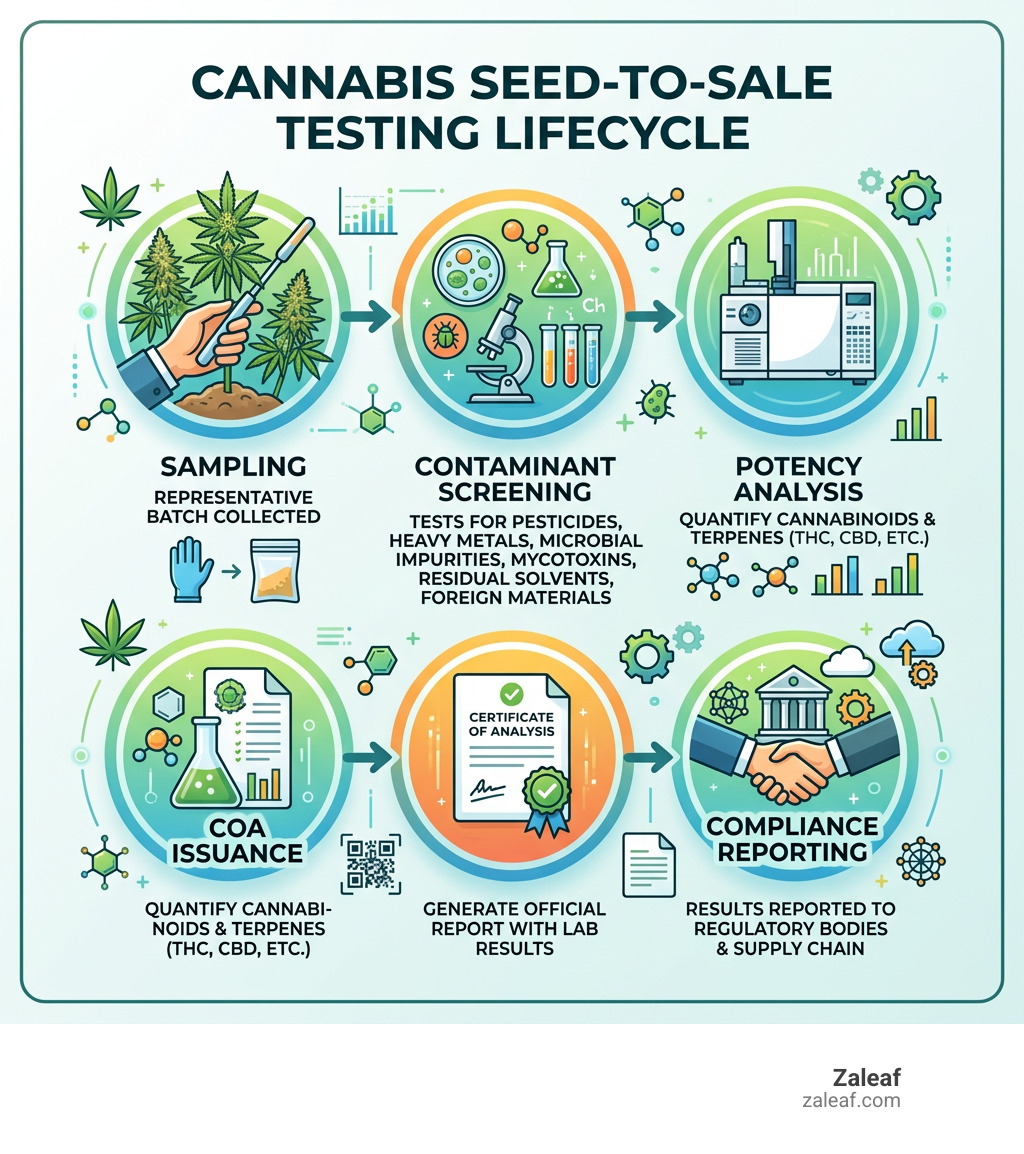
The most important document in the industry is the Certificate of Analysis (COA). Think of it as a product's birth certificate and medical record combined. A legitimate COA should include:
- A unique batch number.
- The name and license number of the testing lab.
- Detailed results for all required safety tests (Pass/Fail).
- A breakdown of cannabinoids and terpenes.
Many modern products now include QR codes on the packaging. When you scan these, they should take you directly to a PDF of the COA. If a company doesn't provide this, or if the "batch number" on the bag doesn't match the report, that’s a major red flag.
In regulated markets, these results are uploaded to "track and trace" systems like Metrc, ensuring regulators can see the data in real-time. For those curious about what a high-quality report looks like, checking out detailed reviews of the top 10 third-party tested cannabis products can give you a baseline for comparison.
State-Specific Compliance: California and Florida Standards
Testing isn't a "one size fits all" deal; different states have different rules. California and Florida represent some of the most rigorous standards in the country. In California, the Department of Cannabis Control (DCC) requires labs to test for 66 specific pesticide analytes. In Florida, the Department of Health (DOH) governs medical cannabis through Statute 381.986, ensuring that any "minimum risk" pesticides used are exempt from tolerance requirements.
One of the most critical parts of this process is representative sampling. A lab can't just test the "prettiest" bud from the top of the pile. In California, for a harvest batch of flower, the sample must be at least 0.35% of the total batch weight. If the batch is 10 pounds or less, the sampler must take at least 8 separate "increments" from different parts of the container to ensure the sample truly represents the whole batch.
Distributors must follow a representative sampling checklist to stay compliant. This prevents "cherry-picking" and ensures that the safety data applies to every single gram sold to the public.
Compliance vs. R&D Testing Requirements
Not all testing is for the government. There is a big difference between Compliance Testing and R&D (Research and Development) Testing.
- Compliance Testing: This is the "final exam." The results are sent to state regulators, and if the batch fails, it cannot be sold without remediation. These tests focus on "action levels"—specific thresholds that contaminants cannot exceed.
- R&D Testing: This is like a "practice test." Growers and manufacturers use R&D testing to check their progress, fine-tune their cannabinoid profiles, or catch problems early. The best part? R&D results are typically private and not reported to regulators, allowing businesses to fix issues before the final compliance check.
For instance, Florida’s medical cannabis testing standards require passing scores on everything from filth to heavy metals before a product can be dispensed to a patient.
Sampling Protocols for Lab Tested Cannabis
The logistics of sampling are more complex than most people realize. When a lab technician arrives at a facility, they are often under video surveillance. They must ensure the batch is "final form"—meaning if it's going to be sold as pre-rolls, it must be sampled as pre-rolls.
We have to look at several factors:
- Batch Size: As mentioned, larger batches require more increments.
- Moisture Content: Flower must typically have a moisture content below 15% to pass. High moisture leads to mold growth during storage.
- Water Activity: This measures how much "free" water is available for microbes to grow. It’s a key predictor of shelf stability.
Learning how to spot third-party tested quality starts with understanding that the sample tested was a fair and honest representation of the product you’re holding.
The Science of Safety: Testing for Contaminants and Potency
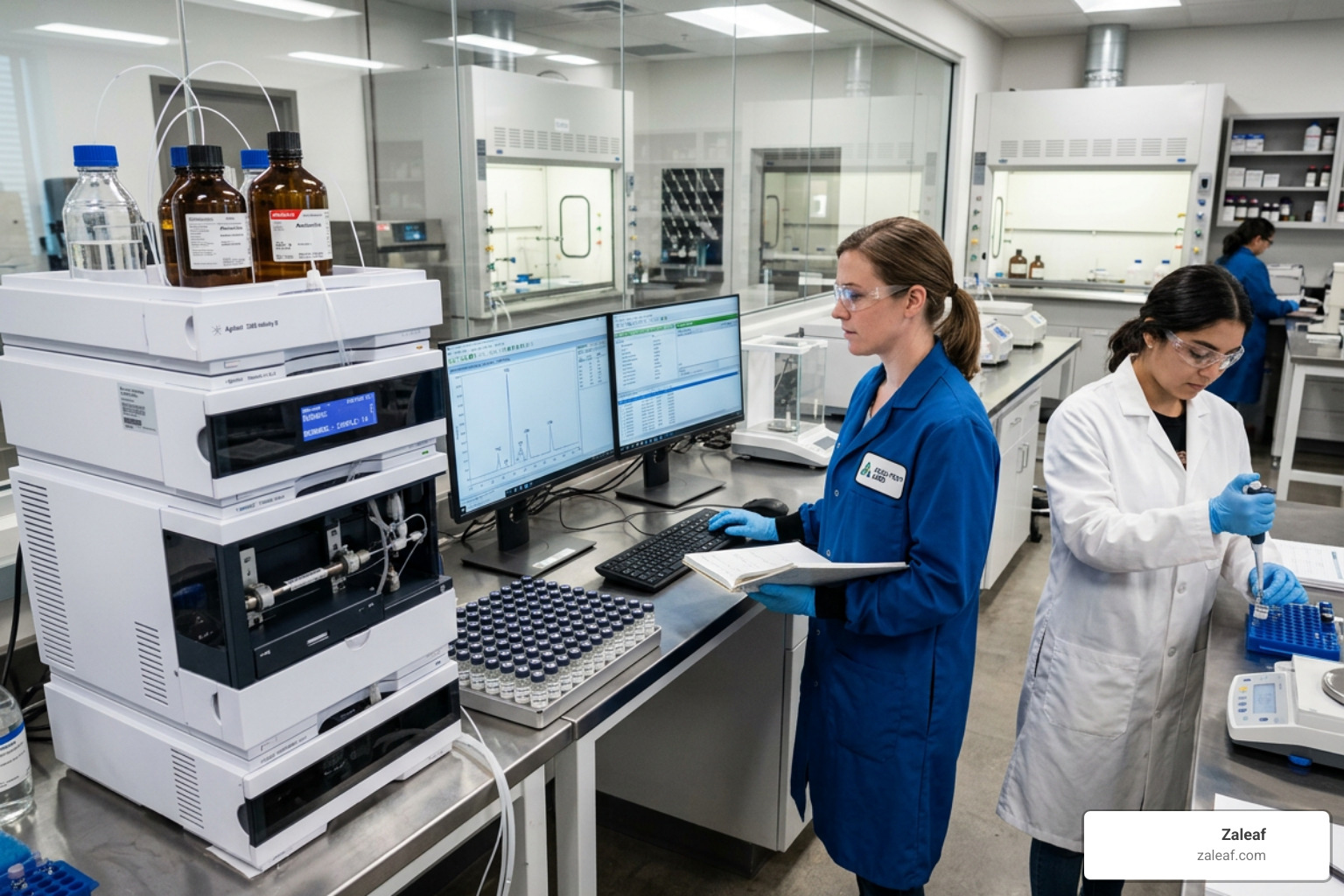
Modern cannabis labs use high-tech equipment like High-Performance Liquid Chromatography (HPLC) and Gas Chromatography-Mass Spectrometry (GC-MS). These machines can detect molecules at the "parts per billion" level. That is equivalent to finding one specific drop of water in an Olympic-sized swimming pool!
Cannabinoid and Terpene Profiling
While safety is the priority, "potency" is what most consumers look for first. But "Total THC" isn't just one number on a screen. Because most THC in the raw plant exists as THCA (an acid form that isn't psychoactive until heated), labs use a specific formula: Total THC = (THCA x 0.877) + Delta-9 THC
This accounts for the weight lost when the THCA molecule drops its "acid" chain during decarboxylation (smoking or baking).
Beyond cannabinoids, we look at terpene profiling. Accredited laboratories can analyze up to 39 prominent terpenes, such as Myrcene, Limonene, and Pinene. These compounds are responsible for the "entourage effect," where cannabinoids and terpenes work together to create specific moods—like relaxation or focus. Some labs now offer "chemometric reporting," which provides a visual "fingerprint" of the strain's aroma and effects. You can find more info about the essential guide to third-party lab testing to see how these profiles help you choose the right product.
Residual Solvents and Foreign Materials
For extracts like wax, shatter, or vape oil, solvents like butane, ethanol, or propane are often used. If the "purging" process isn't done correctly, these chemicals can stay in the final product. California divides these into two categories:
- Category I: Extremely dangerous chemicals like Benzene (a known carcinogen). The limit is zero. If even a trace is found, the batch fails.
- Category II: Common solvents like Butane. These have "action levels" (e.g., 5000 µg/g for inhalables).
Labs also perform a "filth and foreign material" test. This involves looking at the sample under a microscope to ensure there are no:
- Insect fragments (limited to 1 per 3g).
- Hair or mammal excrement.
- Sand, soil, or cinders.
- Mold or mildew covering more than 25% of the area.
For a deep dive into these technical limits, you can review the scientific overview of California cannabis testing menus.
Pesticide Action Levels (California)
To give you an idea of how strict these rules are, here is a comparison of some common pesticide limits:
| Pesticide | Category | Inhalable Limit (µg/g) | Other Product Limit (µg/g) |
|---|---|---|---|
| Abamectin | II | 0.1 | 0.3 |
| Chlorpyrifos | I | No Detection Allowed | No Detection Allowed |
| Daminozide | I | No Detection Allowed | No Detection Allowed |
| Myclobutanil | II | 0.1 | 9.0 |
| Paclobutrazol | I | No Detection Allowed | No Detection Allowed |
Remediation and Retesting: What Happens if a Batch Fails?
A "Fail" on a lab report isn't always the end of the road, but it is a serious hurdle. When a batch fails, the distributor has two choices: destruction or remediation.
- Remediation: This is the process of removing the contaminant. For example, if a batch of flower fails for yeast and mold, it might be processed into "distillate" oil. The high heat and filtration used in extraction often destroy the microbes, making the resulting oil safe. However, the manufacturer must submit a formal remediation plan to the DCC or relevant state authority.
- The Two-Strike Rule: In California, a batch can only be remediated and retested twice. If it fails the second retest, the entire batch must be destroyed under supervision.
- Retesting: A retest must be performed by the same lab that issued the failure, or a new lab if the state allows, and the results must be reported back to the "track and trace" system to clear the hold on the product.
The DCC remediation guidelines ensure that no one can simply "shop around" for a passing result after a failure. This integrity is what keeps the legal market safe.
Frequently Asked Questions about Cannabis Testing
What is the difference between Category I and Category II pesticides?
Category I pesticides are those that are strictly prohibited by the EPA for use on crops or are known to be highly toxic and persistent in the environment. In California, any detection of a Category I pesticide results in an automatic failure. Category II pesticides are those that may be used in certain agricultural settings but must stay below specific "action levels" (measured in parts per million) to be considered safe for human consumption.
How is total THC calculated on a lab report?
Total THC is calculated using the formula: (THCA x 0.877) + Delta-9 THC. This is necessary because THCA (Tetrahydrocannabinolic acid) is the raw, non-psychoactive form found in the plant. When you heat the cannabis (decarboxylation), the THCA loses a carboxyl group, turning into THC. Since the molecule becomes lighter during this process, the 0.877 multiplier accounts for that change in mass, giving you an accurate estimate of the "active" THC available.
Can a failed cannabis batch be sold after remediation?
Yes, but only if it passes a rigorous retesting process. The manufacturer must first get an approved remediation plan from state regulators. After the product is treated (for example, turning moldy flower into clean oil), it must be sampled and tested again. If it passes all safety hurdles on the retest, it can be released for sale. If it fails twice, it must be destroyed.
Conclusion
At the end of the day, lab tested cannabis is about accountability. It’s about knowing that the product you’re using to unwind at the end of a long day isn't bringing along unwanted guests like lead, butane, or illegal pesticides.
At Zaleaf, we take this science seriously. We offer 100% legal cannabis products that are Farm Bill compliant and undergo rigorous 3rd party testing to ensure every gummy, vape, and flower bud meets the highest standards of purity. We specialize in enhancing cannabinoid and terpene profiles to give you the specific mood-lifting or relaxing effects you’re looking for—without the guesswork.
The best part? You can get these high-quality, verified products delivered right to your door with fast shipping and discrete packaging. No medical card or ID is required to browse our selection. If you’re ready to experience the difference that true lab-tested quality makes, you can even order lab-tested vapes online without an ID and have them shipped directly to you.
Stay safe, stay informed, and always look for the COA. Your health is worth the extra few seconds it takes to scan a QR code.