

Top 510 Thread Batteries with Auto Shut-Off and Energy Saving Features
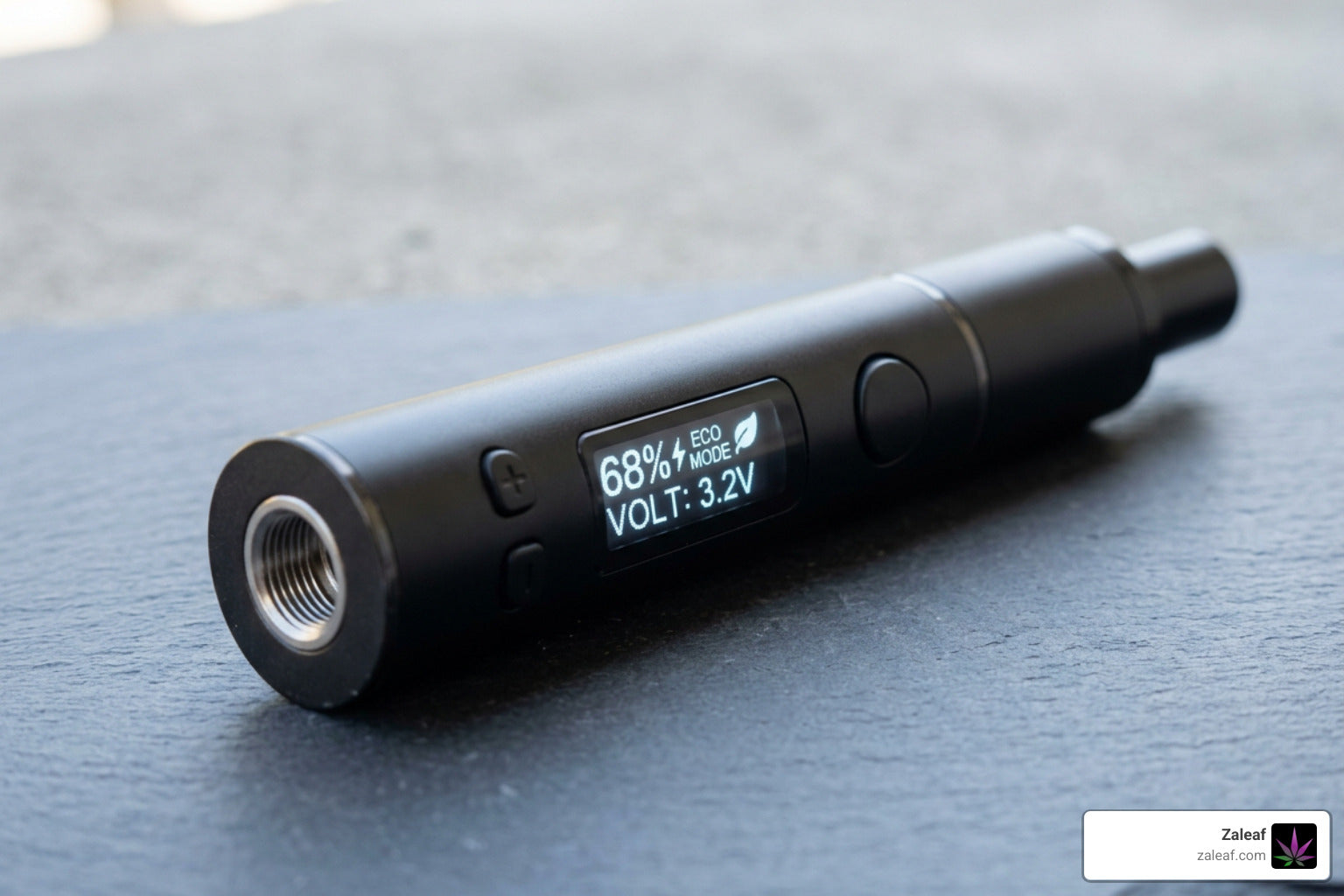
Why Your 510 Battery Energy Saver Choice Matters More Than You Think
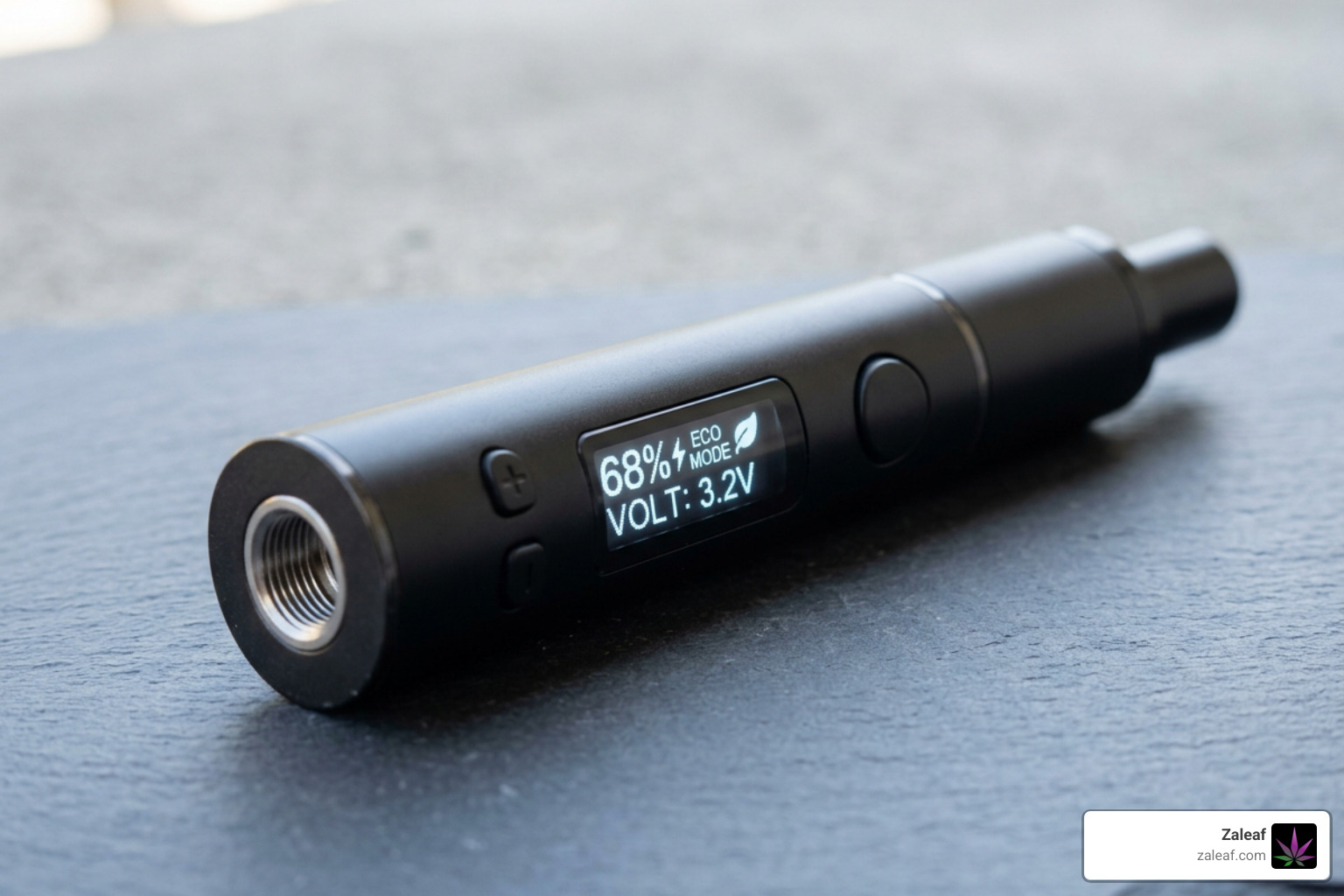
Finding the right 510 battery energy saver is one of the easiest ways to get more out of every charge — and every cartridge.
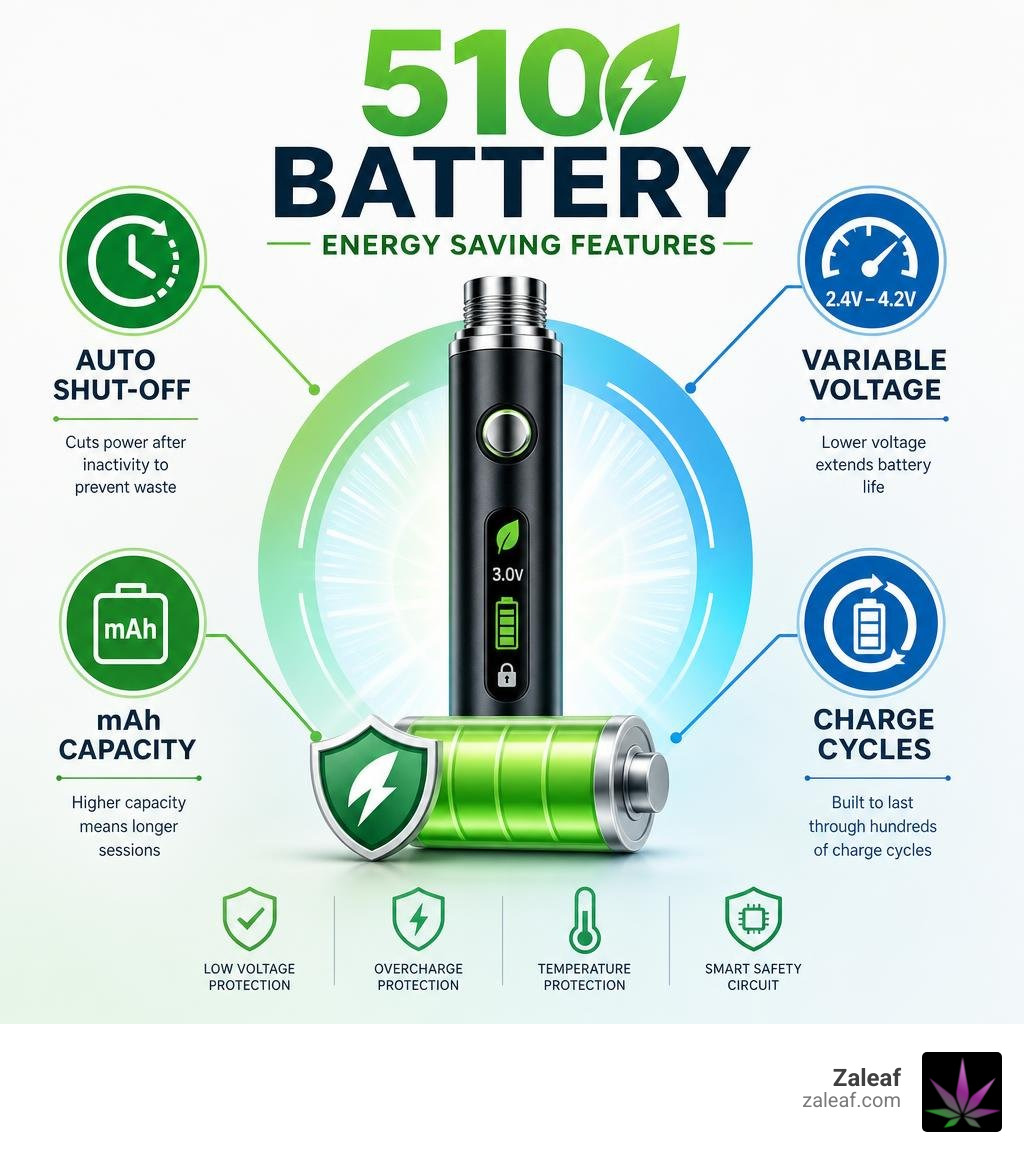
Quick answer: The best energy-saving features to look for in a 510 battery are:
- Auto shut-off — cuts power after inactivity (typically 10 minutes) to prevent waste
- Variable voltage settings — lower voltage (2.4–3.2V) extends battery life significantly
- Low voltage cutoff — protects the cell from over-discharge, preserving long-term capacity
- High mAh capacity — 650+ mAh batteries last all day vs. 350 mAh batteries that need midday charging
- Overcharge protection — stops charging at 4.2V to prevent cell degradation
These features directly affect how long your battery lasts between charges and how many total charge cycles you get before needing a replacement.
Most standard lithium-ion cells are rated for 300–500 full charge cycles before they drop to 80% of their original capacity. With the right battery and smart habits, you can expect 1–3 years of reliable use. Without them, heavy daily users often find themselves replacing batteries every 8–14 months.
The difference usually comes down to the protection circuit inside the battery — not just the mAh number on the label.
I'm Max Shemesh, CEO of Zaleaf, and after years of working across the hemp and cannabinoid industry, I've seen how the right 510 battery energy saver transforms the vaping experience from frustrating to effortless. I'll walk you through exactly what separates a battery worth your money from one that will disappoint you in weeks.
Simple 510 battery energy saver glossary:
What is a 510 Battery and How Does It Work?
To understand how to save energy, we first need to look at what is happening under the hood of your vape. The term "510" has a bit of history to it. It originally came from early e-cigarette manufacturers to describe a connection with ten 0.5-millimeter threads (5mm total diameter with 10 rotations). Today, it has become the universal industry standard for connecting batteries to oil cartridges.
At its core, a 510 battery is a compact, portable power station. Inside the housing sits a rechargeable lithium-ion cell, a protection circuit board (PCB), a voltage regulator, and a microcontroller. When you activate the device, the battery sends electrical current through the 510 connector directly into the cartridge's heating element.
Choosing the right power source can make all the difference in your daily experience. To get a complete grasp of how these devices differ from bulkier mods, you can read our guide on Demystifying Vape Batteries: Understanding the Differences. For a broader look at how these power sources fit into the cannabis ecosystem, check out An Essential Guide to Cannabis Vape Batteries.
The Mechanics of Power Transfer in Vape Devices
The physical connection between your battery and your cartridge is where the magic happens. The center pin (usually brass or gold-plated for maximum conductivity) sits in the middle of the 510 threads. When you screw your cartridge on, this pin makes direct contact with the bottom of the cartridge's atomizer coil.
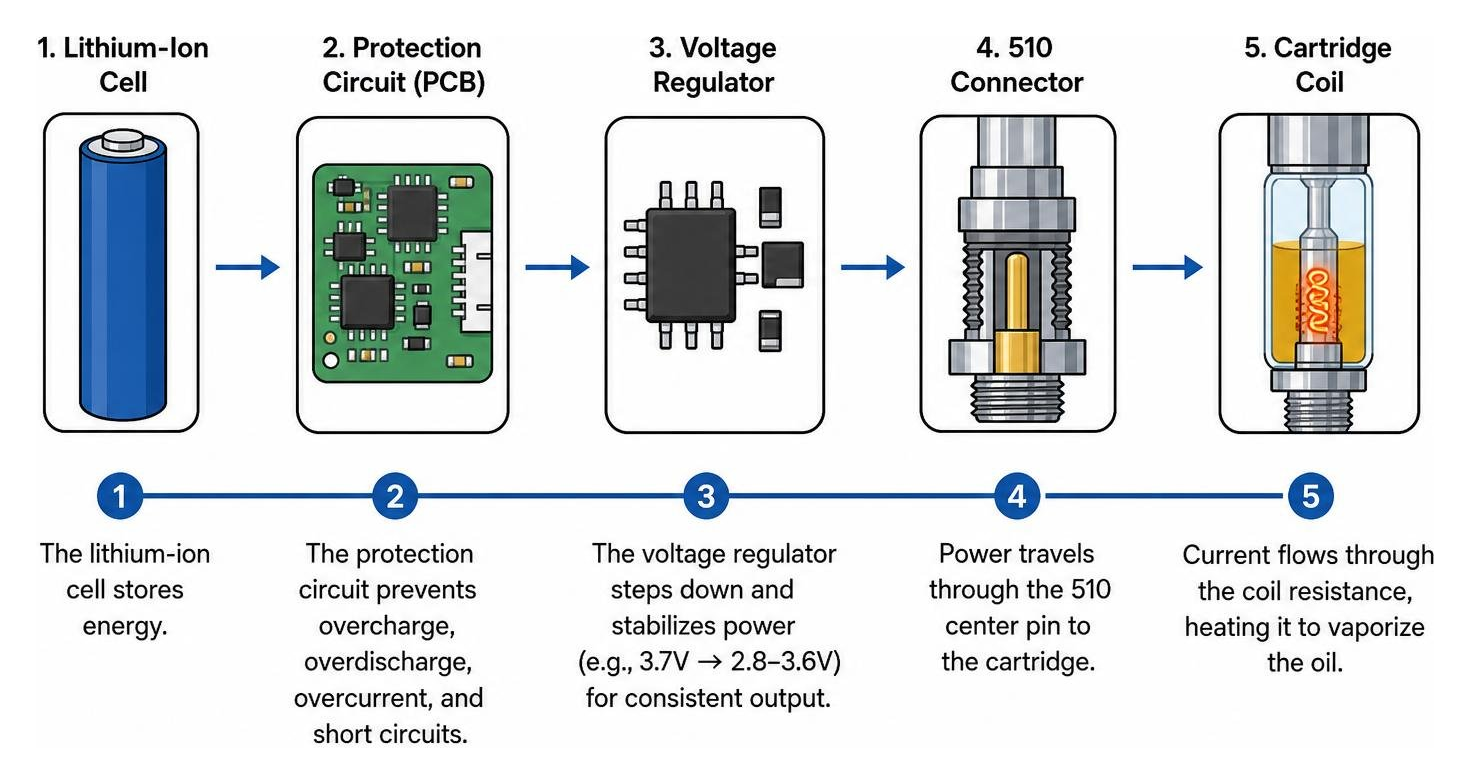
The atomizer coil acts as a resistor. Standard oil cartridges typically have a resistance range of 1.0Ω to 3.0Ω. When electrical current passes through this high-resistance wire or ceramic element, electrical energy is converted into thermal energy. This heat vaporizes the surrounding cannabis oil.
If the connection points are dirty, or if the center pin is misaligned, electrical resistance increases. This forces the battery to work harder, wasting energy as heat at the connection point rather than vaporizing your oil.
Why You Need a 510 Battery Energy Saver in 2026
Vaping technology has come a long way, but the laws of physics haven't changed. In July 2026, we are seeing more feature-rich cartridges than ever before—including smart screens and dual-coil setups—which place a heavy tax on small portable batteries. Without a dedicated 510 battery energy saver routine or built-in power management features, you will find yourself tethered to a charging cable.
In the industrial electronics world, engineers use highly sophisticated energy management systems to keep devices running for years on tiny cells. For instance, the Coin cell battery life booster with adaptive power optimization uses an intelligent learning algorithm to buffer high pulse currents, preventing voltage drops and boosting efficiency.
While you do not need a massive residential battery backup system like the LM-ESS510 - All-in-One System LEMAX New Energy or the ESP-5100 – EndurEnergy to run a vape pen, the core scientific principles of lithium energy storage remain identical. In home energy storage, systems like the Endur Energy Battery | ESP-5100 & ESP-5K — Crisis Comforts and the specifications detailed in the Spec Sheet Rev C ESP-5100 rely on precise voltage regulation and high-quality cells to deliver thousands of cycles.
By choosing a vape battery built with similar high-efficiency standards, you prevent unnecessary power drain, protect the environment from premature battery disposal, and save money.
Key Features of a High-Quality 510 Battery Energy Saver
When shopping for a new device, do not just buy the cheapest plastic stick on the counter. The difference between a premium battery and a cheap knockoff is the quality of the internal Protection Circuit Board (PCB).

A high-quality 510 battery energy saver relies on its PCB to manage power safely and efficiently. If you want to know what features to look for before making a purchase, take a look at The Essential 510 Thread Battery Buyers Guide.
Auto Shut-Off and Low Voltage Cutoff
Two of the most critical energy-saving features are auto shut-off and low voltage cutoff:
- Auto Shut-Off: We have all done it—slipped a vape pen into a pocket or purse and forgot to turn it off. If the button gets pressed accidentally, it can fire continuously, burning your cartridge and draining the battery to zero. An auto shut-off timer detects inactivity (often 10 minutes) and shuts down the microchip, reducing standby current to a mere fraction of a microampere.
- Low Voltage Cutoff (Over-Discharge Protection): Draining a lithium-ion cell completely to 0V damages its chemical structure, making it unable to hold a full charge in the future. A quality PCB features a low voltage cutoff that stops power delivery when the cell drops to around 3.2V. This is why your battery will blink rapidly and refuse to fire even if it feels slightly warm—it is saving itself from permanent degradation.
Variable Voltage Settings and Energy Efficiency
Not all vape sessions require maximum power. In fact, running your battery at its highest setting is the fastest way to kill both your battery and the flavor profile of your terpenes.
Variable voltage allows you to adjust the power output to match the thickness of your oil and your personal preferences. To find out which models offer the best balance of custom settings and efficiency, read our review of the Top Rated 510 Vape Batteries for an Unbeatable Experience.
How Voltage and Capacity (mAh) Impact Battery Longevity
To maximize your battery life, it helps to look at the numbers. The capacity of a vape battery is measured in milliampere-hours (mAh). This rating tells you how much energy the battery can store. A 350 mAh battery can theoretically deliver 350 milliamperes of current for one hour before depleting.
However, the speed at which that energy is drained depends heavily on your voltage settings. The higher the voltage, the more current is pulled from the cell, and the hotter the coil gets.
| Voltage Setting | Typical Use Case | Battery Drain Rate | Impact on Lifespan (Cycles) |
|---|---|---|---|
| 1.8V - 2.2V | Live Resin / Rosin (Preheat) | Ultra-Low | Minimal (Maximizes cycle life) |
| 2.4V - 2.8V | Thin Oils / Flavor Preservation | Low | Very Low (Excellent efficiency) |
| 3.0V - 3.4V | Standard Distillates (CCELL) | Moderate | Standard (Balanced performance) |
| 3.6V - 4.2V | Thick Oils / Large Clouds | High | Accelerated (Reduces cycle life) |
Using a lower voltage setting dramatically reduces the strain on your lithium-ion cell, allowing you to get more hits per charge and extending the overall lifespan of the device. For a deeper dive into the science of cell degradation, read our Vape Battery Lifespan: Complete Guide.
Finding the Sweet Spot for Your 510 Battery Energy Saver
For the ultimate balance of flavor, vapor production, and energy conservation, we recommend staying between 2.4V and 3.0V.
If you are vaping high-quality live resin or delicate rosin, high temperatures will scorch the natural terpenes, leaving a burnt taste. Starting low preserves those delicate compounds.
If you are using thick distillate in ceramic coils or standard CCELL cartridges, you can utilize a preheat function. A gentle 10-second preheat mode at 1.8V warms the oil to lower its viscosity before you draw, preventing clogs and reducing the energy required for your actual hit.
Built-In vs. Removable 510 Batteries
When choosing a 510 battery energy saver, you will also need to decide between a built-in battery and a device that uses removable cells (like an 18650 battery):
- Built-In Batteries: These are highly portable, lightweight, and incredibly convenient. However, once the internal lithium-ion cell degrades to the end of its life, the entire device must be recycled.
- Removable Cells: While these devices are larger, they offer incredible hardware durability. When the battery cell eventually loses its capacity, you can simply swap it out for a fresh cell without throwing away the entire mod.
Best Practices for Charging and Maintaining Your 510 Battery
How you charge your battery plays a massive role in how long it will live. Modern devices have made charging easier than ever, but basic battery care rules still apply.
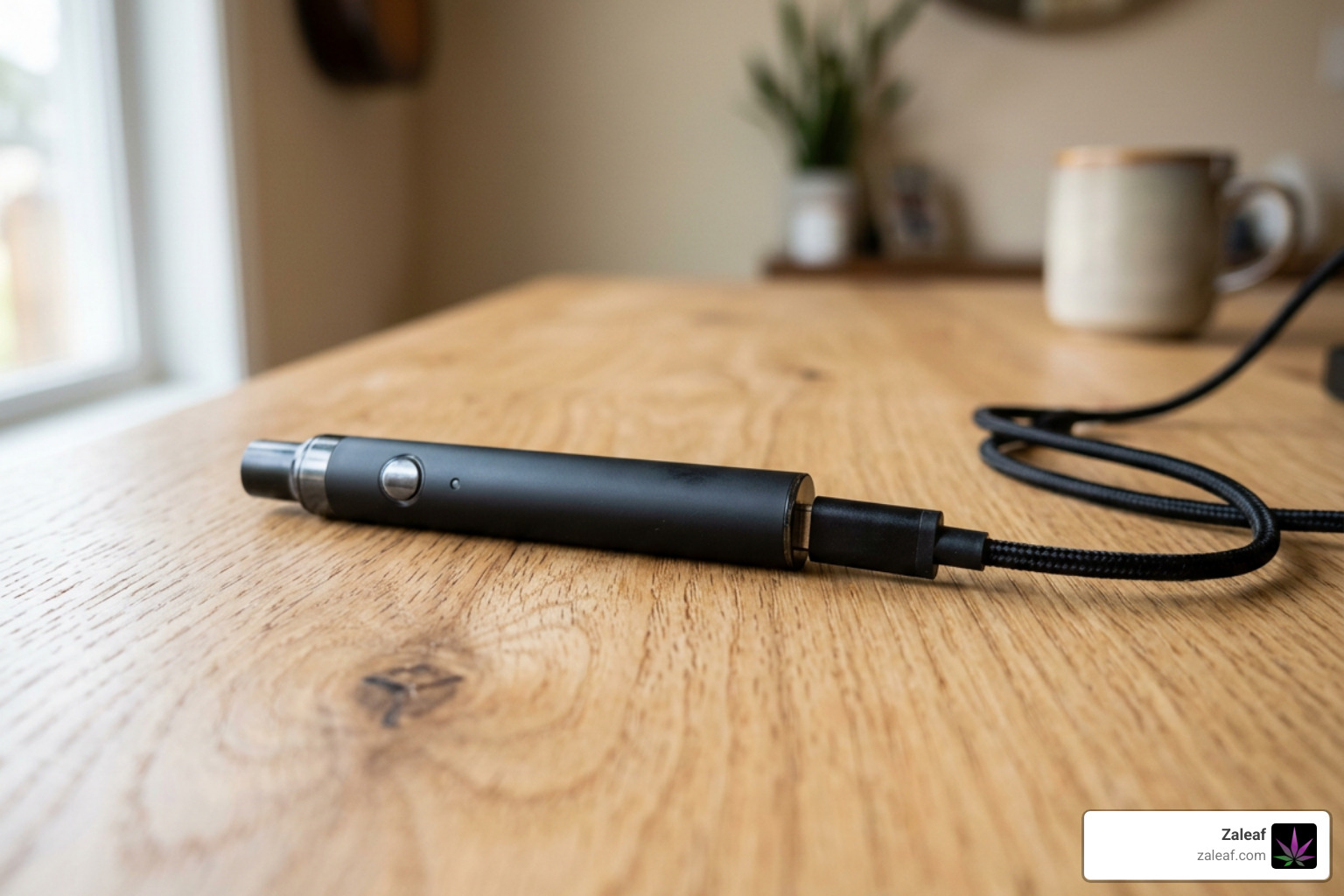
Always charge your vape on a hard, flat, non-flammable surface. To learn more about modern charging protocols and how to keep your device running safely, read our guide on Charge On: Maximizing Your Vape Battery's Life and Speed. For additional optimization strategies, check out our resource on Optimizing Battery Life.
Cleaning and Storage Tips to Prevent Power Drain
A dirty connection is a quiet battery killer. Over time, microscopic amounts of vaporized oil can condense inside the 510 threads, creating a sticky residue. This residue acts as an insulator, disrupting the electrical connection and forcing the battery to work twice as hard to heat the coil.
To prevent this:
- Dip a cotton swab in high-percentage isopropyl alcohol.
- Gently squeeze out any excess liquid so the swab is damp, not dripping.
- Swirl the swab around the metal threads and center pin of both the battery and the cartridge.
- Let the connection dry completely before screwing the cartridge back on.
Additionally, store your battery at room temperature (60–75 °F). Extreme cold slows down chemical reactions, reducing temporary performance, while extreme heat accelerates internal degradation, permanently lowering your battery's capacity.
Frequently Asked Questions About 510 Battery Efficiency
How long does a 510 thread battery last before needing replacement?
With proper care and regular cleaning, a high-quality 510 battery will last between 1 and 3 years, which equates to roughly 300 to 500 full charge cycles. Heavy daily users who drain and recharge their devices constantly may notice a drop in performance and need a replacement after 8 to 14 months.
Does leaving the cartridge attached drain the battery?
With a well-designed, modern battery from a reputable brand, leaving your cartridge attached will not cause a dangerous drain. The internal microcontroller prevents power from flowing when the device is idle. However, for long-term storage (more than a few days), it is always best practice to unscrew the cartridge to prevent any slow standby current draw or potential leaks into the thread connection.
What is the fastest and safest way to charge a 510 battery?
The safest way to charge your battery is to use the charging cable that came with the device, plugged into a standard USB port on a computer or a certified 5V wall adapter. Avoid using high-wattage fast chargers designed for laptops or modern smartphones, as pushing too much current into a small battery can overheat the cell and shorten its lifespan.
Conclusion
Finding the right 510 battery energy saver is all about choosing smart features like auto shut-off, variable voltage, and robust internal protection circuitry. By practicing healthy charging habits, cleaning your connection threads regularly, and keeping your voltage settings in the sweet spot, you can easily double the lifespan of your device.
At Zaleaf, we are dedicated to helping you elevate your cannabis experience with premium, reliable information and top-tier products. All of our legal cannabis offerings are carefully selected, undergo rigorous 3rd party testing, and are shipped directly to your door in fast, discrete packaging—with no medical card or ID required.
Want to keep learning about how to get the absolute most out of your setup? Explore Zaleaf's Latest Vape Guides and News to stay ahead of the curve.