

Are Anxiety Pens Real or Just Hot Air?
Are Anxiety Pens Real — or Just a Wellness Trend Worth Knowing About?

What are anxiety pens? Here's the quick answer:
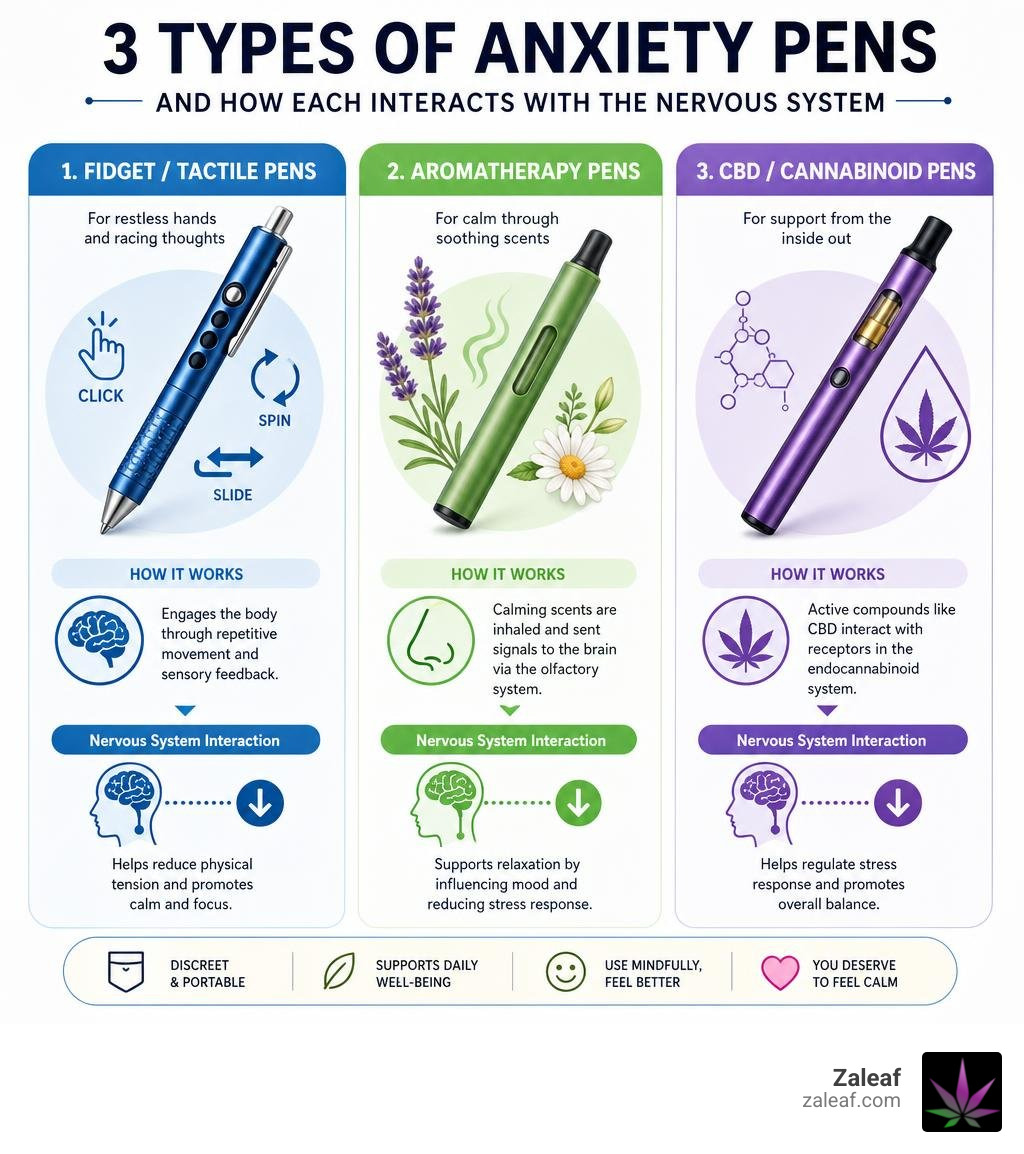
Anxiety pens are small, handheld devices designed to help reduce stress and anxiety. They come in three main types:
- Fidget/tactile pens — give your hands something to do through clicking, spinning, or sliding
- Aromatherapy pens — deliver calming scents like lavender or chamomile through gentle inhalation
- CBD/cannabinoid pens — use active compounds like CBD to interact with your body's stress response system
They're not a medical treatment. But for mild, situational anxiety — a stressful meeting, a flight, a big presentation — many people find them genuinely useful.
From TikTok to pharmacy shelves, what are anxiety pens has become one of the most searched wellness questions of 2026. And it's easy to see why. Anxiety affects roughly one in three adults at some point in their lives, and people are looking for fast, discreet, portable ways to take the edge off — without a prescription, a waiting room, or a 30-minute meditation session.
But with so many products on the market — fidget tools, lavender inhalers, CBD vapes — it's hard to know what's actually useful and what's just clever packaging.
This guide cuts through the noise.
I'm Max Shemesh, owner and CEO of Zaleaf, and I've spent years working directly in the cannabinoid industry helping people find legal, tested products that actually support relaxation and stress relief. Understanding what are anxiety pens — and which types hold up to scrutiny — is core to what we do at Zaleaf. Let's get into it.
What are anxiety pens terms simplified:
What Are Anxiety Pens and How Do They Work?
To understand how these tools work, we first have to look at how they differ from the average ballpoint pen sitting on your desk. A regular pen has one job: to put ink on paper. An anxiety pen, however, is designed to ground your nervous system.
At its core, the concept relies heavily on sensory grounding. When anxiety strikes, your mind often gets trapped in a loop of racing thoughts. Your heart rate increases, your breathing becomes shallow, and you lose touch with the physical world around you.
Anxiety pens disrupt this "fight-or-flight" response by offering a physical anchor. By providing tactile feedback, a pleasant scent, or a calming compound, they redirect your focus away from internal panic and back to your physical body. This is a classic cognitive distraction technique. Instead of fighting the anxious thoughts directly, you give your brain a simple, soothing physical sensation to process instead.
How they achieve this depends entirely on the mechanism they use. Some rely on mechanical physical movement to channel nervous energy, while others use the power of inhalation to deliver rapid-acting calming agents. To explore how these portable tools can fit into your daily routine, check out our deep dive into Anxiety Pens, where we break down the fundamental mechanics of these devices.
No matter the design, the goal is always the same: to provide a quick, portable ritual that signals to your brain that it is safe to slow down. For more clinical context on how these devices are viewed by health professionals, you can read about the physical and psychological mechanisms in Anxiety Pens Explained.
The Different Types of Anxiety Pens on the Market
If you search for "anxiety pens" online, you will quickly realize that the term covers a surprisingly wide range of products. They generally fall into three distinct categories, ranging from completely mechanical writing tools to active vaporizers.
To help you understand the product variety and find the right sensory tools for your needs, we have put together a quick comparison table:
| Feature | Fidget / Tactile Pens | Aromatherapy Diffuser Pens | CBD & Cannabinoid Pens |
|---|---|---|---|
| Primary Mechanism | Physical movement & tactile touch | Inhalation of vaporized essential oils | Inhalation of active hemp-derived compounds |
| Active Ingredients | None | Lavender, chamomile, valerian root, B12 | CBD, CBN, terpenes |
| Best For | Restlessness, focus, quiet sensory stimulation | Mindful breathing, pleasant scents, sensory grounding | Deep physical relaxation, sleep support, fast relief |
| Ingestion Method | None (100% mechanical) | Inhalation (nicotine-free vapor) | Inhalation (nicotine-free vapor) |
| Risk Level | Extremely low (safe for all ages) | Low (watch for throat or lung irritation) | Low to moderate (requires third-party testing) |
Let’s break down each of these three categories in detail so you can see exactly how they function.
Fidget and Tactile Options: What Are Anxiety Pens Built for Fidgeting?
For many people, anxiety manifests as physical restlessness. You might tap your foot, bite your nails, or bounce your knee. Fidget and tactile anxiety pens are designed specifically to channel this nervous energy into a quiet, socially acceptable outlet.
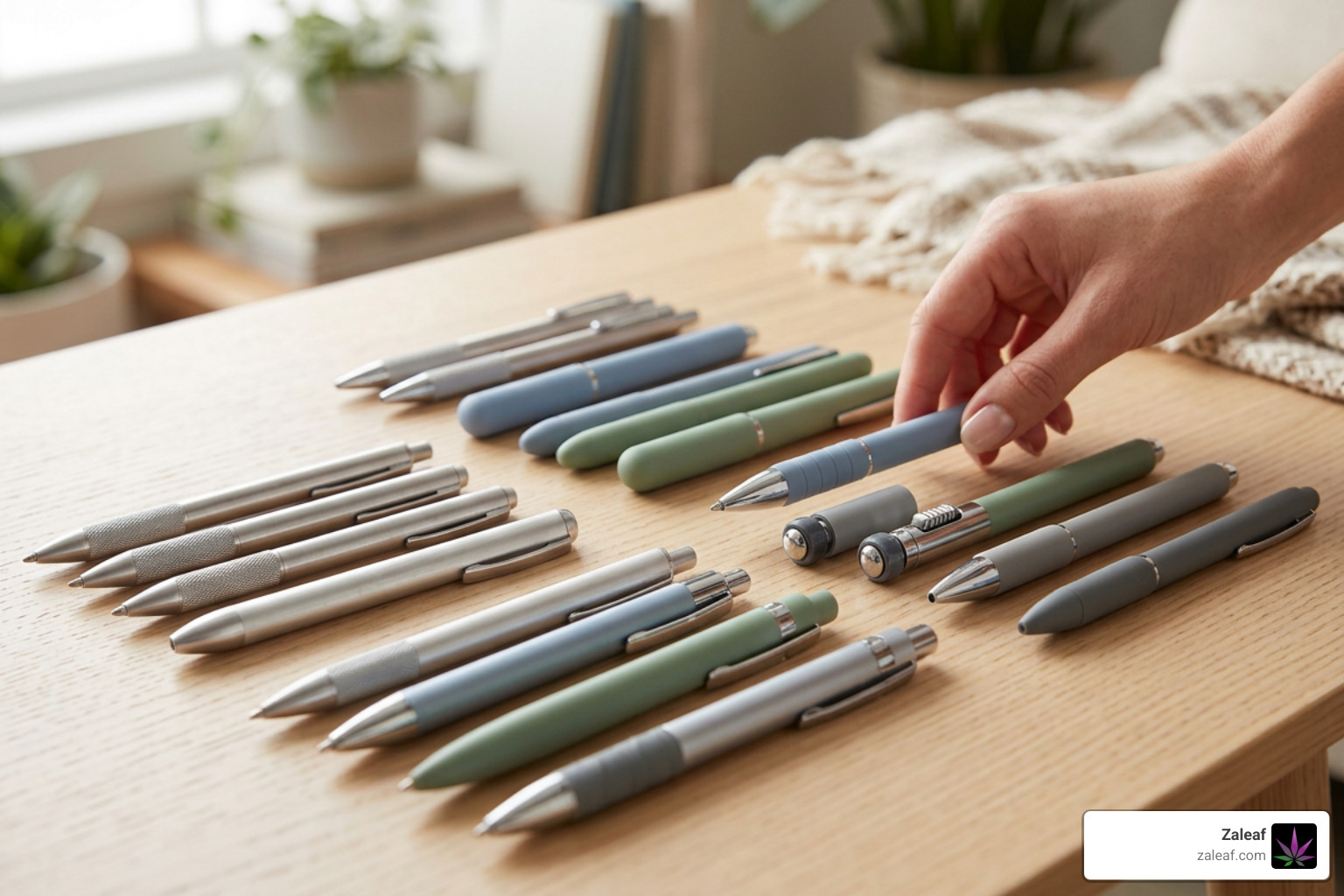
These devices look like high-quality writing instruments, making them perfect for professional or academic settings where playing with a bright plastic toy might feel out of place. However, they are packed with hidden mechanical features:
- Spinning components: Smooth magnetic rings or bearings that let you spin the pen body silently.
- Weighted bodies: Built with heavier metals to provide calming proprioceptive input (similar to a miniature weighted blanket for your hand).
- Textured surfaces: Ridges, gears, and sliders that offer satisfying tactile feedback.
In psychology, this physical interaction is often referred to as "stimming" (self-stimulatory behavior). For individuals with ADHD or high levels of daily stress, these physical movements can actually help increase cortical arousal to an optimal level, improving focus and keeping the mind grounded. To learn more about how physical design and ergonomics play a role in stress management, take a look at the Anxiety Pen Benefits guide.
Aromatherapy and Essential Oil Diffuser Pens
Aromatherapy pens take a different approach by targeting your sense of smell. These pens are essentially portable, personal essential oil diffusers. Instead of filling a whole room with scent, they allow you to inhale a gentle, warm vapor infused with natural botanical extracts.
Common ingredients in these formulas include:
- Lavender: Renowned for its natural calming and soothing properties.
- Chamomile: A traditional herb used for centuries to promote quiet relaxation.
- Valerian Root: Often utilized in nighttime blends to help ease a racing mind before bed.
- L-Theanine & Vitamin B12: Added to some modern blends to promote a state of calm focus.
When you inhale these botanical scents, the aromatic molecules travel through your olfactory system and directly access the limbic system—the region of the brain responsible for regulating emotions, memory, and stress responses. This direct pathway is why certain scents can instantly trigger a feeling of nostalgia or calm.
Furthermore, using an aromatherapy pen naturally forces you to slow down and take deep, controlled breaths. To explore how these botanical inhalers compare to other options, check out our guide on the Anxiety Inhaler Pen.
Cannabinoid and CBD Vapes: What Are Anxiety Pens with Active Ingredients?
For those looking for more than just physical distraction or pleasant scents, cannabinoid-based pens offer active, plant-based support. These pens heat a concentrated hemp extract—typically containing CBD (cannabidiol), CBN (cannabinol), and natural terpenes—into a smooth, inhalable vapor.
Unlike THC, CBD is entirely non-intoxicating, meaning it will not make you feel "high" or impair your daily functioning. Instead, it interacts directly with your body's endocannabinoid system (ECS). The ECS is a complex cell-signaling network that plays a crucial role in regulating stress, mood, sleep, and overall physiological balance.
The main advantage of using a vape pen over other CBD delivery methods (like gummies or oils) is speed. When you eat a gummy, the active ingredients must pass through your digestive tract and liver, which can take anywhere from 45 minutes to two hours. Inhalation bypasses the digestive system entirely, delivering the compounds directly to your bloodstream through the lungs for relief that can be felt within minutes.
At Zaleaf, we specialize in crafting high-quality, legal cannabis formulations that utilize custom cannabinoid and terpene profiles to target specific moods. Whether you are trying to wind down after a chaotic workday or find a sense of peace before a big event, choosing a pen with the right active ingredients is key. For a curated list of top-performing options, check out our breakdown of the Top Vape Pens for Anxiety.
Do Anxiety Pens Work? Scientific Evidence and Clinical Insights
When evaluating any wellness trend, it is crucial to separate marketing hype from scientific reality. So, what does the research actually say about whether anxiety pens work?

The short answer is that it depends on the type of pen you are using and what you expect from it. No anxiety pen is a cure for clinical anxiety disorders, but they can be highly effective tools for managing acute, situational stress.
Here is what the scientific literature reveals:
- Aromatherapy studies: There is solid clinical evidence supporting the use of essential oils for stress reduction. For example, a study examining Damask rose water inhalation found that patients who inhaled the aroma had significantly lower anxiety levels than a control group. Similarly, lavender oil has been shown in multiple clinical settings to have measurable, calming effects on the nervous system.
- CBD and cannabinoid research: Preliminary studies on CBD are highly promising. A 2015 scientific review concluded that CBD shows considerable potential for treating generalized anxiety disorder, social anxiety, and panic disorder. Furthermore, a comprehensive 2024 meta-analysis found a statistically significant reduction in anxiety symptoms among participants using CBD compared to those receiving a placebo.
- The power of breath regulation: Part of why inhalable pens work is actually the physical act of using them. To use an aromatherapy or CBD pen, you must pause what you are doing, take a slow, deep breath in, hold it briefly, and exhale slowly. This pattern closely mirrors deep diaphragmatic breathing, which is clinically proven to lower cortisol (stress hormone) levels and activate your parasympathetic nervous system (the body's natural "rest and digest" state).
However, the rapid rise of the vape market has also introduced real risks. The 2019 EVALI (e-cigarette or vaping product use-associated lung injury) outbreak was a stark reminder of what can happen when unregulated, black-market products enter the space. Many of those injuries were tied to illicit cartridges containing harmful cutting agents like Vitamin E acetate.
This is why third-party testing is absolutely non-negotiable for any inhalable product. Reputable brands must provide a clean Certificate of Analysis (COA) to prove their products are free from heavy metals, pesticides, residual solvents, and harmful additives. To read more clinical perspectives on the safety profiles and limitations of these devices, explore the research compiled in Clinical Insights and Health Risks.
For a deeper look at how these inhalable wellness tools compare to traditional, evidence-based therapies, check out our article on The Role of Vape Pens in Managing Anxiety.
How to Choose and Use an Anxiety Pen Safely
If you decide to try an anxiety pen, safety and quality should be your top priorities. Here is a practical, step-by-step checklist to help you choose and use your device responsibly:
- Verify the COA: Never buy an inhalable pen unless the brand publishes up-to-date, third-party lab testing results on their website. This is your only guarantee of purity and potency.
- Start Low and Go Slow: If you are using a cannabinoid-based pen, take one or two small puffs and wait 10 to 15 minutes to see how your body responds before taking more.
- Integrate Mindful Breathing: Do not just puff mindlessly. Use the pen as a visual cue to practice structured breathing, such as box breathing (inhale for 4 seconds, hold for 4, exhale for 4, hold for 4).
- Listen to Your Body: If you experience any throat irritation, coughing, or chest tightness, stop using the product immediately.
- Maintain Your Device: If using a rechargeable pen, keep the connection points clean and store it in a cool, dry place to prevent the oil from degrading.
By following these simple guidelines, you can safely incorporate these tools into a broader, holistic wellness routine. For a complete buying guide and safety walkthrough, refer to our Ultimate Guide to Anxiety Pens 2026.
Frequently Asked Questions About Anxiety Pens
Navigating wellness devices can be confusing. Here are some of the most common questions consumers ask about anxiety pens.
Are anxiety pens safe to use every day?
Yes, high-quality, non-nicotine anxiety pens are generally safe for daily use, but moderation is key. If you are using an inhalable pen (aromatherapy or CBD), it is important to monitor your respiratory health. Overuse of any vaporized substance can potentially cause mild throat or lung irritation. For everyday stress management, we recommend blending inhalable options with physical grounding tools like tactile fidget pens or mindfulness exercises.
Do anxiety pens contain nicotine?
No, legitimate anxiety pens are completely nicotine-free. Nicotine is a highly addictive stimulant that can actually increase physical anxiety symptoms, such as an elevated heart rate and restlessness. Instead, high-quality anxiety pens rely on plant-based ingredients, natural botanical extracts, calming cannabinoids, and beneficial vitamins to promote relaxation. Always check the ingredient list to ensure you are buying a clean, nicotine-free formula.
Can you travel on an airplane with an anxiety pen?
Yes, but you must follow standard TSA guidelines and local laws.
- Fidget pens can go anywhere without restriction.
- Aromatherapy and CBD pens must be packed in your carry-on luggage (not checked baggage) because they contain lithium-ion batteries.
- If traveling with a CBD pen, ensure it is federally legal (hemp-derived and containing less than 0.3% THC). Be sure to check the local regulations of your destination, as international laws regarding hemp products vary significantly.
Conclusion
At the end of the day, are anxiety pens real or just hot air? The truth lies somewhere in the middle. They are not a magic cure-all, and they will never replace professional mental health care or evidence-based treatments like Cognitive Behavioral Therapy (CBT).
However, as a portable, discreet, and fast-acting tool in your wellness toolkit, they are absolutely real. Whether you are using a mechanical fidget pen to channel physical restlessness during a long meeting, or inhaling a carefully formulated CBD blend to quiet a racing mind before sleep, these tools can provide genuine, situational relief.
At Zaleaf, we believe in a holistic, balanced approach to wellness. We are dedicated to providing clean, 100% legal, and third-party tested cannabis products designed to help you find your personal version of calm. With our fast shipping and highly discreet packaging, getting safe, reliable relaxation tools delivered right to your door has never been easier.
Ready to explore your options and find the perfect fit for your lifestyle? Check out our extensive collection of educational articles, product guides, and expert recommendations at Zaleaf News and Guides. Take a deep breath, find your anchor, and let us help you navigate your journey to peace of mind.