

The Shocking Health Risks of Inhaling Your Stress Away
Are Anxiety Pens Bad for You? Here's the Short Answer

Are anxiety pens bad for you — the honest answer is: it depends on the type, but many carry real health risks.
Here's a quick breakdown:
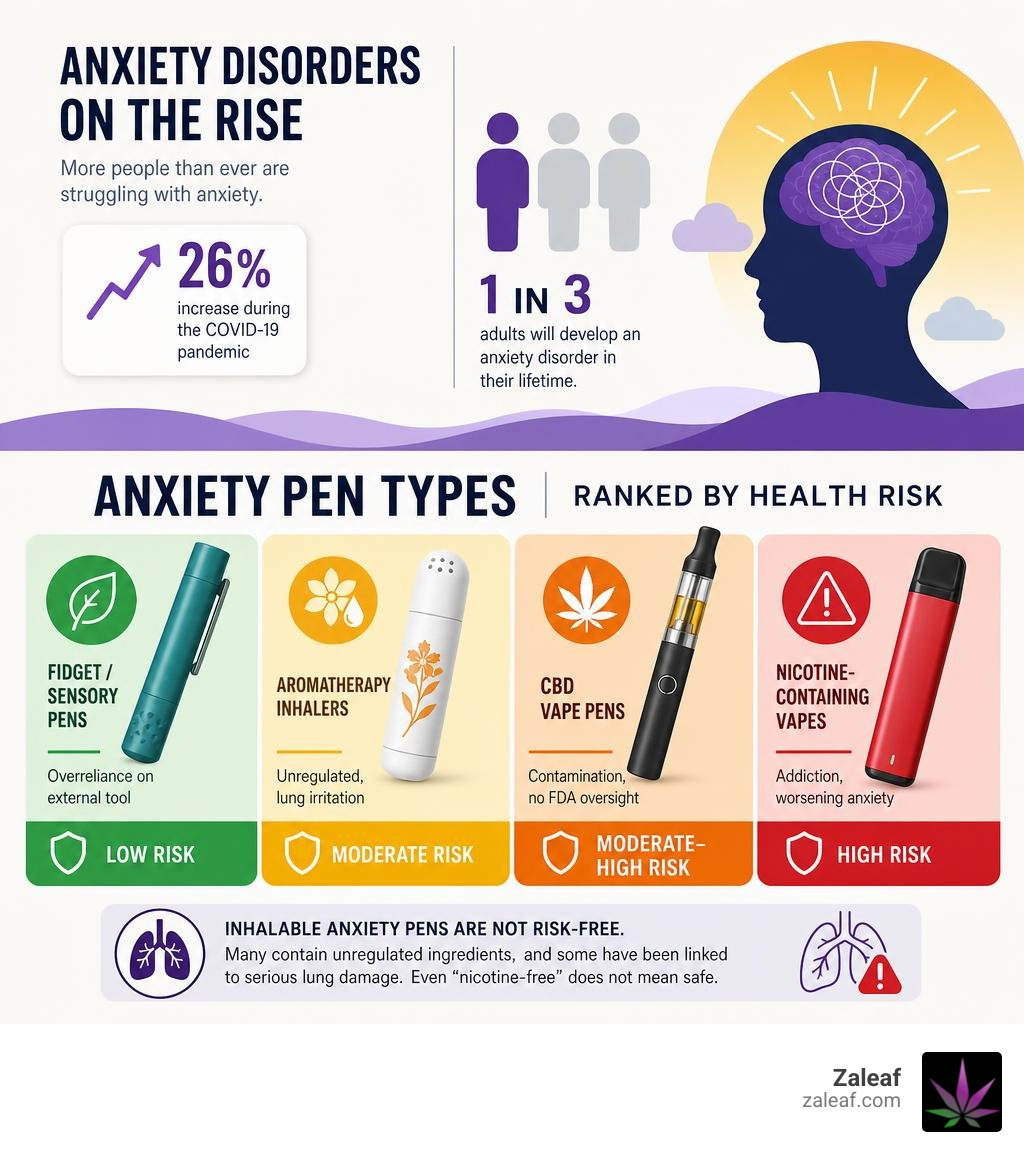
| Type of Anxiety Pen | Main Risk Level | Key Concern |
|---|---|---|
| Fidget/sensory pens | Low | Overreliance on external tool |
| Aromatherapy inhalers | Moderate | Unregulated, lung irritation |
| CBD vape pens | Moderate–High | Contamination, no FDA oversight |
| Nicotine-containing vapes | High | Addiction, worsening anxiety |
The bottom line: Inhalable anxiety pens are not risk-free. Many contain unregulated ingredients, and some have been linked to serious lung damage. Even "nicotine-free" does not mean safe.
Anxiety is at an all-time high. Anxiety disorders surged by nearly 26% during the COVID-19 pandemic, and approximately one in three adults will develop an anxiety disorder in their lifetime. It's no surprise that people are reaching for fast, discreet solutions — and anxiety pens have exploded onto TikTok feeds and pharmacy shelves promising instant calm with a single puff. But before you inhale your stress away, it's worth knowing exactly what you're putting into your lungs.
As Max Shemesh, owner and CEO of Zaleaf with deep experience in the hemp and cannabinoid industry, I've seen how the rise of unregulated inhalable wellness products has created serious confusion — and real harm — for people genuinely trying to understand are anxiety pens bad for you and find safe alternatives. Below, we break down everything the research actually says.
Are anxiety pens bad for you word list:
What is an Anxiety Pen and How Does It Work?
To answer whether these trendy devices are harmful, we first need to define what they actually are. The term "anxiety pen" has become a broad marketing catch-all used to describe two entirely different categories of products: mechanical fidget tools and inhalable vaporizers.
While mechanical fidget pens use gears, clickable buttons, and spinning rings to channel nervous energy through tactile stimulation, the overwhelming majority of the online buzz centers around inhalable devices. These inhalable wellness pens look exactly like standard e-cigarettes or nicotine vapes, but they are marketed as therapeutic tools. Instead of nicotine, they are pre-filled with a liquid mixture of essential oils, vitamins, melatonin, or cannabidiol (CBD).
When a user draws on the device, an internal battery heats a metal coil. This coil rapidly heats the liquid mixture to its vaporization point, converting it into an aerosol that the user inhales directly into their lungs. The core promise of these devices is rapid, on-the-go stress relief. Because inhalation bypasses the digestive tract, active compounds enter the bloodstream almost instantly through the lungs' thin membranes.
However, because these devices are sold as "wellness products" rather than medical treatments, they bypass strict pre-market safety reviews. This lack of oversight has resulted in a flood of unregulated CBD vapes and herbal diffusers on the market, leaving consumers to act as guinea pigs. To explore the foundational concepts of these devices further, you can read more about What Is An Anxiety Pen? How It Works And Safety Tips.
Inhalable Wellness and Aromatherapy Vapes
Among the most popular inhalable options are aromatherapy vapes, sometimes called "personal diffusers" or "diffuser sticks." These devices are marketed as portable, heated versions of traditional room diffusers. Instead of dispersing essential oils into the air, they vaporize concentrated plant extracts—such as lavender, chamomile, rose water, or peppermint—directly into the mouth and lungs.
The theory behind these products relies on the rapid delivery of active compounds. Because the lungs are packed with millions of tiny air sacs (alveoli) with a massive surface area, inhaling vaporized compounds allows them to enter the bloodstream within seconds. This rapid onset of action is highly appealing to someone experiencing a sudden spike in panic or situational stress.
Unfortunately, the mechanism that makes inhalation so fast also makes it incredibly risky. Traditional aromatherapy relies on ambient scent molecules interacting with olfactory receptors in the nose, which then signal the brain's emotional center (the amygdala). It was never intended to involve heating concentrated plant oils to hundreds of degrees and pulling that superheated aerosol deep into delicate lung tissue. To understand the critical differences between safe sensory tools and high-risk inhalables, take a look at Anxiety Pens: What Are They, Do They Work, and Are They Safe? | DMHBH or explore our deep dive into the anxiety inhaler pen.
Are Anxiety Pens Bad for You? The Physical Health Risks
When evaluating whether are anxiety pens bad for you, we have to look past the soothing pastel colors and clean "plant-based" marketing. The hard truth from pulmonologists and medical researchers is clear: inhaling heated oils, chemicals, and volatile compounds is inherently damaging to the human respiratory system.
The American Lung Association has repeatedly warned the public that the human lung is an incredibly delicate organ designed solely to breathe clean air. It is not equipped to process, filter, or clear vaporized oils, heavy metals, or synthetic chemicals. When you draw superheated aerosol into your lungs, you trigger an immediate inflammatory response. Over time, this chronic irritation can lead to tissue scarring, airway hypersensitivity, and a host of respiratory issues. For an exhaustive look at both immediate and long-term medical warnings, consult this breakdown on Anxiety Pen Side Effects: Short-Term and Long-Term Health Risks. If you'd like to understand the broader context of vaporized wellness trends, check out our guide on anxiety pens.
Why Chemical Additives in Anxiety Pens Are Bad for You
Even if an anxiety pen claims to contain nothing but "pure organic lavender" or "natural CBD," the active ingredients cannot be vaporized on their own. They must be suspended in a liquid base—known as a carrier solvent—to flow through the device and vaporize evenly.
The most common carrier bases are propylene glycol (PG) and vegetable glycerin (VG). While both are classified as "generally recognized as safe" (GRAS) by the FDA for ingestion in food, that safety rating does not apply to inhalation. When heated by a vape coil, PG and VG undergo chemical degradation, transforming into toxic volatile organic compounds (VOCs) such as formaldehyde, acetaldehyde, and acrolein—all of which are known to irritate respiratory tissues and damage cells.
Furthermore, some aromatherapy pens contain flavorings or chemical additives like diacetyl. Diacetyl is safe to eat, but when inhaled, it causes chronic, irreversible scarring of the tiny airways in the lungs, a severe and life-threatening condition known as bronchiolitis obliterans, or "popcorn lung."
Another severe risk is lipoid pneumonia. This occurs when fat or oil molecules—such as the lipids found in essential oils or MCT oil carrier bases—are inhaled into the lungs. The body's immune cells cannot easily break down these foreign oils, leading to a massive inflammatory reaction where the lungs fill with fluid, causing chronic shortness of breath, persistent coughing, and oxygen deprivation.
Contamination and Why Unregulated Anxiety Pens Are Bad for You
Because the wellness vape market operates in a regulatory gray area, quality control is notoriously poor. This lack of standards exposes consumers to dangerous hidden contaminants.
A stark warning of what can go wrong occurred during the 2019 outbreak of EVALI (E-cigarette, or vaping product use-associated lung injury). This crisis resulted in thousands of hospitalizations and dozens of deaths nationwide. The primary culprit was Vitamin E acetate, a synthetic oil used as a thickening agent in illicit and unregulated CBD and THC vape cartridges. When inhaled, Vitamin E acetate acted like liquid plastic, coating the inside of users' lungs and destroying their ability to absorb oxygen.
Contamination remains a massive issue today. A landmark study published in 2024 evaluated popular melatonin and wellness vape pens and found shocking levels of contamination. Many of the tested products contained undisclosed pharmaceutical adulterants—including prescription stimulants and antidepressant medications—along with industrial chemical residues.
Additionally, heating elements in cheap, unregulated pens are often constructed from low-grade metals. As the coil repeatedly heats up and cools down, it degrades, leaching toxic heavy metals like lead, nickel, chromium, and cadmium directly into the vapor. A multi-product analysis of commercial CBD vapes revealed that over 25% of tested products contained detectable levels of lead and other heavy metals. To learn how to spot these hidden manufacturing dangers and read professional safety warnings, refer to Are Anxiety Pens Safe? A Comprehensive Guide.
Psychological Risks and the Teen Brain
The physical dangers of anxiety pens are only half of the story; their psychological impact—particularly on teenagers and young adults—is equally alarming.
The human brain undergoes massive developmental changes well into a person’s mid-twenties, with the prefrontal cortex (the area responsible for decision-making, impulse control, and emotional regulation) being the last to fully mature. Introducing inhaled, fast-acting substances during this critical window can permanently alter neural pathways, particularly those tied to reward, stress response, and habit formation.
Many teens turn to anxiety pens to cope with academic or social stress, unaware of the physiological backlash. For instance, while some pens contain nicotine disguised under "nicotine-free" labels due to poor manufacturing regulations, even truly nicotine-free pens can exacerbate mental health issues. The act of vaping mimics the rapid, shallow breathing patterns associated with panic, which can paradoxically trigger a fight-or-flight response, spiking cortisol levels and worsening baseline anxiety.
The statistics surrounding vaping and youth mental health are staggering:
- Research shows that 60% to 70% of teen vapers report experiencing weekly anxiety symptoms, compared to just 40% of non-vapers.
- Daily e-cigarette users face 2.39 times higher odds of developing clinical depression compared to those who have never vaped.
- Over 50% of regular nicotine vapers report symptoms of depression, compared to 25% of non-vapers.
- Ninth graders who begin vaping experience a significant worsening of depressive symptoms over time, even if they had no prior history of mental health struggles or tobacco use.
By relying on a quick-fix device to instantly alter their mood, young people fall into an avoidance-based coping loop. Instead of learning to process, tolerate, and navigate difficult emotions through evidence-based psychological skills, they learn to reach for a pen. This behavioral dependency delays proper treatment, allowing underlying anxiety disorders to become deeply entrenched.
Do Anxiety Pens Actually Work for Stress Relief?
With all of these documented health risks, it is fair to ask: do these devices actually deliver on their promise of calming anxiety?
The short answer is that while some users report feeling a wave of calm after using an anxiety pen, these benefits are almost always temporary, highly situational, and frequently driven by factors other than the ingredients themselves. While a puff might take the edge off pre-flight jitters or a nerve-wracking public speaking engagement, it does absolutely nothing to address the cognitive or physiological root causes of chronic stress. To read more about how therapists evaluate these devices and whether they provide genuine clinical relief, check out Anxiety Pen: Does It Really Work? Here’s What to Know First.
The Science Behind Inhaled CBD and Aromatherapy
To understand if there is any clinical validity to these devices, we have to look at the active ingredients. Cannabidiol (CBD) is undoubtedly the most heavily researched compound found in anxiety pens. CBD interacts with the body's endocannabinoid system, specifically targeting receptors that help regulate mood, fear responses, and stress.
A 2015 scientific review and a comprehensive 2024 meta-analysis both concluded that CBD shows considerable clinical potential for reducing acute anxiety symptoms. However, there is a massive catch: almost all clinical trials showing positive results utilized high oral doses of purified CBD, typically ranging from 300 mg to 800 mg per dose.
Anxiety vape pens, by contrast, deliver microscopic doses per puff. Furthermore, because the commercial CBD market is highly unregulated, product accuracy is abysmal. Independent laboratory testing has revealed that up to 26% of tested CBD products contained significantly less CBD than their labels claimed, with some containing virtually none at all, while others were contaminated with trace amounts of psychoactive THC.
Similarly, while studies show that traditional aromatherapy—such as a 2019 clinical trial where patients inhaling rose water (Damask rose) aromatherapy experienced a measurable drop in anxiety—can be highly effective, these studies evaluated ambient scent diffusers. There is zero clinical evidence showing that heating these delicate plant oils and drawing them directly into the lungs is necessary, safe, or more effective than simply smelling them.
The Placebo Effect and Deep Breathing Rituals
If the scientific evidence for inhaling these compounds is so weak, why do so many people swear that their anxiety pens work? The answer lies in a combination of expectation bias and basic physiology.
Anxiety is one of the mental health conditions most highly susceptible to the placebo effect. When a consumer buys a sleek, beautifully packaged product that promises instant calm, their brain creates a powerful expectation of relief. This mental shift alone can trigger a real, measurable reduction in heart rate and muscle tension.
More importantly, the physical act of using an anxiety pen forces the user to pause, step away from a stressful situation, and take slow, deep, controlled breaths.
This deliberate breathing pattern directly stimulates the vagus nerve, activating the body's parasympathetic nervous system (the "rest and digest" mode) and slowing down a racing heart. The user feels calmer and attributes the relief to the expensive lavender or CBD vapor, completely unaware that the free, natural act of deep breathing did all the heavy lifting. To explore how clinical experts view this intersection of breathwork, ritual, and placebo, you can read Do Anxiety Pens Work? Clinical Insights and Health Risks.
Safer, Non-Inhalation Alternatives for Managing Anxiety
The good news is that you do not need to risk your long-term lung health to find rapid, on-the-go stress relief. There are countless evidence-based, highly effective strategies that can calm your nervous system in the moment without requiring you to inhale a single chemical.

Immediate Grounding Techniques
When anxiety strikes, your brain's alarm system (the amygdala) hijacks your rational mind, making you feel trapped in a loop of racing thoughts. Grounding techniques work by forcing your brain to redirect its focus away from internal panic and back onto the physical world around you.
Some of the most therapist-recommended techniques include:
- The 5-4-3-2-1 Grounding Method: Look around your environment and identify five things you can see, four things you can physically feel (like the fabric of your pants or the cold floor), three things you can hear, two things you can smell, and one thing you can taste. This sensory checklist acts as a circuit breaker for runaway panic.
- Progressive Muscle Relaxation (PMR): Starting at your toes, tense a specific muscle group as tightly as you can for five seconds, then release it completely. Work your way up your body through your calves, thighs, stomach, chest, hands, shoulders, and face. PMR physically releases the somatic tension that anxiety stores in your body.
- Box Breathing: Used by elite athletes and military personnel to maintain composure under extreme stress, this technique involves inhaling for a count of four, holding your breath for four, exhaling slowly for four, and holding empty for four. Repeating this cycle for just two minutes physically lowers your blood pressure and dampens your body's adrenaline response.
Safe, Tested Cannabinoid Alternatives
If you want to leverage the genuine, science-backed benefits of cannabinoids like CBD or THC for stress relief, the solution is simple: bypass your lungs entirely.
Ingestible cannabinoid products—such as organic gummies, sublingual tinctures, and precise softgels—offer a highly effective, clean, and lung-safe alternative. When you consume cannabinoids orally or sublingually (under the tongue), they are absorbed safely through your digestive system or mucosal membranes, providing long-lasting, sustained relief without exposing your respiratory system to heat, heavy metals, or toxic carrier solvents.
At Zaleaf, we specialize in crafting 100% legal, premium cannabis products specifically designed for mood enhancement and stress relief. Unlike the unregulated "wild west" of anxiety vapes, all of our products undergo rigorous, independent third-party laboratory testing to verify exact cannabinoid potency and guarantee they are completely free of heavy metals, pesticides, residual solvents, and microbes. We focus on optimizing specific cannabinoid and terpene profiles to deliver reliable, mood-targeted effects—allowing you to calm your mind safely, legally, and with absolute peace of mind. To learn more about our approach, check out our mood specific cannabis pen.
Frequently Asked Questions about Anxiety Pens
Can minors and teens use anxiety pens?
No, medical and mental health professionals strongly advise against minors or teenagers using any form of inhalable anxiety pen. Adolescent lungs are still actively developing and are highly susceptible to chemical irritation and long-term respiratory damage. Furthermore, introducing fast-acting, vaporized substances to a developing brain can disrupt critical neural pathways, impair memory and focus, and foster a psychological dependency on external devices for emotional regulation.
Will using a CBD anxiety pen make me fail a drug test?
Yes, there is a very real risk that using a CBD anxiety pen can trigger a positive result on a workplace drug test. Many CBD pens are formulated using full-spectrum or broad-spectrum hemp extracts, which naturally contain trace amounts of THC. Because the industry is largely unregulated, these trace amounts are frequently higher than advertised. Furthermore, standard drug tests screen for THC metabolites, which can accumulate in your body's fat tissues over time with regular use. Up to 10% of regular CBD users test positive for THC on standard urine panels.
Are anxiety pens regulated or FDA-approved?
No, anxiety pens are not regulated or approved by the Food and Drug Administration (FDA) for treating anxiety, stress, or any other medical condition. Because manufacturers market them as "dietary supplements" or "wellness lifestyle products," they are not subject to the strict pre-market safety, purity, and labeling reviews required for medications. The FDA has repeatedly issued warning letters to wellness vape companies for making illegal, unproven health claims and selling mislabeled products.
Conclusion
When you are in the grip of stress, the promise of a sleek, pocket-sized pen that can vaporize your worries away with a single puff sounds incredibly tempting. But when we look past the marketing hype, the medical reality is clear: the physical and psychological risks of inhaling heated oils, unregulated chemicals, and heavy metals far outweigh any temporary, placebo-driven calm they might offer.
Real, lasting relief from anxiety does not come from a heated metal coil. It comes from building healthy coping mechanisms, practicing evidence-based grounding techniques, and utilizing clean, safe, and rigorously tested wellness tools.
If you are looking for a safe, legal, and lung-friendly way to incorporate the calming benefits of high-quality cannabinoids into your daily routine, we are here to help. At Zaleaf, we offer premium, 100% legal cannabis products with fast, discrete shipping directly to your door—no medical card or ID required. Every single batch is independently third-party lab tested to guarantee absolute purity, safety, and precise dosing, giving you the peace of mind you deserve. Skip the risks of inhalation and Explore safe and legal cannabinoid options to support your wellness journey today.