

Download the Science: Key Research on Cannabinoids in the Brain

Where to Start With Cannabinoid Brain Research

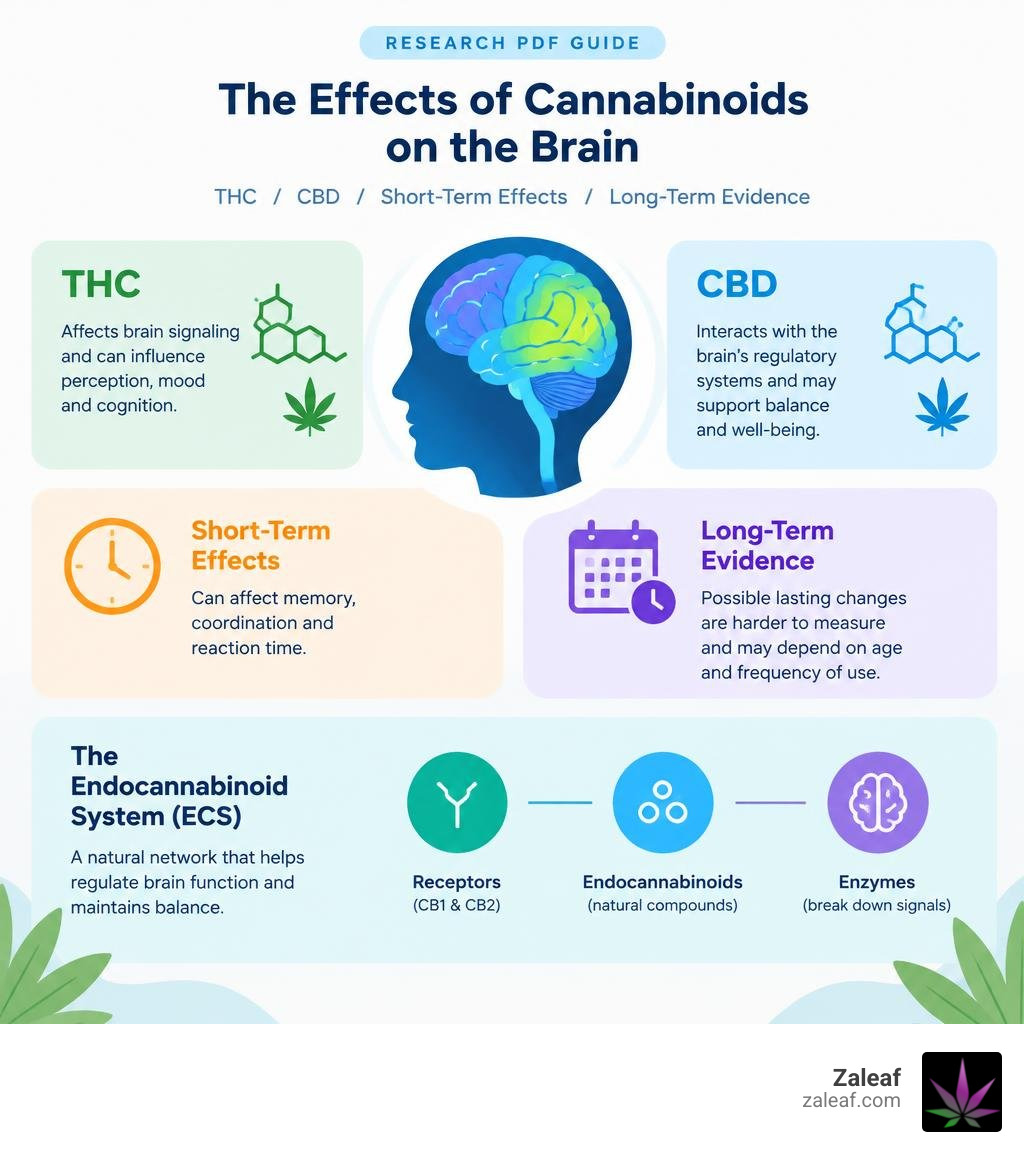
For a PDF on the effects of cannabinoids on the brain, start with this government research report. It reviews how THC affects brain signaling, why it can disrupt memory and coordination, and what researchers know about longer-term risks. The key distinction: short-term impairment is well established; lasting changes are harder to measure and may depend on age and frequency of use.
This guide will help you read those findings without treating THC, CBD, and every cannabis product as the same thing.
I'm Max Shemesh, owner and CEO of Zaleaf, where I've worked on cannabinoid products that undergo third-party testing. For readers searching effects of cannabinoids on the brain pdf, I bring that industry experience to a plain-language look at the research.
Comprehensive PDF on the Effects of Cannabinoids on the Brain: Endocannabinoid Science
To understand how cannabis compounds alter our perception, mood, and cognitive performance, we must first look at our own internal biological machinery: the endocannabinoid system (ECS). Discovered in the early 1990s, the ECS acts as a master regulatory network throughout the central nervous system. It maintains physiological homeostasis by fine-tuning neurotransmission across key neural circuits.
The ECS consists of three core components:
- Cannabinoid Receptors: Primarily Cannabinoid Receptor 1 (CB1), which is among the most abundant G-protein coupled receptors (GPCRs) in the central nervous system, and Cannabinoid Receptor 2 (CB2), predominantly found in immune cells and microglia.
- Endogenous Ligands (Endocannabinoids): Lipid-based messengers produced on demand, notably Anandamide (AEA) and 2-Arachidonoylglycerol (2-AG).
- Metabolic Enzymes: Proteins responsible for ligand synthesis and degradation, including fatty acid amide hydrolase (FAAH) and monoacylglycerol lipase (MAGL).
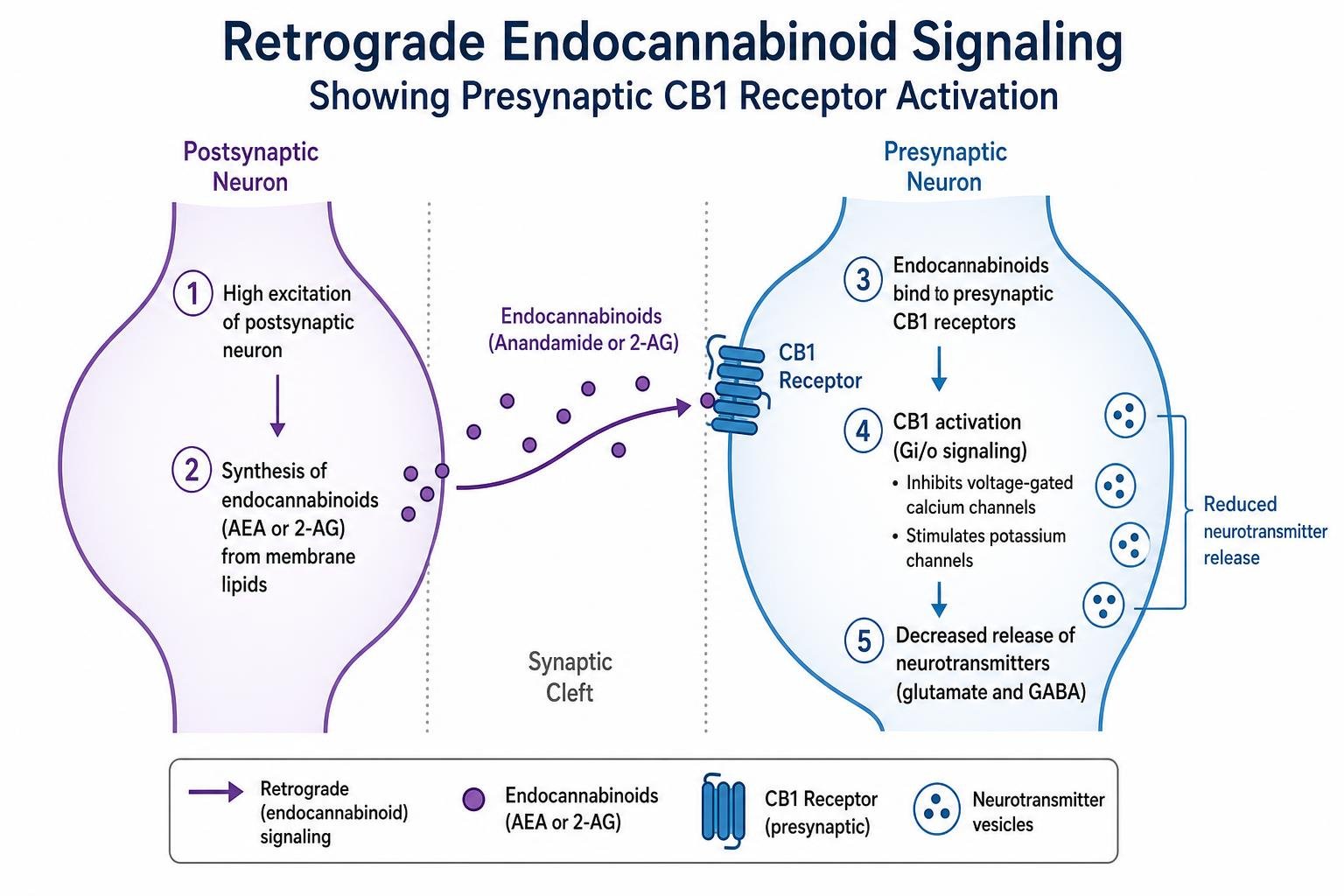
In a seminal review on The Endocannabinoid System and the Brain, neuroscientists established that natural endocannabinoids operate differently from classic neurotransmitters. While conventional messengers travel forward from a presynaptic neuron to a postsynaptic neuron, endocannabinoids operate in reverse.
Retrograde Signaling and Cannabinoid Receptor Pharmacology
When a postsynaptic neuron experiences high excitation, it synthesizes AEA or 2-AG from membrane lipids. These endocannabinoids travel backward across the synaptic cleft to bind presynaptic CB1 receptors. Once activated, CB1 receptors inhibit voltage-gated calcium channels and stimulate potassium channels via Gi/o protein signaling.
This process acts like a biological dimmer switch, damping down the presynaptic release of major neurotransmitters such as glutamate (excitatory) and GABA (inhibitory) (Kendall & Yudowski, 2017). For a detailed dive into these cellular cascades, see the review on Cannabinoid Receptors in the Central Nervous System: Their Signaling and Roles in Disease.
When an individual consumes cannabis, exogenous phytocannabinoids flood these synapses. Rather than modulating localized neural circuits on demand, compounds like delta-9-tetrahydrocannabinol bind widely to CB1 receptors throughout the brain, overwhelming normal retrograde feedback loops.
Downloading Key Evidence: Effects of Cannabinoids on the Brain PDF Data
When reviewing any effects of cannabinoids on the brain pdf, researchers distinguish between how different molecules engage our receptor network. While classical endocannabinoids like AEA serve as partial agonists and 2-AG as a full agonist, plant-derived cannabinoids possess unique binding affinities and signaling behaviors.
To better understand how specific phytocannabinoids bind and produce psychoactive or therapeutic effects, read our comprehensive guide to delta 9 tetrahydrocannabinol.
Beyond cell-surface GPCRs, researchers have uncovered mitochondrial CB1 (mtCB1) receptors. These intracellular receptors directly regulate cellular respiration and ATP generation in neurons. When phytocannabinoids activate mtCB1 receptors, they alter mitochondrial energy metabolism, providing a molecular explanation for both short-term memory disruption and cellular adaptations observed in chronic exposure models.
Acute and Lasting Neurological Impacts: From Working Memory to Brain Architecture

Cannabinoid exposure produces distinct acute effects versus chronic neuroadaptations. When THC enters the bloodstream, it readily crosses the blood-brain barrier to bind densely concentrated CB1 receptors in the hippocampus, basal ganglia, cerebellum, and prefrontal cortex.
Acute Cognitive Alterations and Motor Coordination
The immediate, short-term impacts of cannabis use stem directly from the disruption of baseline neurotransmission:
- Working Memory & Executive Function: By inhibiting acetylcholine and glutamate release in the hippocampus and prefrontal cortex, THC impairs working memory formation, short-term recall, and sustained attention.
- Motor Control & Reaction Time: CB1 activation in the cerebellum and basal ganglia impairs psychomotor coordination and spatial processing. Acute THC exposure can slow reaction times by up to 30% within 30 minutes of intake.
- Affective State: In the amygdala, cannabinoid signaling exhibits biphasic effects—low doses often reduce anxiety, whereas high doses can trigger acute panic, paranoia, or transient psychotic symptoms.
To see how structural variations across cannabinoid classes alter these physiological responses, explore our comprehensive look at THC and related cannabinoids.
Evaluating Long-Term Cognitive Outcomes in PDF Studies on the Effects of Cannabinoids on the Brain
A major question in neuroimaging is whether heavy, sustained cannabis use produces permanent alterations in brain activation.
In a study of 1,003 young adults evaluated through the Human Connectome Project (HCP), researchers categorized participants into heavy users (8.8%), moderate users (17.8%), and nonusers (73.4%). Heavy lifetime cannabis use (greater than 1,000 lifetime exposures) was associated with significantly lower brain activation during working memory tasks, exhibiting a small to medium effect size (Cohen d = -0.28). This reduction was driven by decreased recruitment of key executive nodes:
- The anterior insula
- The medial prefrontal cortex
- The dorsolateral prefrontal cortex
Notably, these differences remained significant even after controlling for demographic covariates, education, alcohol, and nicotine use. While acute intoxication directly impairs performance, chronic heavy exposure appears to downregulate prefrontal recruitment during complex cognitive tasks.
| Cognitive Domain | Acute Exposure Impact | Chronic / Heavy Use Impact | Structural / Functional Correlates |
|---|---|---|---|
| Working Memory | Temporary encoding failure, memory lapses | Reduced functional fMRI activation (Cohen d = -0.28) | Dorsolateral prefrontal cortex, Hippocampus |
| Reaction Time | Impairment up to 30%, delayed motor output | Mild psychomotor slowing; partial recovery with abstinence | Basal ganglia, Cerebellum |
| Verbal Memory | Reduced word-list recall during intoxication | 0.13 SD decline per 5 years of regular use | Left hippocampal volume, Temporal lobe |
| Global Cognition / IQ | Dose-dependent executive impairment | Potential long-term IQ drop if initiated early in adolescence | Synaptic density, Cortical thickness |
Developmental Vulnerabilities, Potency Trends, and Addiction Risks
The neurological consequences of cannabinoid consumption are mediated by two critical variables: the developmental age of the user and the concentration of the active compounds consumed.
Adolescent Maturation, Prenatal Exposure, and Neural Pruning
The human brain undergoes dynamic structural maturation until roughly age 25. During adolescence, the central nervous system undergoes extensive synaptic pruning, white matter myelination, and refinement of prefrontal-subcortical pathways. The endocannabinoid system acts as an enzymatic conductor for this developmental wiring.
When adolescents consume high concentrations of exogenous cannabinoids, they risk disrupting this precise pruning process. Cannabis use that begins early in adolescence, occurs frequently, and continues over time is associated with an increased risk of cognitive harms, including a potential drop in IQ that may not fully reverse following cessation.
Developmental stages vulnerable to cannabinoid exposure include:
- Prenatal Period: In the Adolescent Brain Cognitive Development (ABCD) study assessing 11,489 youth, self-reported maternal cannabis use during pregnancy was associated with poorer performance on neurocognitive batteries and smaller total intracranial volumes in children aged 9 to 10.
- Perinatal / Early Infancy: Endocannabinoid signaling governs suckling reflexes and early neurogenesis; exposure disrupts normal receptor density development.
- Early Adolescence (Ages 11–14): Critical window for prefrontal gray matter pruning; heavy exposure accelerates CB1 downregulation and microglial activation.
- Late Adolescence to Emerging Adulthood (Ages 15–24): Finalization of white matter tracts connecting executive control networks to emotional limbic centers.
Escalating THC Potency and Cannabis Use Disorder Markers
Over the last several decades, the potency of commercial cannabis has shifted dramatically. The concentration of delta-9-THC in seized cannabis products rose from approximately 4% in 1995 to over 15% in 2018, with modern concentrates and vape distillates frequently exceeding 80% THC. In parallel, daily marijuana use among youth climbed, with 6.4% of 8th graders and 4.8% of 10th graders reporting daily use in 2019 surveys.
Concurrently, the prevalence of cannabis use disorder (CUD) has grown. Epidemiological models estimate:
- General User Risk: Approximately 1 in 11 (9%) adult cannabis consumers develop dependence.
- Adolescent Initiation: The addiction risk rises to roughly 1 in 6 (17%) for individuals who begin using cannabis during their teenage years.
- Daily Consumers: For individuals consuming cannabis daily, the risk of developing dependence reaches 25% to 50%.
Cannabis use disorder is characterized by CB1 receptor desensitization and downregulation, tolerance accumulation, escalating consumption, and classic withdrawal symptoms upon cessation (such as insomnia, irritability, anorexia, and vivid dreams). To understand the precursor molecule behind classic psychoactive THC before heat is applied, review our guide on understanding the chemistry of THCA.
Furthermore, the introduction of non-traditional compounds warrants strict scientific scrutiny. Synthetic cannabinoids act as high-affinity full agonists at CB1 receptors, leading to unpredictable neurotoxicity, acute psychosis, and autonomic dysregulation, as documented in the toxicology report on Pharmacological and Toxicological Effects of Phytocannabinoids and Recreational Synthetic Cannabinoids.
Therapeutic Neuroprotection vs. Recreational Risks: CBD, Ratios, and Biphasic Actions
While excessive recreation-level exposure to isolated, high-potency THC presents cognitive risks, the broader cannabinoid pharmacopeia offers distinct neuroprotective and therapeutic avenues. Cannabinoid signaling frequently follows a hormetic, biphasic dose-response curve: low concentrations elicit physiological benefits, whereas high concentrations produce adverse or opposing effects.
Neuroprotective Pathways, Antioxidant Mechanisms, and Ultra-Low Dosing
At controlled concentrations, specific cannabinoids activate protective cellular pathways. They suppress microglial activation, modulate excitotoxic glutamate release via NMDA receptor interactions, and stimulate endogenous cellular defenses.
Key molecular mechanisms include:
- Nrf2 Pathway Activation: Elevates intracellular glutathione and antioxidant enzymes, neutralizing reactive oxygen species (ROS).
- PI3K/Akt and MAPK/ERK Signaling: Promotes cell survival, synaptic plasticity, and brain-derived neurotrophic factor (BDNF) transcription.
- Sirtuin-1 (SIRT1) Modulation: Regulates mitochondrial biogenesis and protects neurons against ischemic or metabolic stress.
These pathways are examined in detail in the published review Involved in Antioxidative and Neuroprotective Effects of Cannabinoids.
Intriguingly, animal models demonstrate that ultra-low doses of THC (0.001 to 0.002 mg/kg)—doses three to four orders of magnitude below recreational thresholds—can prevent cognitive deficits after traumatic or hypoxic insults and improve learning parameters in aged models by selectively activating protective Gs-protein signaling. For more on therapeutic applications, explore our overview of cannabis for stress, pain, and wellness.
Balancing Phytocannabinoids: Full Spectrum Profiles and Receptor Activity
Unlike THC, Cannabidiol (CBD) does not directly stimulate CB1 receptors as an orthosteric agonist. Instead, CBD functions as a negative allosteric modulator of CB1. When CBD binds to an allosteric site, it changes the physical conformation of the receptor, reducing the potency and efficacy with which THC can activate it.
This interaction is vital:
- Mitigating Psychoactivity: CBD blunts THC-induced tachycardia, acute anxiety, and psychotomimetic side effects.
- Broad Receptor Targets: Beyond the ECS, CBD interacts with serotonin 5-HT1A receptors (anxiolytic action), TRPV1 channels (analgesia), and PPAR-gamma nuclear receptors (anti-inflammatory signaling).
- Peptide Modulators: Emerging neuroscience also points to endogenous peptide modulators, such as hemopressin derivatives, which act as natural allosteric regulators of CB1 and CB2 receptors, detailed in fphar-2020-596572 1..23.
Understanding the synergistic interplay between minor cannabinoids and botanical terpenes is essential for maximizing therapeutic outcomes while minimizing cognitive risks. To learn more about these collaborative botanical mechanisms, read our deep dive into hemp's full spectrum powerhouse compounds.
Frequently Asked Questions About Cannabinoid Neuroscience
How do cannabinoids alter memory formation and cognitive processing?
Cannabinoids alter memory primarily by activating CB1 receptors located on presynaptic terminals in the hippocampus and prefrontal cortex. When THC binds these receptors, it suppresses the normal release of neurotransmitters (such as glutamate and acetylcholine) necessary for long-term potentiation (LTP)—the cellular basis of memory encoding. This produces temporary lapses in short-term recall and reduces working memory capacity during acute intoxication.
Can regular cannabis use cause permanent structural changes in the brain?
Neuroimaging literature presents a nuanced picture. While some volumetric studies report modest reductions in hippocampal or prefrontal gray matter volume among individuals who engage in daily, high-potency cannabis use starting in early adolescence, other twin and longitudinal studies suggest these differences may be influenced by shared genetics or polysubstance use.
However, functional fMRI studies demonstrate that heavy lifetime use (over 1,000 uses) is consistently associated with reduced functional recruitment of executive networks during working memory tasks, even after periods of abstinence.
How do phytocannabinoids differ in receptor activity?
Phytocannabinoids differ based on their binding affinity, intrinsic efficacy, and target site:
- Delta-9-THC: A partial agonist at both CB1 and CB2 receptors; its activation of CB1 drives psychoactive effects and memory disruption.
- CBD: A negative allosteric modulator of CB1; it changes the shape of the receptor to dampen THC's binding strength without triggering intoxicating pathways.
- Synthetic Cannabinoids: Often full agonists with extreme binding affinity (up to 100 to 800 times more potent than natural THC), leading to massive receptor internalization, severe toxicity, and medical emergencies.
Conclusion
The scientific literature surrounding cannabinoids and the brain highlights a crucial balance. On one hand, acute high doses of THC and persistent, early-onset adolescent use carry measurable risks—ranging from temporary working memory deficits and reduced prefrontal brain activation to elevated rates of dependence. On the other hand, balanced cannabinoid profiles, non-intoxicating compounds like CBD, and precisely calibrated formulations offer legitimate neuroprotective, anti-inflammatory, and therapeutic promise.
Navigating this scientific landscape requires clear, data-driven consumer choices. At Zaleaf, we believe consumer safety begins with verifiable standards. We offer 100% legal cannabis products featuring enhanced cannabinoid and terpene profiles formulated for specific mood and wellness effects. Every product we craft undergoes rigorous 3rd party testing to verify potency, purity, and safety—shipped with fast delivery and discrete packaging, with no ID or medical card required.
To discover how specific strain profiles interact with daytime focus and mental energy, explore our comprehensive guide on sativa vape effects and brain function.
References
Debra A. Kendall, Guillermo A. Yudowski. "Cannabinoid Receptors in the Central Nervous System: Their Signaling and Roles in Disease." Frontiers in Cellular Neuroscience, 2017. DOI 10.3389/fncel.2016.00294.