

Cart Batteries 101: Can You Use 12V Batteries Instead of 6V?

The Two Very Different Worlds of Cart Batteries

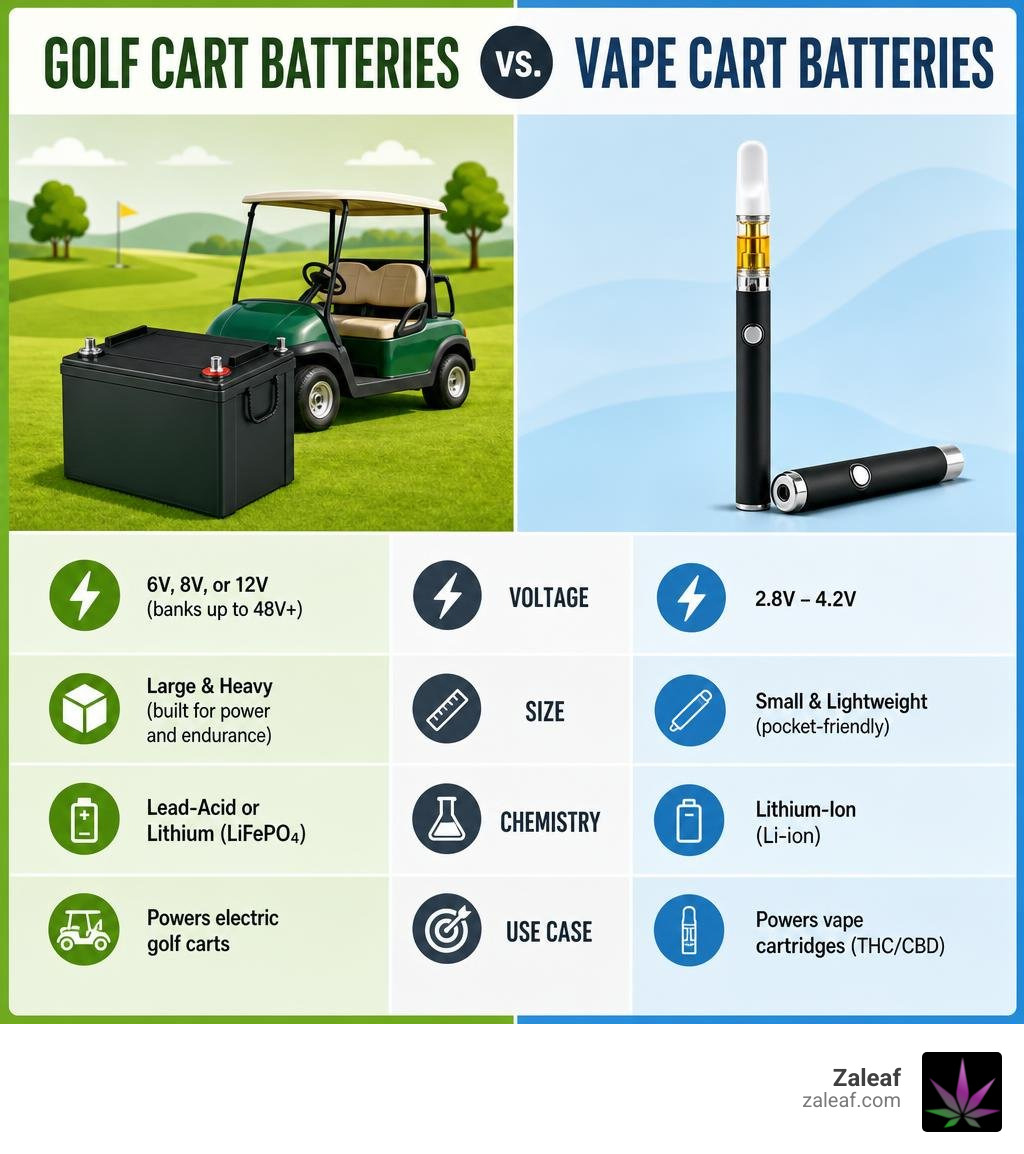
Cart batteries is one of those terms that means completely different things depending on who's asking. Are you trying to power a golf cart across 18 holes? Or are you looking for a 510 thread battery to use with a THC vape cartridge? Both are called "cart batteries" — and that single word overlap causes a lot of confusion.
Here's the quick answer to clear things up:
| Type | What It Powers | Common Voltage | Battery Chemistry |
|---|---|---|---|
| Golf cart battery | Electric golf carts | 6V, 8V, or 12V (banks up to 48V+) | Lead-acid or Lithium (LiFePO4) |
| Vape cart battery | THC/CBD vape cartridges | 2.8V – 4.2V | Lithium-ion (Li-ion) |
The key difference? Golf cart batteries are large, heavy power banks built to move a vehicle. Vape cart batteries are small, pocket-sized devices built to heat oil in a cartridge. This guide covers both — so whether you're upgrading your golf cart's power system or picking a 510 thread battery for your vape carts, you're in the right place.
I'm Max Shemesh, owner and CEO of Zaleaf, and I've spent years working directly in the cannabinoid industry — helping customers find the right cart batteries and vape setups for their needs. Let's break down exactly what you need to know.
Cart batteries helpful reading:
What Are Cart Batteries? Vape Carts vs. Golf Carts
When we search online for cart batteries, we are met with a confusing mix of industrial-sized lead-acid blocks and sleek, pen-shaped vaporizers. This search ambiguity stems from our love of abbreviation. Both "golf carts" and "vape cartridges" get shortened to "carts," leaving search engines scrambling to figure out if you want to play 18 holes of golf or enjoy a relaxing evening with a premium distillate.
At their core, both types of cart batteries are energy storage devices, but they use very different chemistries and scales:
- Vape Cart Batteries: These are compact, rechargeable lithium-ion (Li-ion) devices. They are designed to deliver a small, controlled amount of electrical current to a microscopic heating coil (atomizer) inside a vape cartridge. This heat vaporizes the active ingredients and terpenes in cannabis or CBD oil for inhalation.
- Golf Cart Batteries: These are heavy-duty, deep-cycle batteries. Historically, they have relied on flooded lead-acid chemistry, though modern systems have rapidly transitioned to Lithium Iron Phosphate (LiFePO4). They are engineered to provide sustained, high-current power over hours to drive electric motors, carrying hundreds of pounds of passengers and gear.
Understanding the difference prevents you from making a very awkward retail trip. If you want to dive deeper into how these power sources differ at a molecular level, you can read our guide on Demystifying Vape Batteries: Understanding the Differences.
Golf Cart Power: Can You Use 12V Batteries Instead of 6V?

If you own an electric golf cart, you will eventually face the dreaded day when your battery bank dies. When looking for replacements, you might wonder: Can I swap out my heavy bank of six 6V batteries for four 12V batteries to save space, weight, and money?
The short answer is: Yes, you can use 12V batteries instead of 6V batteries, but there are major trade-offs in performance, runtime, and overall lifespan.
Most standard electric golf carts operate on a 36-volt or 48-volt system. To achieve this total voltage, individual batteries are connected in series. When you connect batteries in series, their voltages add up, while their capacity (measured in Amp-hours, or Ah) remains the same.
For example, to build a 48V battery bank:
- Using 6V batteries: You need eight 6V batteries connected in series (8 x 6V = 48V).
- Using 12V batteries: You only need four 12V batteries connected in series (4 x 12V = 48V).
On paper, the 12V setup sounds fantastic. It requires fewer physical batteries, fewer connection cables, and significantly reduces the overall weight in your battery compartment. However, the physical size of a battery dictates how much active material (lead plates or lithium cells) can fit inside. Because 6V batteries have fewer, much thicker plates per cell compared to 12V batteries of a similar physical footprint, they offer much higher capacity and durability under deep discharge cycles.
| Feature | 6V Battery Bank (8 Batteries) | 12V Battery Bank (4 Batteries) |
|---|---|---|
| Total Voltage | 48V | 48V |
| Average Capacity (Ah) | 210Ah – 250Ah | 100Ah – 150Ah |
| Typical Range | 40 – 50 miles | 20 – 30 miles |
| Lifespan (Lead-Acid) | 5 – 7 years | 2 – 4 years |
| Weight Distribution | Heavy, stable, low center of gravity | Lighter, but less balanced floor space |
| Maintenance Effort | High (watering 24 individual cells) | Medium (watering 12 individual cells) |
By choosing 12V batteries over 6V batteries, you cut your total amp-hour capacity almost in half. This means your cart will have a much shorter range per charge, and the batteries will experience deeper discharge levels on every ride, causing them to degrade much faster.
Comparing 6V, 8V, and 12V Golf Cart Configurations
To understand how battery configurations affect your cart's performance, we have to look at the industry-standard GC2 form factor. The design of your golf cart's battery tray determines what fits, but understanding the electrical differences is key:
- 6V Configurations (8 x 6V = 48V): This is the gold standard for lead-acid setups. Because 6V batteries are highly robust, they handle deep discharge cycles with ease. They offer the highest overall range and the longest operational lifespan of any lead-acid configuration, though they take up the most physical space and add the most weight to the vehicle.
- 8V Configurations (6 x 8V = 48V): A very common middle ground used by major manufacturers. It balances weight and capacity reasonably well, offering decent range while keeping the battery count to six units.
- 12V Configurations (4 x 12V = 48V): This configuration is highly convenient for quick replacements and lighter loads. However, because the plates inside a 12V deep-cycle lead-acid battery are thinner to accommodate the higher voltage cells in the same box size, they have lower discharge tolerance. They are best suited for light, occasional neighborhood cruising rather than heavy-duty course management.
Upgrading to 48V Lithium Golf Cart Batteries
If you want to bypass the heavy maintenance, watering cycles, and rapid degradation of traditional lead-acid systems altogether, upgrading to a 48V lithium conversion kit is the ultimate solution. Lithium Iron Phosphate (LiFePO4) batteries have completely revolutionized the golf cart industry as of 2026.
By replacing your lead-acid bank with a single, integrated lithium unit, you can reduce your cart's weight by up to 325 pounds. This massive weight reduction improves acceleration, braking, hill-climbing torque, and prevents your cart's suspension from sagging. Furthermore, lithium batteries offer a built-in Battery Management System (BMS) that protects against overcharging, short circuits, and extreme temperatures.
If you are looking to make the leap to lithium, here are the top-rated conversion bundles available on the market:
- For maximum capacity and built-in heating for cold-weather charging, check out the MODZ® Universal 48 Volt (51.2v) 175Ah Blade Lithium Golf Cart Battery Bundle.
- If you want a highly compact, drop-in replacement that fits standard battery trays, look at the MODZ 48V Lithium Golf Cart Battery 105AH Nano Kit.
- For a highly reliable, quick-install kit with a 10-year warranty, consider the Big Battery 48-Volt Lithium Golf Cart Batteries.
- For advanced safety features like FireFade automatic fire suppression and a 52-mile range, the Renogy 48V 105Ah Lithium Golf Cart Battery is an exceptional choice.
- If you need native GC2 sizing and full IP67 water immersion protection for muddy trails, the Canbat 48V GC2 Golf Cart Lithium Battery is built like a tank.
- For smart monitoring via Bluetooth and a massive 200A continuous discharge rate, check out the Vatrer 48V 105Ah Lithium Golf Cart Battery.
510 Thread Vape Cart Batteries: Types and How They Work
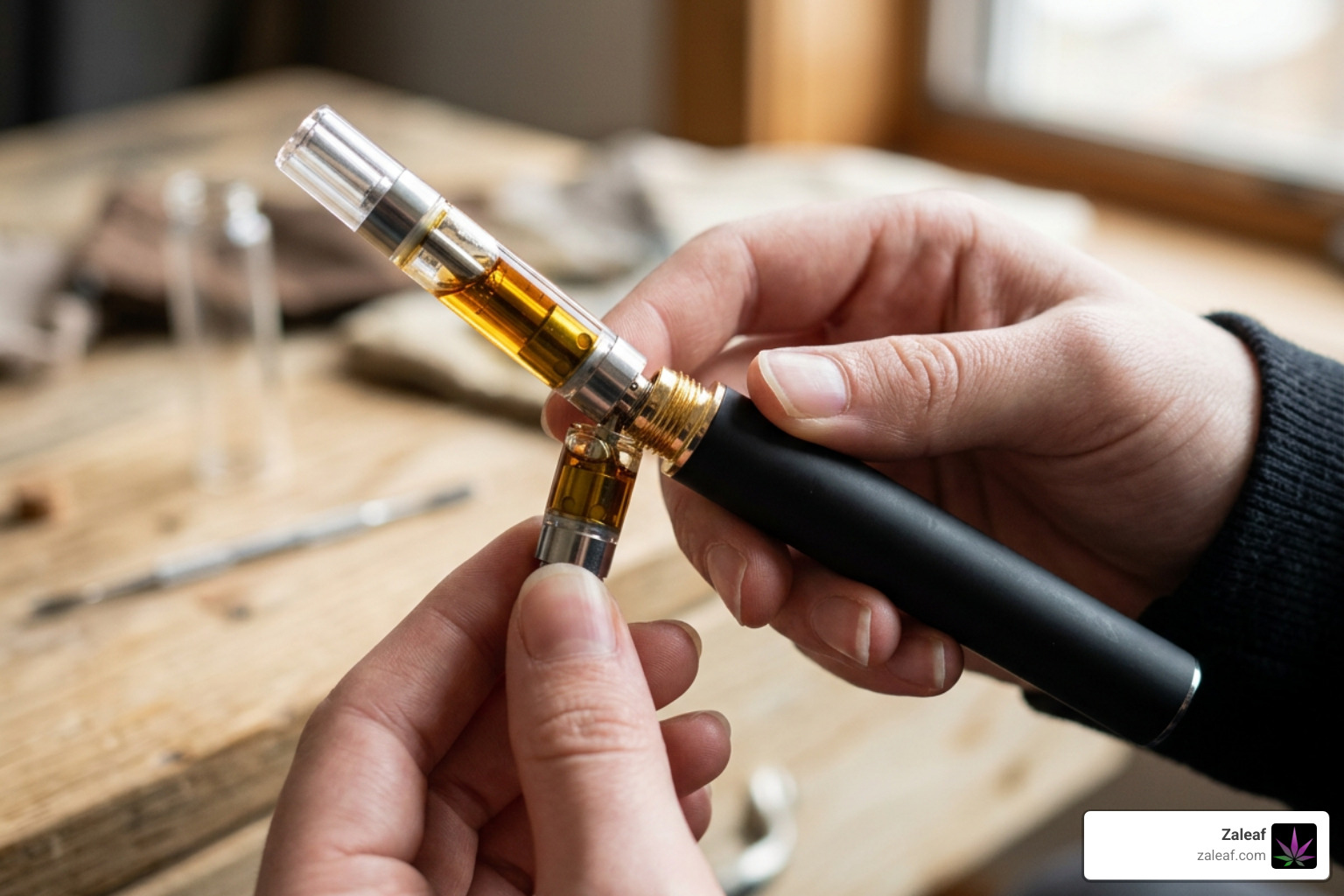
Now, let's transition from the fairways to the palm of your hand. In the vaping world, cart batteries refer almost exclusively to 510 thread batteries. The term "510" originally described the physical threading specification: 10 threads spaced at 0.5 mm intervals. Today, it has become the universal industry standard connection type, ensuring that almost any cartridge you buy will screw perfectly into almost any battery on the market.
These batteries work by sending a controlled electrical current through the 510 connection into the cartridge's atomizer. The atomizer contains a small heating coil (usually wrapped around a ceramic core) that absorbs the cannabis oil. As the coil heats up, it vaporizes the oil, allowing you to inhale a clean, flavorful vapor.
The type of oil you use dictates how you should run your battery:
- Distillate Carts: These contain highly purified THC or CBD with introduced terpenes. Distillates are highly stable and can withstand slightly higher voltages (3.2V - 4.0V) to produce massive, thick vapor clouds.
- Live Resin / Live Rosin Carts: These are premium, full-spectrum extracts that preserve the plant's natural, delicate terpene profile. Terpenes burn easily and lose their flavor if overheated. For live resin, you must use a low voltage range (1.8V - 2.8V) to preserve the rich, authentic flavor.
How 510 Thread Devices Work with THC Vape Cartridges
When you screw a cartridge into your 510 thread battery, you complete an electrical circuit. The battery housing contains a lithium-ion cell, a small circuit board, and a spring-loaded center pin. This center pin makes contact with the bottom pin of the cartridge, sending power directly to the internal heating element.
Most premium vape batteries utilize conduction heating, warming the ceramic core from the inside out. For a comprehensive look at the internal electronics, safety chips, and science behind vapor production, take a look at our guide: Demystifying THC Vape Batteries: A Comprehensive Guide.
Main Types of Vape Batteries
Not all cart batteries are built the same way. Depending on your lifestyle, aesthetic preferences, and how discreet you need to be, you can choose from several distinct designs:
- Pen-Style Batteries: The classic, slender design that resembles an office pen. They are highly portable, easy to slip into a pocket, and usually feature a single button to operate.
- Conceal/Discreet Devices: These batteries fully enclose the cartridge inside the body of the device, often using a magnetic adapter to drop the cart into a hidden chamber. They protect your fragile glass cartridges from breaking if dropped and look like standard USB drives or key fobs, keeping your sessions completely low-profile.
- Dual-Cart Batteries: For the ultimate connoisseur, these allow you to screw in two different cartridges at once (such as a CBD cart and a THC live resin cart) and pull from both simultaneously, mixing the vapor for custom effects.
- Box Mods: Larger, high-capacity batteries adapted from the traditional nicotine e-cigarette world. They feature digital displays, massive battery capacities (up to 1100mAh+), and highly precise voltage controls.
To find out which physical style fits your daily routine, read our breakdown on Cart Pens and Vape Carts: What You Need to Know.
How to Choose and Maintain Vape Cart Batteries
Selecting the right device can make or break your vaping experience. A cheap, unregulated gas station battery can easily overheat your cartridge, burning your expensive live resin and leaving you with a harsh, metallic taste.
Choosing the Right Vape Cart Batteries
When shopping for cart batteries, keep these primary factors in mind:
- Compatibility: Ensure the battery physical opening can fit your cartridge. Standard cartridges are 10.5 mm in diameter, but newer 2-gram cartridges can be up to 11.5 mm or 12 mm wide. Some conceal devices have narrow chambers that won't accept wider carts.
- Battery Capacity (mAh): Milliamp-hours (mAh) measure how much energy the battery can hold. A 350mAh battery is highly compact but may require daily charging, while a robust 900mAh or 1000mAh battery can easily last a heavy user several days on a single charge.
-
Activation Method:
- Auto-Draw (Inhale Activated): Perfect for beginners. You simply inhale, and the device automatically fires up.
- Button-Activated: Gives you complete control. You press and hold a physical button to fire the device. These are highly recommended for thick oils because they allow you to warm up the cartridge before inhaling.
For a structured buying checklist, check out Shop Smart: Your Guide to Choosing a Vape Cartridge Battery.
Key Features to Look For in a Vape Battery
To get the absolute most out of your premium oils, look for these modern features when buying a new device:
- Preheat Mode: A setting that gently warms the cartridge at a very low voltage (typically 1.8V - 2.0V) for 10 to 12 seconds. This thins out cold, thick oils and clears any stubborn clogs in the airflow before you take a real hit.
- USB-C Charging: As of 2026, USB-C is standard on over 82% of premium vape batteries. It charges up to three times faster than old micro-USB ports and is much more durable.
- Variable Voltage Range: Look for a device that offers a wide, adjustable voltage sweep (ideally starting as low as 1.8V up to 4.2V) rather than fixed presets. This allows you to dial in the exact temperature for different oil types.
For a deeper dive into variable voltage and how it preserves your cannabinoids, explore our article on the Variable Voltage Vape Battery.
Maintenance Tips for Vape Devices
A little bit of routine maintenance goes a long way. Because cannabis oil is incredibly sticky, it can easily leak out of the bottom of a cartridge and clog your battery connection point.
Follow these easy steps to maximize your battery's lifespan:
- Clean the Connections: Once a week, dip a cotton swab in high-percentage isopropyl alcohol (91% or higher) and gently wipe down the 510 threads on both the battery and the cartridge. This removes sticky residue and ensures a perfect electrical connection.
- Avoid Overcharging: Do not leave your vape battery plugged in overnight. Overcharging degrades lithium-ion cells over time, reducing their overall capacity. Unplug the device as soon as the indicator light shows it is fully charged.
- Proper Storage: Always store your battery and cartridge upright in a cool, dry place. Storing a cartridge on its side can cause the oil to pool away from the intake holes or seep into the airway, leading to clogs and leaks.
To keep your device running like new for years, read our Vape Battery Lifespan Complete Guide.
Troubleshooting Common Issues with Vape Cart Batteries
Is your battery flashing a weird light or refusing to hit? Don't throw it in the trash just yet. Most common vape battery issues are incredibly easy to fix:
- The "Connection Plate" Issue: If your battery is fully charged but flashes when you try to draw, the center contact pin inside the 510 threads may have been pushed down too far. Unplug the battery, take a small paperclip or toothpick, and gently pry the small metal circle in the center of the threads upward by a fraction of a millimeter. This will restore contact with the cartridge.
- Short Circuit Protection: If the light flashes rapidly, your cartridge might be screwed in too tightly. Back it off a quarter-turn to see if it fires.
- No Power/No Charging: Ensure you are using the correct charging cable. Many modern USB-C vape batteries do not support USB-C to USB-C fast-charging blocks; they require a standard USB-A to USB-C cable plugged into a low-voltage computer port or wall adapter.
For a complete step-by-step troubleshooting guide, check out our resource on Charging 510 Battery.
Safety and Legal Considerations
When using and traveling with lithium-ion batteries, safety should always be your top priority. Never use a battery that has a visibly swollen body, dented casing, or exposed wiring.
Additionally, keep these travel rules in mind:
- TSA Guidelines: According to federal regulations, all electronic vape devices and lithium-ion batteries must be placed in your carry-on luggage. They are strictly prohibited in checked baggage due to the fire risk associated with cargo holds. Always detach your cartridge from the battery and turn the device off before boarding.
- Age Restrictions: You must be of legal age (21+ in most jurisdictions) to purchase or use any vape cart batteries or cannabis accessories. Always buy your gear from reputable sources that require age verification and offer third-party lab-tested products.
To learn more about keeping your sessions safe and avoiding unregulated hardware, read our article: Stay Safe: Understanding Unprotected Vape Battery Risks.
Frequently Asked Questions About Cart Batteries
Can I use a standard USB-C charger for my vape battery?
Yes, but with a major caveat. While you can physically plug a standard USB-C cable into your vape battery, many devices do not support high-wattage USB-C to USB-C fast chargers (like those used for MacBooks or modern smartphones). For safety and optimal charging, always use a standard USB-A to USB-C cable connected to a low-voltage power source, such as a laptop port or a standard 5V/1A wall adapter.
How long do lithium golf cart batteries last compared to lead-acid?
Lithium (LiFePO4) golf cart batteries last significantly longer than traditional lead-acid batteries. While a well-maintained lead-acid battery bank typically lasts 3 to 5 years (roughly 300 to 500 charge cycles), a premium lithium golf cart battery can easily last 10 to 15 years, providing over 4,000 to 6,000 charge cycles at 80% depth of discharge with zero ongoing maintenance.
What voltage should I use for live resin cartridges?
For live resin and live rosin cartridges, you should always use a low voltage setting between 1.8V and 2.8V. Live resin contains delicate, natural terpenes that vaporize at much lower temperatures than pure distillate. Running your battery higher than 2.8V will burn these terpenes, destroying the flavor profile and creating a harsh, unpleasant vapor.
Conclusion
Whether you are upgrading your golf cart to a high-performance 48V lithium battery bank or hunting for the perfect 510 thread device to enjoy your favorite concentrates, choosing the right cart batteries is all about matching power to your specific needs.
At Zaleaf, we specialize in high-quality, 100% legal cannabis products designed to enhance your everyday wellness. We focus on optimizing cannabinoid and terpene profiles for precise, mood-specific effects. All of our products undergo rigorous third-party lab testing, require no medical card or ID, and ship directly to your door with fast shipping and completely discrete packaging.
Ready to upgrade your vaping experience with premium hardware and legal cannabinoids? Choose Your Perfect Vape Setup with Zaleaf today!