

Beyond the Buzz: How Cannabis May Aid Your Sleep, Soothe Anxiety, and Ease Pain

Why Quality Sleep Matters More Than Ever

Cannabis for sleep is becoming one of the most common reasons people turn to cannabinoid products. Here's what the research shows:
Quick Answer: Does Cannabis Help with Sleep?
- Short-term benefits: THC may reduce the time it takes to fall asleep and increase deep sleep initially
- CBD effects: Higher doses of CBD may increase total sleep time and reduce sleep disruptions
- Important caveat: Regular, long-term use is associated with worse sleep quality, lower sleep efficiency, and reduced deep sleep
- Age matters: Older adults (over 31) may see better sleep benefits from CBD than younger users
- Best results: Occasional use with proper dosing appears more effective than daily consumption
The numbers tell a compelling story. Roughly one in three Canadians suffer from symptoms of insomnia. Among Canadians who self-reported consuming cannabis for medical purposes in the 2023 Canadian Cannabis Survey, almost half said they're using it as a sleep aid.
In a recent Sleep Foundation survey, roughly 77% of men and 64% of women between 21 and 64 have used cannabis to sleep. That's a lot of people searching for relief from restless nights.
But here's where it gets interesting. While many users expect cannabis to improve their sleep, the scientific evidence paints a more complex picture. Some studies show benefits for falling asleep faster. Others reveal potential downsides like disrupted REM sleep and reduced sleep quality with frequent use.
This guide cuts through the confusion. We'll explore what actually works, what doesn't, and how to use cannabis for sleep safely if you choose to try it.
I'm Max Shemesh, Owner & CEO of Zaleaf, and I've spent years working with customers seeking high-quality cannabinoid solutions for cannabis for sleep challenges. Our focus on third-party testing and personalized support has helped thousands find effective, safe approaches to better rest.
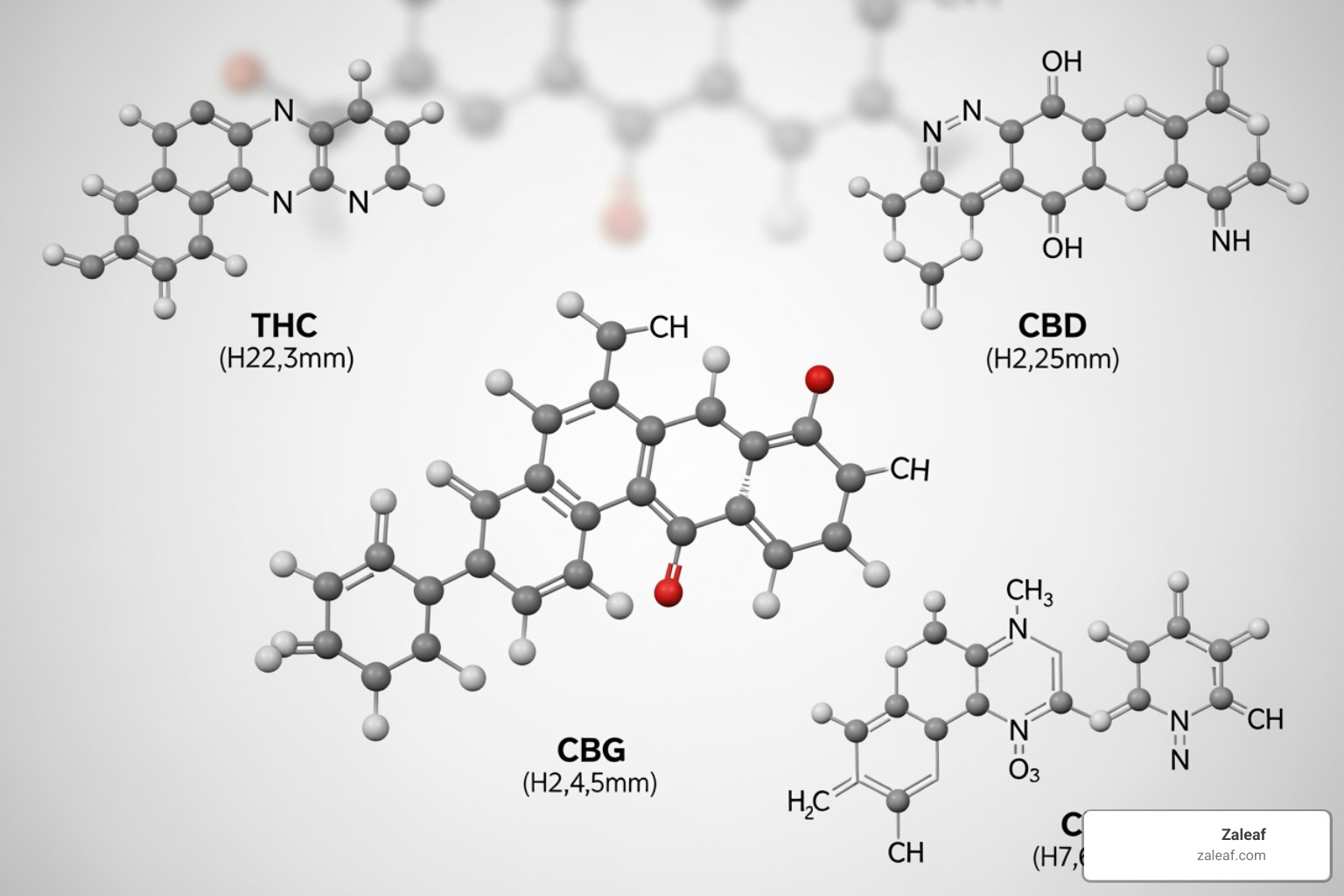
Easy cannabis for sleep glossary:
The Science of Cannabis for Sleep
To understand how cannabis for sleep works, we have to look at the "thermostat" of the human body: the Endocannabinoid System (ECS). This complex network of receptors (CB1 and CB2) and signaling molecules helps regulate everything from our appetite to our mood and, most importantly, our sleep-wake cycles.
When we consume cannabinoids like THC or CBD, they interact with these receptors. Research suggests that cannabinoids can increase adenosine levels—the chemical in your brain that builds up throughout the day to make you feel sleepy—and suppress the brain’s arousal system. This is why many people find that cannabis helps with "sleep latency," which is just a fancy scientific term for the time it takes to fall asleep.
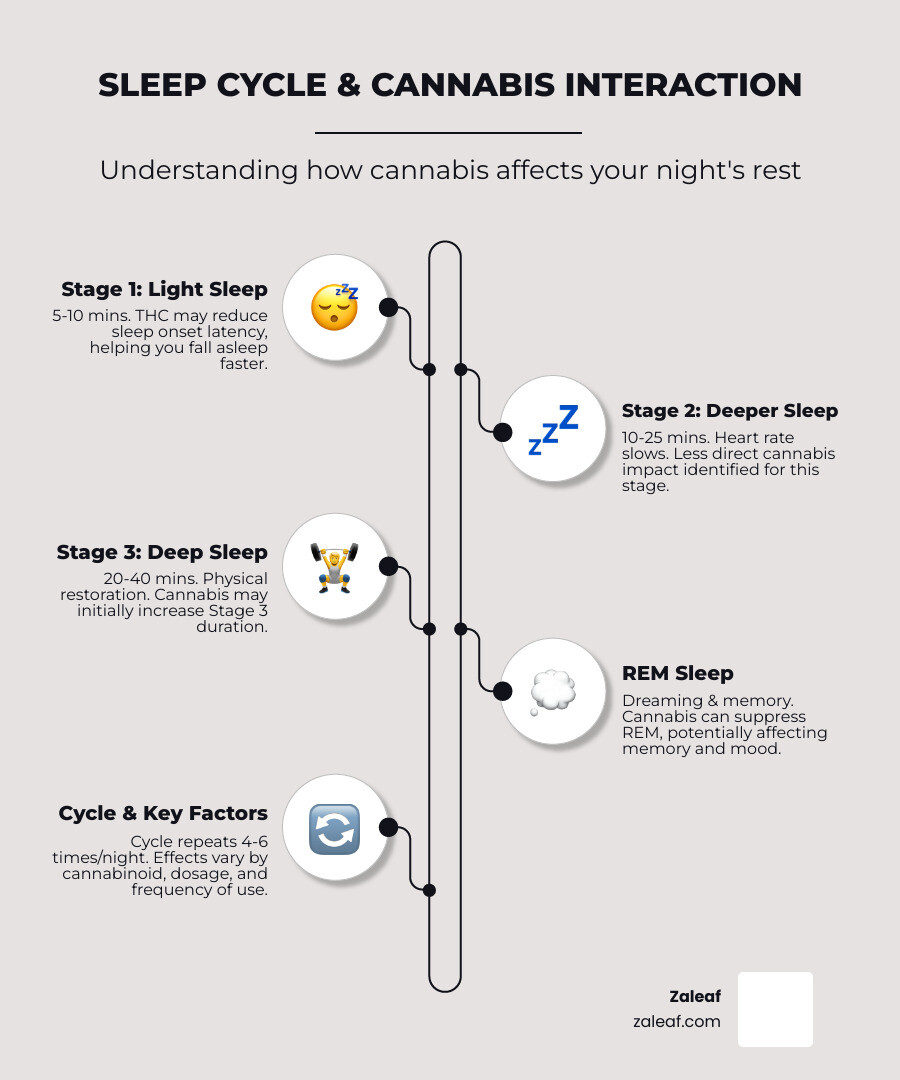
According to a scientific review on sleep architecture, the impact of cannabis on how we sleep is highly variable. Short-term use of THC is often associated with an increase in "deep sleep" (also known as Stage 4 or slow-wave sleep). This is the restorative stage where your body repairs tissues and builds bone and muscle. However, the same research notes that regular use can actually lead to a decrease in deep sleep over time as the body builds a tolerance.
How Cannabis for Sleep Impacts REM Cycles
One of the most discussed topics in cannabis for sleep is its effect on REM (Rapid Eye Movement) sleep. This is the stage where we do most of our dreaming.
Consuming THC may reduce the time you spend in REM sleep. For some, this is a benefit—particularly for those suffering from PTSD-related nightmares. However, research suggests that REM sleep is crucial for brain function development, memory consolidation, and mood regulation. If you've ever noticed that you don't dream much when using cannabis before bed, this REM suppression is the reason why.
Interrupted REM sleep can have negative effects on how you process emotions and store new information. It's a bit of a trade-off: you might fall asleep faster, but you might be missing out on the "mental filing" that happens during your dreams.
Finding the Right Dosage of Cannabis for Sleep
When it comes to cannabis for sleep, more isn't always better. Cannabinoids often exhibit what scientists call "biphasic effects." This means that a small dose might have one effect, while a large dose has the exact opposite.
- Low-dose THC: Often acts as a sedative, helping you drift off.
- High-dose THC: Can actually be stimulating, potentially causing racing thoughts or even paranoia, which is the last thing you want when you're trying to count sheep.
- CBD dosage: Lower doses of CBD may actually promote alertness (great for a morning boost!), while higher doses are typically required to promote sleep and increase overall sleep duration.
Frequency also plays a massive role. The data shows that endorsing current cannabis use is often associated with worse subjective sleep quality compared to occasional use. This suggests that "saving it for a rainy day" (or a particularly stressful night) might be more effective than making it a nightly habit. If you're unsure where to start, you can learn more about Zaleaf’s personalized cannabis support services to find a regimen that fits your specific needs.
Cannabinoid Profiles: THC, CBD, and CBN
Not all cannabis is created equal. The plant contains over 100 different cannabinoids, but three stand out when we talk about catching those elusive Zs.
Tetrahydrocannabinol (THC) is the most famous compound. It’s psychoactive (it gets you high) and is primarily responsible for the sedative effects that help people fall asleep. Scientific findings on THC as a hypnotic have shown that it can significantly decrease sleep onset latency.
Cannabinol (CBN) is often called the "sleepy cannabinoid." It isn't actually produced by the living plant in large amounts. Instead, it’s what happens when THC ages and oxidizes. When THC degrades over time, it converts into CBN, which is thought to be much more sedating than THC itself. When used in combination with THC, CBN can promote better sleep and prolong total sleep time.
Using CBD Cannabis for Sleep
Cannabidiol (CBD) is the non-psychoactive sibling of THC. It won't make you feel "high," which makes it a popular choice for people who want the benefits of the plant without the buzz.
CBD works differently. Instead of knocking you out directly, it helps address the reasons you can't sleep, like stress and anxiety. By inducing a state of relaxation and calm, CBD makes it easier for your body to transition into sleep mode naturally.
A 2022 study on CBD dosage and sleep time concluded that while lower doses can be stimulating, higher doses may increase overall sleep time and reduce sleep disruptions. Interestingly, the research also found that age moderates this relationship—older participants often show a larger positive effect from CBD than younger ones.
Choosing Strains and Consumption Methods
If you walk into a dispensary or browse our selection at Zaleaf, you'll see terms like "Indica" and "Sativa." While the science is evolving, the general rule of thumb for cannabis for sleep is:
- Indica: Often described as "in-da-couch." These strains are typically more relaxing and soothing. They often have higher concentrations of sedating terpenes (aromatic compounds) like Myrcene.
- Sativa: Generally more stimulating and uplifting. Great for a hike, maybe not great for 11:00 PM.
Strains like Pink Kush and Bubba Kush are popularized specifically for their sleep-inducing properties. They focus on calming the mind and relaxing the muscles.
Effective Forms of Consumption
The way you take your cannabis changes how long it takes to work and how long it stays in your system. This is crucial for planning your bedtime.
| Method | Onset Time | Duration | Best For... |
|---|---|---|---|
| Zaleaf Edibles | 30 - 90 mins | 6 - 8 hours | Staying asleep all night |
| Zaleaf Oils | 15 - 45 mins | 4 - 6 hours | Precise dosing and consistent relief |
| Zaleaf Flower | 1 - 5 mins | 2 - 3 hours | Falling asleep quickly |
Preliminary evidence suggests that medical cannabis oils are especially effective for treating insomnia because they allow for precise titration. You can start with a tiny drop and work your way up until you find your "sweet spot."
At Zaleaf, we specialize in enhancing these profiles. Our sleep-enhancing vape pens and cannabis edibles for sleep are designed with specific terpene blends to maximize relaxation.
Long-Term Risks and Safety Considerations
We love cannabis, but we also love being honest. Using cannabis for sleep every single night can lead to "tolerance," meaning you'll need more and more to get the same effect.
There is also the "withdrawal" factor. If you’ve been a heavy user and suddenly stop, you might experience sleep disturbances, including very vivid or strange dreams (this is called REM rebound) and increased difficulty falling asleep. These symptoms usually peak within 24-72 hours but can linger for a few weeks.
Research on long-term brain effects suggests that chronic, heavy use could lead to difficulties with learning, memory, and focus. This is why most medical professionals discourage the long-term use of any sleep aid, cannabis included, without a comprehensive plan.
Age and Developmental Impact
Age is a major factor in how cannabis affects your brain. Experts agree that people under age 25 are at a greater risk for long-term consequences because the brain is still developing. If you're in this age group, using cannabis as a nightly crutch could potentially interfere with that development.
On the flip side, older adults often find that their bodies metabolize cannabinoids differently. As we mentioned earlier, older participants in studies often report better sleep efficiency and duration with CBD than their younger counterparts. This may be due to age-related changes in "pharmacokinetics"—basically, how your body absorbs and processes the compounds.
Frequently Asked Questions
Can cannabis help with chronic insomnia?
Yes, but it's usually considered a management tool rather than a "cure." Insomnia is often a symptom of underlying issues like:
- Chronic stress
- Generalized anxiety
- Physical pain
- Depression
Research has shown that medical cannabis can be a safe alternative for those who haven't found success with traditional methods. By reducing the "noise" of anxiety and pain, cannabis allows the body to relax enough to let sleep happen.
Is it safe to use cannabis with traditional sleep aids?
Mixing substances—what we call "sedative stacking"—can be risky. If you are already taking prescription sleep meds or heavy sedatives, adding cannabis can increase the risk of over-sedation, dizziness, and confusion. We always recommend a Zaleaf medical professional consultation or a chat with your doctor before combining treatments.
What are the legal considerations for using cannabis for sleep?
At Zaleaf, we make this part easy. All our products are 100% legal and undergo rigorous 3rd party testing to ensure what’s on the label is what’s in the product. We offer:
- Fast shipping and discrete packaging (your neighbors don't need to know your business).
- No ID or medical card required for our legal hemp-derived selections.
- A focus on full spectrum oils that provide the "entourage effect" for maximum benefit.
Conclusion
The journey to better sleep is personal. For many, cannabis for sleep offers a bridge to more restful nights, especially when dealing with pain or high-stress levels. While the short-term benefits like falling asleep faster and increased deep sleep are well-documented, it’s important to stay mindful of long-term use and the impact on your REM cycles.
The future of research is looking toward mood-specific profiles and the role of minor cannabinoids like CBN. At Zaleaf, we’re already ahead of the curve, crafting products that prioritize safety, transparency, and effectiveness.
Ready to stop tossing and turning? Explore our guide to CBD vapes for better rest or book a Zaleaf consultation for sleep support today. Let's get you back to the sweet dreams you deserve.