

Deep Breaths or Deep Trouble? The Truth About Anxiety Pens and Lung Health
Are Anxiety Pens Bad for Your Lungs? Here's What You Need to Know First
Are anxiety pens bad for your lungs? The short answer is: yes, most inhalable anxiety pens carry real respiratory risks — and some carry serious ones.
Here's a quick breakdown:
| Type of Anxiety Pen | Lung Risk Level | Key Concern |
|---|---|---|
| Essential oil / aromatherapy vape pen | Moderate to High | Heated oils produce harmful VOCs and aerosolized particles |
| CBD vape pen | Moderate to High | Unregulated products may contain toxic additives like vitamin E acetate |
| Vitamin or melatonin vape pen | Moderate | Contamination risk; lungs not designed for nutrient absorption |
| Non-inhaled sensory / fidget pen | Low | No inhalation means minimal lung exposure |
The American Lung Association is direct on this point: inhaling anything other than clean air is not good for your health — and essential oils are no exception.
Anxiety pens have exploded in popularity on social media, promising instant calm in a single puff. They show up on TikTok, pharmacy shelves, and wellness blogs. But the marketing often gets way ahead of the science. What sounds like a natural, harmless stress fix can actually introduce heated chemicals, heavy metals, and unregulated compounds directly into your lung tissue.
This guide cuts through the hype so you can make an informed decision.
I'm Max Shemesh, founder of Zaleaf, and I've spent years navigating the cannabinoid industry — evaluating product safety, third-party testing standards, and the real question of are anxiety pens bad for your lungs for people who want effective stress relief without compromising their health. With that background, I'll walk you through exactly what the evidence says and what your safer options look like.
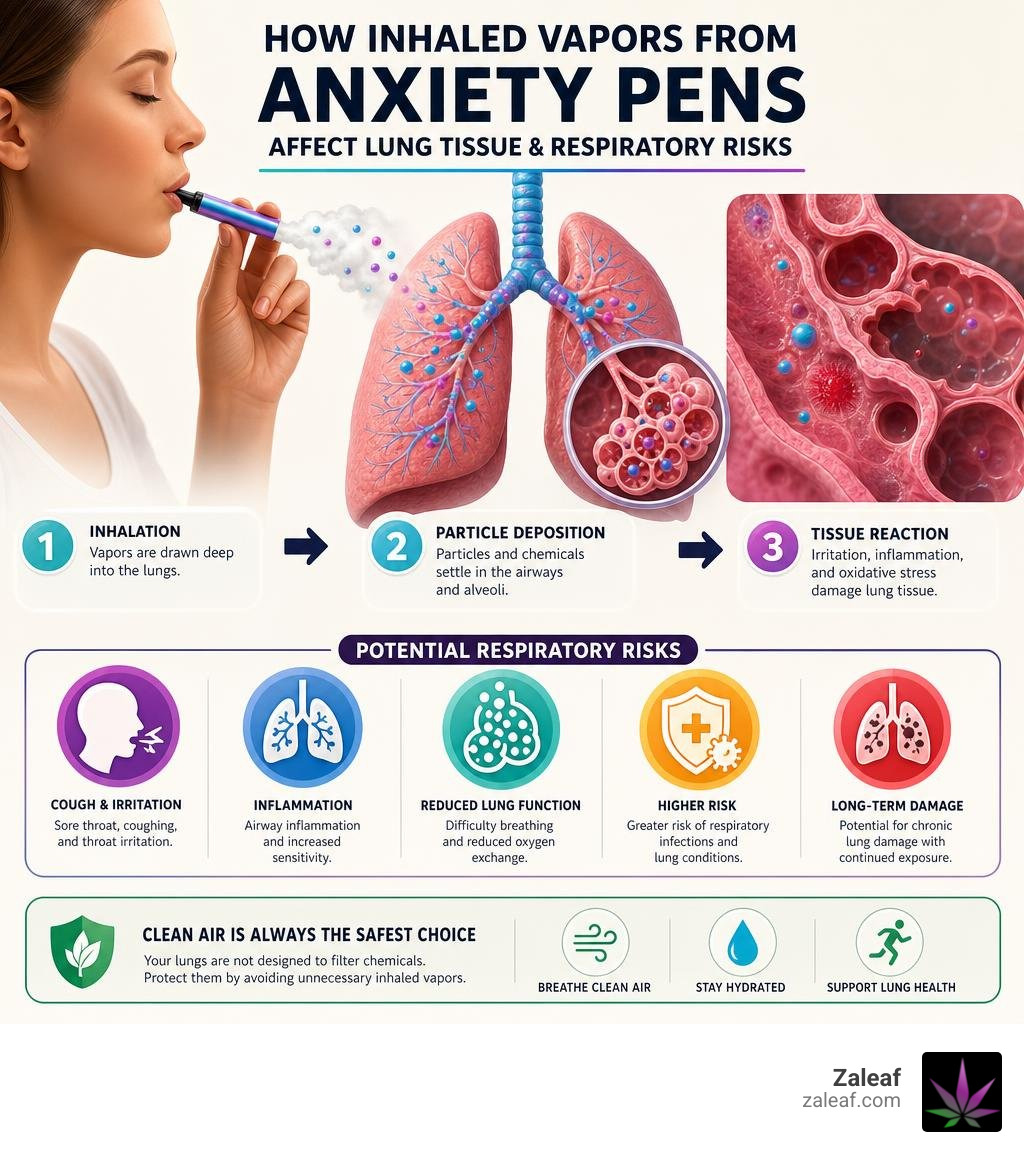
Glossary for are anxiety pens bad for your lungs:
What Exactly Are Anxiety Pens and How Do They Work?
If you have spent any time scrolling through social media, you have likely seen sleek, pastel-colored devices marketed as a "shortcut to calm." But what are these devices under the hood?
At their core, anxiety pens are portable, handheld devices designed to resemble traditional e-cigarettes or vape pens. They generally fall into a few distinct categories based on what they deliver to your body:
- Aromatherapy or Essential Oil Pens: These battery-operated devices heat a mixture of natural essential oils (like lavender, chamomile, or peppermint), water, and vegetable glycerin into an aerosol. Instead of diffusing the scent into a room, you inhale it directly.
- CBD and Cannabinoid Pens: These devices vaporize active hemp extracts like cannabidiol (CBD). They are designed to deliver cannabinoids quickly into the bloodstream via the lungs to help regulate stress and mood.
- Vitamin or Melatonin Vape Pens: Often marketed as "wellness inhalers," these vaporize supplements like melatonin, B12, or L-theanine, claiming to aid sleep or focus.
- Sensory or Fidget-Based Pens: These are completely non-electronic, non-inhalable devices. They might feature physical textures, spinning components, or simple hollow tubes designed to help you slow down your breathing without vaporizing any liquid.
To understand how the electronic versions work, we have to look at the heating mechanism. Inside the pen, a battery powers a small metal heating coil (an atomizer). When you draw on the mouthpiece, this coil heats a liquid reservoir, transforming the liquid into an aerosolized vapor.
The appeal of inhalation is speed. When you inhale a substance, it bypasses the digestive system and enters your bloodstream via the lungs almost instantly. This rapid onset is why many people turn to them during acute moments of panic.
However, the physical act of using the pen also triggers deep breathing rituals and sensory distractions. Taking a slow, measured draw forces you to pause, which can naturally lower your heart rate. This means the calming sensation you feel might actually be a mixture of the placebo effect, scent-memory association, and simple breath regulation rather than the active ingredients themselves.
To learn more about the different styles on the market, you can check out this guide on What Is An Anxiety Pen? How It Works And Safety Tips or explore our deep dive into Anxiety Pens.
Are Anxiety Pens Bad for Your Lungs? The Respiratory Risks
The short answer is yes: inhaling heated vapors from these pens carries clear respiratory risks. While many brands market their products as "natural" and "nicotine-free," the physics of inhalation do not change just because a product has a wellness label.
When you inhale vaporized substances, you are exposing your delicate respiratory tissues to heated, aerosolized microparticles. Your lungs are evolutionary masterpieces designed exclusively for gas exchange — specifically, taking in clean air and releasing carbon dioxide. They are not built to process heated oils, synthetic flavorings, or vaporized vitamins.

One of the most significant clinical warnings in recent history occurred during the 2019-2020 outbreak of EVALI (E-cigarette or Vaping Product Use-Associated Lung Injury). This acute, life-threatening condition resulted in over 2,800 hospitalizations and 68 confirmed deaths. Epidemiological investigations revealed that over 80% of hospitalized EVALI patients reported using THC-containing vape products, with vitamin E acetate — a sticky thickening agent — detected in 94% of tested lung fluid samples.
Even after recovering from acute lung injuries, the damage can linger. Clinical data shows that 48% of EVALI patients experienced persistent respiratory limitations, coughing, and shortness of breath even 12 months after their initial diagnosis.
Furthermore, the mental health impacts of vaping are deeply intertwined with physical health. Research indicates that frequent vapers face 1.7 times higher clinical anxiety rates, and current e-cigarette users show 1.67 times higher odds of experiencing poor mental health days compared to non-users. This creates a vicious cycle: people vape to ease their anxiety, but the physiological stress of vaping on the body actually makes their anxiety worse.
For a thorough breakdown of these health complications, read about Anxiety Pen Side Effects: Short-Term and Long-Term Health Risks and evaluate the safety profiles in Are CBD Vape Pens Bad for You. To understand how this applies to various cannabinoid devices, check out Vapor Trails: Navigating the Health Impacts of Weed Vapes and Vape or Escape: The Truth About Medical THC Vape Pen Safety.
Why Heated Essential Oils and Aromatherapy Are Anxiety Pens Bad for Your Lungs
The American Lung Association is unequivocal on this topic: inhaling anything other than clean air into your lungs is not good for your health, and essential oils are no exception.
Traditional aromatherapy relies on diffusing diluted essential oils into a room, where they mix with ambient air and are processed by your olfactory system (your sense of smell). Anxiety pens, however, require you to inhale highly concentrated, heated oils directly into your lungs.
This process triggers a dangerous chemical transformation:

Most aromatherapy pens use a base of propylene glycol (PG) and vegetable glycerin (VG) to create the visible vapor cloud. When heated to high temperatures by a vape coil, these compounds break down and produce harmful volatile organic compounds (VOCs) like formaldehyde and acetaldehyde.
When these heated oils and VOCs enter the lungs, they coat the tiny air sacs (alveoli). Because lipids and oils do not dissolve in water, your immune system treats these oil droplets as foreign invaders. This can trigger a severe inflammatory response known as lipoid pneumonia, leading to chronic coughing, wheezing, chest tightness, and structural cellular damage.
Chemical Additives and Why Some Anxiety Pens Are Bad for Your Lungs
Beyond the essential oils themselves, the hardware and chemical additives used in cheap anxiety pens present severe health hazards.
Many budget-friendly wellness pens are manufactured with low-grade metal coils. When heated repeatedly, these coils can leach toxic heavy metals — such as lead, chromium, nickel, and manganese — directly into the vapor you inhale.
Additionally, chemical flavorings present unique risks. For example, diacetyl is a chemical compound historically used to give microwave popcorn its rich, buttery flavor. While safe to ingest in food, diacetyl is incredibly toxic when heated and inhaled. It is directly linked to an irreversible, progressive lung disease called bronchiolitis obliterans, commonly known as "popcorn lung," which scars and narrows the smallest airways in the lungs.
Because the wellness vape industry is largely unregulated in the United States, many products do not undergo rigorous pre-market safety reviews. This makes robust third-party testing absolutely essential. Without a verifiable Certificate of Analysis (COA) from an independent lab, it is impossible to know if your pen is free from heavy metals, residual solvents, pesticides, or hidden nicotine.
To learn how to identify safe, compliant, and properly tested products, read The Safe, Legal Vape: Navigating Regulations and Quality.
Scientific Evidence vs. Marketing Hype: Do They Actually Work?
With brands promising "instant stress relief," it is crucial to look at what the scientific literature actually says.
When we look at aromatherapy, the evidence is mixed. A 2020 systematic review found that aromatherapy showed moderate success in reducing symptoms of chronic anxiety and stress. However, the researchers noted that many of these studies were small, lacked robust control groups, and primarily evaluated room-temperature diffusers or topical applications — not direct lung inhalation via heated pens. There is currently no high-quality clinical evidence proving that vaporizing and inhaling essential oils is either safe or effective for treating clinical anxiety.
CBD, on the other hand, has a stronger scientific foundation. Multiple clinical trials suggest that CBD interacts with the body's endocannabinoid system to help regulate mood and stress. However, almost all of these promising studies utilized oral doses of CBD (ranging from 300 mg to 800 mg) in the form of capsules or oils. Inhaling CBD through a vape pen delivers a much smaller, less predictable dose, and we still lack long-term safety data regarding how inhaled cannabinoids affect lung tissue over time.
So, why do so many users swear that their anxiety pens work?
The answer often lies in the power of deep breathing and sensory distraction. When you use an anxiety pen, you stop what you are doing, take a slow, deep breath, hold it, and exhale slowly. This breathing pattern activates your parasympathetic nervous system, naturally lowering your heart rate and interrupting the body's fight-or-flight response.
To help put this into perspective, let's compare how different anxiety management tools stack up:
| Tool Type | Mechanism of Action | Portability & Ease | Primary Risks |
|---|---|---|---|
| Inhalation-Based Pen | Rapid absorption of CBD/oils + deep breathing | High; easily fits in a pocket | Lung inflammation, chemical exposure, potential psychological dependency |
| Sensory Fidget Pen | Tactile distraction + breath coaching (no inhalation) | High; discreet | None (no chemical exposure) |
| Traditional Therapy | Cognitive restructuring, identifying root causes | Moderate (requires scheduled sessions) | None; addresses the underlying causes of anxiety |
| Topical Aromatherapy | Olfactory stimulation via skin absorption | High; simple roll-on | Minimal (potential skin irritation) |
If you want to read more about how clinical science views these devices, check out Anxiety Pen: Does It Really Work? Here’s What to Know First and explore the role of cannabinoids in stress management in Finding Peace: The Role of Vape Pens in Managing Anxiety. You can also read about options for fast-acting relief in Anxiety Pen Guide & Top Picks for Fast Relief - Dr. Diana Rangaves, PharmD and explore our curated list of Inhale Peace Exhale Stress Top Vape Pens for Anxiety.
Safer Alternatives for Managing Anxiety Symptoms
If you want to manage your stress without putting your respiratory health at risk, there are several highly effective, science-backed alternatives that require absolutely no lung exposure.

- Box Breathing (The 4-4-4-4 Method): This simple technique is used by high-stress professionals, including Navy SEALs, to calm the nervous system. Inhale slowly through your nose for 4 seconds, hold your breath for 4 seconds, exhale slowly through your mouth for 4 seconds, and hold your lungs empty for 4 seconds. Repeat this cycle four times.
- The 5-4-3-2-1 Grounding Technique: When panic strikes, bring your mind back to the present by identifying 5 things you can see, 4 things you can physically feel, 3 things you can hear, 2 things you can smell, and 1 thing you can taste.
- Cognitive Behavioral Therapy (CBT): While pens offer a temporary band-aid, working with a professional therapist helps you identify the root causes of your stress and build lasting, healthy coping mechanisms.
- Aromatherapy Roll-ons: You can still enjoy the calming benefits of lavender, bergamot, or chamomile. Simply apply a diluted essential oil roll-on to your wrists, temples, or collarbone. Your olfactory system will process the soothing scents without exposing your lungs to heated chemicals.
- Regular Physical Exercise: Engaging in 3 to 4 sessions of aerobic exercise (like brisk walking, running, or swimming) per week naturally promotes the secretion of dopamine and endorphins, lowering baseline stress levels over time.
For those who still appreciate the physical ritual of holding a device and inhaling, a non-electronic, non-vaporizing breathing tool can be an excellent option. To explore how these work, read our guide on the Anxiety Inhaler Pen.
Frequently Asked Questions about Anxiety Pens and Lung Health
Are nicotine-free anxiety pens safer for your lungs than nicotine versions?
No, nicotine-free anxiety pens are not necessarily safer for your lungs. While they do help you avoid the highly addictive properties of nicotine, the physical and chemical risks to your respiratory system remain largely the same.
Research shows that nicotine-free vape fluids often use the exact same base liquids (propylene glycol and vegetable glycerin) and chemical flavorings as nicotine-containing vapes. When heated, these carrier liquids still undergo thermal degradation, releasing toxic compounds like formaldehyde and triggering identical levels of oxidative stress, cellular damage, and blood vessel inflammation in your lung tissue.
Can anxiety pens cause permanent lung scarring or irreversible damage?
Yes, chronic use of inhalation-based anxiety pens can cause permanent lung damage. Inhaling heated chemical vapors over time can lead to chronic respiratory tissue inflammation, which can eventually progress to small airway-centered fibrosis and constrictive bronchiolitis (the narrowing and scarring of the airways).
Furthermore, if a pen contains chemical flavorings like diacetyl, exposure can lead to bronchiolitis obliterans ("popcorn lung"), a severe and irreversible condition that permanently scars the lungs' smallest airways.
Do anxiety pens show up on drug tests?
It depends on the specific ingredients in your pen. If you are using a pure aromatherapy pen containing only essential oils and vegetable glycerin, it will not trigger a positive result on a drug screen.
However, if you are using a CBD anxiety pen, there is a real risk. Many CBD products are derived from full-spectrum or broad-spectrum hemp, which naturally contains trace amounts of THC. Standard workplace drug tests screen for THC metabolites, and clinical data indicates that up to 10% of regular CBD users can test positive on a standard drug screen due to these trace amounts accumulating in the body. If you are subject to drug testing, you should stick to verified CBD isolate products or avoid inhalable cannabinoid pens entirely.
Conclusion
When you are looking for fast-acting stress relief, it is incredibly tempting to reach for a quick fix. But when it comes to the question of are anxiety pens bad for your lungs, the scientific consensus is clear: inhaling heated oils, chemical carrier liquids, and unregulated additives carries real risks of lung inflammation, chemical exposure, and long-term respiratory damage.
At Zaleaf, we believe you should never have to compromise your physical health to find mental peace. That is why we specialize in 100% legal, premium cannabis products designed with mood-specific cannabinoid and terpene profiles to help you relax safely. Every single product we offer undergoes rigorous, independent 3rd party testing to ensure absolute purity, safety, and compliance — with fast shipping and discrete packaging delivered straight to your door, no medical card or ID required.
Ready to explore safer, lab-tested ways to support your wellness journey? Explore the Zaleaf Blog today for more expert insights, health guides, and product education.