

Look Ma, No Cords: Best Easy-Charge 510 Batteries
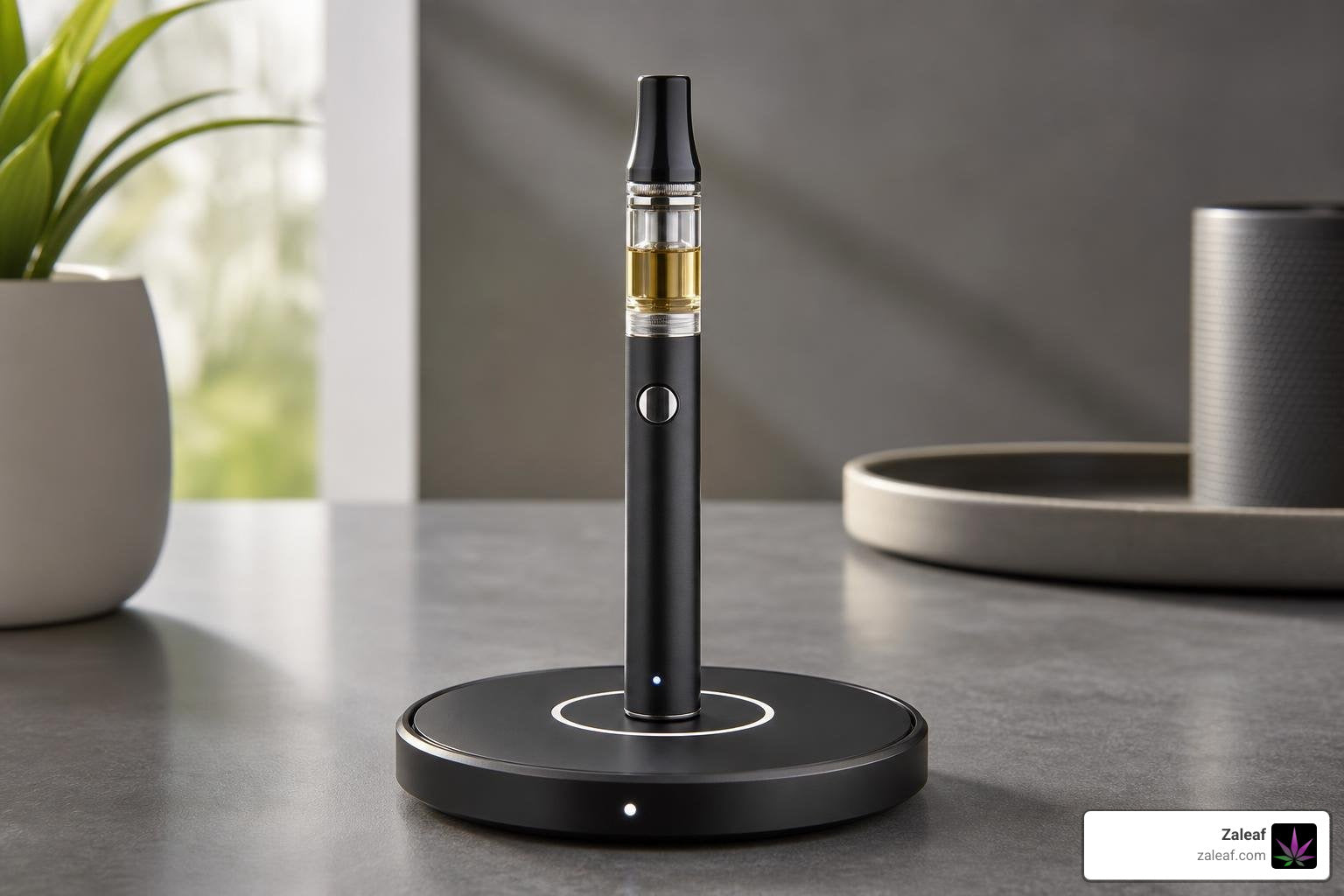
Tired of Hunting for Your Charging Cable? Wireless 510 Batteries Are Here
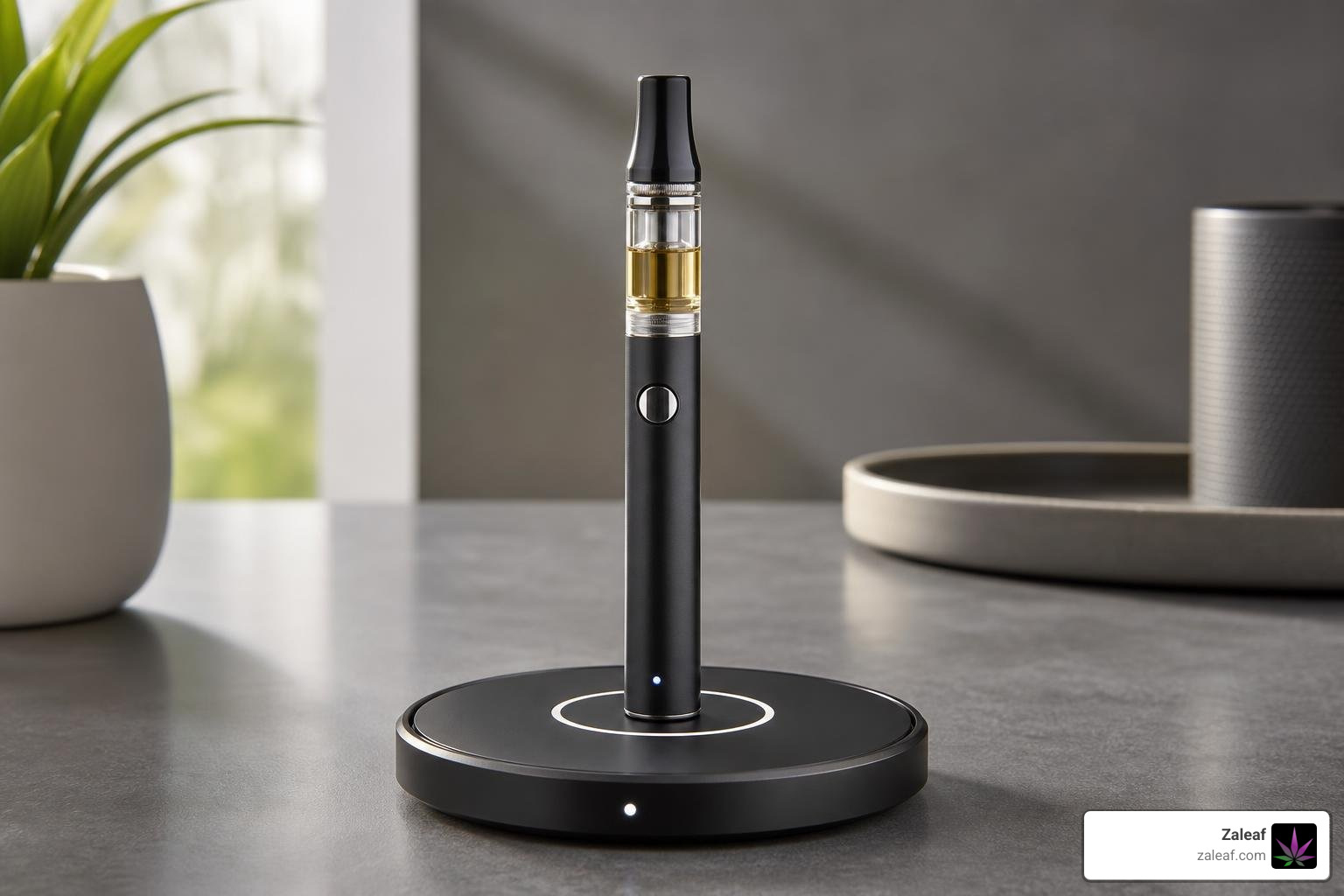
If you've ever wanted a wireless 510 battery charge that works as simply as dropping your phone on a pad, you're in the right place. Here's a quick look at what's available right now:
Top wireless 510 batteries at a glance:
| Battery Type | Wireless Charging | Capacity | USB-C Backup |
|---|---|---|---|
| Standard Wireless 510 | Qi wireless | 400 mAh | Yes (40 min full charge) |
| High-Capacity Wireless 510 | Wireless + Type-C + Lightning | 650 mAh | Yes |
How it works in one line: Place the battery (cartridge removed) on any Qi-compatible pad — your phone, a charging mat, or a standalone pad — and it charges without a single cord.
Cord clutter is a real annoyance. Tiny charging ports get gunked up with lint. Cables go missing at the worst moments. For a busy person who just wants to unwind after a long day, fussing with a micro-USB cable is the last thing you need.
That's exactly why wireless charging for 510 thread batteries is gaining traction fast. The technology — borrowed directly from Qi smartphone charging — is now making its way into vape hardware. It's a small shift, but it removes real friction from your routine.
The best part? You probably already own a Qi charger. Modern iPhones, Samsung Galaxy phones (via PowerShare), and most wireless charging pads all work with compatible 510 batteries right out of the box.
I'm Max Shemesh, owner and CEO of Zaleaf, and I've spent years navigating the hemp and cannabinoid hardware space — including hands-on experience evaluating wireless 510 battery charge technology as it's evolved. I'll cut through the noise so you can find the right setup fast.
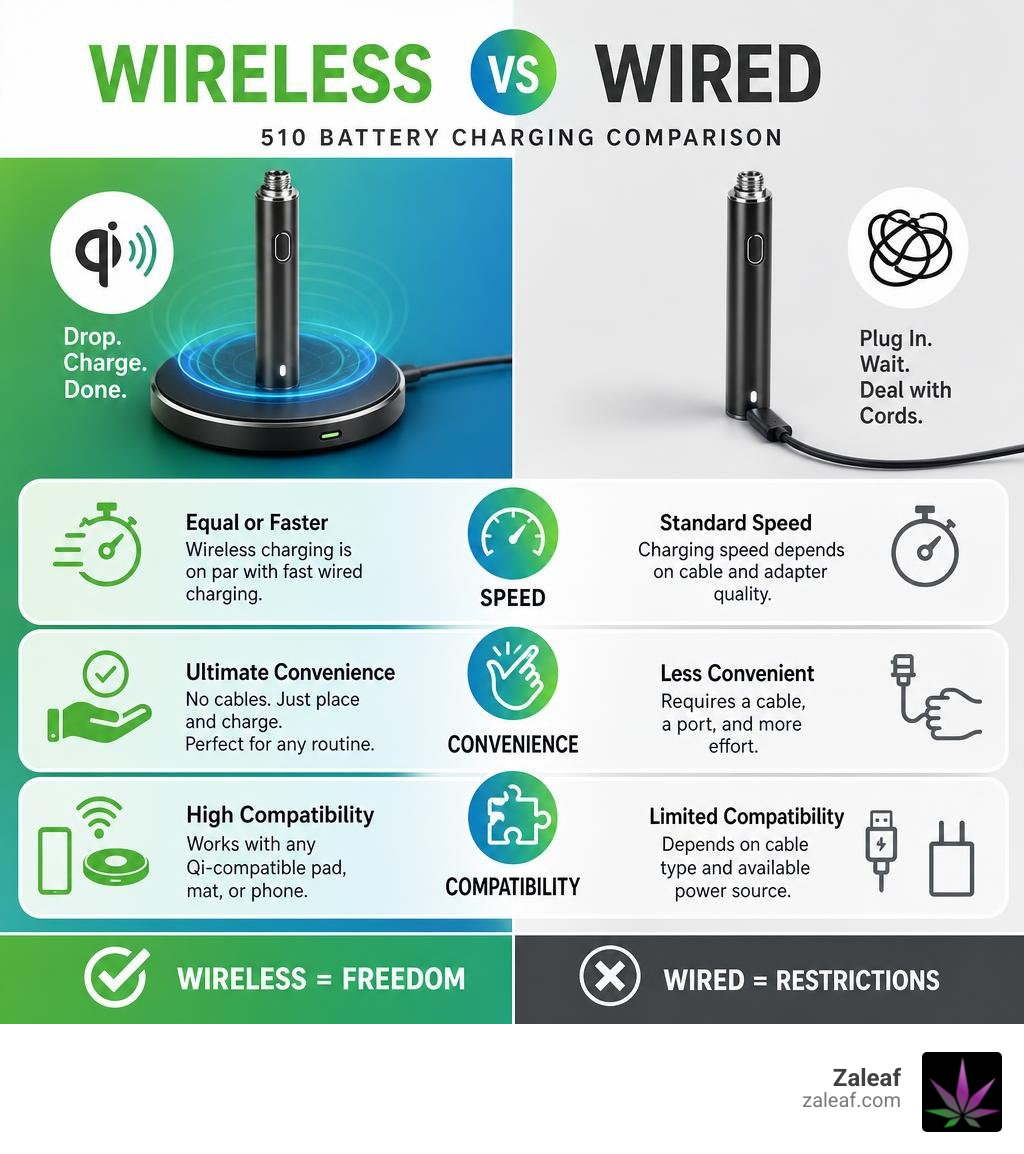
Wireless 510 battery charge terminology:
The Mechanics of a Wireless 510 Battery Charge
To understand why a wireless 510 battery charge feels so much like magic, we have to look under the hood. The core of this technology relies on the global Qi standard, the exact same wireless power transfer system used by major smartphone manufacturers.
At its heart, wireless charging is powered by electromagnetic induction. Inside a wireless charging pad (the transmitter) is a tightly wound copper coil. When you plug the pad into a wall outlet, an alternating electrical current passes through this coil, creating a dynamic, localized electromagnetic field.
Inside your wireless-compatible 510 battery sits a matching receiver coil. When you place the battery onto the charging pad, the electromagnetic field from the pad passes through the battery's receiver coil. This process induces an electrical current within the battery's internal circuitry, which is then safely routed to replenish the lithium-ion polymer cell.
To make this safe and efficient in a device as small as a vape pen, manufacturers rely on highly sophisticated microchips. For example, the Technical specifications of Qi receivers show how modern, highly efficient power receivers handle synchronous rectification, communication protocols, and battery charging profiles in a single, tiny package. These integrated circuits ensure that the power transferred across the electromagnetic gap is regulated down to the exact voltage and current required by the battery, achieving up to 93% peak efficiency while monitoring for safety anomalies.
Once the current is received, it must interface with the classic 510 threading system. Named for its physical dimensions—10 threads spaced at 0.5 mm intervals—the 510 connection acts as the bridge to your cartridge during use. However, during a wireless 510 battery charge, the threading is bypassed entirely. The power goes straight through the receiver coil on the base of the device directly to the internal lithium-ion polymer cell. This internal cell is backed by advanced circuit protection, shielding your device from overcharging, short circuits, and overheating.
How to Initiate a Wireless 510 Battery Charge
Getting your wireless 510 battery powered up is incredibly straightforward, but there is a physical technique to keep in mind:
- Remove Your Cartridge: Before doing anything else, unscrew your 510-thread cartridge. Leaving it attached can cause oil to warm up, thin out, and leak into the battery's delicate connection point.
- Power Up Your Charging Pad: Make sure your Qi-compliant charging pad is plugged into a reliable power source, such as a certified 5V wall adapter.
- Align the Sweet Spot: Place the flat, designated charging area of your 510 battery (usually located on the bottom or back of the device) directly over the center of the wireless charging pad. Because these batteries are much smaller than smartphones, alignment is key. The receiver coil inside the battery must line up with the transmitter coil in the pad.
- Watch the LED Indicators: Once proper alignment is achieved, your battery and the charging pad will "talk" to each other. The battery's LED indicator will light up—typically flashing red or amber to indicate it is drawing power. On many wireless pads, a small blue or green light will also illuminate to confirm a successful connection.
- Wait for the Green Light: Once the battery is fully replenished, the LED indicator will shift to a solid color (often green or blue) or turn off entirely, signaling that your device is ready for action.
Benefits of a Wireless 510 Battery Charge Over USB-C
While USB-C is undeniably fast, a wireless 510 battery charge offers several distinct advantages that make it a game-changer for daily use:
- Complete Port Protection: The physical charging ports on vape pens are highly vulnerable. They spend their lives rolling around in pockets, purses, and backpacks, acting as magnets for pocket lint, dust, and sticky oil residue. Wireless charging completely eliminates the physical port from the daily charging equation, preventing connection failures.
- Unmatched Convenience: There is no need to fumble with tiny cords in the dark or struggle to plug a cable in the right way. You simply set the device down on your nightstand, desk, or kitchen counter, and it charges.
- Wear Reduction: Repeatedly plugging and unplugging a physical cable eventually wears down the internal solder joints of a USB-C or micro-USB port. By removing physical friction, you significantly extend the physical lifespan of your device's hardware.
- Multi-Device Harmony: If you already charge your smartphone or wireless earbuds on a Qi pad, you can use that exact same pad for your vape battery. This means fewer cables cluttering your workspace and a cleaner, more organized environment.
Comparing Charging Methods: Wireless vs. Traditional Wired
The vaporizer landscape has evolved rapidly. To appreciate where we are in 2026, it helps to look at how far charging technology has come.
In the early days of 510-thread vape pens, the standard charging method involved clunky screw-in USB adapters. These required you to unscrew your cartridge and physically twist the battery into a cheap USB dongle. These adapters were notorious for stripping threads, breaking center pins, and overcharging batteries due to a complete lack of smart circuitry.
Then came micro-USB and eventually USB-C charging, which brought faster charging speeds and allowed for pass-through vaping (the ability to use the device while it is plugged in). A prime example of high-quality wired design is a breath-activated 510 thread battery, which features a compact form factor, digital battery display, and reliable USB-C pass-through charging.
But how does wireless stack up against these wired standards when it comes to speed, convenience, and long-term battery health?
| Charging Method | Avg. Charge Time (400mAh) | Port Wear Risk | Pass-Through Vaping | Convenience Rating |
|---|---|---|---|---|
| Qi Wireless | 50 - 60 minutes | None | No | Extremely High |
| USB-C Wired | 40 minutes | Low to Medium | Yes (on select models) | Medium |
| Micro-USB | 60 - 90 minutes | High | Rarely | Low |
| Screw-In USB | 90 - 120 minutes | Extremely High | No | Extremely Low |
While USB-C remains the king of raw speed—typically delivering a full charge in a swift 40 minutes—wireless charging is only slightly slower, catching up in about 50 to 60 minutes.
However, speed isn't the only factor. By 2026 standards, hardware durability is a major consideration. Physical ports are a primary point of failure. Wireless charging completely bypasses port wear, ensuring that a broken port will never render your favorite battery useless.
The main trade-off with wireless charging is the lack of pass-through capability; because the device must remain flat on the pad to receive power, you cannot take a puff while it is charging. Additionally, wireless charging generates slightly more ambient heat than wired charging, which is a key factor in battery degradation over time if not properly managed by the device's internal safety circuits.
Best Practices for Safe and Efficient Wireless Charging
Because wireless charging relies on electromagnetic fields, it naturally generates more heat than a direct wired connection. To keep your battery performing optimally and to prevent premature degradation, following a few safety guidelines is highly recommended.
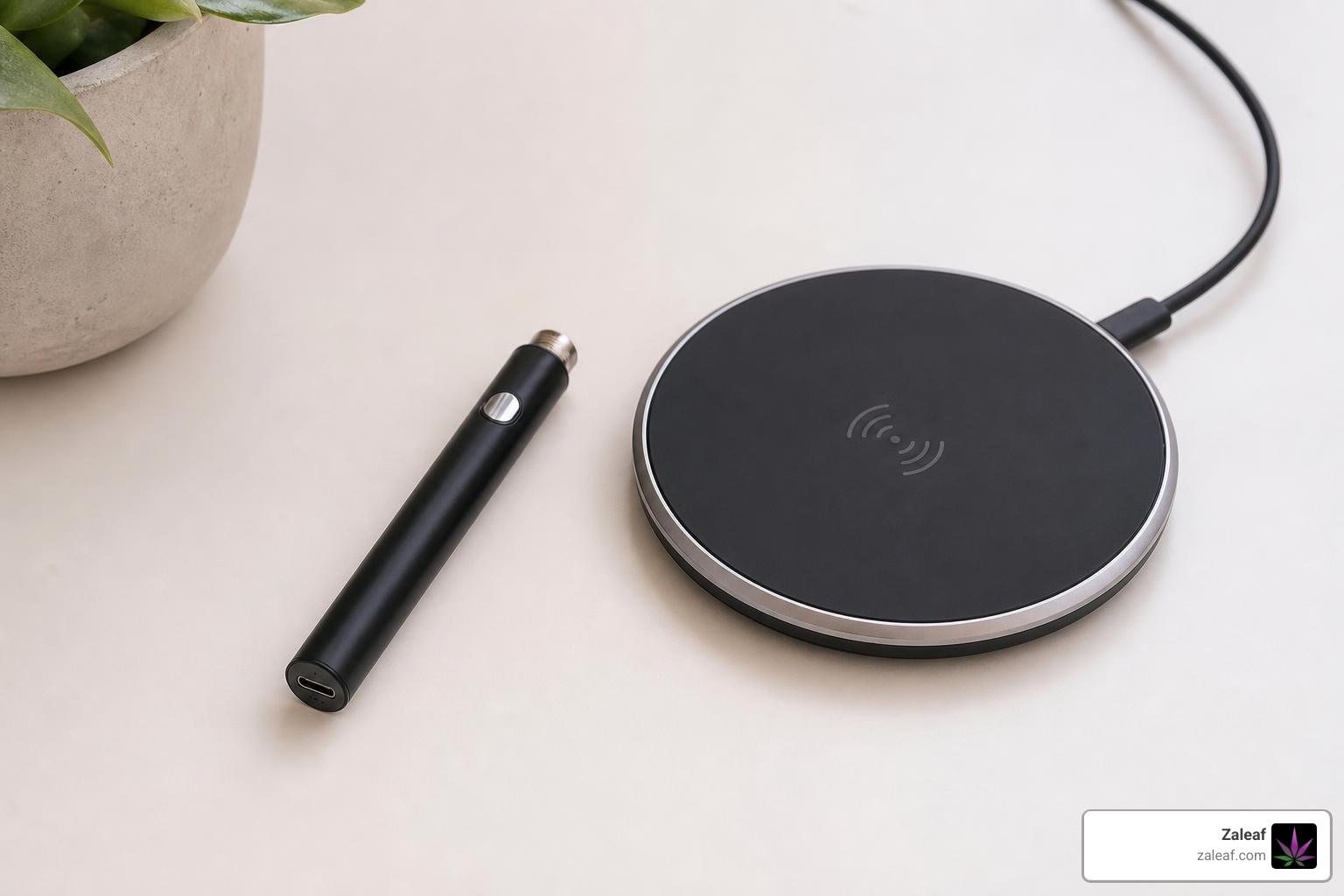
First and foremost, always remove your cartridge before charging. This is the golden rule of vape battery care. When a battery is placed on a wireless charging pad, the entire body of the device can warm up slightly. If a cartridge is attached, this ambient heat will transfer directly to the concentrate oil inside. Heated oil becomes highly viscous and runny, which can lead to severe leaking, clogged airways, and ruined electrical connections. Furthermore, excess heat can degrade the delicate terpene profiles of your premium oils, ruining the flavor of your next session.
To ensure a safe charging environment and maintain long-term battery health, keep these best practices in mind:
- Use Certified Charging Pads: Always pair your battery with a high-quality, Qi-certified charging pad. Cheap, uncertified pads can deliver unstable power, lack proper overcharge protection, or fail to monitor temperatures, increasing the risk of thermal runaway.
- Keep It Flat and Stable: Charge your device on a hard, flat, non-flammable surface like a wooden desk or stone countertop. Avoid charging on soft surfaces like beds, blankets, or couches, which can trap heat around the charging pad and battery.
- Clean Your Threads Regularly: Keep your 510 connection clean. Dip a cotton swab in a small amount of isopropyl alcohol (rubbing alcohol) and gently wipe the threads and center contact pin of both the battery and your cartridges. This removes sticky residue, ensuring a perfect electrical connection when you are ready to vape. Let it dry completely before reassembling.
- Avoid Extreme Temperatures: Never charge your battery in direct sunlight, in a hot car, or in freezing conditions. High heat accelerates battery aging, while charging below freezing can permanently damage the lithium-ion cells.
Frequently Asked Questions About Vape Charging
How long does a wireless charge take?
For a standard 400mAh battery, a wireless 510 battery charge typically takes about 50 to 60 minutes to reach 100%. If you are in a rush, most wireless-compatible batteries can reach an 85% charge in roughly 30 to 35 minutes. By comparison, a direct wired USB-C connection is slightly faster, completing a full charge in about 40 minutes.
Can I charge my battery with the cartridge attached?
Technically, the battery will still charge, but you should never do this. The ambient heat generated by wireless charging pads can warm up the cartridge, causing the oil to thin out and leak into the 510 threads. This can clog your cartridge, damage the battery's electrical contacts, and degrade the flavor of your oil. Always take 5 seconds to unscrew your cartridge before placing the battery on a charging pad.
Does wireless charging degrade the battery faster?
Not if you use high-quality hardware. While it is true that wireless charging generates slightly more heat than wired charging, modern Qi-compatible 510 batteries are built with advanced thermal management and overcharge protection. To maximize your battery's lifespan, avoid leaving the device on the charging pad overnight, and try to keep your battery level between 20% and 80% rather than letting it drain completely to 0% before every charge.
Conclusion
The shift toward a wireless 510 battery charge represents a major step forward in vaping convenience. By eliminating finicky cords, protecting fragile charging ports from pocket lint, and integrating seamlessly with the Qi charging pads you already own, wireless batteries make your daily sessions completely hassle-free.
At Zaleaf, we specialize in enhancing your premium cannabis experiences. We offer 100% legal, top-tier cannabinoid products designed to deliver smooth, flavorful, and mood-specific effects. Every single product we offer undergoes rigorous 3rd-party lab testing to ensure absolute purity, safety, and potency. Plus, we deliver right to your door with fast shipping and highly discreet packaging—no medical card or ID required at checkout.
Ready to elevate your setup and stay ahead of the latest industry innovations? Explore Zaleaf News for expert hardware guides, deep dives into cannabinoid science, and the hottest vaping trends of 2026!