

Beyond the Buzz: Understanding Cannabidiol and Its Role in Cannabis
What You Need to Know About Cannabidiol
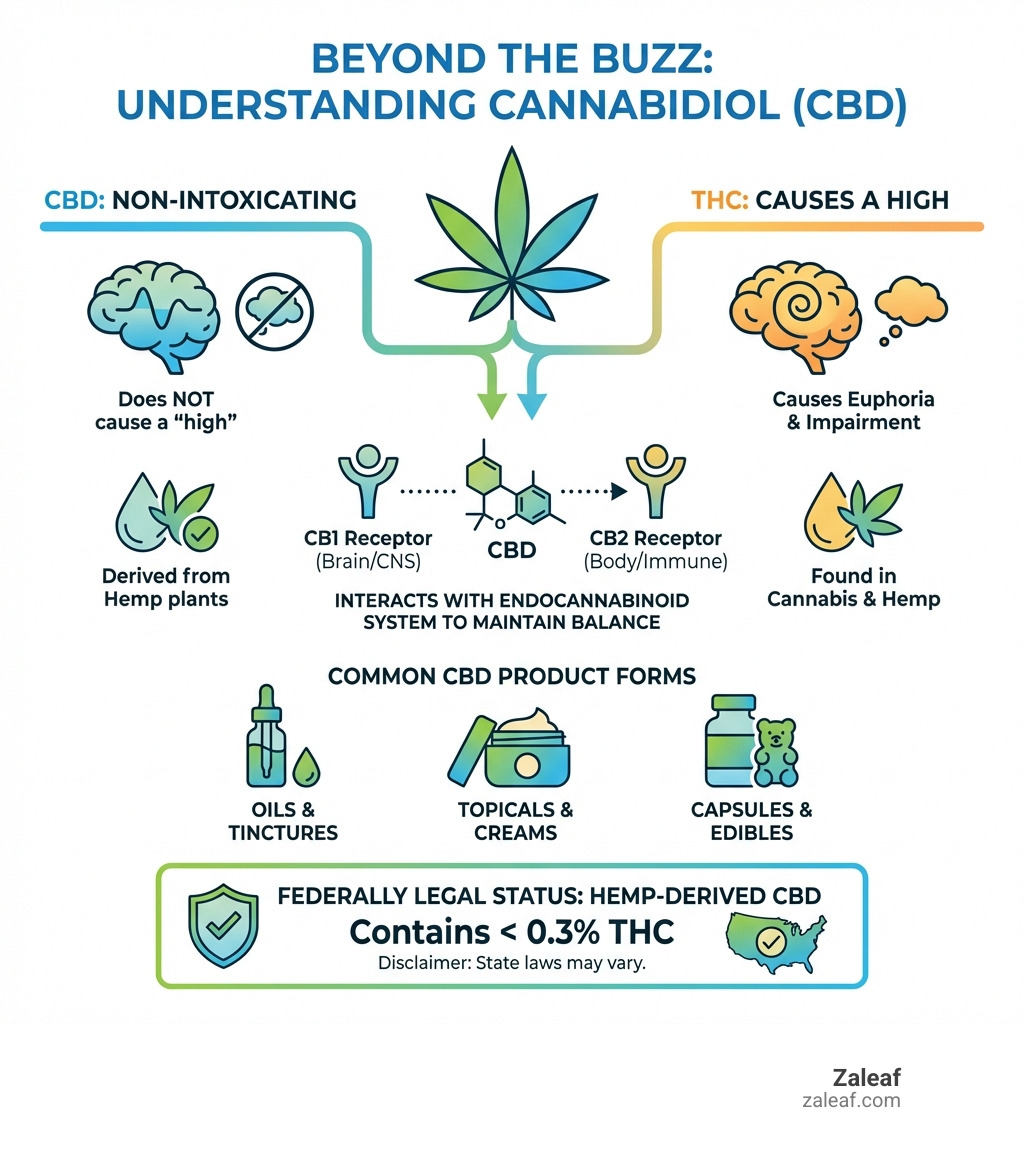
What is cannabidiol and why has it become one of the most talked-about compounds in the wellness industry? Cannabidiol, or CBD, is a naturally occurring chemical compound found in cannabis plants that doesn't produce a "high." Unlike its well-known cousin THC (tetrahydrocannabinol), CBD is non-intoxicating, meaning it won't impair your daily functioning or cause euphoria.
Quick Answer:
- What it is: A non-psychoactive cannabinoid from Cannabis sativa plants
- Key difference: CBD doesn't cause a "high" like THC does
- Legal status: Hemp-derived CBD with less than 0.3% THC is federally legal in the U.S. (state laws vary)
- Common uses: People use it for pain relief, anxiety, sleep issues, and inflammation
- How it works: Interacts with your body's endocannabinoid system to help maintain balance
- Available forms: Oils, tinctures, capsules, edibles, topicals, and vapes
The growing interest in CBD isn't just hype. According to recent surveys, 25% of adults in the United States have tried or are interested in trying CBD products. From busy professionals seeking stress relief to people managing chronic pain, CBD has entered mainstream wellness conversations.
But here's the challenge: the market is largely unregulated. Studies show that 69% of CBD products purchased online in the United States were mislabeled, with many containing significantly different CBD levels than advertised. Some even contained undisclosed THC that could cause you to fail a drug test.
That's why understanding what cannabidiol actually is matters more than ever.
As Max Shemesh, Owner & CEO of Zaleaf, I've spent years navigating the cannabinoid industry and understanding what is cannabidiol at a molecular level to deliver the highest-quality products to customers. My mission has always been to cut through the marketing noise and provide tested, transparent CBD products that busy professionals can trust.
Quick look at what is cannabidiol:
What is Cannabidiol (CBD) and How Does it Work?
So, what is cannabidiol at its core? It's a phytocannabinoid, a type of chemical compound naturally produced by the Cannabis sativa plant. Think of it as one of the plant's many active ingredients, specifically one that has captured the attention of researchers and wellness enthusiasts alike due to its non-intoxicating nature.
The magic of CBD largely lies in its interaction with our body's own internal regulatory system: the Endocannabinoid System (ECS). This intricate network of receptors, enzymes, and endocannabinoids (compounds our bodies naturally produce) plays a crucial role in maintaining homeostasis – a fancy word for balance – across various bodily functions. The ECS influences everything from mood, sleep, appetite, and pain sensation to immune response and memory.
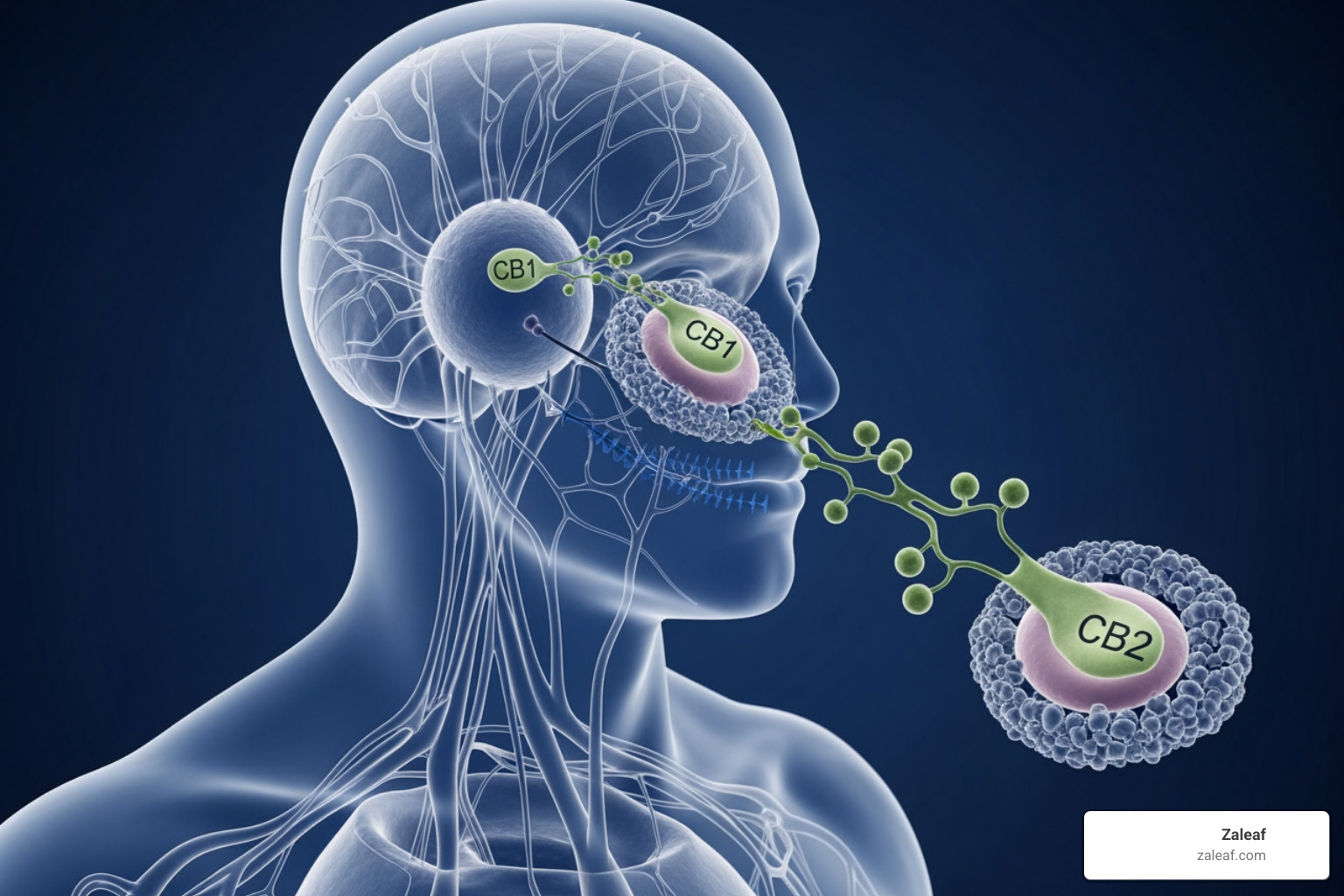
Our ECS has two primary types of receptors: CB1 receptors, predominantly found in the brain and central nervous system, and CB2 receptors, mainly located in the peripheral organs and immune cells. Unlike THC, which directly binds to and activates these receptors, especially CB1, CBD's interaction is a bit more nuanced. It doesn't bind strongly to either CB1 or CB2 receptors. Instead, it's believed to exert its effects through an indirect mechanism of action. This might involve modulating how other cannabinoids (including our body's own endocannabinoids) interact with these receptors, or by influencing other non-cannabinoid receptors and ion channels.
For instance, research suggests CBD may activate or block cannabinoid receptors CB1 and CB2, but not in the direct "lock and key" fashion of THC. It may also affect peroxisome proliferator-activated receptors gamma activity, which helps regulate metabolism, inflammation, and immune responses. Furthermore, CBD is thought to interact with serotonin receptors, which are vital for mood regulation, and even opioid receptors, hinting at its potential for pain management. This indirect approach means CBD can influence the ECS and other systems without causing the psychoactive effects associated with THC.
If you're still wondering about the core differences, this Descriptive Video: What Is the Difference Between THC and CBD? provides a great visual explanation.
The Key Difference: CBD vs. THC
When we talk about what is cannabidiol, we often find ourselves comparing it to THC (Tetrahydrocannabinol). This is for good reason, as they are the two most prominent cannabinoids in the cannabis plant, yet they produce vastly different effects. The primary distinction boils down to psychoactivity: THC is the compound responsible for the "high" or intoxicating effects associated with cannabis use, while CBD is not. You simply won't get high from CBD.
This difference stems from their molecular structures and how they interact with our brain's CB1 receptors. THC fits perfectly into these receptors, like a key in a lock, leading to altered perception, euphoria, and other mind-altering effects. CBD, on the other hand, doesn't fit neatly into the CB1 receptor. Instead, it's thought to modify the receptor's ability to bind with THC, potentially mitigating some of THC's psychoactive effects.
The World Health Organization (WHO) has even weighed in on this, stating that "In humans, CBD exhibits no effects indicative of any abuse or dependence potential…. To date, there is no evidence of public health related problems associated with the use of pure CBD." This robust endorsement underscores CBD's non-intoxicating and non-addictive profile, making it an appealing option for those seeking potential therapeutic benefits without the "buzz."
Understanding the Source: Hemp-Derived vs. Marijuana-Derived CBD
The source of CBD is crucial, not just for its chemical composition but also for its legal status. When discussing what is cannabidiol, it's important to understand that CBD can be derived from two main types of Cannabis sativa plants: hemp and marijuana. Both are varieties of the same species, but they are legally and chemically distinct, primarily based on their THC content.
Hemp is legally defined in the United States as any part of the Cannabis sativa plant that contains no more than 0.3% Delta-9 THC by dry weight. This tiny amount of THC is insufficient to produce intoxicating effects. Marijuana, conversely, refers to Cannabis sativa plants that contain more than 0.3% THC.
The landmark 2018 Farm Bill was a game-changer for hemp-derived CBD. It federally legalized hemp by removing it from the Controlled Substances Act, effectively making CBD derived from hemp legal at the federal level, provided it meets the 0.3% THC threshold. This legislative move transformed hemp into a recognized agricultural commodity, paving the way for the booming CBD market we see today. However, CBD products containing more than 0.3% THC still fall under the legal definition of marijuana and remain federally illegal.
When choosing CBD products, you'll often encounter terms like full-spectrum, broad-spectrum, and CBD isolate:
- Full-Spectrum CBD: Contains all the cannabinoids, terpenes, and other beneficial compounds naturally found in the hemp plant, including trace amounts of THC (less than 0.3%). Many believe in the "entourage effect," where these compounds work together to improve therapeutic benefits. Our Full Spectrum Story digs deeper into this.
- Broad-Spectrum CBD: Similar to full-spectrum but with the THC completely removed. It offers the benefits of multiple cannabinoids and terpenes without any detectable THC.
- CBD Isolate: This is the purest form of CBD, containing 99% pure CBD with all other plant compounds removed. It's ideal for those who want to avoid THC entirely.
While CBD derived from marijuana might theoretically offer a different cannabinoid profile, the federal legal distinction means most commercially available CBD products are hemp-derived.
The Science Behind CBD's Potential Health Benefits
The journey to truly understand what is cannabidiol and its full potential is ongoing. We've seen a surge in anecdotal evidence and marketing claims about CBD's health benefits. However, as responsible providers, we always look to the scientific community for validated insights. While research is still in its early stages for many applications, some areas show promising results backed by rigorous studies.
Epilepsy and Seizure Disorders
Perhaps the most compelling and scientifically validated use of CBD is in the treatment of certain severe forms of epilepsy. This is where the scientific evidence is strongest, moving beyond "potential" to "proven" in specific cases.
For children suffering from rare and severe forms of epilepsy, such as Dravet syndrome and Lennox-Gastaut syndrome (LGS), which typically don't respond well to conventional anti-seizure medications, CBD has offered a guide of hope. In 2018, the FDA approved the first prescription drug containing a purified form of CBD, specifically for these conditions. This marked a historic moment as it was the first FDA-approved cannabis-derived medicine for human use. Numerous studies have shown that this prescription CBD medication can significantly reduce the frequency and severity of seizures in these patients, a testament to CBD's powerful anticonvulsant properties.
Pain and Inflammation
Another area where CBD shows considerable promise is in managing pain and inflammation. While the exact mechanisms are still being solveed, preclinical evidence suggests that CBD may interact with various pathways involved in pain perception and inflammatory responses.
For those battling chronic pain, including conditions like arthritis, CBD has emerged as a natural alternative or adjunct treatment. A 2015 study on rats with arthritis found that CBD oil helped reduce inflammation and pain-related behaviors. Similarly, a 2014 study on human cells indicated that CBD cream possessed effective anti-inflammatory properties. These findings suggest that CBD, especially when applied topically, might offer targeted relief for localized pain and swelling. Our guide on CBD Oil: Your Guide to Its Potential Health Advantages digs into this further.
Anxiety, Sleep, and Other Conditions
Beyond epilepsy and pain, research is exploring CBD's potential in a range of other conditions. Many individuals turn to CBD for its potential anxiolytic (anxiety-reducing) effects and to aid with sleep regulation. While clinical trials are still ongoing, some studies suggest CBD may help alleviate symptoms of anxiety and improve sleep quality. For a deeper dive into how CBD can help with stress, check out our article on the Benefits of CBD Oil for Stress and for sleep, our guide on Sleep Soundly: Your Guide to CBD Vapes for Better Rest.
Other areas under investigation include its potential role in managing cancer treatment side effects (such as nausea and pain), reducing cravings in addiction, and even its anti-acne properties. For example, the American Cancer Society notes that some evidence points to CBD's anticancer properties and benefits in managing cancer treatment side effects. However, it's crucial to remember that for many of these applications, the scientific evidence is still limited, and more robust human trials are needed to confirm efficacy and safety.
A Practical Guide to Using CBD
Understanding what is cannabidiol is one thing, but knowing how to effectively use it is another. With the explosion of CBD products on the market, it can feel like navigating a jungle. Our goal at Zaleaf is to provide clarity and guidance on how to choose and use CBD responsibly and effectively.
One critical concept to grasp is bioavailability, which refers to the proportion of a drug or substance that enters the circulation when introduced into the body and is able to have an active effect. The bioavailability of CBD can vary significantly depending on how you consume it. For instance, the oral bioavailability of cannabidiol is approximately 6% in a fasting state, but it can jump to 36.5–57.3% in a fed state in humans. This means that taking your CBD with food can dramatically increase how much your body absorbs!
What is cannabidiol consumption like? Exploring Different Product Forms
The market offers a diverse array of CBD product forms, each with its own advantages regarding onset time, duration of effects, and bioavailability. Here's a rundown of the most common types:
- Oils and Tinctures: These are typically administered sublingually (under the tongue). Holding the oil under your tongue for 30-90 seconds allows CBD to be absorbed directly into the bloodstream through the capillaries in your mouth, offering a relatively fast onset (15-45 minutes).
- Capsules and Edibles: Including delicious options like gummies, capsules and edibles are ingested orally. The CBD then passes through your digestive system and liver before entering the bloodstream. This process leads to a slower onset (1-2 hours) but often a longer-lasting effect. Our CBD Gummies: No THC guide can help you find pure relaxation.
- Topicals and Creams: Balms, lotions, salves, and creams infused with CBD are applied directly to the skin for localized relief. They interact with cannabinoid receptors in the skin but generally do not enter the bloodstream, making them ideal for muscle aches, joint pain, or skin conditions.
- Vaping: Inhaling CBD through a vape pen offers the fastest onset of effects (within minutes), as CBD enters the bloodstream directly through the lungs. However, it's important to be aware of the potential respiratory risks associated with vaping in general. For those interested in this method, our Ultimate Guide to the Best CBD Disposable Vape Pens can provide more information.
How to Determine Your CBD Dosage
One of the most common questions we hear is about dosage. Unfortunately, there's no universal "right" amount of CBD. Dosage is highly individual and depends on several factors, including:
- Body Weight: Generally, heavier individuals may require a higher dose to feel the same effects.
- Metabolism: Individual metabolic rates affect how quickly CBD is processed and eliminated from the body.
- Severity of Condition: The specific condition you're addressing and its severity will influence the optimal dose.
- Product Concentration: CBD products come in various strengths, measured in milligrams (mg) per serving.
The golden rule for CBD dosage is "start low and go slow." Begin with a minimal dose, perhaps 5-10 mg, and gradually increase it over several days until you find the desired effects. Pay close attention to your body's response. While the maximum dose people can tolerate orally is quite high (a 2020 research review suggests up to 3,500 milligrams per day), most CBD products contain 10 to 100 mg of CBD in one serving. It's always best to follow the product's recommended serving size and, most importantly, consult with a healthcare professional before starting any new supplement regimen, especially if you have underlying health conditions or are taking other medications. They can provide personalized guidance based on your unique needs.
Safety, Legality, and Consumer Awareness
Navigating CBD can feel a bit like the Wild West, with a mix of established science, evolving laws, and a largely unregulated market. Understanding what is cannabidiol in this context requires a keen eye for safety, legality, and product quality.
| Feature | Federal Law (U.S.) | State Laws (U.S.) |
|---|---|---|
| Hemp-derived CBD | Legal (2018 Farm Bill, <0.3% THC) | Varies (some states have more restrictions or outright bans) |
| Marijuana-derived CBD | Illegal (>0.3% THC) | Legal in states with medical/recreational cannabis programs |
| FDA Regulation | Only one prescription CBD drug is FDA-approved; most other CBD products are not regulated as drugs/supplements | Varies; some states have their own regulations for testing/labeling |
| CBD in Food/Drinks | Generally prohibited by FDA | Varies; some states permit it |
Is CBD Legal?
The legality of CBD is one of the most frequently asked questions, and it's understandably confusing. At the federal level in the United States, the 2018 Farm Bill was a pivotal piece of legislation. It removed hemp (defined as cannabis with less than 0.3% THC) from the federal Controlled Substances Act, effectively legalizing hemp-derived CBD across the country. Our article Decoding the Farm Bill provides more detail.
However, federal legality doesn't mean it's universally permitted everywhere. State laws can vary significantly, with some states imposing stricter regulations or even maintaining outright bans on certain CBD products. This patchwork of laws makes it essential to be informed about your local jurisdiction. We highly recommend checking your state’s laws regarding CBD before purchasing or traveling with products.
The FDA's stance also adds a layer of complexity. While they approved a prescription CBD drug, they have not approved nonprescription CBD products for use in food or dietary supplements. This means that many CBD products on the market are not subject to the same rigorous FDA oversight as pharmaceuticals.
What is cannabidiol's risk profile? Side Effects and Drug Interactions
While CBD is generally considered well-tolerated, it's not entirely without its potential downsides. Understanding what is cannabidiol's full risk profile is crucial for safe use. Some individuals may experience mild side effects, which can include:
- Fatigue
- Diarrhea
- Changes in appetite
- Dry mouth
- Changes in mood
More significant concerns arise when CBD interacts with other medications. CBD is metabolized by a group of enzymes in the liver called the cytochrome P450 enzyme system. These enzymes are also responsible for metabolizing a wide range of common medications. When CBD is present, it can inhibit these enzymes, potentially increasing the concentration of other drugs in your system. This is often compared to the "grapefruit warning" seen on many medications, as grapefruit can also interfere with the same enzyme system.
This interaction can lead to higher-than-intended levels of other medications, potentially causing increased side effects or even toxicity. Medications commonly affected include blood thinners (like warfarin), certain antidepressants, anti-epileptic drugs, and some immunosuppressants. For this reason, it is absolutely critical to talk to a doctor or healthcare professional before incorporating CBD into your routine, especially if you are taking any prescription medications. They can provide guidance on potential interactions and appropriate dosing. The Clinicians' Guide to Cannabidiol emphasizes this point. Furthermore, the FDA has warned against using CBD during pregnancy or while breastfeeding due to unknown effects on developing fetuses and infants.
The "Wild West" of CBD: Purity and Labeling Concerns
Perhaps the biggest challenge in the CBD market today stems from the lack of comprehensive FDA regulation for most non-prescription products. This regulatory void has unfortunately created an environment where product quality and labeling accuracy can be highly inconsistent.
The statistics are sobering: a study found that 69% of CBD products purchased online in the United States were mislabeled, with 43% having higher and 26% having lower CBD content than stated on product labels. Even more concerning, an FDA study of 147 CBD products revealed that half contained THC, often without being disclosed on the label. This means you could be consuming more or less CBD than you intend, or even consuming THC when you're trying to avoid it.
Beyond inaccurate potency, there are significant contamination risks. Without strict oversight, some products have been found to contain harmful substances like pesticides, heavy metals (absorbed from the soil), residual solvents from the extraction process, or even synthetic cannabinoids. These contaminants can pose serious health risks.
This is why we cannot stress enough the importance of third-party lab testing. Reputable CBD brands, like Zaleaf, send their products to independent laboratories to verify their cannabinoid content and ensure they are free from harmful contaminants. These labs issue a Certificate of Analysis (COA), which should be readily available to consumers. Always look for a recent COA (ideally less than a year old) when evaluating a CBD product. Our article Beyond the Label: Demystifying Third-Party Testing explains why this is so critical. It's the best way to ensure you're getting exactly what is cannabidiol in your product, and nothing more.
Frequently Asked Questions about Cannabidiol
We get a lot of questions about what is cannabidiol and how it fits into daily life. Here are some of the most common ones we hear:
Will CBD make me fail a drug test?
This is a very common and valid concern. While pure CBD isolate should not cause you to fail a drug test, full-spectrum CBD products contain trace amounts of THC (less than 0.3%). Although this amount is federally legal and generally non-intoxicating, it could potentially accumulate in your system over time and trigger a positive result on a sensitive drug test, especially if you consume large quantities regularly. If you are subject to drug testing, we strongly recommend opting for broad-spectrum CBD or CBD isolate products, and always verifying their THC content with a third-party Certificate of Analysis (COA).
Can I get addicted to CBD?
Based on current scientific understanding, no. The World Health Organization (WHO) has stated that "In humans, CBD exhibits no effects indicative of any abuse or dependence potential." This is a key distinction from THC, which does have a known potential for dependence. CBD is not associated with addiction or withdrawal symptoms, making it a non-habit-forming option for wellness support.
How long does it take for CBD to work?
The onset time for CBD effects largely depends on the method of consumption, as well as individual factors like metabolism and body chemistry.
- Vaping: This is the fastest method, with effects typically felt within minutes (5-10 minutes).
- Sublingual (Oils/Tinctures): When held under the tongue, effects usually appear within 15-45 minutes.
- Oral (Edibles/Capsules): Because CBD must pass through the digestive system, onset is slower, usually taking 1-2 hours. However, the effects tend to last longer.
Understanding these timelines can help you choose the best product form for your needs and manage your expectations.
Conclusion: Making an Informed Choice
As we've explored, what is cannabidiol is far more than just a passing trend. It's a fascinating, non-psychoactive compound from the cannabis plant with a growing body of research suggesting therapeutic potential for conditions ranging from epilepsy and chronic pain to anxiety and sleep issues. While the science is still evolving for many applications, the FDA's approval of a CBD-based medication for severe epilepsy underscores its significant medical value.
However, navigating the current CBD market requires a discerning eye. The lack of comprehensive federal regulation for most products means consumers must be diligent. We've seen the statistics: mislabeled products and potential contaminants are real concerns. This is why the importance of choosing quality, lab-tested products cannot be overstated. Always prioritize brands that provide transparent, third-party Certificates of Analysis (COAs) to verify what's inside the bottle.
At Zaleaf, our commitment is to provide you with 100% legal cannabis products that you can trust. We specialize in enhancing cannabinoid and terpene profiles for mood-specific effects, and all our products undergo rigorous 3rd party testing for purity and potency. We believe in transparency and empowering our customers to make informed choices for their wellness journey.
Ready to experience the Zaleaf difference? Explore our range of lab-verified cannabis products and find a path to relaxation, pain relief, and overall well-being.