

Everything You Need to Know About THC Detection Duration

Why THC Detection Times Matter for Cannabis Users

How long does THC stay in your system depends on several factors, but here's what you need to know right away:
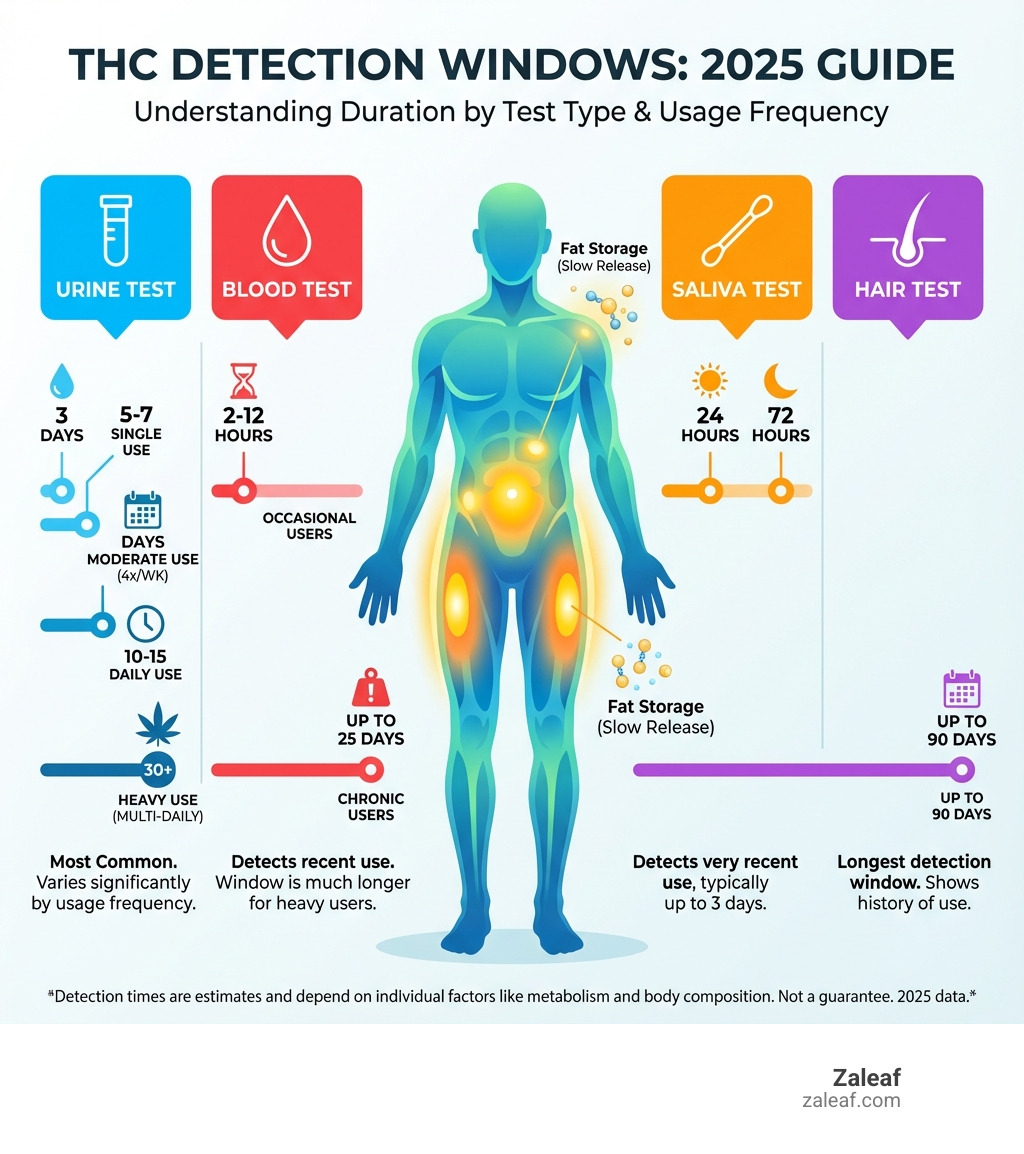
| Test Type | Detection Window |
|---|---|
| Urine | 3-30+ days (varies by usage frequency) |
| Blood | 2-12 hours (up to 25 days for heavy users) |
| Saliva | 24-72 hours |
| Hair | Up to 90 days |
For urine tests specifically (the most common):
- Single use: Up to 3 days
- Moderate use (4x per week): 5-7 days
- Daily use: 10-15 days
- Heavy use (multiple times daily): 30+ days
Whether you're preparing for an employment screening, navigating workplace policies, or simply curious about how your body processes cannabis, understanding THC detection times is essential. The duration THC remains detectable isn't just about the last time you consumed—it depends on your frequency of use, body composition, metabolism, and the type of test being administered.
The reason THC can linger for so long is surprisingly straightforward: it's fat-soluble. Unlike water-soluble substances that your body eliminates quickly, THC and its metabolites bind to fatty tissues and release slowly over time. This means that while the psychoactive effects wear off within hours, the evidence of use can persist for days or even weeks.
In a 2023 poll, about 42% of Americans ages 19-30 reported having used cannabis in the past year, making these detection windows relevant to millions of people facing drug tests. For chronic users, approximately 65% of THC leaves the body through feces and 20% through urine, with the rest stored temporarily in body fat before gradual elimination.
I'm Max Shemesh, Owner & CEO of Zaleaf, and I've spent years helping customers understand how long THC stays in your system and steer the complexities of cannabinoid products with confidence. Through extensive industry experience and partnerships with testing facilities, I've seen how detection times vary dramatically based on individual factors and product quality.
How Your Body Processes and Eliminates THC
Understanding how long THC stays in your system begins with understanding its journey through the body. When we consume cannabis, the primary psychoactive compound, delta-9-tetrahydrocannabinol (THC), starts on a complex metabolic adventure. This journey dictates not only the duration of its effects but also how long its traces remain detectable.
THC is a lipophilic, or fat-soluble, compound. This crucial characteristic sets it apart from many other substances the body processes. Unlike water-soluble compounds that are quickly dissolved in blood and flushed out via urine, THC has a strong affinity for fat cells. This means that after it's absorbed and circulated throughout the body, a significant portion of THC and its metabolites get stored in our fatty tissues.
The liver plays a central role in metabolizing THC. It breaks down THC into various metabolites, with the most important one for drug testing being 11-nor-9-carboxy-delta-9-tetrahydrocannabinol, or THC-COOH. This metabolite is inactive, meaning it doesn't contribute to the "high," but it's very lipid-soluble and is what most drug tests look for.
Once stored in fat, these metabolites are slowly released back into the bloodstream over time. From there, the liver processes them further, and they are eventually excreted from the body. Our research indicates that approximately 65% of THC leaves the body through feces and about 20% through urine. The remaining portion is either stored in fat or broken down further. This slow, continuous release from fat cells is precisely why THC can be detected long after its effects have worn off.
For more in-depth information on the physiological processes involved, you can explore scientific research on THC metabolism.
The Journey of THC: From Consumption to Excretion
The method of cannabis consumption significantly impacts THC's initial absorption and its subsequent journey through the body.
If we're smoking or vaping cannabis, THC enters our bloodstream almost immediately through the lungs. This rapid absorption leads to a quick onset of effects, with blood concentrations peaking within 3 to 8 minutes. The effects typically last one to four hours, though impairment can linger for up to six hours.
When we consume edibles, the process is quite different. THC is absorbed into the bloodstream through the digestive system, where it undergoes what's called "first-pass metabolism" in the liver. This means it's processed by the liver before it reaches the general circulation and the brain. This pathway results in a slower onset of effects, usually taking 30 to 60 minutes (or even up to two hours if the stomach is full), with peak THC levels in the bloodstream occurring up to three hours after ingestion. The high from edibles also tends to be more potent and can last much longer, up to six or eight hours. Sublingual tinctures or tabs, absorbed under the tongue, might show noticeable effects within 15 to 30 minutes. You can learn more about the duration of effects from edibles in our guide, The Edible Countdown: Exactly How Long Your High Will Last.
Regardless of the consumption method, once THC is in the system, its elimination follows a similar pattern. The half-life of THC, which is the time it takes for half of the substance to be eliminated from the body, varies. For occasional users, the half-life is around 1.3 to 21.5 hours, meaning it can be cleared within 4 to 5 days. However, for frequent users, this half-life can extend to 4.1 to 13 days, leading to its presence in the body for more than 20 days. The metabolites, like THC-COOH, can have an even longer elimination half-life, up to 12.6 days in chronic users. This gradual elimination process, primarily due to THC's storage in fat cells and slow release, is why how long THC stays in your system can be such a complex question.
Key Factors Influencing How Long THC Stays in Your System
While the general metabolic pathway of THC is consistent, several individual and usage-related factors can significantly influence how long THC stays in your system. These variables create a wide range of detection windows, making it difficult to pinpoint an exact time for everyone.
-
Frequency of Use: This is arguably the most critical factor.
- Single Use: An occasional user might clear THC metabolites from their system relatively quickly.
- Moderate Use (e.g., 4 times a week): Metabolites can start to accumulate, extending detection times.
- Chronic Use (daily): Consistent use leads to significant buildup of THC metabolites in fat cells, resulting in much longer detection windows.
- Chronic Heavy Use (multiple times a day): The body becomes saturated with metabolites, which can take weeks or even over a month to fully eliminate. Our data shows that in chronic users, cannabis can remain detectable in the blood for up to 25 days after the last use, and in urine for over 30 days.
Dosage and Potency: The higher the amount of THC consumed and the greater its potency, the more THC metabolites the body has to process and eliminate. Stronger products naturally take longer to clear.
Body Fat Percentage (BMI): Since THC is fat-soluble, individuals with higher body fat percentages tend to store more THC metabolites. This means it can take longer for their bodies to release and eliminate these compounds, extending the detection window.
Metabolism Rate: Each person's metabolism is unique. A faster metabolism can process and eliminate substances more quickly than a slower one. Factors like genetics, diet, and activity level influence metabolic rate.
Hydration Levels: While staying hydrated is good for overall health, simply drinking excessive amounts of water won't "flush" THC out of your system significantly faster. However, severe dehydration can concentrate urine, potentially making metabolites more detectable.
Age and Gender: Metabolic rates can decrease with age, potentially slowing down THC elimination. There can also be subtle differences in metabolism between genders, though these are generally less impactful than frequency of use or body fat.
Liver Function: The liver is crucial for breaking down THC. Any impairment to liver function can slow down the metabolism and elimination of THC and its metabolites. Certain medications can also interact with liver enzymes, potentially affecting how THC is processed.
These factors combine to create a highly individualized timeline for THC detection. It's why we always emphasize that general guidelines are just that—guidelines—and individual experiences can vary widely.
How Long Does THC Stay in Your System? A Breakdown by Test Type
The question of how long does THC stay in your system isn't complete without considering the specific type of drug test being administered. Different tests target different compounds (active THC vs. metabolites) and have vastly different detection windows. Here's a quick comparison:
| Test Type | Detection Window (General) | What it Detects | Pros | Cons |
|---|---|---|---|---|
| Urine | 3-30+ days | THC-COOH (metabolite) | Common, non-invasive, cost-effective, long detection window | Can be affected by dilution, not for immediate impairment |
| Blood | 2-12 hours (up to 25 days for heavy users) | Active THC, metabolites | Detects recent use/impairment, precise | Invasive, short detection window for active THC |
| Saliva | 24-72 hours | Active THC, metabolites | Non-invasive, easy to administer, good for recent use | Short detection window, less common for employment |
| Hair | Up to 90 days | THC-COOH (metabolite) | Longest detection window, difficult to tamper | More expensive, cannot detect very recent use (within 7-10 days) |
Urine Tests: The Most Common Method
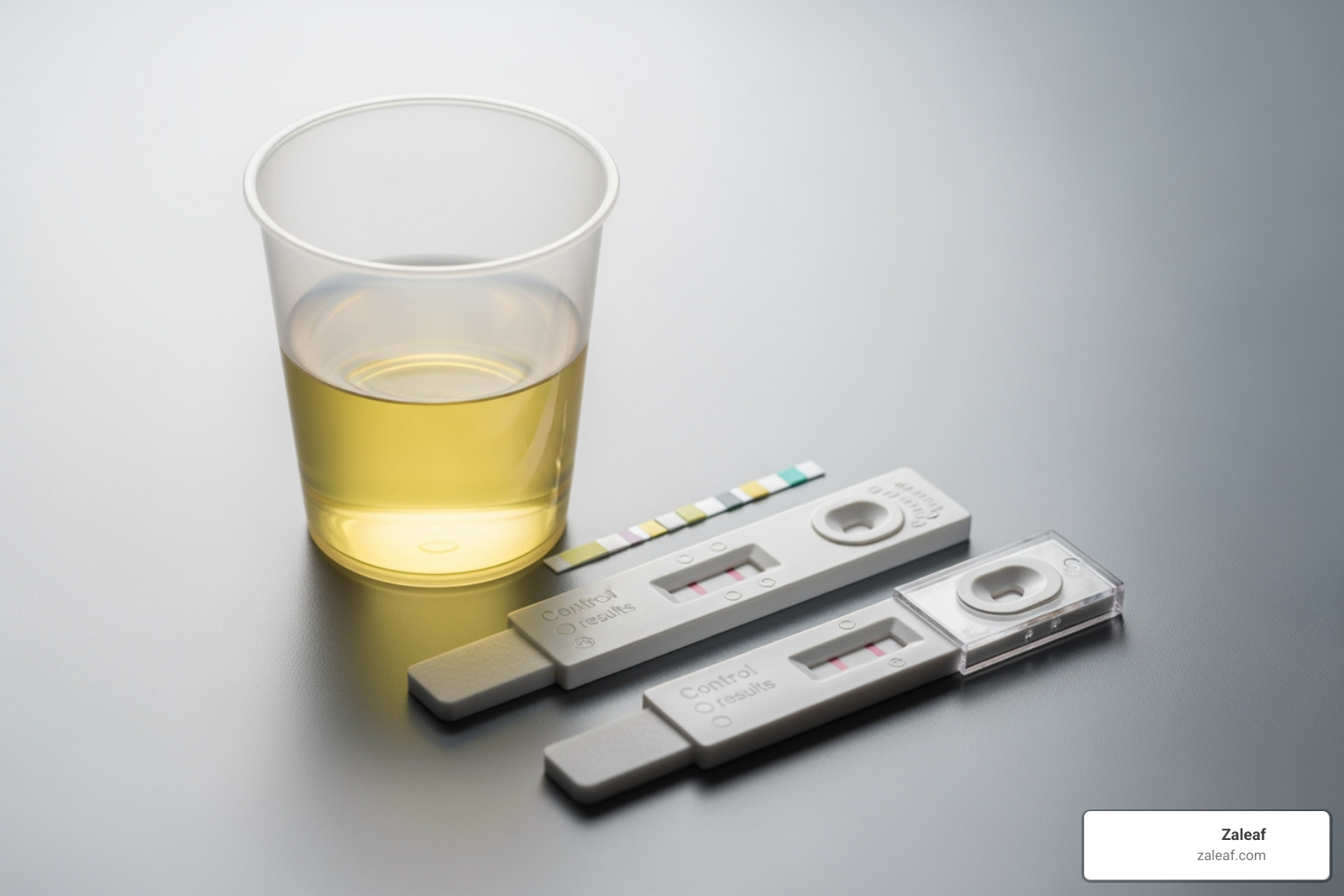
Urine tests are by far the most common method for detecting cannabis use, especially in employment settings. They don't typically look for active THC, but rather its inactive, fat-soluble metabolite, THC-COOH. This is why urine tests can have such a long detection window, as these metabolites are slowly released from fat cells and excreted in urine.
The detection window for urine tests is highly dependent on the frequency and amount of cannabis use:
- Single Use: For someone who uses cannabis just once, THC may be detectable in urine for up to 3 days.
- Moderate Use (e.g., 4 times per week): The detection window extends to approximately 5–7 days.
- Chronic Use (daily): Regular daily use can lead to detection for 10–15 days.
- Chronic Heavy Use (multiple times per day): In this scenario, THC metabolites can remain detectable for more than 30 days, and sometimes even longer.
It's worth noting that while the "30-day myth" of THC detection has been widely circulated, scientific literature suggests that it's uncommon for occasional users to test positive for longer than seven days using standard cutoff concentrations (e.g., 20 ng/mL). Even for chronic smokers, it's not expected to remain positive for longer than 21 days at this cutoff. However, individual variability and the specific sensitivity of the test can still lead to longer detection times.
Blood Tests: Detecting Recent Use
Blood tests offer a different perspective on cannabis use, primarily detecting the presence of active THC itself, rather than just its metabolites. This makes them particularly useful for identifying very recent use or current impairment, which is why they are often employed in situations like roadside testing or accident investigations.
Typically, blood tests can detect recent cannabis use within the last 2–12 hours. The active THC compounds are quickly metabolized and cleared from the bloodstream. However, for chronic heavy users, the story changes. Due to the slow release of stored THC metabolites from fat cells back into the bloodstream, cannabis can remain detectable in the blood for a significantly longer period—up to 25 days after the last use, as indicated by research published in Therapeutic Drug Monitoring.
While blood tests provide a precise snapshot of recent exposure, their relatively short detection window for active THC makes them less suitable for assessing long-term usage patterns compared to other testing methods. You can find more information about THC in blood tests from the National Center for Biotechnology Information.
Saliva Tests: A Short-Term Window
Saliva, or oral fluid, tests are gaining traction for their non-invasive nature and ease of administration, particularly in contexts like roadside drug testing where recent use is the primary concern. These tests primarily detect the presence of THC that hasn't yet been fully metabolized, often from direct oral exposure (like smoking or ingesting).
The detection window for saliva tests is relatively short, making them ideal for identifying very recent cannabis use. Generally, THC can be detected in saliva for 24–72 hours after last use. A 2020 review found that THC was still detected in the oral fluid of frequent smokers up to 72 hours (3 days) after use. It's also worth noting that THC may be detected in oral fluid longer than in blood after acute use.
One unique insight about saliva tests is that THC metabolites are typically only present in oral fluid when cannabis has been personally smoked or ingested. This means that, unlike some other tests, saliva tests are generally not susceptible to false positives from secondhand smoke exposure.
To dig deeper into how vape pens and other consumption methods might impact saliva test results, check out our article: From Puff to Test: Understanding How Long THC Vape Pens Stay in Your System.
Hair Follicle Tests: The Longest Look Back
When it comes to assessing long-term cannabis use, hair follicle tests stand out with the longest detection window. These tests can provide a historical record of drug use, making them a popular choice for certain employment screenings or legal cases where a broader usage pattern needs to be established.
Hair follicle tests can assess drug use for up to 90 days. After cannabis use, cannabinoids reach the hair follicles via small blood vessels. Additionally, cannabinoids can be incorporated into the hair shaft from sebum and sweat surrounding the hair. As hair grows, these incorporated metabolites become trapped within the hair strand, creating a timeline of exposure. A standard hair test typically uses a 1.5-inch segment of hair taken close to the scalp, which represents approximately 90 days of hair growth (since hair grows about 0.5 inches per month).
While highly effective for long-term detection, hair tests do have a slight delay; they generally cannot detect cannabis use from the most recent 7–10 days, as it takes time for the hair containing the metabolites to grow out of the scalp. For more detailed information on the science behind this method, you can refer to research on hair follicle testing.
Can You Speed Up THC Elimination?
Short answer: not meaningfully. Because THC and its metabolites are fat-soluble and stored in adipose tissue, only time lets your body metabolize and excrete them.
Common myths—and why they fall short:
- Detox Kits and Drinks: May dilute urine temporarily but don't clear THC from fat cells; results are unreliable and potentially risky.
- Excessive Exercise: Regular activity supports overall metabolism, but a hard workout right before testing can briefly raise blood THC as fat is mobilized.
- Extreme Hydration: Staying hydrated is fine; overhydration can be dangerous and does not accelerate release from fat stores.
- "Cleansing" Diets: A balanced diet supports liver function, but no food or plan rapidly eliminates THC.
Best approach: stop use and give your body time.
For more insights, see The Great THC Escape: How Long Until You're Clear?.
Frequently Asked Questions about THC Detection
We know that understanding how long THC stays in your system can raise many questions, especially given the various ways cannabis can be consumed and tested. Let's tackle some of the most common inquiries.
How long does THC stay in your system for different consumption methods?
The method of cannabis consumption plays a significant role in how quickly THC enters your system, how long its effects last, and consequently, how long it might be detectable.
Smoking vs. Vaping: When you smoke or vape, THC is rapidly absorbed through the lungs, leading to almost immediate effects. The peak blood concentrations occur quickly, and the psychoactive effects typically subside within a few hours. While the "high" is shorter, traces of THC metabolites can still linger in your system, especially in urine and hair, for days or weeks depending on frequency of use. The bioavailability (the proportion of a drug that enters the circulation) for smoking/vaping THC is relatively high, ranging from 10% to 35%.
Edibles (Gummies, Baked Goods, Drinks): Consuming edibles results in a much slower absorption process, as THC must pass through the digestive system and be metabolized by the liver before entering the bloodstream. This leads to a delayed onset of effects (30-90 minutes, sometimes longer) but a more prolonged and often more intense "high" that can last for 6-8 hours or more. The bioavailability of edible cannabis is generally lower, ranging from 4% to 12%. Because edibles introduce THC into the system over a longer period and involve liver metabolism, some evidence suggests that they might contribute to a more sustained presence of metabolites in the body, potentially impacting detection windows.
The key takeaway is that while the onset and duration of effects differ greatly between consumption methods, the detection time largely depends on the accumulation of fat-soluble metabolites, which is primarily influenced by the frequency and amount of overall THC consumed over time, regardless of how it was ingested.
For a deeper dive into how different edible products, like gummies, might influence detection, explore our article: Staying Power: How Long Do THC Gummies Remain Detectable?.
Can secondhand cannabis smoke cause a positive drug test?
This is a common concern, especially for those who spend time around cannabis users but do not consume themselves. The good news is that under normal circumstances, it is highly unlikely that exposure to secondhand cannabis smoke would lead to a positive drug test.
For a drug test to return a positive result from secondhand smoke, the exposure would need to be extreme and prolonged, occurring in a very poorly ventilated environment. Studies have shown that even in "hotboxed" conditions (e.g., a small, unventilated room filled with smoke), the levels of THC absorbed by non-users are usually below the cutoff thresholds used by most standard drug tests.
Furthermore, most drug tests, particularly urine tests, look for THC-COOH, the inactive metabolite, rather than active THC. While some active THC might be inhaled in extreme secondhand smoke exposure, the body would need to process enough of it to produce a detectable level of metabolites, which is rare. Saliva tests, which often detect active THC from oral exposure, are also unlikely to be positive from secondhand smoke unless there's direct contact with smoke residue in the mouth. Therefore, in typical social or workplace environments with adequate ventilation, the risk of a positive test from secondhand smoke is negligible.
Will Delta-8 or HHC show up on a drug test?
This is a critically important question as the market for hemp-derived cannabinoids expands. Delta-8 THC and HHC (Hexahydrocannabinol) are both cannabinoids that have gained popularity, but their legal status and potential to trigger a positive drug test are often misunderstood.
The short answer is: Yes, Delta-8 THC and HHC can very likely cause a positive result on a standard drug test.
Here's why:
- Structural Similarities: Delta-8 THC and HHC are structurally very similar to Delta-9 THC, the primary psychoactive compound in traditional cannabis.
- Metabolism: When your body metabolizes Delta-8 THC or HHC, it produces metabolites that are also structurally similar to the THC-COOH metabolite that standard drug tests are designed to detect. Most conventional drug tests are not sophisticated enough to differentiate between the metabolites of Delta-8, HHC, and Delta-9 THC. They simply flag the presence of "THC metabolites."
- Cross-Reactivity: This similarity leads to what's called "cross-reactivity." The antibodies in drug test immunoassays, which are designed to bind to Delta-9 THC metabolites, can also bind to the metabolites of Delta-8 and HHC, leading to a false positive for Delta-9 THC.
Even though these cannabinoids might be derived from hemp and are federally legal (containing less than 0.3% Delta-9 THC), their metabolic byproducts can still trigger a positive result for marijuana on a standard drug screening. If you use Delta-8 or HHC products and are subject to drug testing, it's crucial to be aware of this potential outcome. For more detailed information on Delta-8 and drug screenings, check out our guide: Will Delta-8 Show Up? Your Guide to D8 and Drug Screening.
Conclusion: Navigating THC Detection with Confidence
How long THC stays in your system depends on individual biology, consumption patterns, and the test used. This guide covered THC’s path through the body, fat storage, and detection windows for urine, blood, saliva, and hair.
The key takeaways are clear:
- Detection times vary widely.
- Frequency of use is the biggest factor.
- THC is fat-soluble, so it can linger.
- Different tests serve different purposes.
- "Detox" methods are generally unreliable; time works.
- Newer cannabinoids like Delta-8 and HHC can trigger positive tests.
At Zaleaf, we focus on clear education and 3rd party tested products so you can choose confidently.
Whether you're concerned about employment drug testing, curious about your body's processes, or making informed choices about cannabis use, we hope this guide helps. For further insights, especially regarding newer consumption methods, you can learn more about THC vape pens and drug tests. We're here to help you understand your options and choose products that align with your lifestyle.