

Detailed Guide to Sativa Effects: What to Expect
Sativa Effects: What to Expect
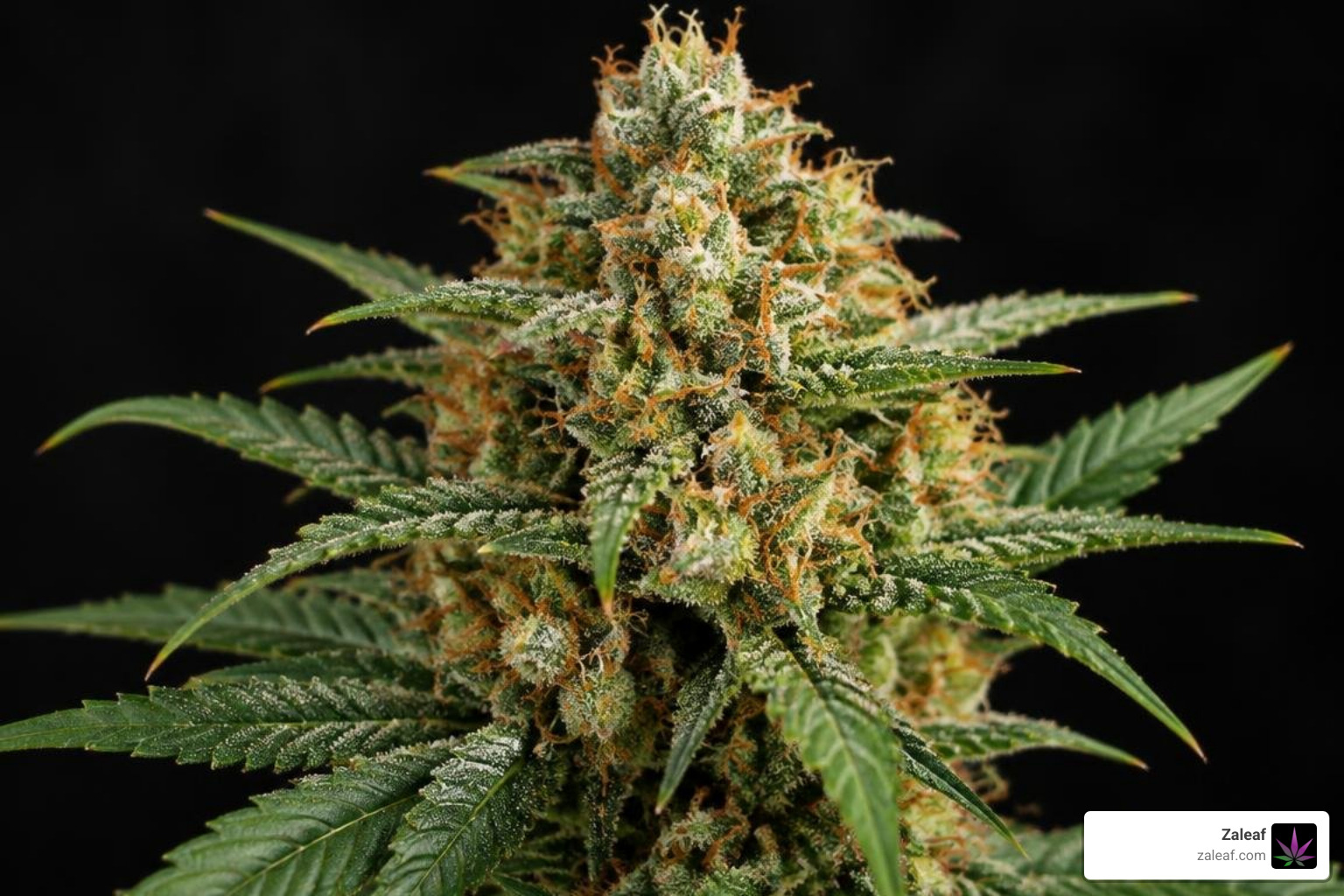
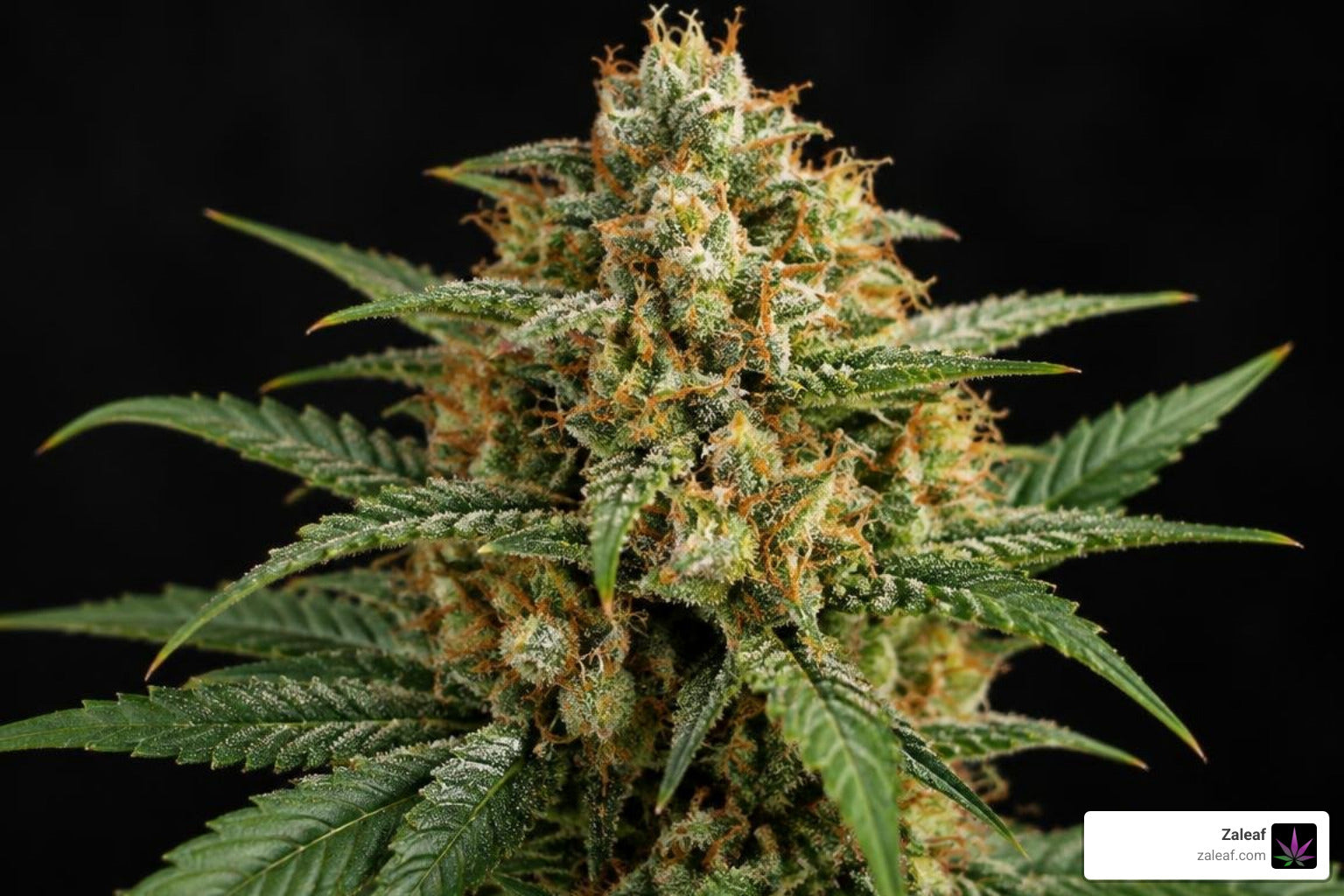
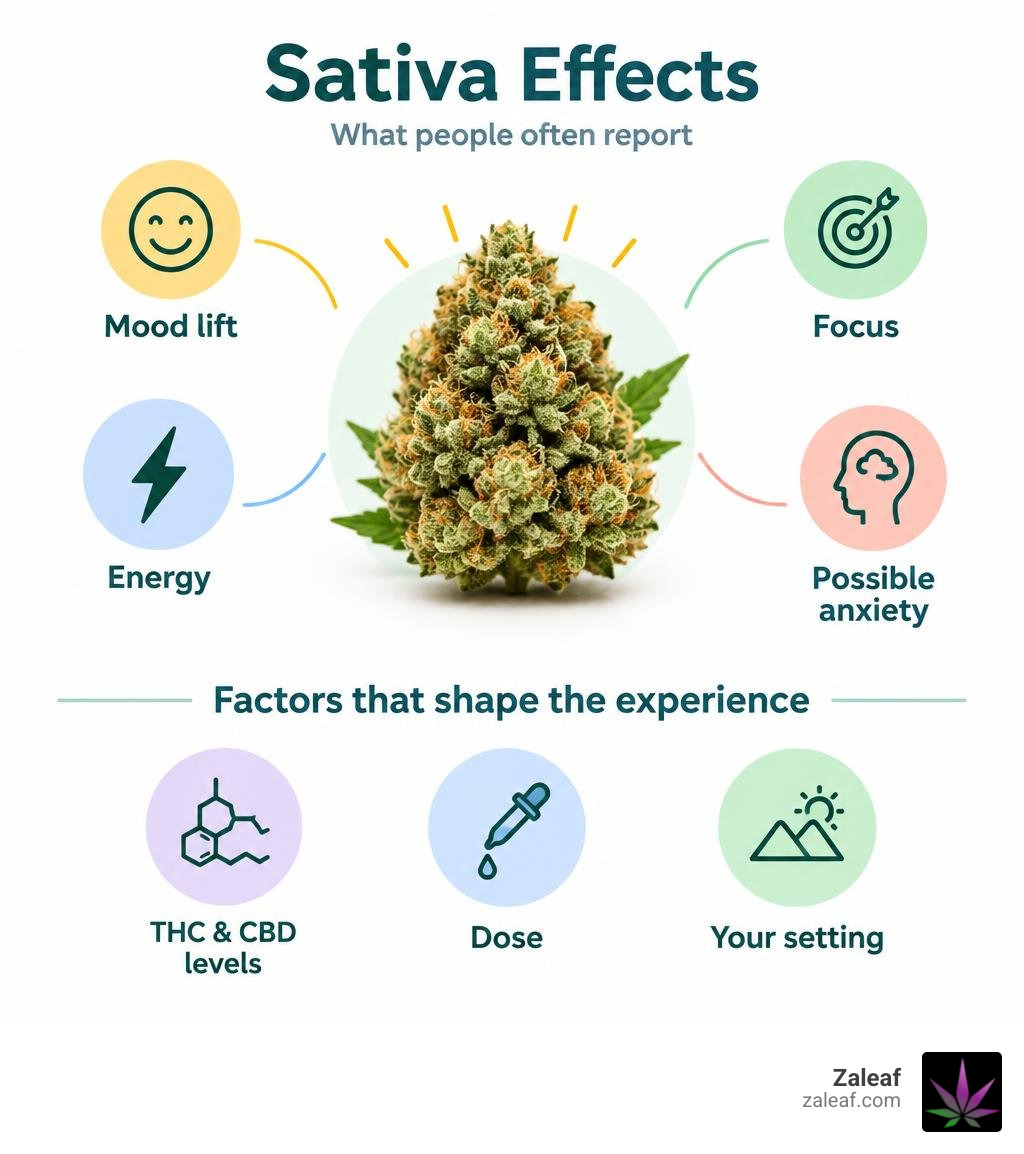
Sativa effects are often described as a lift in mood, energy, and alertness. Some people also report feeling more focused or social. But a sativa label cannot guarantee those results. THC and CBD levels, dose, and your setting can change the experience, and some people feel anxious instead.
This guide looks at what users report, what research supports, and what to check on a product's lab results before you choose.
I'm Max Shemesh, owner and CEO of Zaleaf. My work with cannabinoid and terpene profiles has shown me why understanding sativa effects takes more than reading a label.
Primary Sativa Effects on Mood and Energy
When people walk into a dispensary or shop online, they often seek out sativa cultivars specifically for a daytime boost. Popular culture paints sativa as the botanical equivalent of a morning espresso, promising clear-headed motivation, creative sparks, and vibrant social energy. While individual chemistry always plays a decisive role, broad consumer data reveals remarkably consistent patterns in how people experience these strains.
In a landmark cross-sectional survey on subjective sativa and indica experiences (Sholler et al., 2022), researchers documented clear differences in reported outcomes. Users consistently associated sativa varieties with cerebral, uplifting states, whereas indica varieties were overwhelmingly linked to sedation and physical heaviness.
The differences between how consumers perceive these two main categories are stark:
| Reported Subjective Effect | Users Reporting After Sativa | Users Reporting After Indica |
|---|---|---|
| Happy / Euphoric | 66% | 37% |
| Alert | 54% | 7% |
| Energized | 54% | 3% |
| Focused | 55% | 10% |
| Motivated | 52% | 9% |
| Paranoid / Anxious | 21% | 10% |
| Relaxed | 28% | 85% |
| Sleepy / Tired | 13% | 72% |
These figures demonstrate why daytime consumers gravitate toward sativa profiles. When you want to tackle an artistic project, clean the house, or attend a social gathering, an energizing profile is far more appealing than couch-lock. In fact, survey respondents were significantly more likely to prefer sativa in the morning (19% vs. 6%) and during the middle of the day (30% vs. 8%) compared to indica, and heavily favored sativa when heading out to social events or parties.
Physiological and Mental Sativa Effects
The classic sativa experience is frequently described as a "head high." Rather than feeling heavy limbs and physical lethargy, users often notice heightened sensory perception, associative thinking, and an urge to communicate or create.
For many, this cerebral stimulation manifests as spontaneous laughter—the classic "giggles"—making everyday conversations feel engaging and lighthearted. When dosed appropriately, it can cut through morning brain fog and encourage sustained task engagement. For users who prefer a flavorful, smoke-free routine to kickstart their afternoon, infusing your regimen with delicious daytime gummies offers a measured way to experience sustained mental clarity and uplifting mood support throughout busy hours.
Adverse Effects: Anxiety, Paranoia, and Tolerance
While the energizing properties of sativa can elevate your day, they can also trigger unwanted side effects if consumed in excessive doses or in high-stress environments.
Because sativa-labeled products frequently feature higher concentrations of tetrahydrocannabinol (THC) relative to cannabidiol (CBD), they can overstimulate the central nervous system. As noted in consumer surveys, roughly 21% of users report feeling paranoid or anxious after consuming sativa, compared to just 10% after indica.
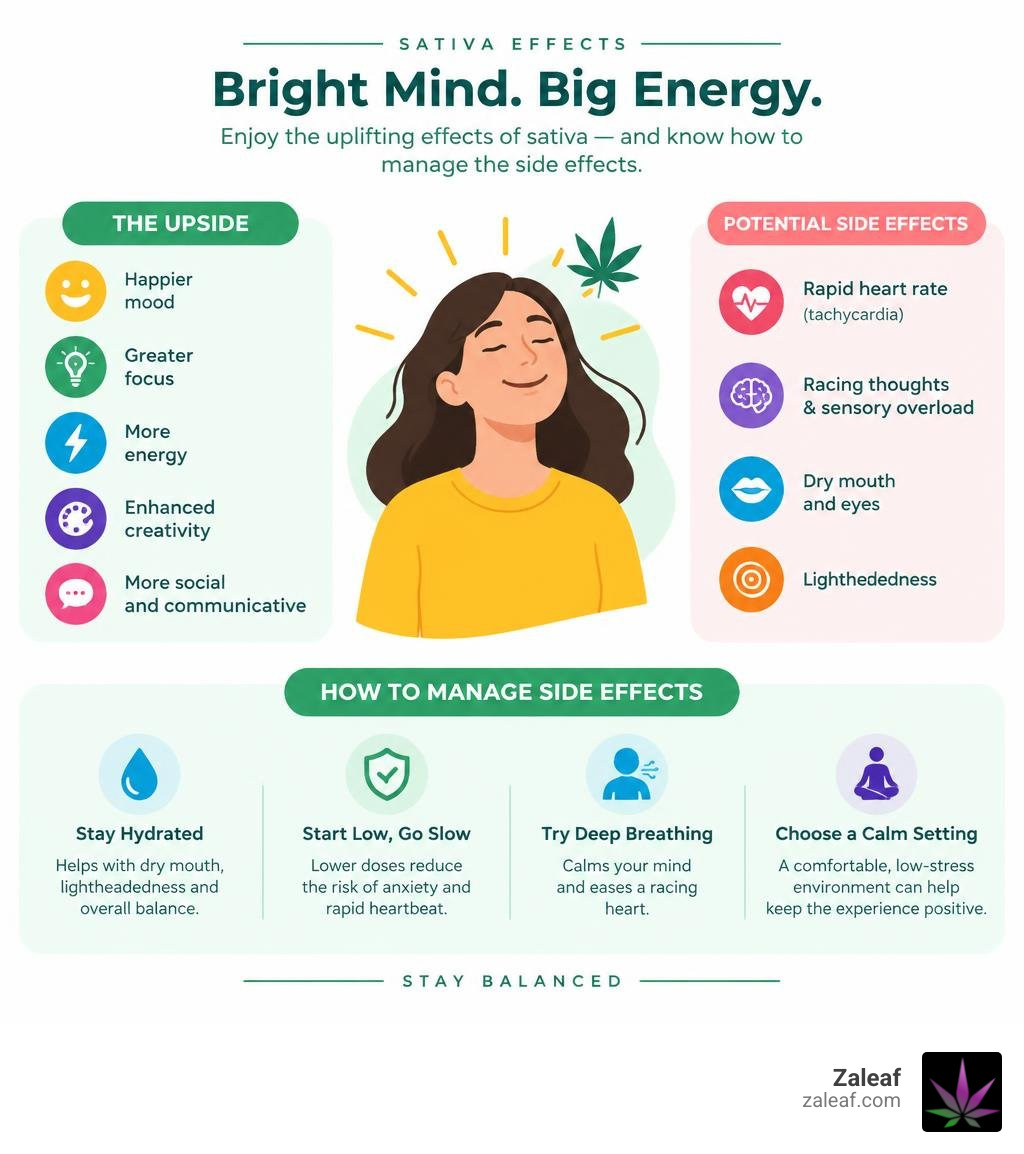
Elevated THC levels can lead to:
- Rapid Heart Rate (Tachycardia): A sudden, noticeable increase in pulse that can feel alarming.
- Sensory Overload: Racing thoughts, racing speech, and hyper-fixation on environmental stimuli.
- Dry Mouth and Eyes: Standard physiological responses to cannabinoid receptor activation.
- Lightheadedness: Brief drops in blood pressure upon standing quickly.
If you ever find yourself feeling overwhelmed, implementing strategies for anxiety management when using sativa can quickly restore equilibrium. Hydrating, shifting to a calm environment, practicing slow diaphragmatic breathing, or consuming pure CBD can counteract THC overstimulation at the CB1 receptors.
The Science: Cannabinoids, Terpenes, and Chemotype Classification
To truly understand what drives these effects, we have to look past casual dispensary folklore and explore cannabis biochemistry. For decades, the industry relied on physical plant appearance to predict effects. However, modern analytical chemistry has revealed that the actual driver of your experience is the plant's chemical fingerprint—known scientifically as its chemotype or chemovar.
As highlighted in a comprehensive scientific evaluation of cannabis chemotypes, commercial strain names and physical plant traits rarely align perfectly with their underlying chemical profiles. For instance, classic strains like Sour Diesel show THC concentrations swinging wildly from 7.7% to 22% depending on the grower and harvest batch. Meanwhile, heritage sativa profiles like Acapulco Gold typically test between 15% and 23% THC, while Maui Waui often lands between 13% and 19% THC.
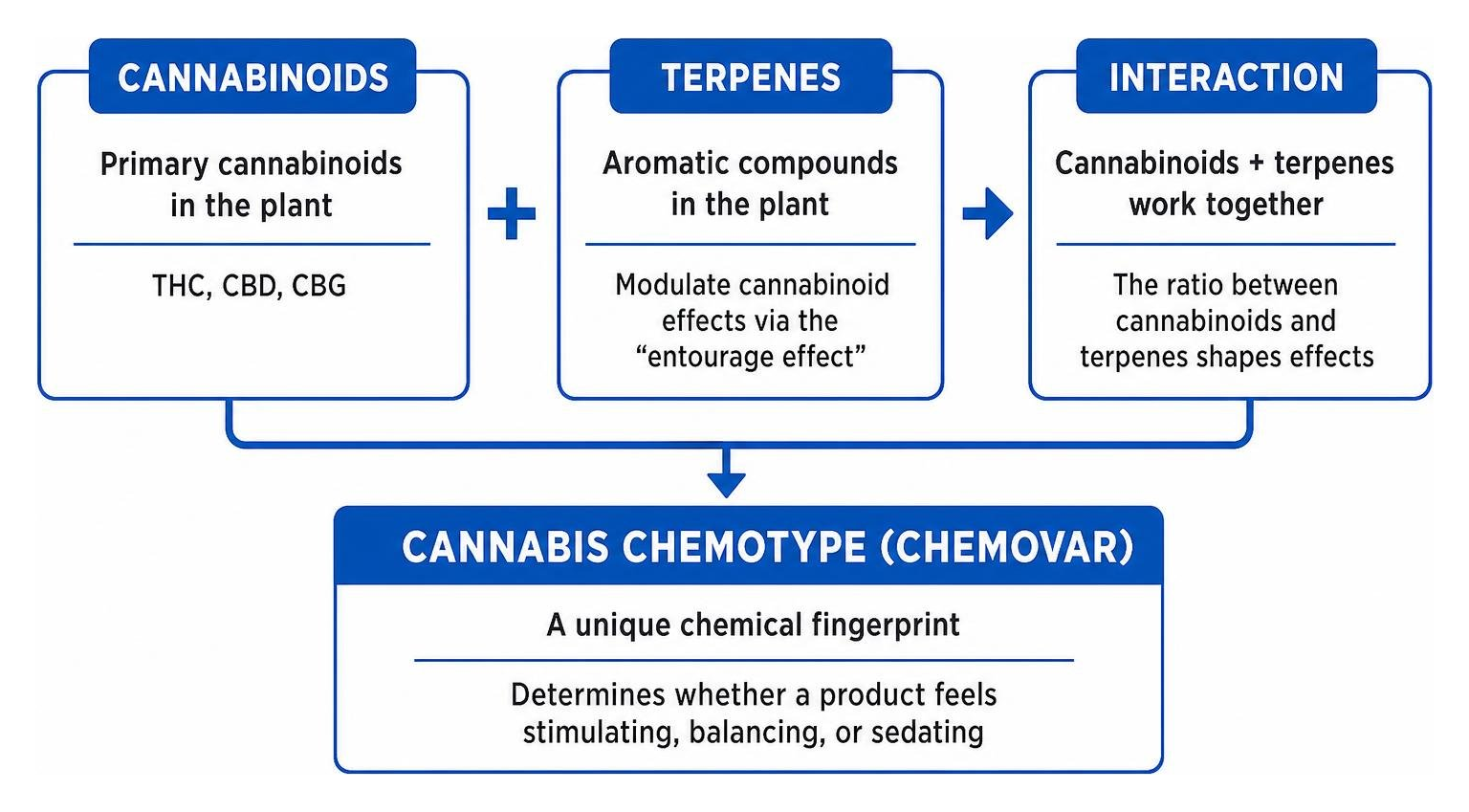
When consumed orally, THC undergoes metabolic conversion in the liver into 11-hydroxy-THC—a metabolite significantly more potent and long-lasting than inhaled delta-9-THC. Regardless of consumption method, it is the ratio between primary cannabinoids (THC, CBD, CBG) and aromatic terpenes that dictates whether a product feels stimulating, balancing, or sedating.
How Terpenes Modulate Sativa Effects
Terpenes are aromatic compounds produced in the plant's trichomes alongside cannabinoids. They protect the plant from pests and climate stress, but in humans, they modulate how cannabinoids interact with neurological pathways through what researchers call the "entourage effect."
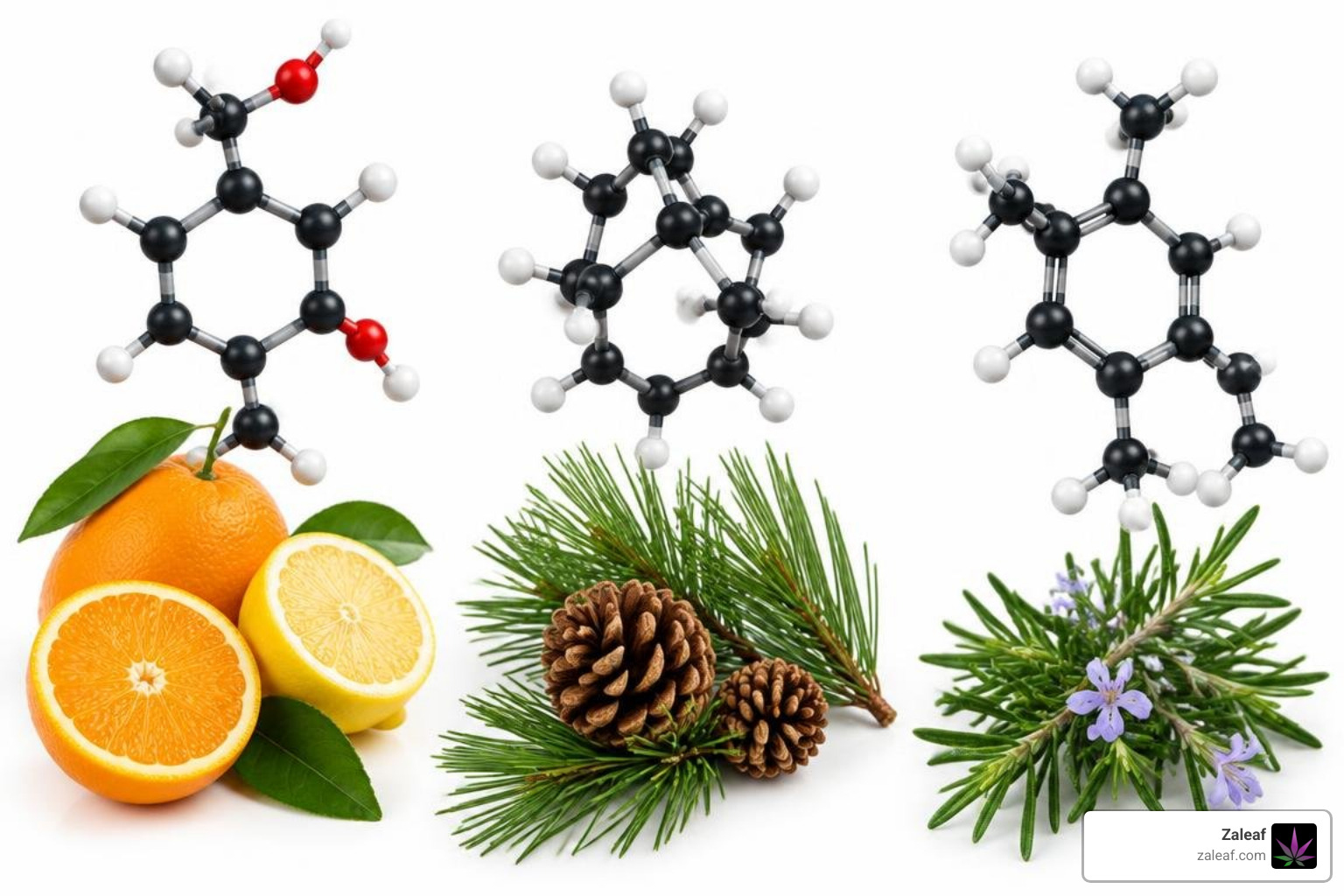
An empirical study on primary terpenes and subjective outcomes (Okey et al., 2023) revealed that terpene concentrations significantly influence subjective user ratings. In sativa-leaning profiles, three primary terpenes take center stage:
- Limonene: Abundant in citrus rinds, this terpene promotes mood elevation, stress relief, and an overall sense of energetic well-being.
- Pinene (Alpha and Beta): Found in pine needles and rosemary, pinene is linked to mental alertness and memory retention. Clinical observations indicate pinene can help mitigate short-term memory lapses and negative cognitive feedback loops often induced by high THC.
- Terpinolene: Common in classic sativa cultivars like Jack Herer, this complex, floral-pine terpene provides an invigorating, cerebral lift.
The concentration of myrcene serves as a vital biochemical switch. Myrcene is known for sedative, muscle-relaxing properties. When a cultivar contains high myrcene levels (often exceeding 0.5%), it tends to induce physical lethargy regardless of whether it carries a sativa or indica label. Sativa profiles typically possess low myrcene concentrations paired with high limonene and pinene, keeping the mental experience alert rather than drowsy.
Sativa vs. Indica: Botanical Morphology vs. Chemical Reality
The historical distinction between Cannabis sativa and Cannabis indica was established by 18th-century botanists like Carl Linnaeus and Jean-Baptiste Lamarck based purely on physical structure and geographic origin:
- Sativa Morphology: Tall, loose branching, narrow leaflets, native to warm, humid equatorial climates with extended growing seasons.
- Indica Morphology: Short, dense, broad leaflets, native to harsh, arid mountainous regions like the Hindu Kush.
As medical reviews discussing an overview of indica vs sativa distinctions point out, centuries of cross-breeding and selective hybridization mean nearly all modern commercial cultivars are hybrids.
Visual inspection of a flower bud cannot tell you how it will make you feel. Instead of judging a book by its cover, learning how to evaluate lab reports and distinguishing cart types by their terpene formulations is the modern, scientifically accurate way to predict your experience.
Potential Therapeutic Applications and Timing of Use
Because of their uplifting nature, sativa-leaning chemovars are widely utilized for daytime wellness and functional symptom management:
- Combating Chronic Fatigue: Sativa profiles can provide a sustained motivational boost for individuals dealing with lethargy, helping them stay active throughout the workday.
- Mood Elevation for Depressive States: The euphoric, dopamine-stimulating properties of limonene-rich THC cultivars can offer temporary relief from low mood, apathy, and mental exhaustion.
- Appetite and Nausea Management: Sativa varieties stimulate appetite without putting the user straight to sleep, making them ideal for daytime culinary enjoyment or medical recovery.
- Headache and Tension Relief: Uplifting varieties can ease minor head pressure and migraine symptoms without causing debilitating physical sedation.
To integrate these benefits seamlessly into daytime routines without combustion or lingering odors, many consumers rely on versatile sativa vape cartridges featuring authentic, strain-specific terpene profiles for fast, precise symptom control.
Optimizing Consumption Methods: Vaping, Smoking, and Edibles
The way you consume sativa dramatically impacts how quickly the effects take hold and how long they persist.
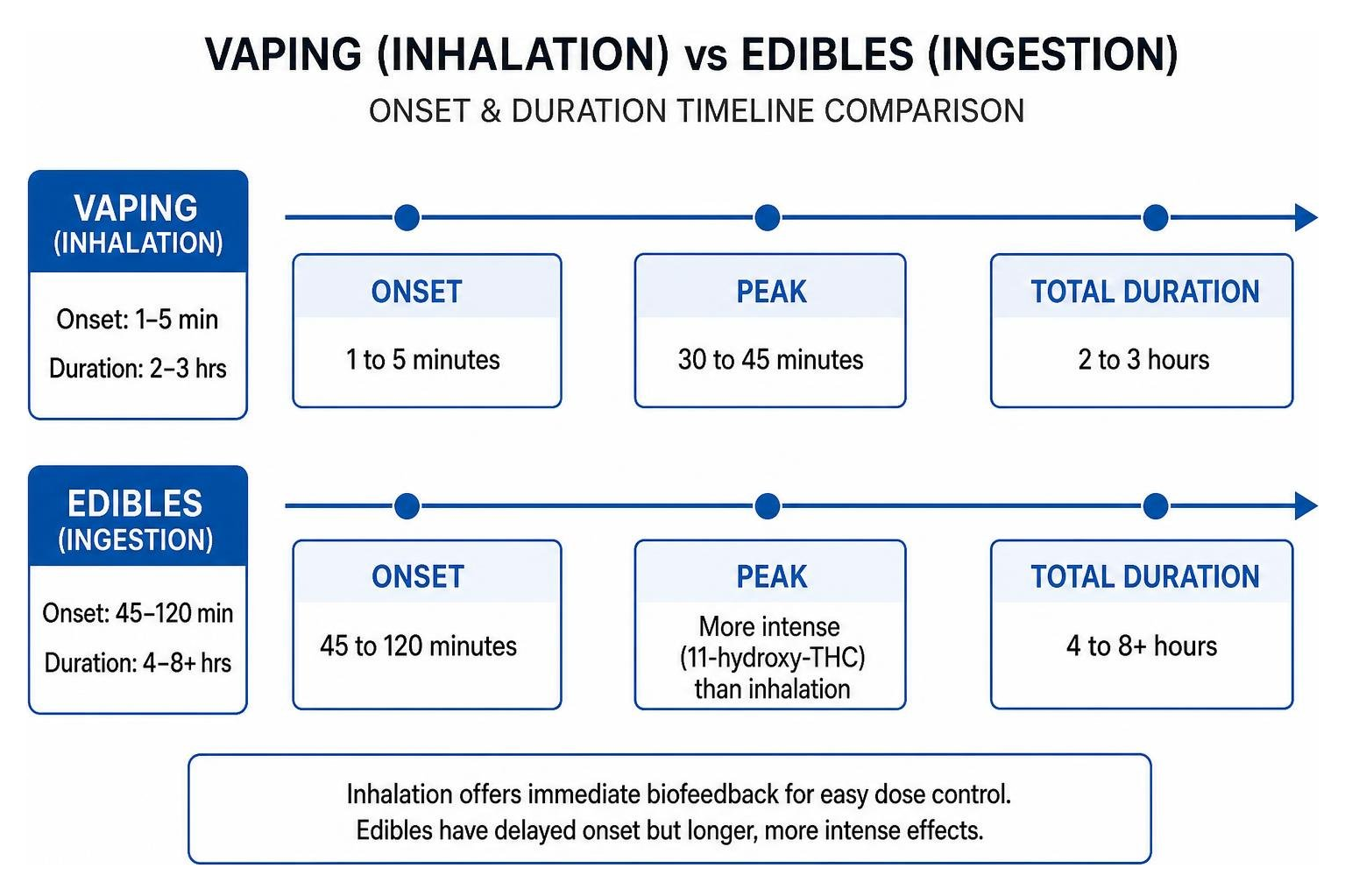
- Vaporization & Smoking (Inhalation): Onset occurs within 1 to 5 minutes, peaking around 30 to 45 minutes, with total duration lasting 2 to 3 hours. Inhalation offers immediate biofeedback, making it easy to titrate your dose one gentle draw at a time.
- Edibles & Infusions (Ingestion): Onset takes anywhere from 45 to 120 minutes. Because THC converts to 11-hydroxy-THC in the digestive tract, the high is significantly more intense and lasts 4 to 8+ hours.
- Sublingual Tinctures: Onset occurs within 15 to 30 minutes, balancing rapid absorption with moderate 3- to 4-hour longevity.
If you are exploring vaporization, diving into our deep dive into cannabis vape categories will help you understand hardware mechanics, temperature settings, and oil types. For on-the-go discretion and consistent terpene preservation, potent disposable vaporizers provide ready-to-use convenience tailored for daytime clarity.
How to Choose the Right Sativa Product
Finding the ideal product requires looking past marketing buzzwords and examining the actual laboratory Certificate of Analysis (COA). At Zaleaf, all our products undergo comprehensive third-party testing to verify precise cannabinoid and terpene percentages, ensuring clean, consistent, and 100% legal formulations delivered directly to your door with fast shipping and discreet packaging—no medical card or state ID required.
When evaluating a product, consider these four rules:
- Check the Cannabinoid Ratio: Beginners should look for balanced ratios (such as 1:1 THC:CBD or THC formulas blended with CBG) to buffer against potential racing thoughts. Experienced users seeking potent euphoria can explore higher THC concentrations.
- Inspect the Terpene Breakdown: Ensure uplifting terpenes like limonene, alpha-pinene, and terpinolene dominate the profile, while myrcene remains below 0.5%.
- Evaluate Your Personal Tolerance: Start with small doses (2.5 mg to 5 mg for edibles, or a single 2-second draw from a vape pen) and wait at least 30 minutes before consuming more.
- Understand Your Hardware: Gaining practical insights into understanding vape pen mechanics ensures you operate devices at optimal voltage settings, preventing burnt oils and preserving fragile terpenes.
Frequently Asked Questions About Sativa Effects
Is sativa guaranteed to give you energy?
No. While sativa profiles are statistically more likely to promote alertness, individual biological variables—including your unique endocannabinoid tone and baseline fatigue levels—play a major role. Furthermore, cannabinoids exhibit biphasic effects: low to moderate doses of THC tend to be stimulating, while very high doses can trigger cognitive fatigue or sluggishness, regardless of the strain's genetic lineage.
Why do some sativa strains cause anxiety?
Cannabis produces its psychoactive effects by binding to CB1 receptors in the brain, particularly in regions that regulate emotional processing and fear responses, like the amygdala. High-THC cultivars with minimal CBD can overstimulate these receptors. If you are in a chaotic environment or naturally prone to nervous tension, this sudden neurochemical spike can manifest as anxiety or paranoia. Choosing products with pinene or balancing your session with CBD helps counteract this effect.
How long do the effects of sativa last?
Duration depends primarily on your chosen route of administration. When inhaled via vaporizers or traditional flower, peak effects occur within 30 minutes and gently taper off over 2 to 3 hours. When consumed as an edible, liver metabolism prolongs the experience, creating active effects that typically last between 4 and 8 hours.
Conclusion
Understanding sativa effects requires moving beyond simple plant labels and embracing modern chemovar awareness. While traditional sativa strains are renowned for delivering euphoria, daytime focus, and creative stimulation, the true character of your experience is determined by the synergy between active cannabinoids, low myrcene levels, and bright terpenes like limonene and pinene.
By paying attention to third-party lab results, starting with mindful doses, and tailoring your environment to your goals, you can reliably unlock the uplifting benefits of daytime cannabis. If you are ready to elevate your daily routine with clean, lab-tested formulations, start by exploring uplifting sativa vape effects across our curated collection at Zaleaf.
References
Sholler DJ, Moran MB, Dolan SB, Borodovsky JT, Alonso F, Vandrey R, Spindle TR. "Use patterns, beliefs, experiences, and behavioral economic demand of indica and sativa cannabis: A cross-sectional survey of cannabis users.." Experimental and clinical psychopharmacology, 2022. PMCID PMC8517044. Okey SA, Waddell JT, Shah RV, Kennedy GM, Frangos MP, Corbin WR. "An Ecological Examination of Indica Versus Sativa and Primary Terpenes on the Subjective Effects of Smoked Cannabis: A Preliminary Investigation.." Cannabis and cannabinoid research, 2023. PMID 36648357.