

Pain, Begone: The Role of CBD Vapes in Relief
Understanding CBD Vape Pain Relief: What You Need to Know
CBD vape pain relief is a topic affecting millions searching for alternatives to traditional pain management. Here's a look at the current evidence:
Quick Answer:
- Does it work? Evidence is mixed. Some studies show CBD helped over 98% of chronic pain patients, while other controlled trials found it no better than a placebo.
- How fast? Vaping CBD enters your bloodstream in 3-10 minutes, making it the fastest delivery method.
- Is it safe? CBD is generally well-tolerated, but vaping carries unknown long-term risks. The CDC recommends against vaping due to lung injury concerns (2,807 hospitalizations, 68 deaths from EVALI as of 2020).
- Legal? CBD products with less than 0.3% THC are federally legal under the 2018 Farm Bill, but state laws vary.
Chronic pain affects an estimated 20% of adults worldwide. For many, conventional treatments like NSAIDs and opioids have unwanted side effects or addiction risks, driving the search for alternatives.
Enter CBD (cannabidiol), a non-psychoactive compound from the cannabis plant. Unlike THC, CBD won't get you high. When vaped, it offers rapid relief, reaching your bloodstream in minutes. However, the science is complicated. While some research is promising, other rigorous trials found CBD no better than a placebo. Combined with concerns about lung health and product quality, it's easy to feel overwhelmed.
This guide cuts through the confusion, exploring the benefits, risks, and current research to help you make an informed decision. As founder of Zaleaf, I've spent years navigating the cannabinoid industry to deliver transparent, high-quality products. Understanding the nuanced evidence around CBD vape pain management is central to helping people on their wellness journey.
What is CBD Vaping and How Does It Work?
When you need fast relief from a sudden pain flare-up, CBD vape pain management is often part of the conversation. But what is it, and how does it work?
CBD vaping is the inhalation of vaporized cannabidiol from a vape pen. The device heats a CBD-infused liquid into a fine mist, or aerosol, which is then inhaled. This method is similar to how some medical aerosol therapies deliver medication directly to the lungs for rapid effect.
Unlike its cousin THC, CBD is non-psychoactive, meaning it won't get you high. Most quality CBD products, like those from Zaleaf, are hemp-derived and legally contain less than 0.3% THC.
The primary reason people choose vaping is speed and efficiency. When inhaled, CBD is absorbed directly into the bloodstream via the lungs, with effects typically felt in 3-10 minutes. This is much faster than the hour or more required for edibles.
This method also offers high bioavailability, which refers to how much of a substance enters your circulation. While oral CBD may have a bioavailability of 10-15% due to the digestive process, vaping can achieve rates as high as 50%. More of what you inhale gets to work.
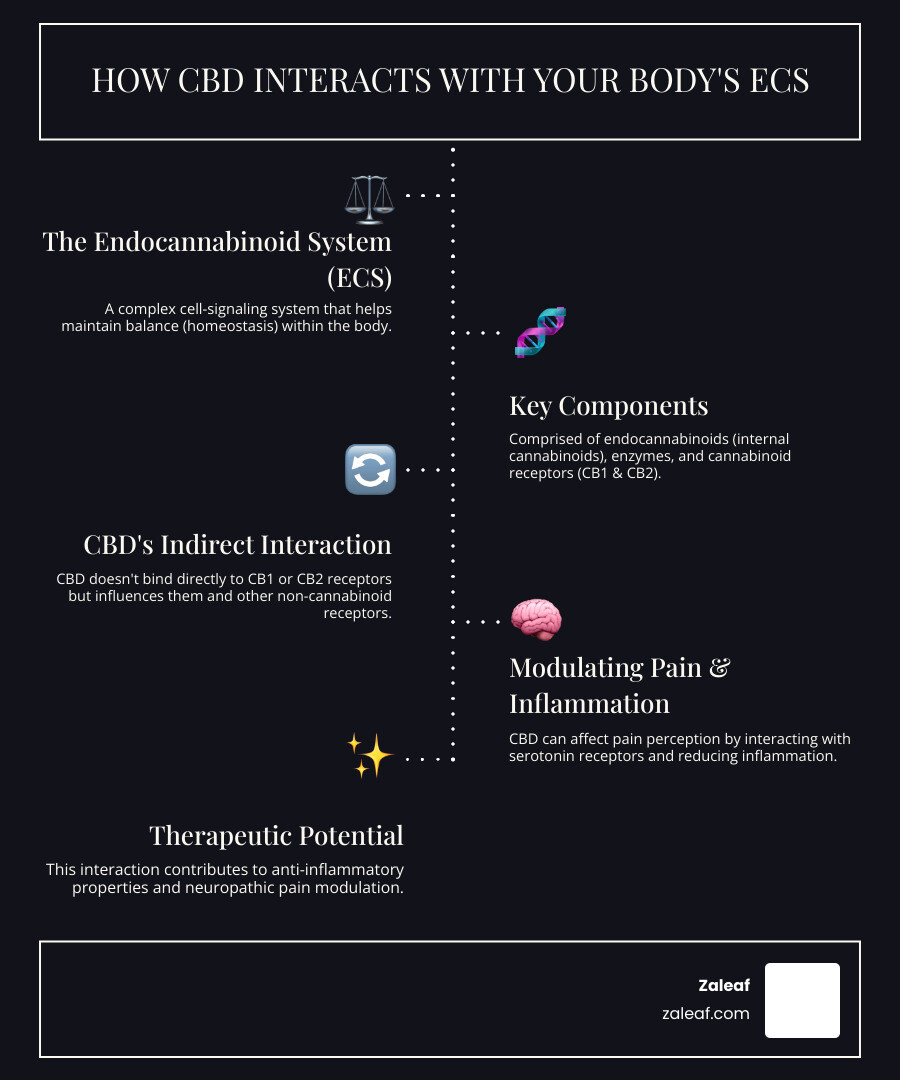
Once in your bloodstream, CBD interacts with your endocannabinoid system (ECS), a complex network that helps regulate pain, mood, sleep, and immune response. By influencing this system, CBD may help restore balance and alleviate discomfort. Research continues to explore the potential therapeutic effects of CBD and its mechanisms.
If you're considering this method, our guide on Vape your way: Best CBD pens to buy online can help you choose a quality device.

The Mechanism Behind Pain Relief
How does CBD actually ease pain? It's a multi-faceted process. CBD influences multiple pathways involved in pain perception and inflammation, primarily through the endocannabinoid system's CB1 and CB2 receptors. Unlike THC, which binds directly to these receptors, CBD acts more subtly, modulating how they function.
CBD also interacts with other important receptors, such as TRPV-1 (which regulates pain signals) and serotonin receptors (which influence mood and pain). This multi-target approach may explain its potential effectiveness for complex pain.
One of CBD's most promising features is its anti-inflammatory properties. Since inflammation is a common source of pain in conditions from arthritis to sports injuries, reducing it can provide significant relief. Animal studies have shown CBD can decrease both inflammation and pain-related behaviors.
Research on neuropathic pain (nerve damage) is also encouraging. Preclinical studies suggest CBD may help with the unusual pain sensations and anxiety that often accompany these conditions. Because inhalation provides a rapid clinical effect, vaping CBD may be particularly useful for acute pain episodes where waiting an hour for relief isn't an option. While more human trials are needed, the science is evolving and points toward CBD's potential for CBD vape pain management.
The Efficacy of CBD Vape for Pain: Benefits vs. Conflicting Evidence
When considering CBD vape pain relief, you'll find a landscape of both enthusiastic testimonials and scientific caution. Let's unpack both sides.

Potential Benefits of Using CBD Vape for Pain
The biggest draw of vaping CBD for pain is speed. For a sudden pain flare-up, relief in 3-10 minutes can be life-changing. This rapid response is a key advantage over slower methods like edibles.
Real-world experiences often align with promising research. A peer-reviewed study on chronic pain improvements found that over 98% of chronic pain patients reported improvements after using CBD, with average pain scores dropping significantly and minimal side effects.
People with inflammatory conditions like arthritis often report reduced swelling, while those with neuropathic pain find it helps take the edge off. Animal studies support these observations, showing CBD can reduce inflammation and modulate nerve pathways involved in pain.
Another potential benefit is CBD's opioid-sparing effect. Animal research suggests high-CBD cannabis extract vapor can reduce opioid reward and intake, hinting that CBD might help manage pain while reducing reliance on opioids. For more on this, see our guide on Soothe your aches: Best cannabis edibles for pain relief.
The Scientific Controversy and Lack of Quality Evidence
Despite widespread positive reports, rigorous clinical trials often yield different results. Professor Chris Eccleston of the Centre for Pain Research at Bath University notes a "complete lack of quality evidence that it has any positive effects." His team's review of 16 randomized controlled trials found that in 15 of them, pharmaceutical-grade CBD performed no better than a placebo.
A new study finding CBD no better than placebo highlights this gap between public perception and scientific validation, a sobering reality check against marketing claims of a miracle cure.
Part of the problem is that most clinical trials haven't studied vaping CBD specifically. The vast majority focus on oral forms, which have different absorption rates and bioavailability. What works (or doesn't) for a capsule may not apply to vaping.
A systematic review on CBD for chronic pain found that while some studies showed benefits, the overall clinical evidence remains limited, emphasizing the need for more research on isolated CBD.
This leaves us in a middle ground. The anecdotal evidence is too strong to dismiss, but the scientific proof isn't definitive. This is why transparency is crucial. At Zaleaf, we're honest about what the science says. CBD may help your pain, but it's not a guaranteed cure. The science is still catching up, and a healthy dose of skepticism is wise.
Key Risks and Safety Concerns of Vaping CBD
While the potential for CBD vape pain relief is appealing, it's crucial to have an honest conversation about the risks. Vaping CBD is not without its concerns.
Lung Health and Vaping-Associated Injuries (EVALI)
The CDC recommends against vaping due to serious health concerns. The long-term effects are still largely unknown, and recent events are alarming.
Between 2019 and 2020, an outbreak of vaping-related lung injuries, known as EVALI, resulted in 2,807 hospitalizations and 68 deaths in the U.S. (see the CDC report on lung injury). The investigation identified Vitamin E acetate, a thickening agent in some vape liquids, as a primary culprit. While reputable CBD products should not contain this additive, its presence in the market highlights the dangers of unregulated products.
Even the base ingredients in most vapes—propylene glycol (PG) and vegetable glycerin (VG)—raise questions. While safe to eat, inhaling them is different. When heated, they can produce toxins like formaldehyde and trigger inflammatory responses in airway cells. Some studies even suggest vaping CBD might be particularly damaging to lung health.
These risks must be part of your decision-making process. For a deeper dive, see our article on Vapor trails: Navigating the health impacts of weed vapes.
Other Potential Side Effects and Drug Interactions
Beyond lung health, CBD itself can have side effects. Most people tolerate it well, but some may experience drowsiness, dry mouth, fatigue, dizziness, or nausea. Changes in appetite or diarrhea can also occur, especially at higher doses.
A more serious, though rare, concern is liver toxicity, which has been linked to high doses of CBD or its use with certain medications.
This brings up a critical point: drug interactions. CBD can interfere with a wide range of prescription drugs, including blood thinners, antidepressants, and some pain medications. It inhibits liver enzymes (cytochrome P450) that metabolize many drugs. This can cause other medications to build up in your bloodstream, leading to increased side effects or reduced effectiveness.
For this reason, it is essential to consult your doctor before using any CBD product, especially if you take other medications. A healthcare provider can assess your specific situation and help you determine if CBD is a safe option for you.
How to Use CBD Vapes for Pain Relief Safely and Effectively
If you've decided to explore CBD vape pain relief, doing so safely is paramount in a confusing market. With the right knowledge, you can make informed decisions that prioritize your safety and wellness.
Finding the Right Product: Regulation and Quality Control
The 2018 Farm Bill federally legalized hemp-derived CBD (under 0.3% THC), but this did not create a regulated market. The FDA does not currently regulate nonprescription CBD products, leading to wild variations in quality and accuracy.
Studies have repeatedly shown widespread mislabeling in the CBD industry. Products may contain far more or less CBD than advertised, undeclared THC, or harmful contaminants like heavy metals and pesticides. This isn't just about value—it's about safety. You could unknowingly consume harmful substances or face legal issues due to varying state laws.
How do you protect yourself? Here’s what to look for:
Third-Party Lab Testing: This is non-negotiable. Reputable brands send every batch to an independent lab to verify potency and purity. The results are published in a Certificate of Analysis (COA), which should be easily accessible. At Zaleaf, this is a cornerstone of our commitment to you. Learn more in our articles on purity testing in vapes and third-party lab testing.
Clean, Minimal Ingredients: Your vape liquid should only contain what's necessary. Avoid questionable additives like Vitamin E acetate. Our Full Spectrum CBD + CBG Vape, for example, contains only Full Spectrum Hemp Extract, CBG, and Natural Terpenes—no fillers.
Transparency and Reputation: Look for brands that are open about their sourcing and manufacturing processes. Good manufacturing practices (GMP) are a positive sign. Vagueness is a red flag.
Check Local Regulations: State laws on CBD and vaping can differ from federal law. A quick check can prevent legal headaches.
A Guide to Dosage for CBD Vape Pain Management
One of the trickiest parts of using CBD is that there are no established clinical dosing guidelines. Both consumers and doctors are navigating largely uncharted territory.
The golden rule is: "start low and go slow." Begin with the smallest possible dose and gradually increase until you find relief. While clinical trials have used oral doses of 100-800mg daily, vaping is much more bioavailable. You will likely need significantly less CBD when vaping compared to taking it orally.
Your ideal dose depends on several factors:
- Body weight and metabolism
- Severity of your pain
- Individual sensitivity to cannabinoids
- Product potency
Here’s a practical approach: start with one or two puffs, once or twice a day. Keep a journal to track your pain levels, dose, and any effects. This record will help you identify patterns and find your sweet spot. After a few days, if needed, gradually increase the number of puffs or the frequency. Listen to your body; if you experience unwanted side effects, reduce your dose.
Be wary of advice from retail salespeople. Your doctor is your best resource, especially if you take other medications. While dosing principles are similar across products (see our guide on mastering THC gummies dosage), the rapid onset of vaping makes a careful, patient approach particularly important.
Vapes vs. Other Methods: Which CBD Product is Right for Your Pain?
Choosing how to take CBD can be overwhelming. Should you vape, use an oil, eat a gummy, or apply a cream? Each method has a unique profile based on how quickly it works (onset), how long it lasts (duration), and how much CBD enters your system (bioavailability). For CBD vape pain relief, these traits make it ideal for some situations but not others.
Let's compare how CBD vapes stack up against other popular options:
| CBD Product Type | Onset Time | Duration of Effects | Bioavailability | Best For |
|---|---|---|---|---|
| Vapes | Fast (3-10 minutes) | Short (2-4 hours) | High (20-50%) | Acute pain, sudden flare-ups, immediate relief |
| Oils/Tinctures | Medium (15-45 minutes) | Medium (4-6 hours) | Medium (10-30%) | Consistent daily relief, general wellness |
| Edibles | Slow (1-3 hours) | Long (6-12 hours) | Low (6-20%) | Long-lasting relief, nighttime pain, discreet use |
| Topicals | Localized (15-60 minutes) | Localized (2-6 hours) | Very Low (systemic), High (localized) | Muscle aches, joint pain, localized inflammation |
CBD Vapes: These are the fastest option, making them ideal for acute pain like a sudden migraine or muscle spasm. The trade-off is a shorter duration of effects and the health risks associated with vaping.
Oils and Tinctures: Offering a middle ground, these are absorbed under the tongue for relatively quick (15-45 minutes) and lasting (4-6 hours) relief. They are great for managing consistent, daily discomfort. Learn more in our guide to CBD oil's advantages.
Edibles: These are the marathon runners. While slow to kick in (1-3 hours), their effects can last 6-12 hours, making them perfect for nighttime pain or all-day coverage. Explore options in our guides to cannabis edibles for pain relief and THC-free CBD gummies.
Topicals: These provide targeted relief for localized pain like a sore joint or tight muscle. The CBD interacts with receptors in the skin, offering relief without systemic effects like drowsiness.
So, which is right for you? Consider your pain pattern. Is it sudden and intense? Vaping might be best, assuming you accept the risks. Is it a steady, all-day issue? Oils or edibles may be better. Is it in one specific spot? Try a topical. Many people use a combination of methods to suit different needs. At Zaleaf, we offer a range of tested, transparent options so you can find the right fit.
Conclusion
So, what's the verdict on CBD vape pain relief?
The answer is complex. Vaping CBD offers the compelling benefit of fast relief, which can be invaluable for sudden pain. The way CBD interacts with the body's endocannabinoid system shows real therapeutic potential, and some research has yielded impressive results.
However, we can't ignore the other side of the coin. The scientific evidence is mixed, with many rigorous trials finding CBD no more effective than a placebo. Furthermore, there are real health risks associated with vaping. The CDC recommends against it due to unknown long-term effects and the danger of lung injury, as seen in the EVALI outbreak.
Compounding these issues is a largely unregulated market where product quality and label accuracy are not guaranteed. Contaminants and incorrect dosages are genuine concerns.
If you are considering CBD vape pain relief, approach it with caution. Product quality and safety must be your top priority. Always insist on transparent third-party lab testing (with a Certificate of Analysis) and clean ingredients. Most importantly, talk to your doctor before starting, especially if you take other medications, as CBD can cause dangerous interactions.
At Zaleaf, we built our brand on transparency and quality to help you steer this space safely. All our products undergo rigorous third-party testing, with results available to you. We are committed to providing honest products you can trust, delivered discreetly to your door. If you're interested in the rapid effects of vaping, our guide on the best CBD disposable vape pens can help you make an informed choice.
Your health and safety are paramount. Do your research, consult a professional, and choose wisely.