

Stay Legal, Stay High: A Shopper's Guide to Cannabis Oil and Hemp Products

Why Understanding Legal Cannabis Products Matters More Than Ever

Legal cannabis products come in many forms and are now available across North America, but navigating the complex regulatory landscape can be confusing. Here's what you need to know to shop safely and legally:
Quick Guide to Legal Cannabis Products:
- Hemp-derived products (CBD, Delta-8, Delta-9 THC under 0.3%) are federally legal in the U.S.
- Cannabis products with over 0.3% THC are legal in Canada and certain U.S. states like New York and California
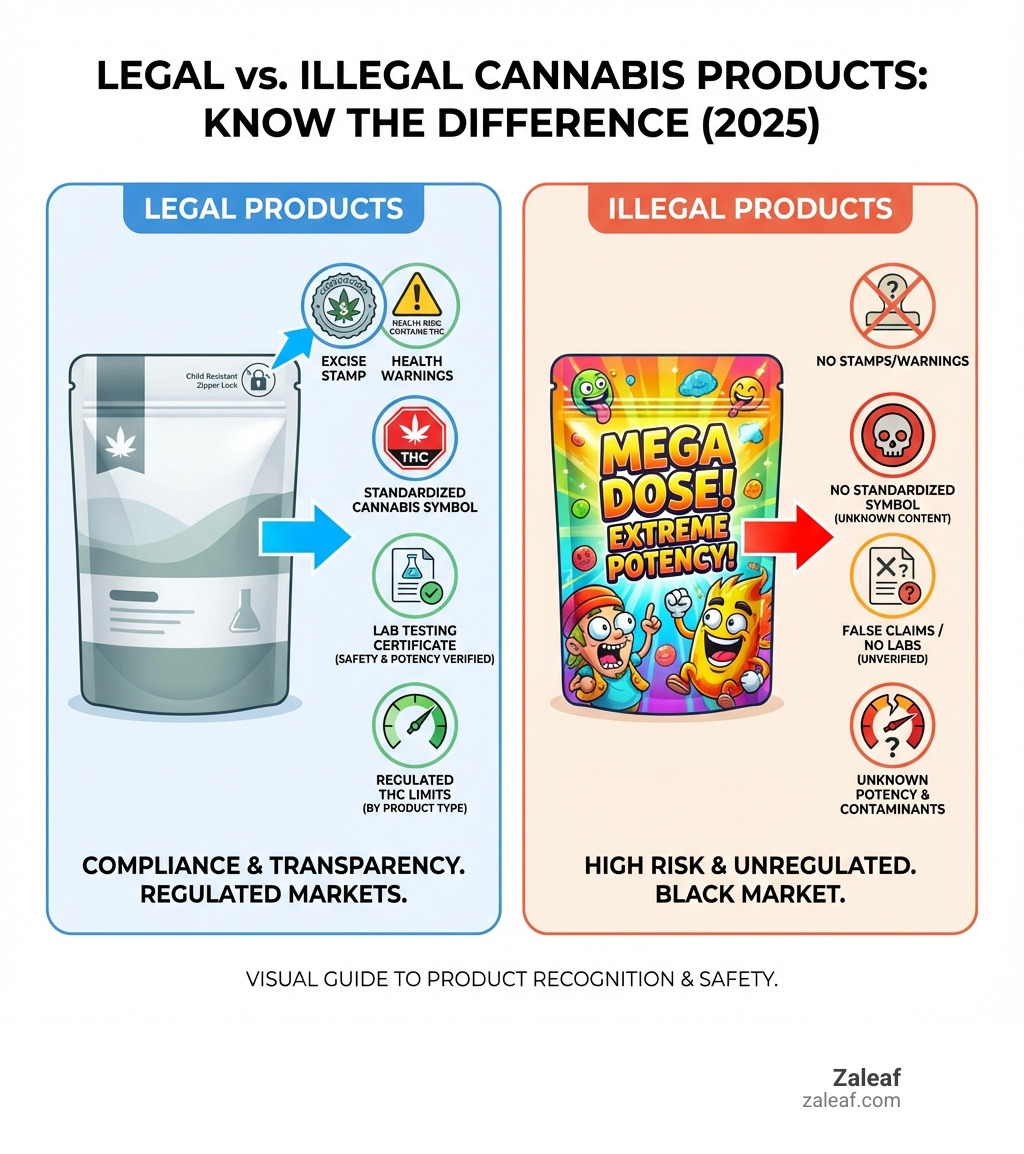
- Look for third-party lab testing and proper packaging with health warnings and excise stamps
- Possession limits vary by location: 30g in Canada, 3 ounces in New York
- All THC products can cause you to fail a drug test, regardless of legality
The cannabis industry has changed dramatically. What was once entirely illegal is now a regulated market offering everything from oils and gummies to topicals and beverages. But with this expansion comes confusion—what's actually legal to buy? How do you tell legitimate products from illegal "copycat" items that could be unsafe?
The stakes are real. Illegal cannabis products may contain harmful contaminants like pesticides, heavy metals, or dangerous THC levels that have sent people to emergency rooms. Meanwhile, legal products undergo strict testing and quality control to ensure what's on the label matches what's in the package.
Whether you're in Canada, New York, California, or another jurisdiction, the rules differ significantly. Canada operates under federal oversight with the Cannabis Act, while U.S. states create their own frameworks. Even more complex, the 2018 Farm Bill legalized hemp-derived cannabinoids federally, creating a new category of legal products available nationwide.
Understanding these distinctions isn't just about staying on the right side of the law—it's about protecting your health and getting products that actually work as intended.
I'm Max Shemesh, Owner & CEO of Zaleaf, and I've spent years navigating the cannabinoid industry to deliver high-quality legal cannabis products to customers nationwide. Through partnerships with over 300 stores and rigorous third-party testing standards, I've seen why transparency and compliance matter for consumer safety.
The Legal Foundation: What Makes Cannabis Products Legal?
The journey to understanding legal cannabis products begins with a crucial distinction: hemp versus marijuana. Both come from the Cannabis sativa plant, but their legal status hinges on their Delta-9 THC content. THC (tetrahydrocannabinol) is the cannabinoid primarily responsible for the psychoactive "high" associated with cannabis.
The 2018 Farm Bill fundamentally reshaped the landscape of cannabis legality in the United States. It federally legalized hemp, defining it as any Cannabis sativa plant, or any part of that plant, with a Delta-9 THC concentration of no more than 0.3% on a dry weight basis. This legislative change opened the door for a vast array of hemp-derived products, including those containing CBD, Delta-8 THC, and even small amounts of Delta-9 THC, to be sold legally across state lines. For a deeper dive into this pivotal legislation, explore The Farm Bill Explained: Your Guide to Hemp Legality.
This federal framework means that many products containing cannabinoids are now accessible without needing a medical card or prescription, as long as they adhere to the 0.3% Delta-9 THC limit. This represents a significant shift from traditional marijuana laws. If you're curious about the evolving accessibility, our article Is No Medical Card Needed? The Future: A Legal Perspective provides further insights.
Beyond Delta-9 THC, other cannabinoids like Delta-8 THC have emerged, often existing in a legal gray area or under specific state regulations. Understanding their legal standing is important, and you can learn more about this in The Legal Landscape of Delta-8 THC Products. At Zaleaf, we ensure all our hemp-derived products strictly comply with federal law, offering you peace of mind.
Hemp-Derived vs. Marijuana-Derived Products
The key difference between hemp-derived and marijuana-derived legal cannabis products lies in their source and, consequently, their legal classification. Chemically speaking, Delta-9 THC is the same compound whether it comes from a hemp plant or a marijuana plant. The distinction is purely legal:
- Hemp-derived products: These are sourced from cannabis plants containing less than 0.3% Delta-9 THC by dry weight. Due to the 2018 Farm Bill, these products are federally legal in the U.S. and often available nationwide. This category includes many CBD products, as well as Delta-8 and certain Delta-9 THC products that maintain the legal threshold.
- Marijuana-derived products: These come from cannabis plants with a Delta-9 THC content exceeding 0.3%. These products are subject to state-specific legalization and regulation, meaning they are only legal in states that have expressly permitted recreational or medical marijuana.
This distinction is crucial for consumers, especially when purchasing online. While our hemp-derived products are federally compliant, it's always wise to be aware of your specific state's laws, as some states have implemented their own restrictions on hemp-derived cannabinoids. New York, for example, has its own regulations for cultivating hemp, which you can explore further by viewing more information about cultivating hemp in New York State.
Navigating Different Legal Frameworks: Canada, New York & California
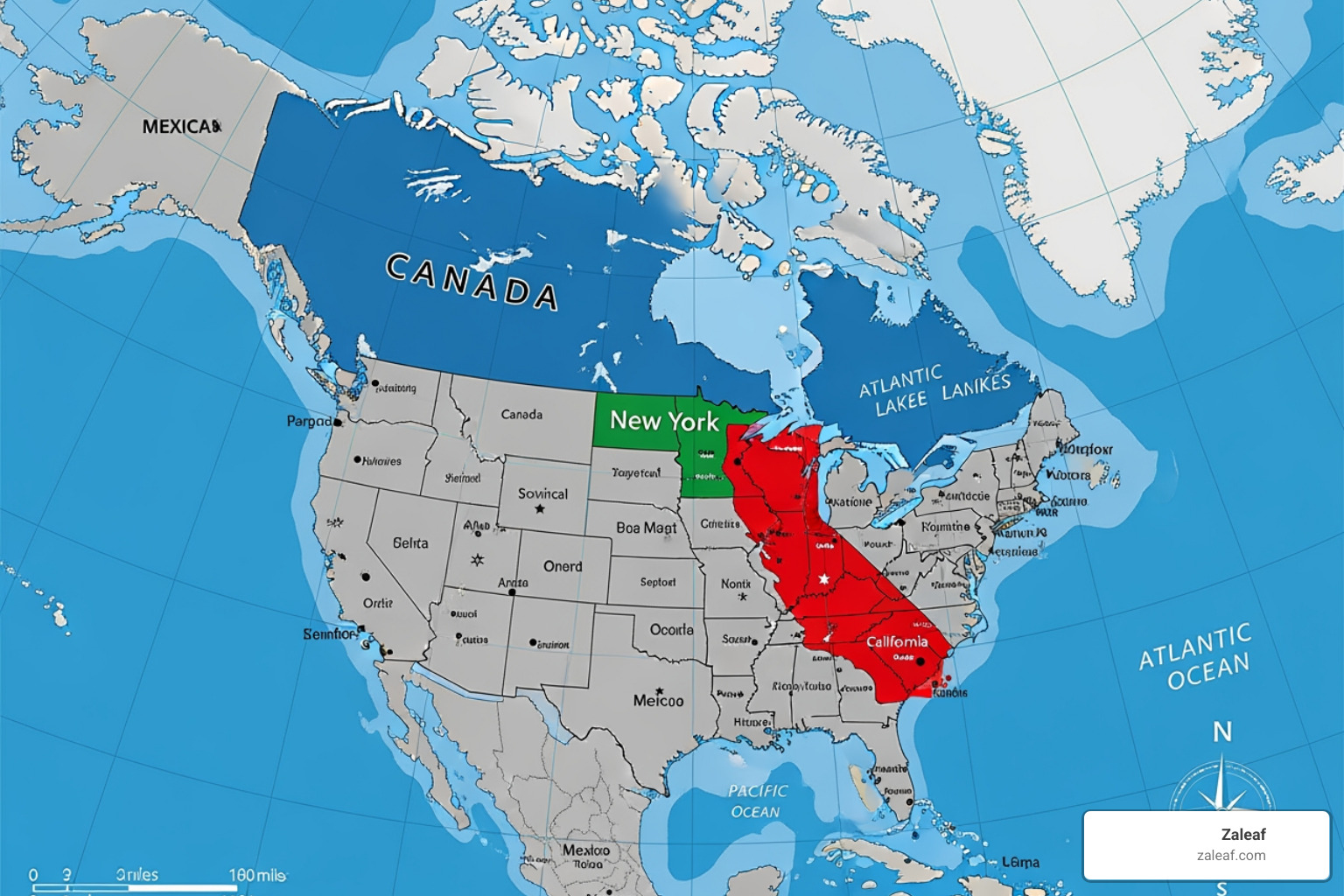
The legal landscape for legal cannabis products is a patchwork of federal, state, and local regulations. What's allowed in one region might be strictly prohibited in another. Let's look at some key examples:
Canada: Our northern neighbor operates under a federal framework established by the Cannabis Act. This means that across all provinces and territories, adults can legally purchase and possess up to 30 grams of dried cannabis or its equivalent in non-dried forms. The federal government sets strict requirements for producers, product types, packaging, and labeling, while provinces and territories manage retail sales, distribution, and public consumption rules.
New York: In the U.S., states often lead the way in cannabis legalization. New York's adult-use cannabis program, governed by the Marihuana Regulation and Taxation Act (MRTA), allows individuals 21 and over to possess up to 3 ounces of cannabis and 24 grams of cannabis concentrate. The state's Office of Cannabis Management (OCM) oversees licensing, cultivation, production, distribution, sale, and taxation. A unique aspect of New York's approach is its strong emphasis on social equity initiatives, aiming to repair historical harms caused by disproportionate enforcement of cannabis prohibition. You can find comprehensive details on this framework at Adult-Use Information.
California: A pioneer in cannabis legislation, California first legalized medicinal cannabis in 1996 and later adult-use cannabis. The state's framework is complex, involving statutes like the Medicinal and Adult Use Cannabis Regulation and Safety Act (MAUCRSA), agency regulations from the Department of Cannabis Control (DCC), and numerous local ordinances. This multi-layered approach means that specific rules can vary significantly from city to city or county to county. California also prioritizes social equity, with many local jurisdictions implementing programs to support communities impacted by past prohibition. To understand the intricacies, refer to California's cannabis laws.
Understanding these varying frameworks is essential for any consumer or business navigating the legal cannabis market. We at Zaleaf stay informed about these regulations to ensure our product offerings and shipping practices remain compliant.
Navigating the World of Legal Cannabis Products
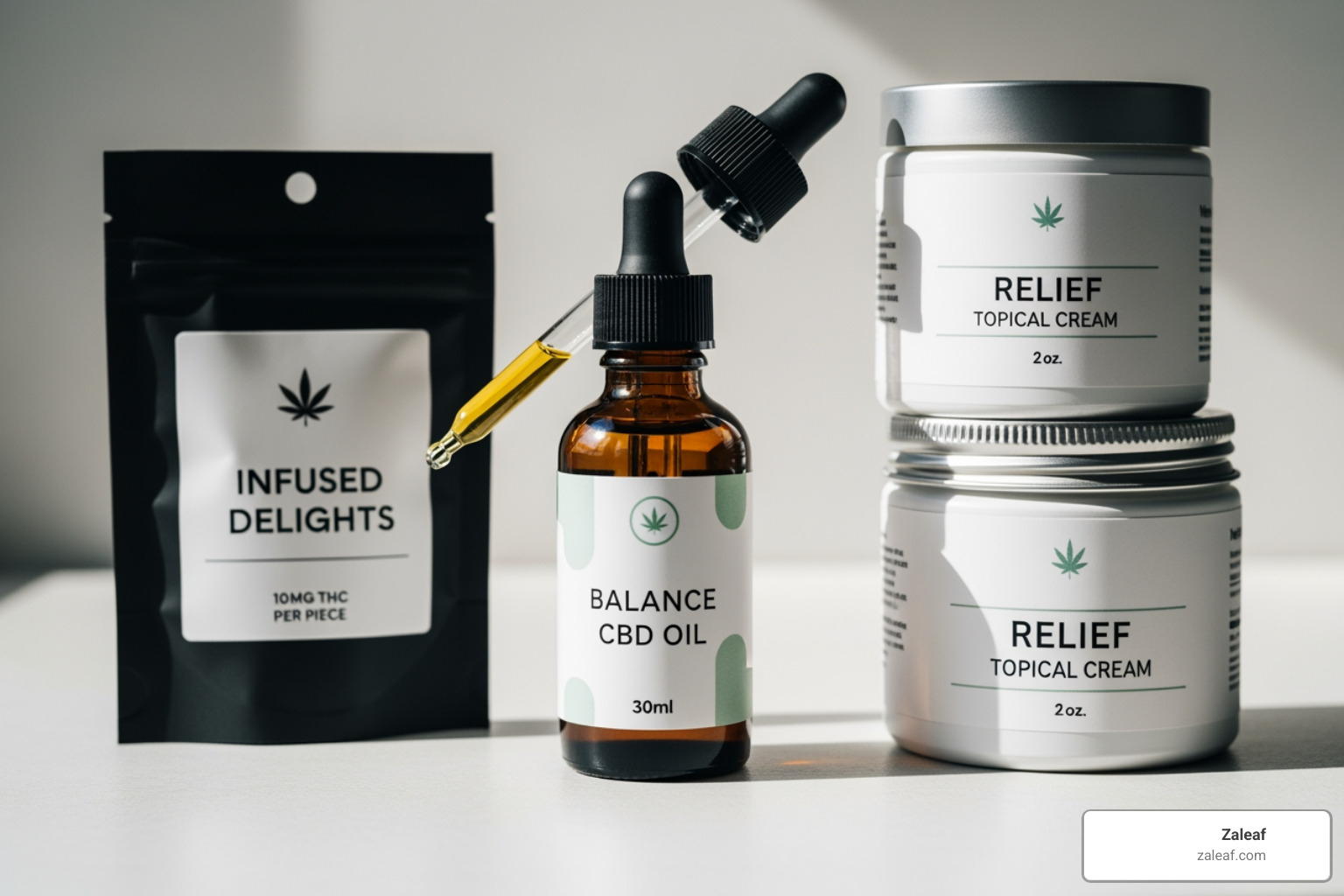
The variety of legal cannabis products available today is truly astonishing, catering to diverse preferences and desired effects. From traditional dried flower to innovative edibles and topicals, there's a world of choice. At Zaleaf, we specialize in enhancing cannabinoid and terpene profiles to help you achieve mood-specific effects, whether you're seeking relaxation, energy, or something in between.
Product potency, measured primarily by THC and CBD content, is a key factor. Beyond these, terpenes—aromatic compounds found in cannabis—play a significant role in shaping the overall experience, often referred to as the "entourage effect." We believe in transparency and providing detailed information so you can make informed choices. For those interested in how these products can affect you, our guide to The Ultimate Guide to Edible Cannabis Effects offers valuable insights.
Key Types of Legal Cannabis Products Available
In both Canada and legal U.S. states, and with federally compliant hemp-derived options, the range of legal cannabis products includes:
- Dried Flower: The traditional form, consumed by smoking or vaporizing. It offers immediate effects and a full spectrum of cannabinoids and terpenes.
- Pre-rolls: Convenient, pre-rolled joints ready for consumption, often containing ground dried flower.
- Cannabis Oils: Versatile products that can be ingested orally (tinctures), added to food, or used in vape pens. They offer a more controlled dosage and can have a slower onset than smoking.
- Capsules: Discreet and precisely dosed, capsules offer a smoke-free way to consume cannabis, similar to other dietary supplements.
- Edibles: A popular category including gummies, chocolates, baked goods, and more. Edibles offer a longer-lasting effect but typically have a delayed onset. For specific rules on edibles, especially in California, check out Gummy Bears or Gummy Bans: Understanding California's THC Rules.
- Beverages: Cannabis-infused drinks offer a unique consumption method with potentially faster onset than traditional edibles due to different absorption pathways.
- Concentrates: Highly potent forms of cannabis, such as shatter, wax, and live resin, often consumed via dabbing or specialized vape pens. These are known for their intense effects.
- Topicals: Cannabis-infused balms, lotions, and creams applied to the skin. They are non-intoxicating and used for localized relief.
Understanding THC Limits in Legal Cannabis Products
One of the most critical aspects of legal cannabis products is understanding their THC limits, which are strictly regulated to ensure consumer safety and product consistency. These limits vary significantly depending on the product category and jurisdiction.
In Canada, Health Canada regulations set clear boundaries:
| Product Category | Maximum THC per Package | Notes Data is not available for this question.
What are the tax implications and revenue allocation for legal cannabis sales in New York?
New York State's adult-use cannabis program includes three types of taxes: a 9% wholesale excise tax, a 9% retail excise tax, and a 4% local excise tax. The revenue generated from these taxes is allocated to specific funds: 40% goes to Education, 40% to the Community Grants Reinvestment Fund, and 20% to the Drug Treatment and Public Education Fund. These funds are intended to cover program administration costs, support equity applicants, and reinvest in communities disproportionately impacted by past cannabis prohibition. You can visit the New York State Department of Taxation and Finance website for more details.
What are the regulations for cannabis businesses, including licensing, packaging, labeling, and testing in California?
California has a robust regulatory framework for cannabis businesses. The main statute is the Medicinal and Adult Use Cannabis Regulation and Safety Act (MAUCRSA), which outlines the basic framework for licensing, oversight, and enforcement. The Department of Cannabis Control (DCC) then creates detailed regulations covering:
- Licensing: Requirements for various license types (cultivation, manufacturing, distribution, retail).
- Packaging and Labeling: Strict rules to ensure products are child-resistant, tamper-evident, and contain specific information like THC/CBD content, ingredients, warnings, and a universal cannabis symbol. Packaging must not appeal to youth.
- Testing: All cannabis products must undergo rigorous testing by licensed laboratories before sale. This includes screening for pesticides, heavy metals, residual solvents, microbial contaminants, and verifying cannabinoid potency. These regulations aim to ensure product safety, prevent diversion, and protect public health.
What are the health effects and risks associated with cannabis consumption, and for whom should caution be exercised?
While many enjoy legal cannabis products responsibly, it's crucial to be aware of potential health effects and risks. Cannabis can be addictive; up to 3 in 10 people who consume cannabis develop "cannabis use disorder," with higher risks for those who start young and consume frequently. If you're concerned about your consumption, resources are available, including the OASAS website to learn more about addiction treatment.
Caution should be exercised particularly by:
- Youth: Brains continue developing until around age 25. Cannabis use during this period can lead to negative cognitive effects, including difficulties with memory, learning, and problem-solving, and may increase the risk of mental health issues like depression, anxiety, and psychosis, especially with high THC content.
- Pregnant and Breastfeeding/Chestfeeding Individuals: Medical organizations advise against cannabis use during pregnancy due to potential risks to fetal development, as components can pass to the baby. Similarly, it's safest to avoid cannabis while breast/chestfeeding, as components can pass into breast/chest milk. For more information, view the Breastfeeding Grand Rounds “Marijuana Use During Pregnancy and Breastfeeding" on the SUNY University at Albany School of Public Health website.
- Individuals with Pre-existing Conditions: Those with a history of mental illness, respiratory or cardiovascular issues, or those taking prescription medications should consult a healthcare provider before using cannabis, as it can interact with medications or exacerbate conditions.
- Anyone driving or operating machinery: Cannabis impairs judgment, coordination, and reaction time. "If you feel different, you drive different."
Conclusion
Navigating legal cannabis products can feel complex, but with the right knowledge, it's an exciting journey towards informed choices. We've explored the fundamental distinctions between hemp-derived and marijuana-derived products, the varying legal frameworks across Canada, New York, and California, and the diverse types of products available. We've also emphasized the critical importance of identifying legal products through proper packaging and rigorous third-party testing, as well as understanding the rules for possession, consumption, and safe practices.
At Zaleaf, our commitment is to empower you with high-quality, 100% legal cannabis products that are safe, effective, and custom to your needs. We stand by our promise of enhancing cannabinoid and terpene profiles for mood-specific effects, and all our products undergo meticulous 3rd party testing to ensure purity, potency, and safety. We believe you deserve transparency and peace of mind. Plus, we offer fast shipping and discreet packaging, with no ID or medical card required for our federally compliant hemp-derived selections.
Staying legal means staying informed. Always check local laws, choose products from reputable sources like Zaleaf, and prioritize safe consumption practices. Your well-being is our highest priority, and we're here to guide you every step of the way. If you're looking for natural ways to unwind, explore our Detailed Guide to CBD Oil for Stress: Effectiveness.