

Top E-Cigarette Flavors for Beginners and Seasoned Vapers Alike
E-Cigarette Flavors: Which Profiles Are Most Popular?

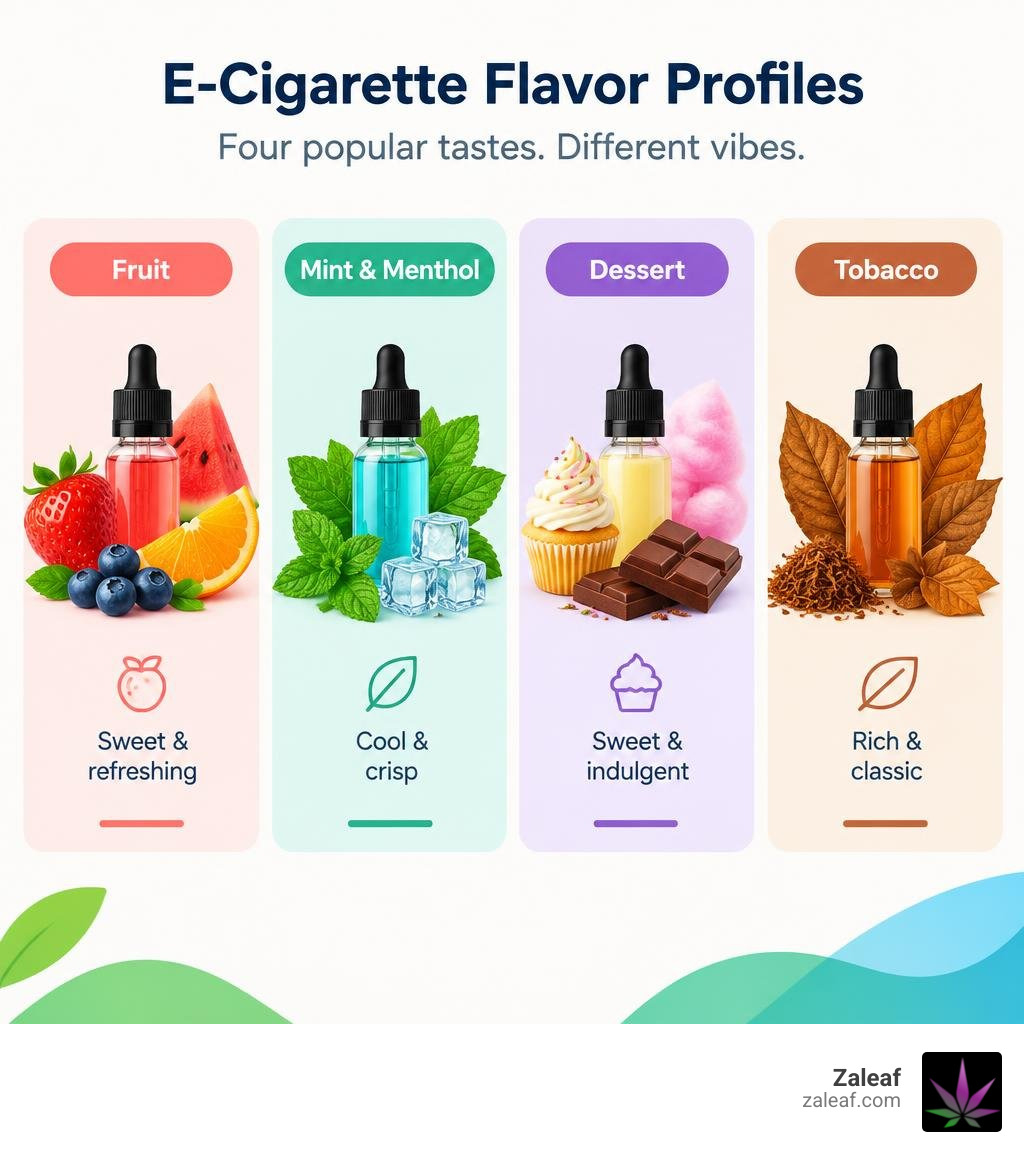
Fruit, mint or menthol, and sweet dessert blends are common e-cigarette flavor choices. Fruit leads among young users, while adults also choose mint, menthol, and tobacco flavors. If you are comparing options, think about whether you prefer a sweet, cooling, or tobacco-like taste. Flavor does not make nicotine vaping risk-free.
I'm Max Shemesh of Zaleaf. My experience developing cannabinoid and terpene profiles informs how I compare tastes and aromas, but e cigarettes flavors and cannabis vape products are not the same thing.
Essential e cigarettes flavors terms:
Comprehensive Guide to E Cigarettes Flavors and Market Profiles

The landscape of e-cigarette flavors has expanded into thousands of distinct formulations. Market data demonstrates that non-tobacco options dominate consumer demand. As of 2024 retail tracking, 80.6% of all e-cigarette unit sales in the United States—accounting for over 17 million units monthly—consisted of flavors other than traditional tobacco. Furthermore, research indicates that 62.9% of adult vapers regularly consume non-tobacco profiles, with flavor cited as the primary catalyst for vaping initiation by 29.5% of surveyed users.
Understanding how taste preferences correlate with vaping experience allows both newcomers and experienced users to select blends that suit their palates. Beginners generally look for approachable, bright notes that mask the natural bitterness of nicotine. Conversely, seasoned enthusiasts often migrate toward complex botanical mixtures, multi-layered desserts, or robust tobacco hybrids. Exploring curated vaping flavors highlights how formulation techniques shape sweetness, throat hit, and vapor density.
| Flavor Profile Category | Target User Level | Dominant Sensory Notes | Perceived Sweetness | Throat Hit Intensity |
|---|---|---|---|---|
| Single Fruit (e.g., Mango, Berry) | Beginner | Crisp, sweet, juicy | High | Low to Mild |
| Menthol & Ice Mint | Beginner to Intermediate | Crisp peppermint, intense cooling | Low to Medium | Crisp / Soothing |
| Dessert & Bakery (e.g., Custard, Pastry) | Intermediate | Vanilla, cream, brown sugar | High | Smooth / Warm |
| Artisan Beverage & Drink | Intermediate | Coffee, cola, iced tea | Moderate | Balanced |
| Terpene & Botanical Hybrids | Advanced / Connoisseur | Herbal, pine, citrus, floral | Low | Variable / Earthy |
| Cured & Spiced Tobacco | Transitioning Smokers | Oak, ash, caramel, nut | Very Low | Strong / Pronounced |
Top E Cigarettes Flavors for Beginners: Fruit, Menthol, and Dessert Blends
For individuals starting out, profile simplicity and palatability are essential. Single-note and blended fruity vape flavors—such as strawberry, watermelon, blueberry, and mango—remain the entry point for the vast majority of consumers. In retail market analyses, fruit accounts for the largest market share worldwide. For instance, a comprehensive Canadian market analysis on e-liquid flavours and retail scans documented that fruit comprised 43.6% of available e-liquids, followed by candy and dessert profiles at 27.6%, and non-alcoholic drinks at 12.5%.
Beginners frequently favor sweet profiles like cotton candy vapes because they deliver immediate familiarity without residual harshness. Similarly, menthol and mint variations provide a smooth sensory counterpoint by reducing irritation on inhalation, making them a consistent choice for individuals seeking a clean throat sensation.
Advanced Flavor Profiles: Terpenes, Complex Blends, and Beverage Infusions
As vapers gain experience, their palates often develop an appreciation for intricate flavor architecture. Rather than relying on simple sweeteners, advanced e-liquids incorporate multi-stage notes such as espresso infused with hazelnut, barrel-aged vanilla bourbon, or savory spiced teas.
In modern formulation, botanical extracts and specific hydrocarbon aromatics known as terpenes are used to build layered sensory profiles. Investigating the best cannabis vape flavors reveals how natural plant terpenes—such as myrcene, limonene, and caryophyllene—deliver authentic earthy, pine, and citrus undertones without synthetic artificiality. Connoisseurs who enjoy artisan blends often look across industries for inspiration, tracking the amazing vape flavours you need to try today to discover how complex flavor layering creates evolving top, middle, and base notes across varied wattage settings.
Flavor Chemistry, Satisfaction, and User Experience
The presence of characterising flavor compounds directly alters consumer experience and neurochemical satisfaction. Peer-reviewed cross-sectional studies reveal that adult consumers utilizing flavored formulations experience measurably higher satisfaction compared to unflavored or basic tobacco-flavored alternatives (Landry et al., 2019). Adults utilizing non-tobacco flavors exhibit 2.73 times higher odds of reporting high overall satisfaction, while consumers choosing mint or menthol options report 3.23 times higher odds of high satisfaction compared to non-flavored alternatives.
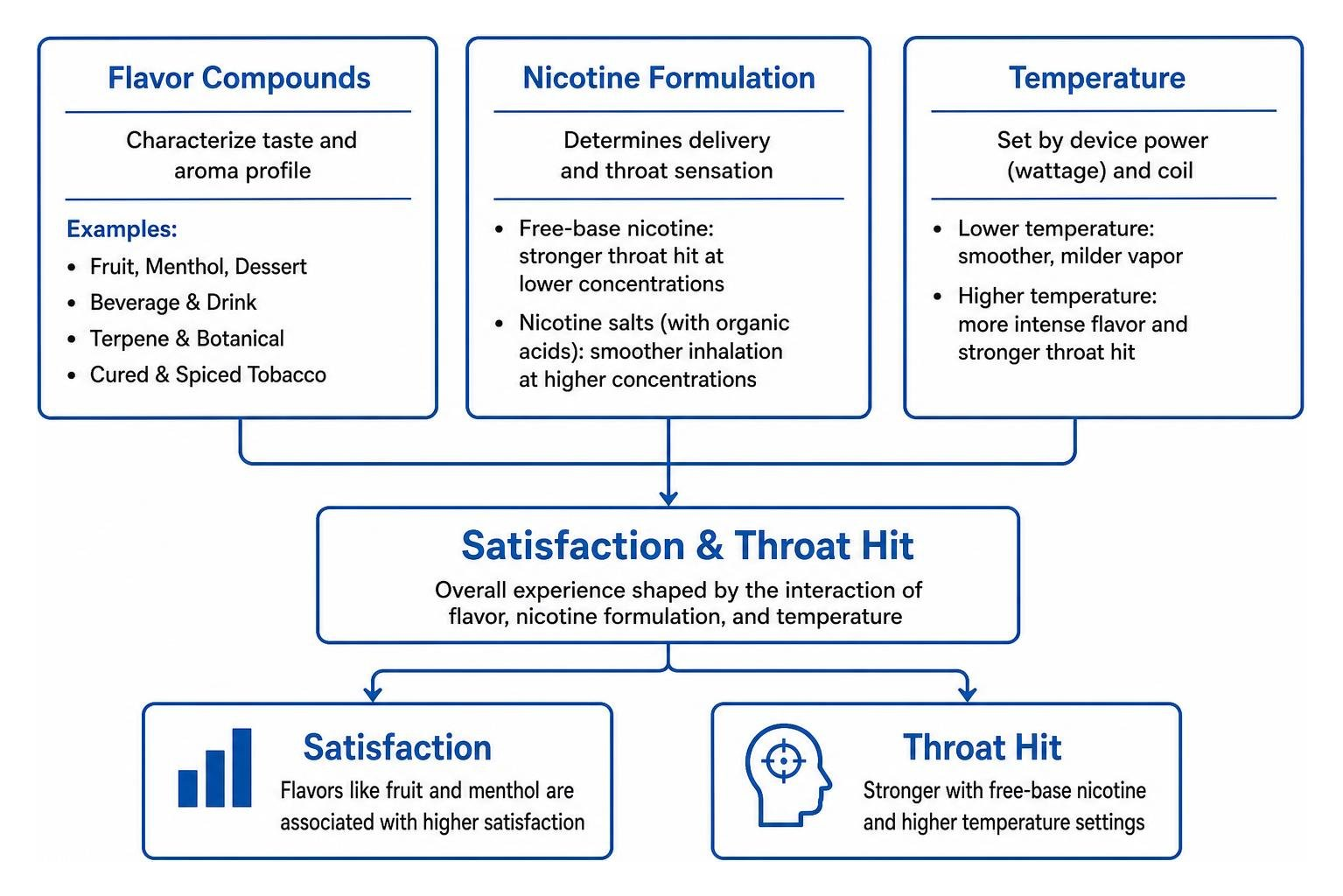
However, higher sensory palatability also impacts consumption patterns. Users of non-tobacco flavored products demonstrate 2.23 times higher odds of reporting perceived addiction relative to unflavored e-cigarette users. This relationship is shaped by the type of nicotine used in the e-liquid. Free-base nicotine provides a distinct throat hit at lower concentrations, whereas nicotine salts (formulated by adding organic acids such as benzoic acid) lower pH levels, enabling smooth inhalation of higher concentrations. Federal public health overviews from the NIDA research report on electronic cigarettes detail how these formulation variables alter user behavior and dependency profiles.
Chemical Composition and Safety of Common E Cigarettes Flavors
A standard e-liquid formulation consists of a base of USP-grade vegetable glycerin (VG) and propylene glycol (PG), pharmaceutical-grade nicotine, and flavoring chemicals. While many flavoring compounds are certified as Generally Recognized as Safe (GRAS) for ingestion, the toxicological dynamics change significantly when these chemicals are heated and aerosolized for pulmonary inhalation.
Toxicological assessments show that certain chemical classes carry known inhalation hazards:
- Diketones (Diacetyl, Acetyl Propionyl): Frequently used to produce buttery, custard, and pastry notes. Occupational and laboratory studies confirm that aerosolized diacetyl damages bronchiolar tissue and is linked to severe respiratory impairment.
- Aromatic Aldehydes (Benzaldehyde, Vanillin, Cinnamaldehyde): Commonly present in fruit, cherry, vanilla, and cinnamon formulations. Benzaldehyde acts as a known respiratory tract irritant with established inhalation toxicity thresholds across laboratory animal models.
- Thermal Degradation of Synthetic Sweeteners: A comprehensive scientific review of sweeteners and biological action in e-cigarettes highlighted that popular synthetic sweetening agents like sucralose degrade at temperatures above 119 °C (246 °F), releasing chlorinated degradation by-products such as 3-chloropropane-1,2-diol into the aerosol condensates.
Comprehensive toxicological tables compiled in the Overview of common flavorings and inhalation toxicity data illustrate the necessity of rigorous chemical screening to ensure that high-risk compounds are excluded from aerosolized products.
Longitudinal Use Patterns and Dependency Dynamics
Flavor preference remains remarkably stable over time, even as a user's device style and nicotine delivery efficiency change. In a 12-month longitudinal study on adolescent e-cigarette dependence and exposure, researchers tracked high-school participants to evaluate how consumption habits evolved (Vogel et al., 2019). While participants transitioned to more efficient high-nicotine delivery systems—leading to daily usage rates doubling from 14.5% to 29.8% and average urinary cotinine biomarkers rising from 2.1 ng/ml to 10.8 ng/ml—their fundamental flavor choices (dominated by fruit, mint, and candy) remained constant throughout the year.
For adult populations evaluating vapes flavored with non-tobacco profiles, flavor diversity serves a different role: it helps complete the transition away from combustible cigarettes by severing the sensory association with burning tobacco leaf. Public health evaluations continue to weigh these adult cessation benefits against the risks of youth initiation.
Regulations, Quality Standards, and Choosing Quality Products
Regulatory authorities across North America and Europe continuously evaluate e-cigarette flavor availability. In the United States, premarket tobacco product application (PMTA) requirements enforced by the FDA have restricted many pre-filled pod systems to tobacco and menthol profiles, while state and municipal jurisdictions enforce varying degrees of comprehensive flavor bans.
In October 2026, finding reliable, high-grade vapor products requires looking beyond marketing claims to verify production standards. Our vape flavor guide 2026 outlines the criteria consumers should use when evaluating formulations:
- USP-Grade Carrier Liquids: Verification that all PG and VG carriers meet United States Pharmacopeia standards for purity.
- Exclusion of High-Risk Additives: Complete absence of diacetyl, acetyl propionyl, acetoin, and Vitamin E acetate.
- Comprehensive Third-Party Lab Testing: Accessible Certificates of Analysis (COAs) verifying cannabinoid or nicotine purity, chemical safety, and screening for heavy metals or residual solvents.
- Thermal Stability Standards: E-liquids formulated to resist chemical degradation at standard operating coil temperatures.
At Zaleaf, our botanical and cannabinoid formulations undergo full-panel 3rd party testing. We focus on enhancing natural cannabinoid and terpene profiles to deliver distinct, mood-specific effects without synthetic fillers. All our products are 100% legal, require no ID or medical card, and are delivered with fast shipping and discrete packaging.
Frequently Asked Questions About E-Cigarette Flavors
What are the most popular e-cigarette flavors for new users?
Fruit-based e-liquids (such as mango, strawberry, and mixed berry) and crisp mint or menthol blends are the most popular choices for beginners. These profiles minimize the throat harshness associated with nicotine and offer a clean, familiar taste profile.
How do flavor choices impact user satisfaction and vaping experience?
Flavor significantly increases user satisfaction scores. Research shows that consumers using fruit, dessert, or menthol profiles have over 2.7 times higher odds of reporting high satisfaction than those using unflavored e-liquids. Flavors also alter perceived throat hit and improve overall palatability.
Are non-tobacco e-cigarette flavors safe to inhale?
While flavorings may be approved for ingestion, inhalation introduces distinct biological risks. Certain compounds, like diacetyl or thermal degradation products from sucralose, can cause respiratory irritation. Always review third-party laboratory reports to confirm that formulations are free from known respiratory toxins.
Conclusion
Choosing the right flavor profile requires balancing personal taste preferences with clean formulation standards. Whether you prefer vibrant fruit profiles, cool mint notes, or complex botanical terpenes, quality sourcing and ingredient transparency should always come first.
At Zaleaf, we specialize in pure, lab-verified formulas that harness natural plant terpenes for balanced aromatic depth and targeted effects. To learn more about modern formulation standards and flavor science, explore our educational guides and news updates.
References
Landry RL, Groom AL, Vu TT, Stokes AC, Berry KM, Kesh A, Hart JL, Walker KL, Giachello AL, Sears CG, McGlasson KL, Tompkins LK, Mattingly DT, Robertson RM, Payne TJ. "The role of flavors in vaping initiation and satisfaction among U.S. adults.." Addictive behaviors, 2019. PMCID PMC6903386. Vogel EA, Prochaska JJ, Ramo DE, Andres J, Rubinstein ML. "Adolescents' E-Cigarette Use: Increases in Frequency, Dependence, and Nicotine Exposure Over 12 Months.." The Journal of adolescent health : official publication of the Society for Adolescent Medicine, 2019. PMCID PMC6538303.