

The Ultimate Guide to Effective Dog Anxiety Treats

Finding Dog Anxiety Treats That Fit Your Dog

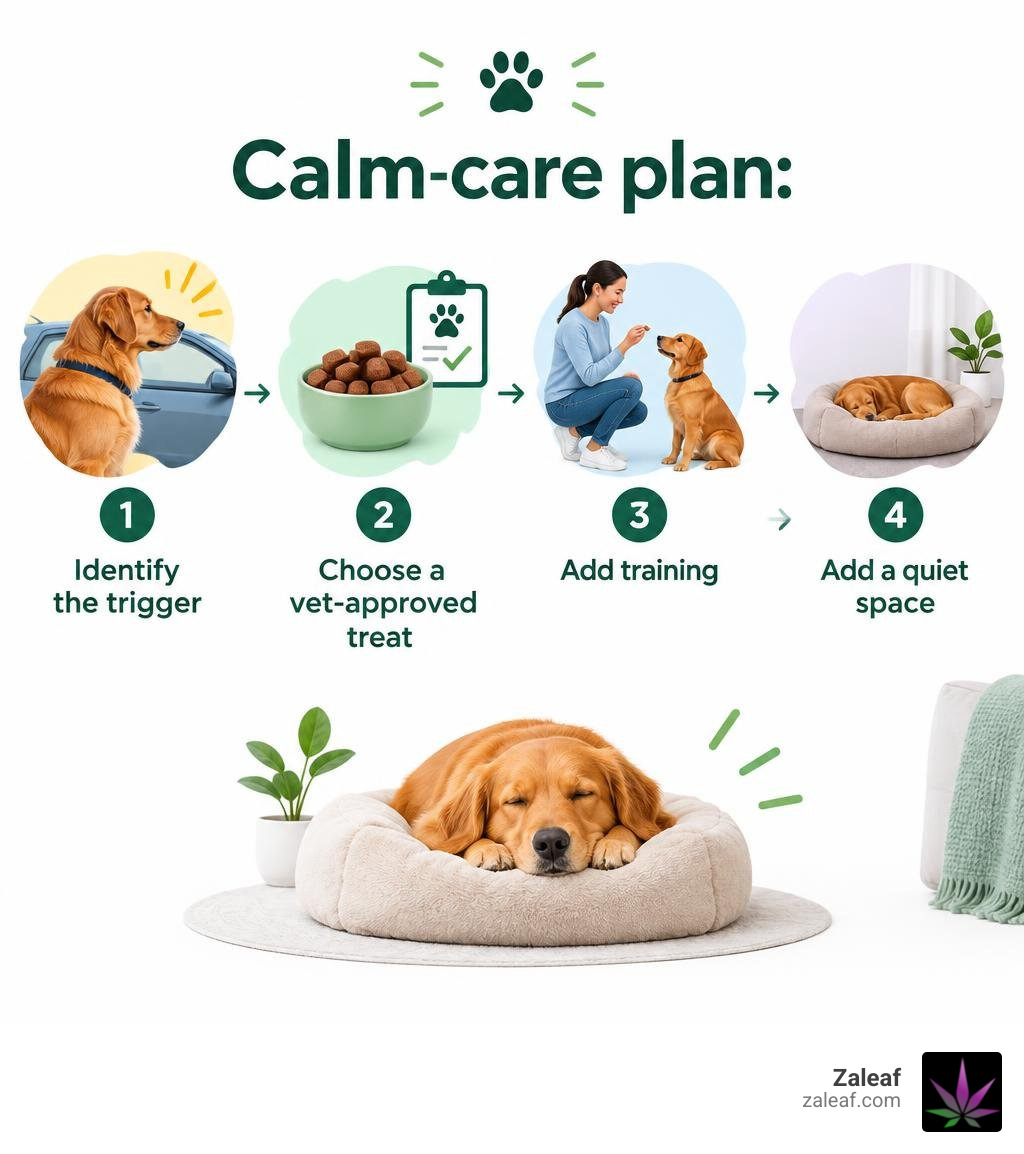
Dog anxiety treats may help some dogs with mild stress, but no single treat works for every dog. Start by identifying the trigger. For a predictable event, such as a car ride, ask your veterinarian about a treat intended for use before that event. For ongoing stress, ask about a daily-use option and a behavior plan. Check the label for your dog's weight, age, and allergies, and try a new treat at home before relying on it during a stressful moment.
Treats are one part of care, not a fix for fear. A quiet space and reward-based training can help alongside them. If your dog panics, hurts themselves, or struggles when left alone, talk with your veterinarian rather than trying more treats.
I'm Max Shemesh of Zaleaf. My experience with cannabinoid products informs how I assess claims about dog anxiety treats, but a veterinarian is the right person to guide your dog's care.
Dog Anxiety Treats: What They Are and How They Work
Calming treats for dogs are over-the-counter functional supplements formulated with specific amino acids, botanicals, vitamins, or probiotics designed to support relaxation. Unlike everyday biscuits, these functional foods serve a targeted purpose: moderating a dog's physiological stress response to external stressors.

These supplements are available in various formats to match canine preferences and administration needs:
- Soft Chews: Palatable, cold-pressed bites typically flavored with peanut butter, chicken, or bacon. These are the most common format and work well for dogs that view supplements as rewards.
- Powders & Meal Toppers: Dry blends or encapsulated formulations designed to be mixed directly into wet or dry food, ideal for daily maintenance or picky eaters.
- Lickable Treats & Spreadable Pastes: Designed for use on enrichment mats or fillable rubber toys, pairing active ingredients with the naturally soothing action of repetitive licking.
- Calming Dental Sticks: Functional chews that combine mechanical teeth cleaning with mild relaxing compounds.
Calming supplements do not produce instantaneous, sedative knock-out effects. Instead, they provide nutritional support to the central nervous system. Individual results vary widely depending on the dog's size, metabolism, baseline temperament, and the severity of the stressor.
Signs and Triggers of Anxiety in Dogs
Dogs communicate stress through subtle body language long before they escalate to vocal or destructive behaviors. Recognizing these early signals allows pet parents to intervene before an anxiety spiral takes hold.
Common situational triggers include:
- Loud Noise Phobias: Thunderstorms, fireworks displays, construction, and traffic backfires.
- Travel and Motion: Car rides, visits to the groomer, and unfamiliar boarding environments.
- Separation and Routine Shifts: Being left alone at home, moving to a new residence, or welcoming unfamiliar guests.
- Handling and Veterinary Visits: Physical restraint, medical examinations, and novel clinical scents.
How Calming Ingredients May Support Relaxation
The active compounds in dog anxiety treats work along several distinct biological pathways to promote equilibrium:
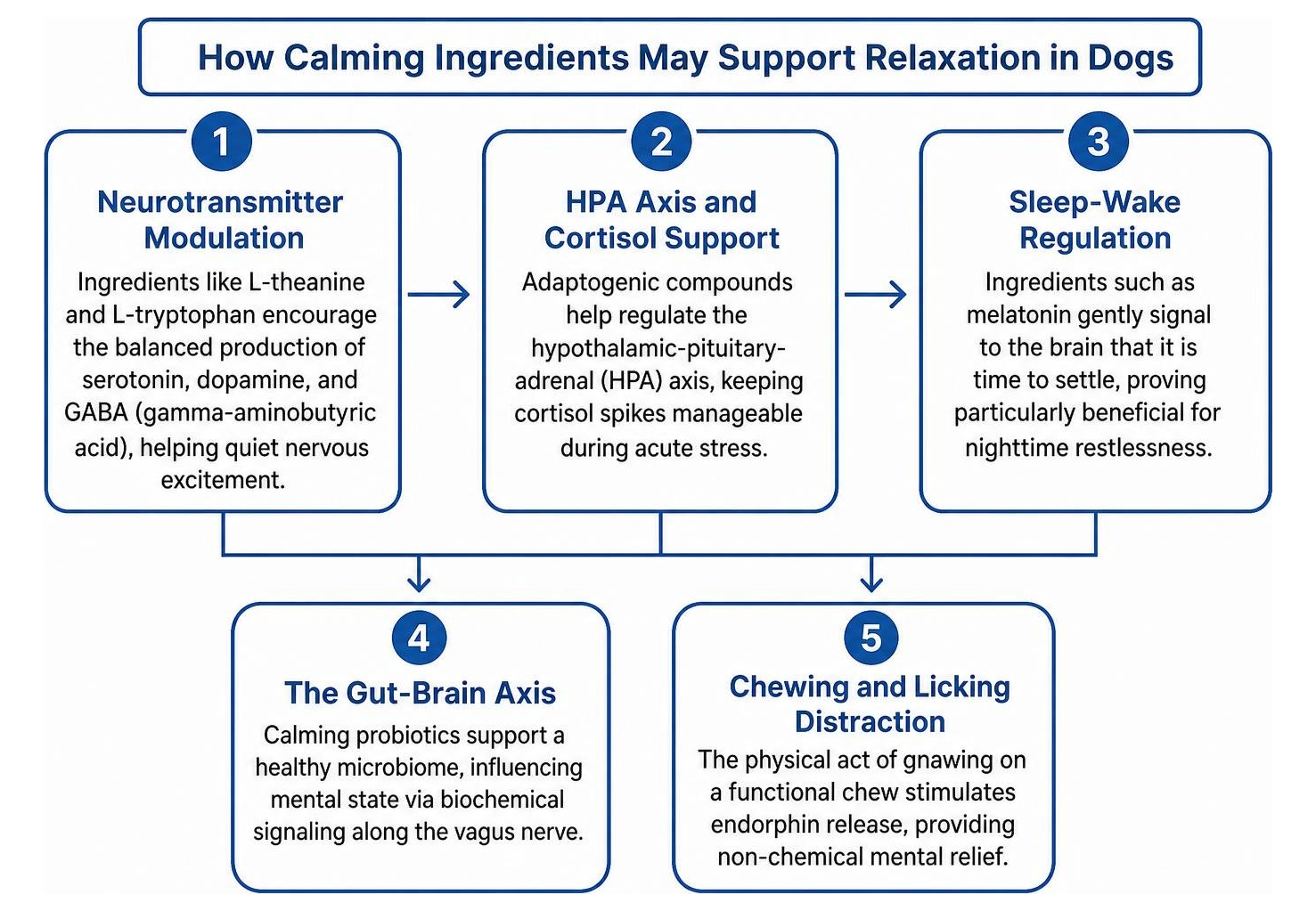
- Neurotransmitter Modulation: Ingredients like L-theanine and L-tryptophan encourage the balanced production of serotonin, dopamine, and GABA (gamma-aminobutyric acid), helping quiet nervous excitement.
- HPA Axis and Cortisol Support: Adaptogenic compounds help regulate the hypothalamic-pituitary-adrenal (HPA) axis, keeping cortisol spikes manageable during acute stress.
- Sleep-Wake Regulation: Ingredients such as melatonin gently signal to the brain that it is time to settle, proving particularly beneficial for nighttime restlessness.
- The Gut-Brain Axis: Calming probiotics support a healthy microbiome, influencing mental state via biochemical signaling along the vagus nerve.
- Chewing and Licking Distraction: The physical act of gnawing on a functional chew stimulates endorphin release, providing non-chemical mental relief.
Understanding these mechanisms reinforces realistic expectations: supplements ease tension at the margins, but they cannot erase ingrained phobias without concurrent behavioral modification.
Dog Anxiety Treat Ingredients: Evidence, Claims, and Cautions

The pet supplement aisle features dozens of botanicals and compounds, but scientific support is not equal across all labels. As detailed in the American Kennel Club's guidance on calming treats and alternatives, pet owners must distinguish between clinically evaluated ingredients and traditional herbal claims.
| Ingredient | Proposed Mechanism & Use | Evidence Level in Dogs | Key Safety Considerations |
|---|---|---|---|
| L-Theanine | Amino acid that crosses the blood-brain barrier to support GABA and dopamine | Moderate; multiple canine clinical trials | Non-sedating; well-tolerated across life stages |
| L-Tryptophan | Essential amino acid precursor to serotonin and melatonin synthesis | Moderate; studied for chronic stress and travel | Do not combine with prescription SSRIs without veterinary approval |
| Alpha-Casozepine (Casein) | Bioactive peptide derived from milk protein with GABA-mimetic activity | Moderate; proven soothing effects in anxious dogs | Safe; check dairy sensitivity in highly allergic dogs |
| Melatonin | Neurohormone regulating circadian rhythms and evening relaxation | Moderate for sleep and situational noise aversion | Can interact with hormone pathways; verify exact microgram dosage |
| Calming Probiotics (B. longum) | Modulates the gut-brain connection to reduce stress behaviors over time | Emerging/Moderate; studied in proprietary canine trials | Requires 6 to 8 weeks of daily use; cost considerations |
| Ashwagandha | Adaptogenic root (Withania somnifera) modulating cortisol and HPA axis | Emerging in pets; extensive human data | Avoid in pregnant dogs; monitor liver values with chronic use |
| Chamomile & Passionflower | Traditional botanicals thought to provide mild muscle relaxation | Low in dogs; primarily extrapolated from human usage | Potential gastrointestinal upset or plant allergies |
| Valerian Root | Botanical traditionally used as a mild herbal sedative | Low/Anecdotal; limited canine pharmacokinetic data | Strong odor; high doses may cause lethargy or paradoxical excitement |
Ingredients With Some Research in Dogs
A select group of active compounds has undergone controlled evaluation in canine behavioral studies:
- L-Theanine: Found naturally in green tea, this amino acid promotes relaxation without causing drowsiness. Research indicates it helps dogs cope with separation anxiety and thunderstorm phobias by enhancing alpha-wave brain activity.
- L-Tryptophan: Because a dog's body cannot synthesize this essential amino acid, it must be supplied through diet or supplementation. It serves as the building block for serotonin, moderating mood and reactivity.
- Casein (Alpha-Casozepine): Derived from milk proteins, this peptide mimics the calming effect puppies experience during nursing. Clinical trials demonstrate measurable reductions in fear-based barking and pacing.
- Melatonin: Produced by the pineal gland, synthetic melatonin is widely used to manage noise phobias and nocturnal pacing in senior dogs dealing with cognitive changes.
- Calming Probiotics: Strains such as Bifidobacterium longum (BL999) influence the autonomic nervous system via the gut-brain axis, helping dogs maintain stable heart rates during environmental stress.
Note on Study Limitations: Much of the available literature investigates isolated active ingredients at specific dosages rather than commercially finished, multi-ingredient chew products.
Popular Ingredients With Less Certain Evidence
Many commercial treats rely on complex blends of traditional herbs. Ingredients like chamomile, passionflower, lemon balm, and ginger root possess long histories in holistic medicine, but dedicated canine clinical trials remain scarce.
While these herbs generally demonstrate wide safety margins when formulated appropriately, their presence on a label does not guarantee potent anti-anxiety action. Furthermore, proprietary blends that conceal individual milligram amounts make it difficult to determine whether a treat delivers a biologically meaningful serving.
Hemp Seed, CBD, and THC Are Not Interchangeable
Cannabis- and hemp-derived ingredients are frequently confused on product packaging, yet they represent distinctly different compounds:
- Hemp Seed Powder & Hemp Seed Oil: Extracted strictly from the seeds of the industrial hemp plant (Cannabis sativa). Hemp seed contains no active cannabinoids (neither CBD nor THC). Instead, it provides a rich dietary source of omega-3 and omega-6 fatty acids, supporting brain health and skin integrity. For a detailed breakdown of seed-based formulations, review our guide to pet hemp chews.
- Cannabidiol (CBD): A non-intoxicating cannabinoid extracted from the aerial parts, leaves, and flowers of the hemp plant. CBD interacts with the mammalian endocannabinoid system (ECS), helping support nervous system balance and physiological resilience under stress. Pet parents interested in how cannabinoid profiles function can read the basics of pet CBD treats.
- Tetrahydrocannabinol (THC): The primary psychoactive compound found in high concentrations in marijuana. Dogs possess a significantly higher density of CB1 receptors in their brains than humans, making them exceptionally sensitive to THC toxicity. Dog calming treats must be formulated exclusively from compliant hemp extracts with verifiable non-detectable or legal trace THC levels.
Always consult your veterinarian before introducing any cannabinoid supplement, and confirm that the manufacturer provides a comprehensive Third-Party Certificate of Analysis (COA) confirming safety and potency.
How to Choose and Use Dog Anxiety Treats Safely
Selecting the right calming supplement requires matching the product's active ingredients to your dog's specific trigger, age, and physical condition.
Key evaluation factors include:
- Accurate Weight-Based Dosing: Dosages must scale accurately with body mass. A 10-pound Italian Greyhound processes active compounds differently than an 85-pound Golden Retriever.
- Dietary Intolerances: Many soft chews utilize beef liver, chicken meal, or wheat binders for palatability. If your dog suffers from food allergies, select hypoallergenic, plant-based, or grain-free alternatives.
- Third-Party Verification: Look for products bearing the National Animal Supplement Council (NASC) Quality Seal. The NASC audits facilities for strict quality control, ingredient verification, and accurate labeling.
How Quickly Do Dog Anxiety Treats Work?
Onset times and duration vary fundamentally based on whether a product is designed for acute situational stress or daily behavioral maintenance.
| Product Type | Intended Use Case | Typical Time to Onset | Duration of Effect | Administration Strategy |
|---|---|---|---|---|
| Fast-Acting Situational Chews | Thunderstorms, fireworks, vet visits, car rides | 30 to 60 minutes | 4 to 8 hours | Administer prior to the onset of the stressor; perform a baseline trial at home |
| Daily Behavioral Supplements | Generalized anxiety, separation distress, ongoing reactivity | 2 to 4 weeks (cumulative) | Continuous baseline support | Administer daily with meals at the same time each day |
| Calming Probiotic Powders | Chronic gut-brain stress, digestive nervousness | 6 to 8 weeks | Continuous baseline support | Daily meal topper; requires consistent microbial colonization |
Actionable Advice: Never test a fast-acting calming chew for the first time during an active crisis like a major thunderstorm. Administer a trial dose on an ordinary, low-stress afternoon to evaluate your dog's individual tolerance, ensure no digestive upset occurs, and monitor for excessive drowsiness.
Are Dog Anxiety Treats Safe for Daily Use?
Most over-the-counter calming treats formulated with L-theanine, B-vitamins, or adaptogens are safe for long-term daily use when administered according to label directions. However, several safety guidelines apply:
- Adhere to Maximum Servings: Giving extra chews will not produce faster relaxation and may cause loose stools, vomiting, or lethargy.
- Puppies Under Six Months: Young puppies have developing metabolic and neurological systems. Prioritize positive socialization and crate games over supplements unless directly approved by your veterinarian.
- Senior Dogs and Pre-existing Conditions: Older dogs with compromised hepatic or renal function may clear compounds more slowly.
- Drug Interactions: If your dog currently takes prescription behavior medications (such as fluoxetine, trazodone, or clomipramine), discuss all supplements with your vet to avoid compounding serotonin levels.
Red Flags to Check on a Product Label
To protect your pet from ineffective or contaminated formulas, screen packaging for these warning signs:
- Undisclosed Proprietary Blends: Blends that lump all herbs together without listing exact milligram amounts per chew.
- Unrealistic "Miracle Cure" Claims: Any supplement claiming to "permanently eliminate separation anxiety" or "cure severe aggression" violates regulatory standards.
- Missing Manufacturer Contact Information: Legitimate brands provide verifiable batch numbers, lot codes, and accessible customer support.
- Harmful Additives: Ensure the formula is entirely free from xylitol (a sweetener highly toxic to dogs) and artificial preservatives.
When Treats Aren’t Enough: Alternatives and Veterinary Care
Calming supplements represent only one component of a modern, multi-modal behavioral wellness plan. When dealing with moderate to severe distress, physical tools and environmental modifications provide critical support.
When to Discuss Anxiety With a Veterinarian
You should schedule a comprehensive veterinary behavioral assessment if your dog exhibits any of the following clinical signs:
- Self-injurious behaviors (chewing paws, breaking teeth on crates, damaging claws attempting to escape).
- Severe panic, incessant vocalization, or destructive distress when left alone.
- Anorexia (refusing all high-value food) during routine environmental changes.
- Aggression driven by fear or resource guarding.
In severe cases, a veterinarian or board-certified veterinary behaviorist can help assess the dog's needs and discuss an appropriate care plan.
What to Do If a Calming Treat Doesn’t Help
If a supplement produces no noticeable improvement after appropriate administration:
- Track and Log Responses: Note the time of administration, the specific stress trigger, and observed behaviors in a journal.
- Do Not Exceed Dosing Independently: Increasing the chew count outside label specifications will not resolve behavioral panic and risks digestive distress.
- Review the Pattern With Your Veterinarian: Share your notes about triggers, timing, and behavior changes to help guide next steps.
Frequently Asked Questions About Dog Anxiety Treats
Do calming treats work for every dog?
No. Calming treats are most effective for mild situational stress or as an adjunct tool for low-level nervousness. Dogs suffering from severe panic, deep-seated trauma, or genetic noise phobias rarely experience complete relief from nutritional supplements alone.
How long can calming-treat effects last?
For acute, situational soft chews, effects typically persist for 4 to 8 hours depending on your dog's metabolism, hydration, and whether the treat was given on an empty or full stomach. Daily-use formulations and calming probiotics work by establishing a steady metabolic baseline rather than a finite hourly window.
Can calming treats solve severe anxiety on their own?
No. Calming treats are supportive tools, not a standalone solution for severe anxiety. A veterinarian can help assess persistent or worsening signs and guide appropriate next steps.
Conclusion
Supporting an anxious dog requires patience, consistency, and a personalized care strategy. Over-the-counter calming treats can serve as valuable tools for taking the edge off mild stress, car rides, and noisy evenings—provided you choose research-backed ingredients, verify independent quality standards, and consult your veterinarian.
When you are ready to introduce high-quality botanical and hemp options into your dog's wellness routine, explore Zaleaf’s pet-treat collection. We specialize in enhancing cannabinoid and terpene profiles for mood-specific effects, and all of our 100% legal cannabis and pet products undergo rigorous third-party testing for safety and purity. With fast shipping, discreet packaging, and no ID or medical card required, supporting your pet's everyday balance is straightforward and reliable.