

The Highs and Lows of Delta-8 THC
What Are Delta-8 Effects? A Quick Guide Before You Dive In
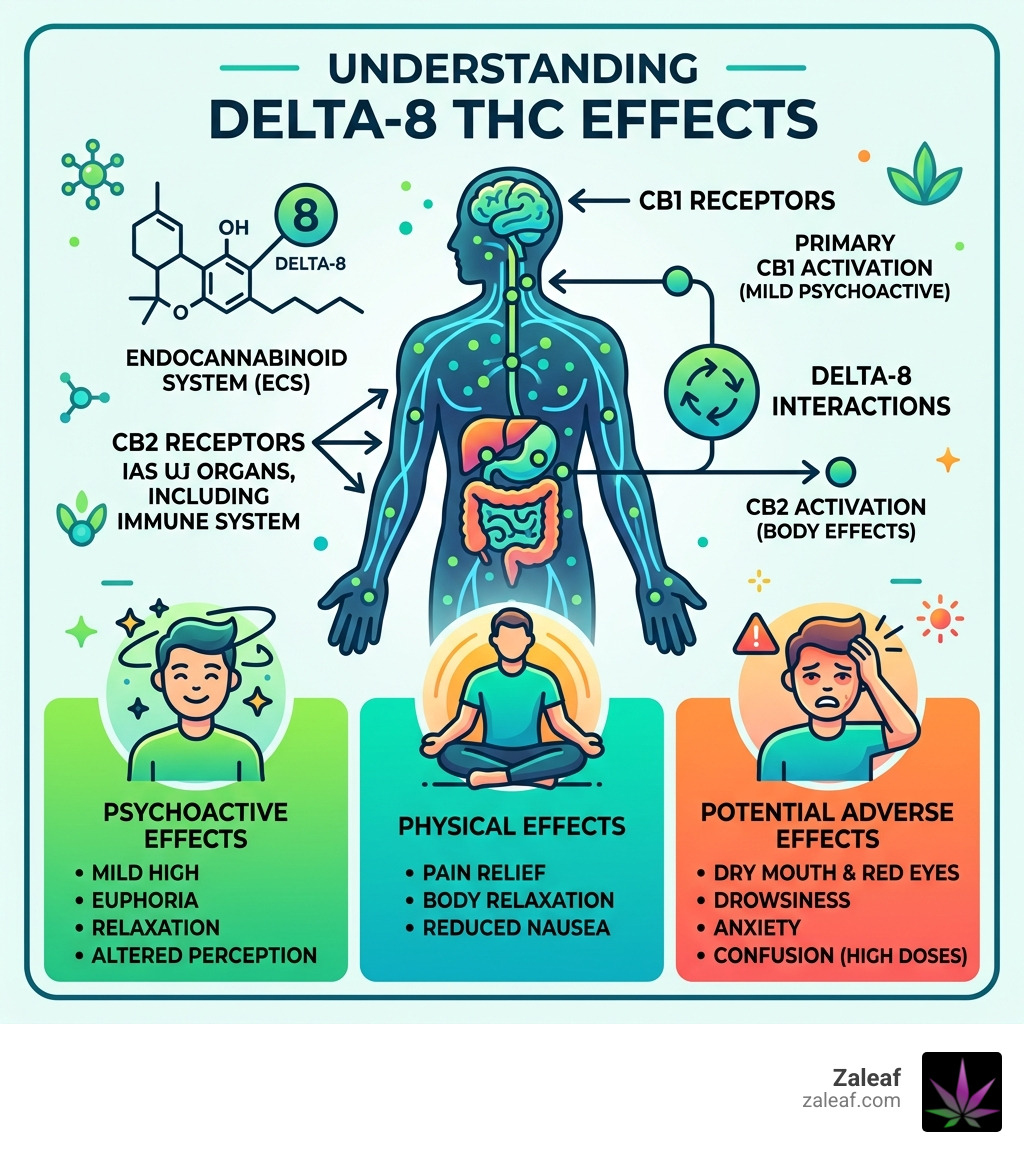
Delta-8 effects include a mild psychoactive high, relaxation, euphoria, and pain relief — but also potential side effects like dry mouth, anxiety, and in some cases, more serious reactions.
Here's a fast overview:
| Effect Type | What to Expect |
|---|---|
| Psychoactive | Mild high, euphoria, altered perception |
| Physical | Relaxation, pain relief, reduced nausea |
| Side Effects | Dry mouth, red eyes, drowsiness, anxiety |
| Severe Reactions | Hallucinations, vomiting, confusion (usually from high doses) |
| Duration | 2-4 hours (vaping) to 6-8 hours (edibles) |
Delta-8 THC is a naturally occurring cannabinoid found in hemp and cannabis plants. It's closely related to delta-9 THC — the main compound in traditional marijuana — but produces a noticeably milder high. Most products on the market today are made by chemically converting hemp-derived CBD, which is why understanding what's actually in your product matters so much.
It's become one of the fastest-growing segments of the hemp industry. And with that growth has come a flood of questions — and real concerns — about safety, quality, and what delta-8 actually does to your body.
This guide breaks all of that down clearly, so you can make an informed decision.
I'm Max Shemesh, owner and CEO of Zaleaf, and I've spent years working hands-on in the hemp and cannabinoid industry helping customers navigate the full range of delta-8 effects with confidence. Throughout this guide, I'll share what the research actually shows — the good, the bad, and the nuanced.
Defining Delta-8 THC vs. Delta-9 THC
To understand the delta-8 effects you might feel, we first have to look at the chemistry. Delta-8 and delta-9 are "isomers." This means they have the exact same chemical formula, but their atoms are arranged slightly differently.
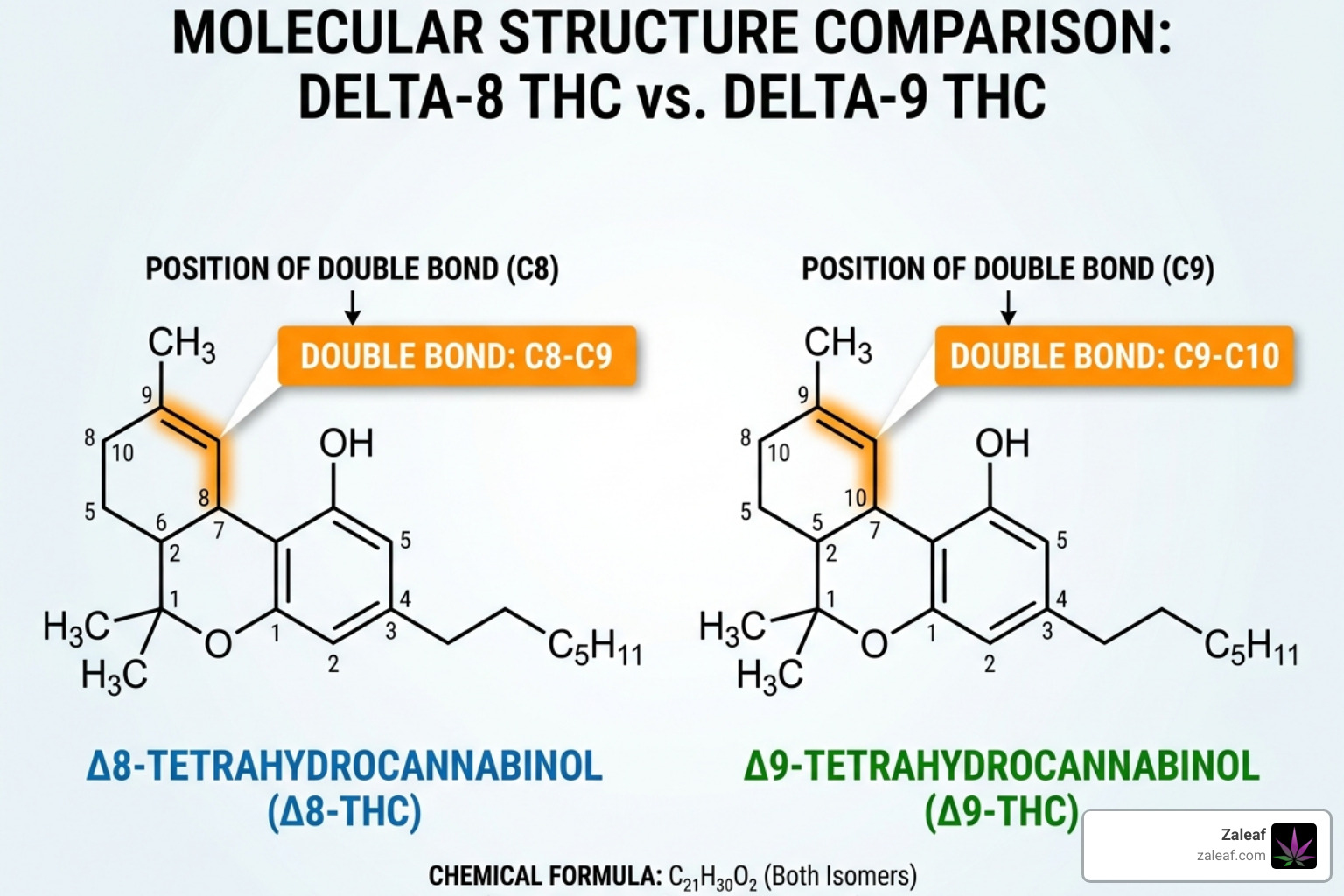
The big difference is the location of a specific double bond in their carbon chain. In delta-9, that bond is on the 9th carbon; in delta-8, it’s on the 8th. It sounds like a tiny detail, but this shift changes how the molecule fits into your brain's receptors. Think of it like a key that almost fits the lock perfectly but turned just a fraction—it still opens the door, but with a bit less force.
According to Δ8-Tetrahydrocannabinol, delta-8 is generally considered to be about half as potent as delta-9. This is why many people call it "diet weed" or "cannabis light." For a deeper dive into the science without the headache, check out our guide on Understanding Delta 8 versus THC Without Getting Lost in Chemistry.
Because delta-8 binds less to the CB1 receptors in your central nervous system, users often report a "clearer" high. While delta-9 can sometimes lead to "couch-lock" or intense paranoia, delta-8 tends to offer a more manageable experience for those who find traditional marijuana too overwhelming.
Understanding the Physiological Delta-8 Effects
When you consume delta-8, it travels through your bloodstream and eventually reaches your endocannabinoid system (ECS). This is a complex network of receptors (CB1 and CB2) that helps regulate everything from your mood and memory to your appetite and pain levels.
The primary delta-8 effects stem from its interaction with CB1 receptors located in the brain. This interaction triggers a release of dopamine, the "feel-good" chemical, which creates the characteristic euphoric high. However, because delta-8 is a "partial agonist" (it doesn't fully activate the receptor the way delta-9 does), the intensity is dialed back.
Medical summaries like the Delta-8-Tetrahydrocannabinol (Delta-8-THC) Overview from WebMD note that while it shares many properties with its more famous cousin, the way it modulates the nervous system is unique. It’s not just about getting high; it’s about how the compound interacts with your body's natural chemistry to alter perception and physical sensation.
Common Psychoactive Delta-8 Effects
What does it actually feel like? For the vast majority of users, the experience is described as a "happy medium" between CBD and delta-9. You get the therapeutic relaxation of hemp with a gentle, uplifting buzz.
- Euphoria: A general sense of well-being and happiness.
- Relaxation: A physical "melting" sensation that helps with stress and tension.
- Clearheadedness: Unlike delta-9, many users find they can still focus on tasks or hold conversations without feeling "foggy."
- Nausea Reduction: Delta-8 has strong anti-emetic properties. In fact, a 1995 study showed a 100% success rate in reducing nausea for children undergoing cancer treatments.
- Pain Relief: By interacting with CB2 receptors, delta-8 can help dampen inflammatory signals.
For those curious about how these properties can be used for more than just a fun Saturday night, we've explored the therapeutic side in Delta 8 For Wellness A Comprehensive Look At Its Therapeutic Uses.
Adverse Side Delta-8 Effects and Risks
We have to be honest: it’s not all sunshine and rainbows. Because delta-8 is psychoactive, it carries risks, especially if you take too much. The most common "nuisance" side effects include dry mouth (cottonmouth) and red, itchy eyes.
However, more significant delta-8 effects can occur, particularly with high doses or unregulated products:
- Anxiety and Paranoia: While less common than with delta-9, it can still happen.
- Short-term Memory Impairment: You might find yourself forgetting what you were saying mid-sentence.
- Grogginess: Some users report a "weed hangover" the next day, feeling sluggish or foggy.
- Cannabinoid Hyperemesis Syndrome (CHS): This is a rare condition associated with long-term, heavy use that causes severe, repeated vomiting.
According to Recovered.org's guide on side effects, many of these adverse reactions are the result of "over-serving" yourself. Because edibles can take up to two hours to kick in, many people make the mistake of taking a second dose too early.
Manufacturing Risks and Safety Concerns
This is the most critical part of the delta-8 conversation. Delta-8 exists naturally in the cannabis plant, but only in tiny, trace amounts. It is not cost-effective to extract it directly. Instead, almost all the delta-8 you see in stores is "semi-synthetic."
Manufacturers take CBD (which is abundant in hemp) and use strong acids—like toluene or p-toluenesulfonic acid—to isomerize it into delta-8 THC. This process requires a skilled chemist and a clean laboratory.
The FDA has issued warnings because some "basement" manufacturers use unsafe chemicals or fail to properly "wash" the final product. This can leave behind:
- Residual Solvents: Chemicals that shouldn't be ingested.
- Heavy Metals: Lead or mercury from low-quality extraction equipment.
- Unknown By-products: Sometimes the chemical reaction creates "mystery" cannabinoids that haven't been studied.
At Zaleaf, we eliminate these risks by ensuring every batch undergoes rigorous 3rd party testing. We want you to enjoy the delta-8 effects without worrying about what else might be in the jar. For a deeper look at why testing is a non-negotiable, see our article Unpacking Delta 8: What You Need to Know.
Public Health Trends and Legal Status
The rise of delta-8 has been meteoric. Because the 2018 Farm Bill legalized hemp and its derivatives (as long as they contain less than 0.3% delta-9 THC), a legal loophole was created. This has led to delta-8 being sold in gas stations and convenience stores, often with very little oversight.
This lack of regulation has led to some concerning statistics regarding accidental exposure, particularly among children who mistake colorful gummy packaging for candy.
| Exposure Statistic | Data Point |
|---|---|
| Total Poison Control Cases (2021-2025) | 10,434 |
| Youth Usage (12th Graders, 2023) | 11.4% |
| Pediatric Exposures (<18 years old) | 41% of total cases |
| Hospitalization Rate (FDA Adverse Events) | 55% required intervention |
These numbers are a wake-up call. As we discuss in The Delta 8 Dilemma: Legal Status Explained, many states—including New York, Colorado, and Florida—have moved to either ban or strictly regulate these products to protect public health. The Cleveland Clinic emphasizes that the "unexpected intoxication" from mislabeled products is one of the biggest drivers of ER visits.
Frequently Asked Questions about Delta-8
Does delta-8 show up on a drug test?
Yes. This is a major point of confusion. Most standard drug tests (like urine screenings) are not looking for delta-9 specifically; they are looking for THC metabolites. Because delta-8 and delta-9 are so chemically similar, your body breaks them down into many of the same compounds. If you have a drug test coming up, it is best to assume you will test positive. Detection windows can last up to 30 days for frequent users.
Is delta-8 safe for pregnant individuals?
The short answer is no. There is a profound lack of research on how delta-8 affects fetal brain development. Most health authorities, including the FDA and CDC, strongly advise against using any THC products—including delta-8—while pregnant or breastfeeding. Always consult with a medical professional before introducing any cannabinoid into your routine during pregnancy.
How long do the effects of delta-8 last?
It depends entirely on how you take it.
- Vaping/Smoking: Onset is almost immediate (1-5 minutes). The effects peak quickly and usually wear off within 2 to 4 hours.
- Edibles (Gummies/Brownies): Onset takes 30 to 90 minutes. However, the delta-8 effects are much more intense and can last anywhere from 6 to 8 hours. Your metabolism, body weight, and whether you've eaten recently also play huge roles in the duration.
Conclusion
Navigating delta-8 can feel like a balancing act. On one hand, you have a compound that offers a manageable, clearheaded high with genuine potential for pain and nausea relief. On the other, you have an unregulated market where quality can vary wildly from one shop to the next.
At Zaleaf, we believe the key to a positive experience is transparency. We specialize in enhancing cannabinoid and terpene profiles to create mood-specific effects that actually do what they say on the label. All of our products are 100% legal, 3rd party tested for purity, and shipped in discrete packaging right to your door—no medical card or ID required.
Whether you're looking for deep relaxation or a creative spark, we're here to help you find the right fit. Explore our latest guides and legal cannabis products to learn more about how to use these powerful plant compounds safely and effectively.