

The Definitive Guide to Legal Cannabis Vapes in Texas
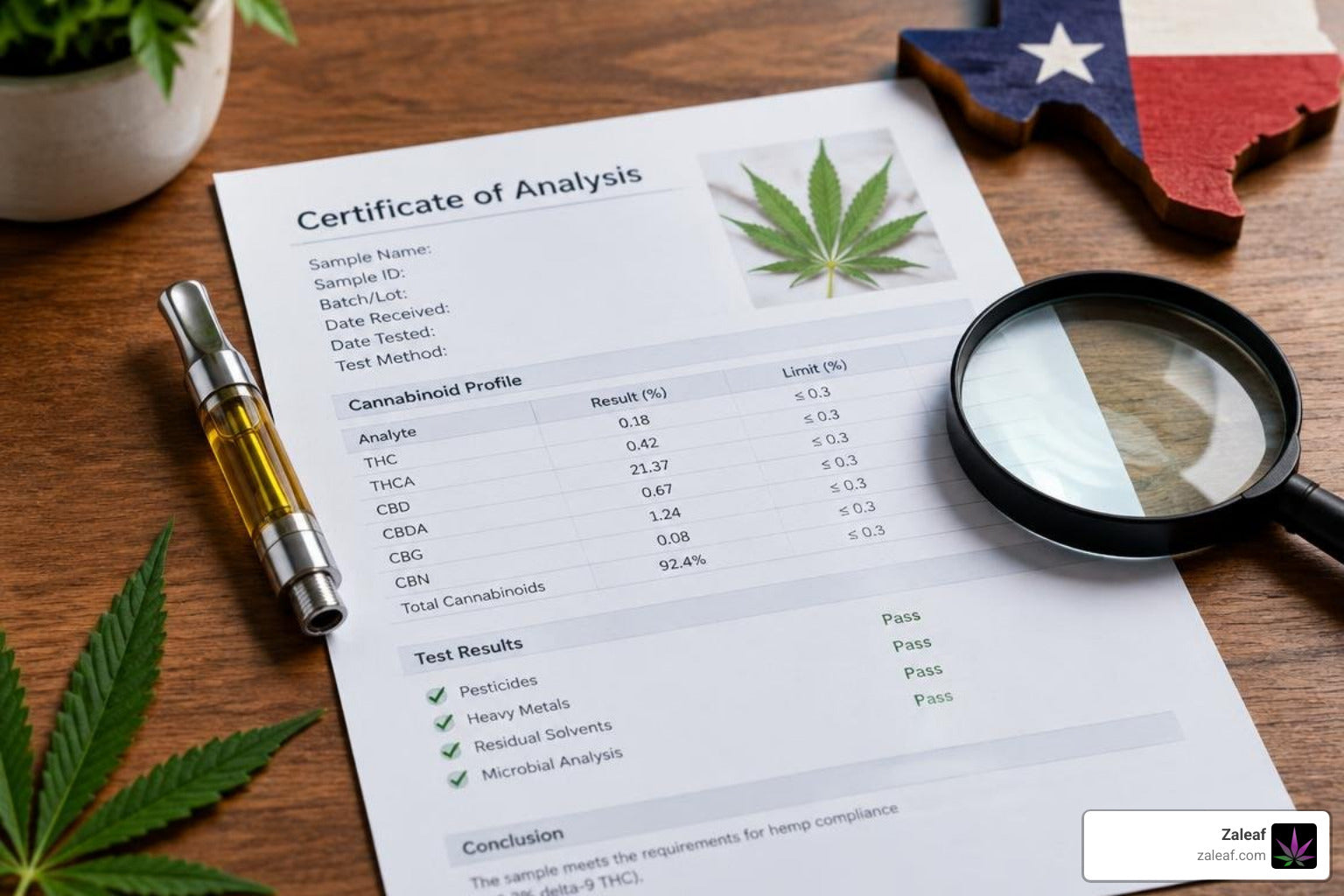
Navigating the Legal Framework for Cannabis Vapes Texas
Cannabis vapes are legally accessible in Texas only as physician-prescribed medical formulations through the Texas Compassionate Use Program (TCUP) or as federally compliant hemp-derived extracts containing less than 0.3% Delta-9 THC, while unregulated THC vape concentrates remain illegal Penalty Group 2 felonies. Understanding the regulatory environment in Texas requires looking past catchy marketing claims and examining the state's strict statutory framework. The Lone Star State maintains a firm line between state-authorized medical treatments and all other forms of cannabis consumption. Because Texas did not legalize adult-use recreational cannabis alongside many other states, understanding Texas THC vape pen laws is critical for anyone exploring modern inhalation options.
In Texas, the law distinguishes sharply between whole-plant cannabis flower and manufactured concentrates. While possessing small amounts of traditional cannabis flower (under two ounces) is categorized as a Class B misdemeanor, concentrated cannabis extracts—such as hash oil, vape oils, wax, and shatter—fall under a much harsher statutory umbrella.
Under the Texas Controlled Substances Act (Texas Health and Safety Code Chapter 481), non-exempt THC concentrates are placed into Penalty Group 2. This classification changes the stakes entirely:
- Any measurable amount under 1 gram: State Jail Felony (punishable by 180 days to 2 years in state jail and fines up to $10,000).
- 1 gram to 4 grams: Third-Degree Felony (2 to 10 years in prison).
- 4 grams to 400 grams: Second-Degree Felony (2 to 20 years in prison).
- Over 400 grams: First-Degree Enhanced Felony (10 to 99 years or life imprisonment).
Because vape cartridges contain concentrated liquid extracts, an illicit cart weighing just 1 gram of total fluid can easily trigger a felony charge rather than a simple misdemeanor citation.
Evolution of Cannabis Vapes Texas Regulations (2025–2026)
The legal status of inhalable cannabis products underwent dramatic structural changes leading into 2026. Prior to late 2025, patients in the Texas Compassionate Use Program (TCUP) were restricted strictly to low-THC ingestible oils, tinctures, topicals, and lozenges. Inhalation of any medical cannabis was completely prohibited under the original 2015 statute.
That landscape transformed through two pivotal legislative developments:
- House Bill 46 (Effective September 2025): Representing the most expansive update to TCUP since its inception, HB 46 formally authorized medical cannabis inhalation via state-regulated vaporizers, metered-dose inhalers, and nebulizers. This provided patients suffering from severe acute symptoms with a rapid-onset delivery method.
- Senate Bill 2024: Concurrently, Texas lawmakers targeted the rapidly growing, unregulated retail market for hemp-derived cannabinoid vapes (including Delta-8, Delta-10, and converted THCA cartridges sold at convenience stores and smoke shops). For an in-depth breakdown of the legislative debate, read about the Senate Bill 2024 retail ban details.
Under SB 2024, the state made the marketing, distribution, and commercial retail sale of all cannabinoid vape products a Class A misdemeanor, subjecting non-compliant store owners to up to one year in county jail and fines up to $4,000 per violation. While the bill focused penalties on commercial sellers, it dramatically cleared physical shelves across the state, leaving TCUP as the primary state-monitored framework for legal in-state inhalation hardware.
Texas Compassionate Use Program (TCUP) vs. Illicit THC Concentrates
The operational core of legal medical cannabis in Texas is the Compassionate Use Registry of Texas (CURT). Unlike states that distribute physical identification cards, Texas manages all patient authorizations through a secure online registry maintained by the Texas Department of Public Safety (DPS).
When a registered physician determines that medical cannabis is clinically appropriate, the prescription—including the exact dosage, delivery form (such as an approved vaporizer), and dispensing limit—is entered directly into CURT. Licensed dispensing organizations access this centralized database to verify credentials before filling any order.
Importantly, TCUP explicitly excludes the combustion (smoking) of raw cannabis flower. Only pharmaceutical-grade extracts delivered via Department of State Health Services (DSHS) approved vaporization hardware or metered inhalers are legal. Possessing untested THC oil cartridges bought outside of this registry bypasses all patient protections and exposes individuals directly to Penalty Group 2 felony charges.
| Attribute | TCUP Medical Inhalation | Retail Storefront Hemp Vapes (SB 2024) | Illicit Street THC Cartridges | Compliant Online Hemp Extract Inhalers |
|---|---|---|---|---|
| Legal Framework | Texas Health & Safety Code Ch. 487 (HB 46) | SB 2024 Commercial Ban | Texas Penal Code / Penalty Group 2 | 2018 Federal Farm Bill Compliant |
| Medical Script Needed? | Yes (CURT Registered Doctor) | No | No | No |
| Permitted In-Store Sale? | Yes (State-Licensed Dispensaries Only) | Prohibited (Class A Misdemeanor) | Prohibited (Felony Distribution) | N/A (Direct-to-Consumer / Online) |
| Combustion Allowed? | No (Vaporization/Nebulization only) | No | No | No |
| Lab Testing Requirements | Mandatory State Batch Testing | Unregulated / Inconsistent | None (High Contamination Risk) | Mandatory Full-Panel ISO Third-Party COA |
| Possession Classification | Legal for Registered Patients | Non-Criminalized for End Users | State Jail Felony to 1st Degree Felony | Fully Legal Federal Derivative (<0.3% D9-THC) |
Senate Bill 2024 and Retail Hemp Inhalation Restrictions
When Texas originally enacted House Bill 1325 in 2019, it legalized the cultivation and processing of consumable hemp products containing less than 0.3% Delta-9 THC on a dry-weight basis. That statutory window sparked a massive retail market across the state, with nearly 9,000 businesses registering to sell consumable hemp items.
Over time, manufacturers developed techniques to isomerize hemp-derived CBD into psychoactive compounds like Delta-8 THC, Delta-10 THC, and THCA. These products quickly flooded convenience stores, gas stations, and smoke shops in the form of disposable e-cigarettes and 510-thread vape cartridges.
Senate Bill 2024 was engineered specifically to shut down this unregulated over-the-counter vape sector. Lawmakers raised concerns over youth access, deceptive packaging, and the absence of standardized safety testing for heating elements and thinning agents.
Under SB 2024:
- The Ban Focuses on Commercial Activity: The law criminalizes the manufacturing, distribution, retail stocking, and marketing of inhalable cannabinoid vape products by brick-and-mortar storefronts in Texas.
- Misdemeanor Penalties: Store operators caught selling these devices face Class A misdemeanor charges, bringing up to a $4,000 fine and up to 12 months in jail per offense.
- Consumer Impact: The legislation was structured around commercial trade rather than criminalizing consumer possession of hemp derivatives that meet federal standards. However, it effectively removed unvetted vape cartridges from Texas retail shelves.
Campus Drug Policies and Law Enforcement Field Testing
University campuses throughout Texas enforce strict zero-tolerance policies regarding all electronic nicotine delivery systems and cannabis products, regardless of changes in state-level medical statutes.
At institutions like Texas Christian University (TCU), policies prohibit all forms of vaping and tobacco use across campus grounds, residence halls, and athletic facilities. Furthermore, campus drug policies strictly forbid the possession of any cannabinoid substance.
Students should be aware of modern law enforcement protocols:
- Field Testing Kits: Campus police departments and municipal law enforcement utilize advanced chemical field-test kits and portable spectrometers capable of distinguishing between inert e-liquids and concentrated cannabinoids in seconds.
- Felony Arrest Realities: If a student is found on campus with an unauthorized THC vape pen that tests positive for controlled concentrates, officers are empowered under state law to execute an immediate custodial arrest on felony charges.
- Administrative Ramifications: Beyond criminal charges, university disciplinary boards routinely enforce mandatory drug education, disciplinary probation, suspension, expulsion, and the loss of institutional scholarships or campus housing.
Consumer Health Considerations and Hardware Quality
The crackdown on unregulated vape hardware stems in part from genuine public health considerations. The rapid heating of poor-quality e-liquids, heavy-metal hardware, and non-cannabinoid additives presents serious physiological risks.
When evaluating any vaporized extract, several health factors are critical:
- Heavy Metal Leaching: Cheap vape cartridges often utilize sub-par solder or low-grade alloys in their center posts. When heated repeatedly, toxic metals like lead, nickel, and cadmium can leach directly into the oil and enter the lungs.
- Coil Construction (Ceramic and Glass vs. Cotton): Low-end wicks burn easily, releasing acrid byproducts and particulate matter. High-grade cartridges feature inert medical-grade ceramic cores or pure glass heating elements designed to vaporize viscous oils evenly without combustion. Discover how we maintain strict safety standards and clean hardware across all product lines.
- Cannabinoid Hyperemesis Syndrome (CHS): Regular, high-dose consumption of high-potency concentrates without medical guidance can trigger CHS, a condition characterized by recurrent bouts of severe nausea, abdominal cramping, and intractable vomiting.
- Adolescent Neurological Risks: Concentrated cannabinoids can affect brain development in individuals under the age of 25, influencing memory retention, executive function, and emotional regulation.
How Patients Access Approved Medical Cannabis Inhalers via TCUP
For Texas residents dealing with debilitating chronic health challenges, obtaining medical cannabis through the Texas Compassionate Use Program provides a physician-supervised, legally protected route.
The path to accessing approved inhalation devices follows a structured clinical procedure:
- Physician Evaluation: Patients meet with a board-certified physician who is formally registered with CURT. Consultations are routinely conducted via secure telemedicine platforms, making access straightforward for residents in both urban centers and rural areas.
- Registry Documentation: If the physician determines that the patient meets state eligibility guidelines and that the clinical benefits outweigh the risks, the doctor logs the specific prescription details into the state CURT portal.
- No Physical Paper Cards: Texas does not mail plastic ID cards. The patient's state ID or driver's license serves as their identifier, allowing licensed dispensaries to verify the active prescription in real time.
- Dispensary Delivery or Pickup: The patient contacts one of the state's licensed dispensing organizations to purchase their prescribed DSHS-approved formulation and compatible inhalation device.
Qualifying Conditions Under House Bill 46
To be eligible for TCUP enrollment, a patient must be a permanent Texas resident diagnosed with one of the state-approved medical conditions. Following the passage of HB 46, qualifying conditions include:
- Chronic Pain: Intractable pain where conventional pain management therapies or prescription medications have proven ineffective or cause intolerable side effects.
- Post-Traumatic Stress Disorder (PTSD): Clinically diagnosed PTSD causing significant functional impairment.
- Neuropathic Conditions & Spasticity: Severe muscle spasms, peripheral neuropathy, and neurological disorders.
- Multiple Sclerosis (MS) & Amyotrophic Lateral Sclerosis (ALS).
- Epilepsy & Seizure Disorders: Including intractable forms of pediatric and adult epilepsy.
- Autism Spectrum Disorder: Diagnosed conditions across varying severity levels.
- Cancer: Diagnoses involving severe nausea, cachexia, or chronic pain management.
- Incurable Neurodegenerative Diseases: Parkinson's disease, Alzheimer's disease, Huntington's chorea, and related progressive conditions.
- Terminal Illnesses: Any medical condition with a prognosis of limited life expectancy.
DSHS-Approved Vaporizer Devices and Prescription Process
To protect patient safety and prevent black-market contamination, the Texas Department of State Health Services (DSHS) maintains a specialized registry of approved inhalation hardware.
Under state rules, medical cannabis oils cannot be vaporized using arbitrary, unregulated batteries or open-tank systems bought at smoke shops. Approved medical hardware focuses on closed-loop, metered-dose systems to maintain strict dosing control:
- DSHS-Approved Vaporizer Models: Specialized closed-loop hardware systems, tamper-resistant cartridges, and standardized medical platforms that have undergone rigorous state testing and approval for distribution by licensed TCUP dispensaries.
- Metered-Dose Inhalers (MDIs): Aerosolized inhalers similar to asthma medications that deliver exact milligram quantities per actuation without heating elements.
- Medical Nebulizers: Clinical liquid-mist delivery systems designed for respiratory intake in clinical or home-care settings.
Physicians must explicitly specify the delivery mechanism within the CURT registry. This ensures that every medical patient receives standardized hardware tested for particulate purity and thermal stability.
Safe Sourcing and Quality Standards for Inhalation Devices
Whether acquiring medical formulations through state dispensaries or ordering federally compliant hemp extracts online, safety should always be the top priority. The global vape market has seen its share of contamination issues, making independent verification essential.
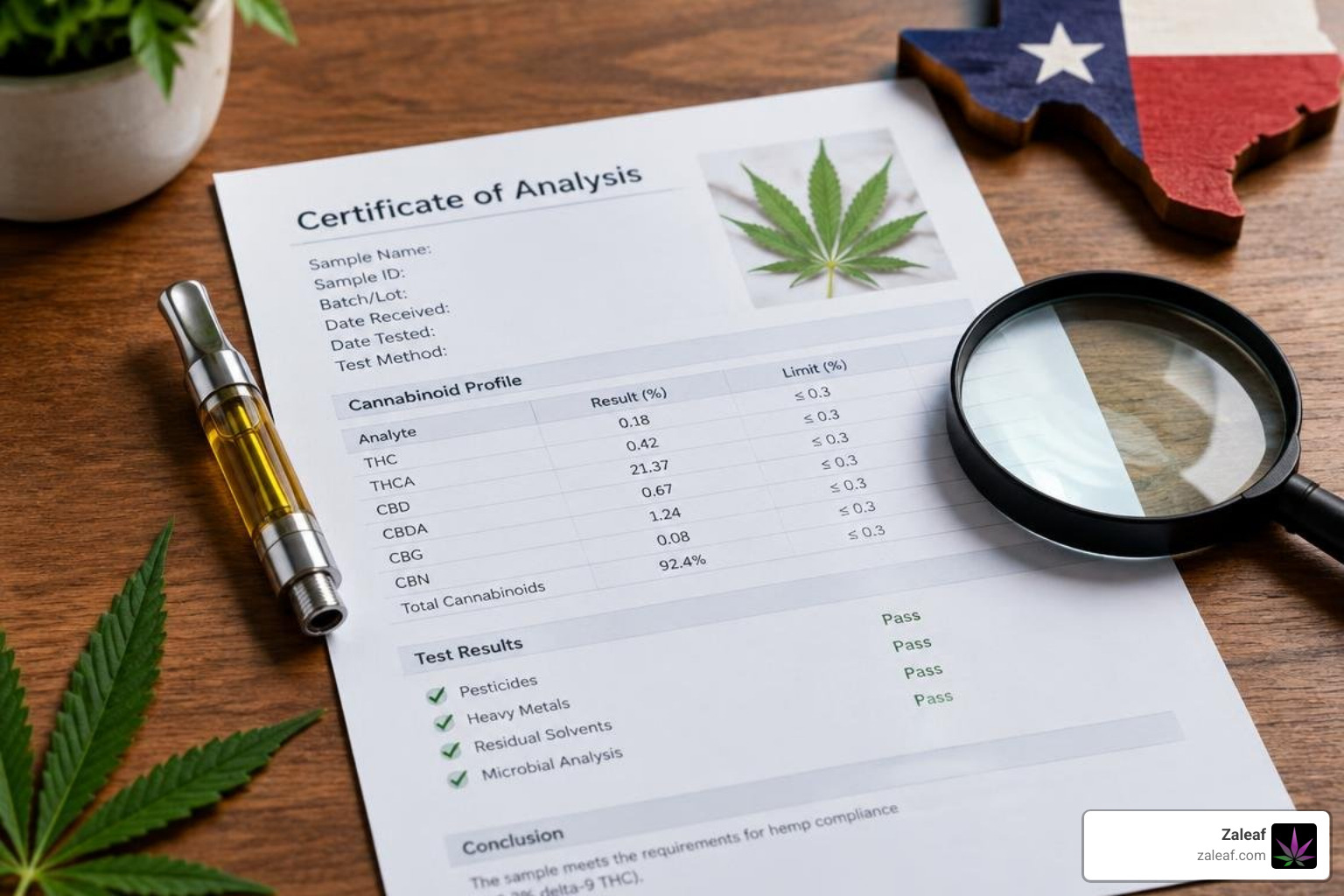
We believe that consumers deserve absolute transparency. Every batch of oil should be accompanied by an easily accessible, batch-specific Certificate of Analysis (COA) conducted by an independent, ISO/IEC-accredited testing laboratory.
When browsing our curated cannabis vape devices and lab-verified tested vape cartridges, you can confirm that every product uses high-grade, food-contact-safe components, medical ceramic heating elements, and clean botanical extracts.
Sourcing High-Quality Cannabis Vapes Texas Residents Can Trust
Because Senate Bill 2024 restricted physical storefronts from stocking cannabinoid vapes across Texas, many consumers turn to direct-to-consumer online platforms operating in compliance with the 2018 Federal Farm Bill.
At Zaleaf, our direct-to-consumer model delivers reliable, top-tier wellness products straight to your doorstep. Here is what sets our process apart:
- 100% Federally Compliant Hemp Formulations: All of our extracts are derived from legal industrial hemp containing less than 0.3% Delta-9 THC on a dry-weight basis.
- No Medical Card or In-Person Doctor Visit Required: You can browse and order our compliant formulas without scheduling clinical consultations or registering with state databases.
- Enhanced Mood-Specific Cannabinoid & Terpene Profiles: We don't just supply standard distillates; our products are formulated with targeted terpene blends to support relaxation, creative focus, sleep, or elevated mood.
- Mandatory 3rd-Party ISO Lab Testing: Every single batch undergoes full-panel testing for purity, potency, and hardware safety. You can inspect the COA before buying.
- Fast, Discrete Packaging: We process and ship orders quickly in plain, secure packaging that protects your privacy every step of the way.
To learn more about selecting the right device for your lifestyle, check out our guide on how to choose the best THC vape pens available online.
Frequently Asked Questions About Texas Vape Regulations
Are THC vape pens classified as a felony in Texas?
Yes. Under the Texas Health and Safety Code, illicit cannabis extracts and non-exempt THC concentrates are categorized under Penalty Group 2. Possessing even a single vape cartridge containing unauthorized THC concentrate is a State Jail Felony if the extract weighs under 1 gram. Penalties include 180 days to 2 years in state jail and fines up to $10,000. Registered TCUP patients using prescribed medical formulations in approved hardware are fully exempt from these criminal penalties.
Can TCUP patients legally vape medical cannabis anywhere in Texas?
No. While registered TCUP patients possess statutory protection against state prosecution, public consumption remains restricted. Patients are prohibited from using medical vaporizers in smoke-free zones, public school properties, universities, government facilities, or in moving vehicles. Medical cannabis should be stored in its original dispensary container with prescription labeling and used responsibly in private residences.
How did Senate Bill 2024 change buying vape cartridges in Texas stores?
Senate Bill 2024 prohibited the retail marketing, commercial distribution, and physical over-the-counter sale of consumable hemp vape products in Texas storefronts, classifying violations as Class A misdemeanors for retailers. While the law targeted merchant sales rather than end-user possession of federally compliant derivatives, it effectively cleared smoke shops and convenience store shelves of Delta-8 and related vape cartridges across the state.
Conclusion
The legal landscape surrounding vaporized cannabinoids in Texas has entered a new era. With House Bill 46 establishing a legal medical inhalation pathway through the Texas Compassionate Use Program, patients facing chronic pain, PTSD, and neurological challenges have access to physician-supervised, fast-acting relief through DSHS-approved devices. At the same time, Senate Bill 2024 has reshuffled the retail landscape, making it more important than ever to understand the legal boundaries and health implications of what you purchase.
Whether navigating medical registration via CURT or seeking legal, high-potency hemp options online, never compromise on safety, transparency, or hardware reliability. For a comprehensive legal breakdown, review our detailed guide on THC vape pen Texas legality to stay informed and protected.
At Zaleaf, we remain committed to setting the standard for purity, compliance, and convenience. We offer 100% legally compliant cannabinoid products backed by full-panel 3rd-party lab testing, mood-specific terpene profiles, and fast, discrete shipping—with no ID or medical card required. Explore our collections today to discover the difference that pure quality makes.