

An Essential Guide to Cannabis for Anxiety

Understanding Anxiety and Cannabis as a Potential Tool

Cannabis for anxiety has become a topic of growing interest as millions of Americans seek alternatives to traditional anxiety treatments. Here's what you need to know:
Quick Answer: Does Cannabis Help with Anxiety?
- CBD (cannabidiol) shows promise for reducing anxiety at all tested doses, without causing a "high"
- THC (tetrahydrocannabinol) has a biphasic effect: low doses may calm anxiety, while high doses can make it worse
- The ratio matters: CBD-dominant or balanced CBD:THC products are generally better for anxiety than high-THC products
- Evidence varies: Research shows potential benefits for GAD, social anxiety, and PTSD, but more clinical trials are needed
- Not for everyone: People with certain conditions or taking specific medications should avoid cannabis
Anxiety affects 31.1% of U.S. adults at some point in their lives, making it one of the most common mental health challenges. It manifests in several forms—Generalized Anxiety Disorder (GAD), Social Anxiety Disorder (SAD), Post-Traumatic Stress Disorder (PTSD), and Obsessive-Compulsive Disorder (OCD)—each with unique symptoms and triggers.
Traditional anxiety treatments work for many people, but they can come with side effects and don't work for everyone. This gap has led many to explore cannabis as a complementary option. The biological rationale lies in the endocannabinoid system (ECS), a complex network of receptors throughout your brain and body that helps regulate mood, stress response, and fear.
However, the relationship between cannabis and anxiety is complex. The same plant that helps one person relax might make another person feel more anxious. The key factors include the type of cannabinoids (THC vs. CBD), the dose, the ratio between compounds, and individual differences in biology and tolerance.
I'm Max Shemesh, Owner & CEO of Zaleaf, and I've spent years working with customers to help them find the right cannabinoid products for their wellness goals, including using cannabis for anxiety. My experience has shown me that quality, transparency, and proper guidance make all the difference in whether cannabis becomes a helpful tool or a frustrating experiment.
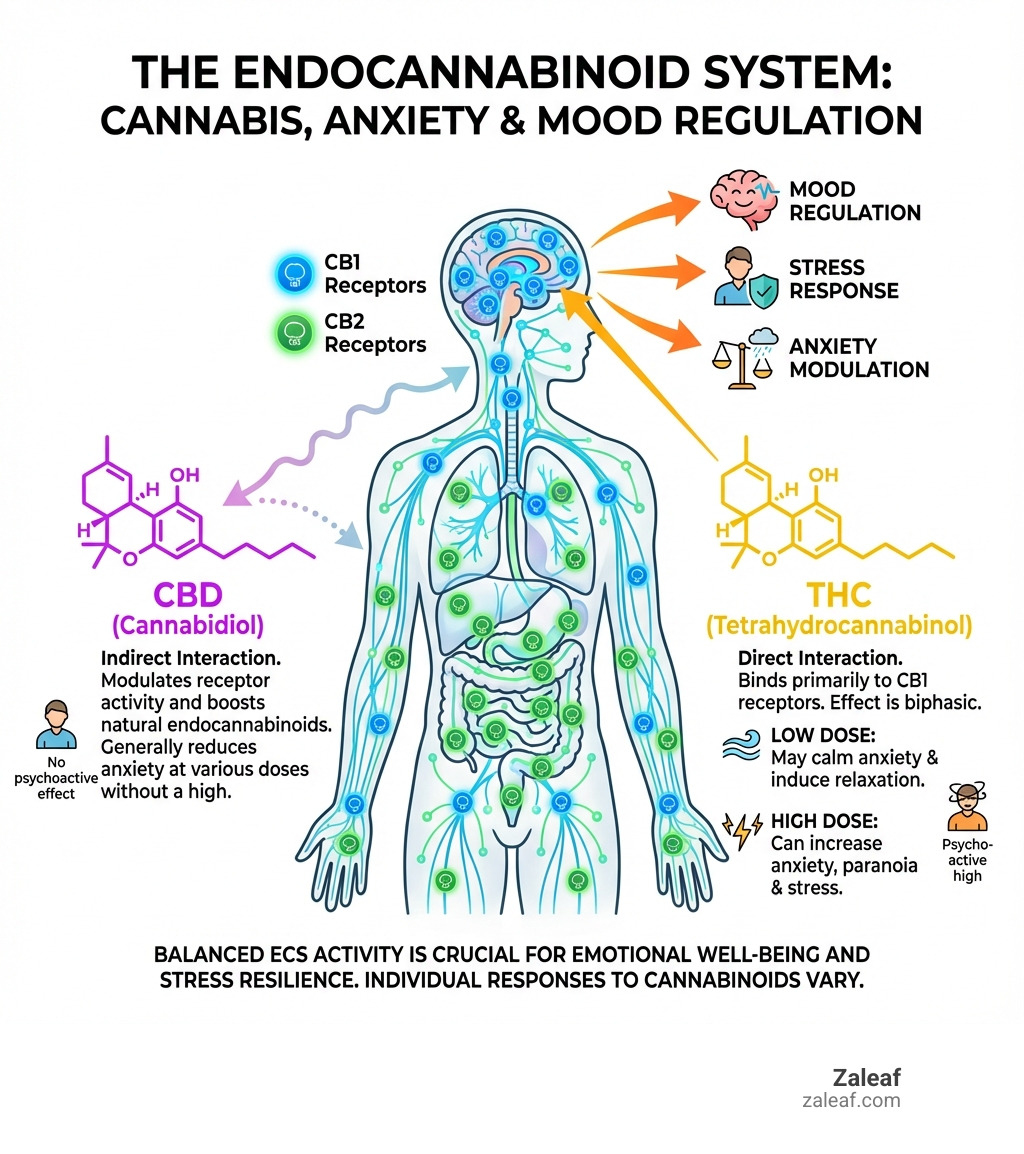
Anxiety is a prevalent mental health condition, defined as a disproportionate response of fear to a perceived threat. Different types of anxiety disorders vary in their pathophysiology, symptoms, and treatments. When we talk about cannabis for anxiety, it's crucial to understand how cannabinoids interact with our body's own systems. The endocannabinoid system (ECS) plays a vital role in regulating mood, stress, and fear responses. It's like our body's internal balancing act, and compounds from the cannabis plant, known as cannabinoids, can influence this system.
The Key Components: How THC, CBD, and Terpenes Affect Anxiety
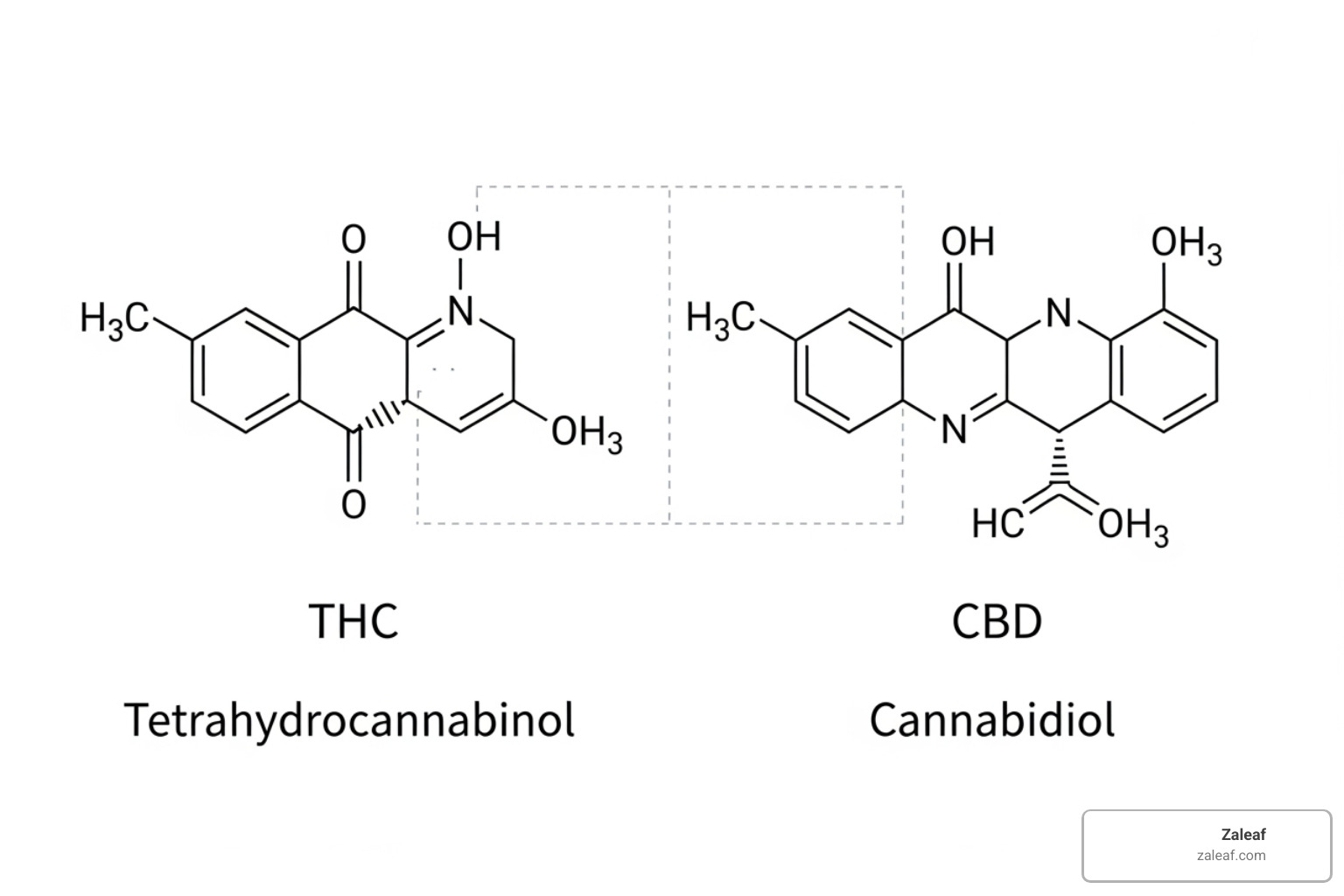
The cannabis plant is a treasure trove of compounds, but two superstars, THC and CBD, often steal the spotlight when discussing cannabis for anxiety. These two cannabinoids, along with other compounds like terpenes, create a unique symphony of effects within our bodies.
The self-medication hypothesis is a prominent theory in the discussion of cannabis for anxiety. This hypothesis suggests that individuals experiencing anxiety symptoms may turn to cannabis as a way to alleviate their distress. Indeed, many people report using marijuana to cope with anxiety, especially those with social anxiety disorder. This is often because they find immediate, albeit sometimes short-lived, relief.
The Biphasic Effect of THC
When it comes to the primary psychoactive component of cannabis, delta-9-tetrahydrocannabinol (THC), its effect on anxiety is a bit of a Jekyll and Hyde story. THC exhibits what we call a biphasic effect on anxiety. This means that the dose makes all the difference.
At lower doses, THC may actually yield calming outcomes, helping to reduce stress and promote relaxation. Many users describe a gentle euphoria and a sense of ease. However, this effect can quickly flip. Higher doses of THC can intensify anxiety symptoms, leading to feelings of panic, paranoia, and increased nervousness. Imagine trying to calm your nerves only to find yourself feeling more agitated and on edge – that's the higher-dose THC experience for some.
This is why, at Zaleaf, we always advocate for the "start low and go slow" principle, especially when exploring THC-containing products for anxiety. It allows you to gauge your individual response and find your personal sweet spot without tipping into uncomfortable territory.
The Importance of the CBD to THC Ratio
Enter cannabidiol (CBD), the non-psychoactive counterpart to THC. Unlike THC, CBD appears to decrease anxiety at all doses that have been tested, without producing the "high" sensation. More importantly, CBD plays a crucial role in mitigating some of THC's less desirable effects.
The ratio of CBD to THC is a critical factor when considering cannabis for anxiety. CBD can act as a buffer, reducing the potential for THC-induced anxiety and paranoia. For many, a balanced CBD:THC product or a CBD-dominant product offers a more predictable and often more comfortable experience for managing anxiety. Our goal at Zaleaf is to provide options with transparent cannabinoid profiles, empowering you to find the ratio that best suits your needs for calmness and well-being. CBD has been proven to have positive effects on stress and anxiety, and for many, it's a better alternative than high-THC marijuana for anxiety relief.
The Entourage Effect and Terpenes
Beyond THC and CBD, the cannabis plant contains hundreds of other compounds, including terpenes. These aromatic molecules are responsible for the distinct smells and flavors of different cannabis strains, but they do much more than just smell good. They contribute to what scientists call the "entourage effect," where cannabinoids, terpenes, and other plant compounds work synergistically to improve each other's therapeutic benefits.
For anxiety, specific terpenes have shown promising anxiolytic (anxiety-reducing) properties. One such terpene is d-limonene, commonly found in citrus fruits and many cannabis strains. Research suggests that d-limonene can significantly reduce THC-induced anxiety and paranoia in humans, and these anxiety-reducing effects actually increase with higher doses of d-limonene. Interestingly, d-limonene doesn't interfere with THC's other subjective, cognitive, or physiological effects. You can explore a study on d-limonene and THC's interaction here: https://doi.org/10.1016/j.drugalcdep.2024.111267.
Other terpenes like linalool (found in lavender) and myrcene (found in hops and mangoes) are also thought to possess calming and sedating effects, which could be beneficial for anxiety. At Zaleaf, we understand the power of these compounds, and our products are designed to improve specific cannabinoid and terpene profiles to help you find mood-specific effects.
The Evidence: What Research Says About Cannabis for Specific Anxiety Disorders
While anecdotal reports about cannabis for anxiety are widespread, we believe in looking at what current research suggests. The federal ban on cannabis has historically restricted scientific and medical research, leading to a lack of large-scale, placebo-controlled clinical trials. However, the landscape is changing, and new studies are continually shedding light on this complex relationship.

Despite these limitations, we are seeing promising preliminary evidence for cannabis's potential role in managing various anxiety disorders.
Generalized Anxiety Disorder (GAD)
Generalized Anxiety Disorder (GAD) is characterized by persistent and excessive worry about various aspects of life. For individuals struggling with GAD, the potential of medicinal cannabis is being explored. Some research indicates that medicinal cannabis may improve generalized anxiety disorder symptoms, general health-related quality of life, and sleep. A notable analysis from the UK Medical Cannabis Registry provides insights into clinical outcomes of medicinal cannabis therapy for GAD. You can find more details on this analysis here: https://www.tandfonline.com/action/showCitFormats?doi=10.1080/17512433.2022.2020640. These findings suggest a potential avenue for relief, offering hope for improved daily functioning and rest for those affected by GAD.
Social Anxiety Disorder (SAD)
Social Anxiety Disorder (SAD) involves intense fear of social situations, often leading to avoidance and significant distress. Interestingly, many people report using marijuana to cope with the overwhelming feelings associated with social anxiety disorder, highlighting the self-medication aspect. From a research perspective, CBD has shown particular promise here. Studies suggest that CBD can be helpful in reducing the overwhelming feelings associated with SAD. For instance, research on the neural basis of CBD's anxiolytic effects in generalized social anxiety disorder, including studies where CBD reduced anxiety induced by simulated public speaking tests, offers compelling insights. You can dig into the neural basis of CBD's anxiolytic effects here: https://journals.sagepub.com/doi/10.1177/0269881110379283. These findings suggest CBD could be a valuable tool for those struggling with social apprehension.
PTSD and OCD
Post-Traumatic Stress Disorder (PTSD) and Obsessive-Compulsive Disorder (OCD) are two other anxiety-related conditions where cannabis has garnered attention. For PTSD, preliminary research has shown that patients being treated with CBD capsules or sprays can reduce some symptoms such as flashbacks, irritability, and difficulty sleeping. This offers a potential pathway to better symptom management for individuals living with the aftermath of trauma.
In the case of OCD, inhaling cannabis can have short-term beneficial effects on symptoms like a reduction in compulsions, intrusions, and anxiety. This immediate relief can be significant for individuals experiencing acute distress. However, it's important to note a caveat: over time, individuals may develop a tolerance, potentially requiring higher doses to continue feeling less impact from the intrusions. This suggests that while cannabis might offer acute relief, it may not be a sustainable long-term solution without careful management. You can review acute effects of cannabis on OCD symptoms here: https://doi.org/10.1016/j.jad.2020.09.124. For both PTSD and OCD, more robust, long-term studies are needed to fully understand the efficacy and optimal usage of cannabis.
A Practical Guide to Using Cannabis for Anxiety
Navigating cannabis for anxiety can feel overwhelming, but with the right information and quality products, it can be a mindful path toward relief. At Zaleaf, we're dedicated to making this journey as clear and beneficial as possible.
Choosing Your Consumption Method
The method you choose to consume cannabis can significantly affect its impact on anxiety. Different methods offer varying onset times, durations, and overall experiences. Understanding these differences is key to finding what works best for you.
- Inhalation (Vaping): Zaleaf offers a range of vape pens designed for stress relief. Vaping provides the fastest onset of effects, usually within minutes, because cannabinoids are absorbed directly into the bloodstream through the lungs. This can be beneficial for acute anxiety attacks or when you need quick relief. However, the effects are typically shorter-lived.
- Ingestion (Edibles, Oils/Tinctures): Our edibles and oils offer a different experience. When you ingest cannabis, it's metabolized by your liver, leading to a slower onset (30 minutes to 2 hours) but often a longer-lasting and more generalized effect. This can be ideal for sustained anxiety management throughout the day or for promoting restful sleep.
Here's a quick comparison of consumption methods for Zaleaf products:
| Method | Onset Time | Duration | Pros | Cons |
|---|---|---|---|---|
| Vaping | Minutes | 1-3 hours | Fast relief, easy to dose | Shorter duration, potential respiratory irritation |
| Edibles | 30 min - 2 hours | 4-8 hours | Long-lasting effects, discreet | Slower onset, harder to titrate dose initially |
| Oils/Tinctures | 15-45 minutes | 4-6 hours | Moderate onset, flexible dosing, discreet | Taste may be an issue for some |
Product Consistency and Guidance
We understand that consistency is crucial when using cannabis for anxiety. That's why Zaleaf is committed to providing products with transparent and consistent cannabinoid and terpene profiles. All our products undergo rigorous 3rd party testing to ensure what's on the label is what's in the product, guaranteeing quality and safety. We believe that clear guidance and reliable products are essential for a positive experience.
Navigating Legal Access in New Jersey
For our customers in New Jersey, understanding the legal landscape for cannabis is important. New Jersey has established a legal framework for both adult-use (recreational) and medicinal cannabis. Notably, the New Jersey Medicinal Cannabis Program lists anxiety and PTSD as qualifying conditions, allowing patients with these diagnoses to access medical cannabis.
As Zaleaf offers 100% legal cannabis products, you can access our offerings with ease. We pride ourselves on fast shipping and discrete packaging, ensuring your privacy and convenience. Plus, with Zaleaf, no medical card is required for our legal products, broadening access to those seeking wellness solutions. To stay updated on the evolving regulations and news from your state, we recommend following the New Jersey Cannabis Regulatory Commission: https://twitter.com/NewJerseyCRC.
Safety, Risks, and Responsible Use
While cannabis for anxiety shows promise, it's not without its potential risks and side effects. Our goal is to empower you with knowledge for safe and responsible use.
Common potential side effects can include dizziness, dry mouth, and for some, an increase in paranoia or anxiety, especially with higher THC doses. Long-term risks associated with regular cannabis use can include the development of tolerance, where you need more of the substance to achieve the same effect, and dependence. In some cases, prolonged use can lead to Cannabis Use Disorder (CUD). A meta-analysis examining the association between anxiety and cannabis use or CUD can be found here: https://www.ncbi.nlm.nih.gov/pmc/articles/PMC4033998/. This research highlights that anxiety can predispose individuals to cannabis use as a method of self-medication.
Who should avoid using cannabis for anxiety?
Not everyone is a suitable candidate for cannabis for anxiety. We strongly advise certain individuals to avoid using cannabis due to increased risks:
- Adolescents and Young Adults: The developing brain is particularly vulnerable to the effects of cannabis. Chronic, heavy cannabis use, especially in adolescents, may be a risk factor for developing anxiety disorders and other mental health issues later in life.
- Individuals with a Personal or Family History of Psychosis: Cannabis, particularly high-THC products, can exacerbate symptoms or even trigger episodes in individuals predisposed to psychotic disorders like schizophrenia.
- Pregnant or Breastfeeding Individuals: There is insufficient research on the effects of cannabis on fetal development and infants. It's best to avoid use during these critical periods.
- People with Certain Cardiovascular Conditions: Cannabis can temporarily increase heart rate and blood pressure, which could be problematic for individuals with pre-existing heart conditions.
Potential Drug Interactions
Cannabis, especially CBD, can interact with various medications, potentially altering their effectiveness or increasing side effects. It's crucial to consult your doctor before combining cannabis with any prescription medications.
- Psychiatric Medications: Cannabis can interact with common anxiolytics and antidepressants. CBD is a known inhibitor of certain cytochrome P450 enzymes (CYP2C9, CYP2C19, CYP3A4) in the liver, which are responsible for metabolizing many of these drugs. This interaction could lead to higher-than-intended levels of your medication in your system.
- Blood Thinners: Cannabis may interact with blood thinners, potentially increasing the risk of bleeding.
- Sedatives: Combining cannabis with other sedatives can lead to excessive drowsiness and impaired coordination. Additionally, cannabis can exacerbate sedative side effects when taken with certain medications for anxiety.
Always have an open and honest conversation with your healthcare provider about your cannabis use, or plans for use, to ensure your safety and well-being.
Frequently Asked Questions about Cannabis for Anxiety
We often hear similar questions from our customers exploring cannabis for anxiety. Let's address some of the most common ones.
What's the best Zaleaf product for anxiety?
When considering the "best" Zaleaf product for anxiety, we recommend focusing on the cannabinoid and terpene profiles rather than generic strain names. For beginners or those sensitive to THC, high-CBD, low-THC Zaleaf products are often recommended. These offer the calming benefits of CBD without significant psychoactivity.
Look for products that feature terpenes like linalool for its relaxing properties, myrcene for its sedative effects, and caryophyllene for its potential to interact with cannabinoid receptors. Our products are formulated to improve these specific profiles, making it easier for you to find a product custom to your desired mood-specific effects. We always recommend starting with a low dose and observing your body's response.
Can I replace my anxiety medication with cannabis?
This is a critical question, and our answer is clear: Never stop or alter prescribed medication without consulting your doctor. While cannabis can be a valuable complementary tool for some individuals managing anxiety, it is not a direct replacement for physician-prescribed treatments. Your doctor can assess your specific health needs, potential drug interactions, and guide you on safely integrating cannabis into your overall wellness plan. We emphasize that professional medical advice is crucial for managing anxiety disorders.
What are the limitations of the current research on cannabis for anxiety?
It's important to be aware of the ongoing challenges in cannabis research. The federal prohibition on cannabis has historically created significant barriers, hindering large-scale, placebo-controlled clinical trials that are the gold standard for medical research. This means much of the current evidence, while promising, is often based on smaller observational studies, case series, or preclinical research.
Another limitation is the wide variability of cannabis products themselves. Differences in cannabinoid ratios, terpene profiles, and consumption methods make it difficult to compare findings across studies or to generalize results. We need more long-term data to fully understand the sustained effects, benefits, and potential risks of cannabis for anxiety over extended periods. Despite these limitations, the growing body of research continues to provide valuable insights, and we at Zaleaf are committed to staying informed and providing products backed by the best available science.
Conclusion: A Mindful Path Forward
The journey to managing anxiety is deeply personal, and exploring cannabis for anxiety can be a part of that path for many. We've seen that the relationship is nuanced, highlighted by the biphasic effect of THC—calming at low doses, potentially anxiety-inducing at high doses—and the consistent calming potential of CBD. The importance of specific dosage, the right CBD to THC ratios, and the synergistic power of terpenes cannot be overstated.
As you consider cannabis for your well-being, remember the core principles: consult a healthcare provider to ensure it's a suitable option for you, and always start with a low dose to understand your body's unique response. At Zaleaf, we stand by our commitment to quality, offering 3rd-party tested products with curated cannabinoid and terpene profiles designed to help you find your balance. We believe in transparency and empowering you with the knowledge to make informed choices.
Ready to explore a mindful approach to wellness? We invite you to explore Zaleaf's curated products for wellness: https://zaleaf.com/products.