

How to make the perfect cannabis coconut oil chocolate at home

The Perfect Cannabis Coconut Oil Chocolate Recipe: What You Need to Know
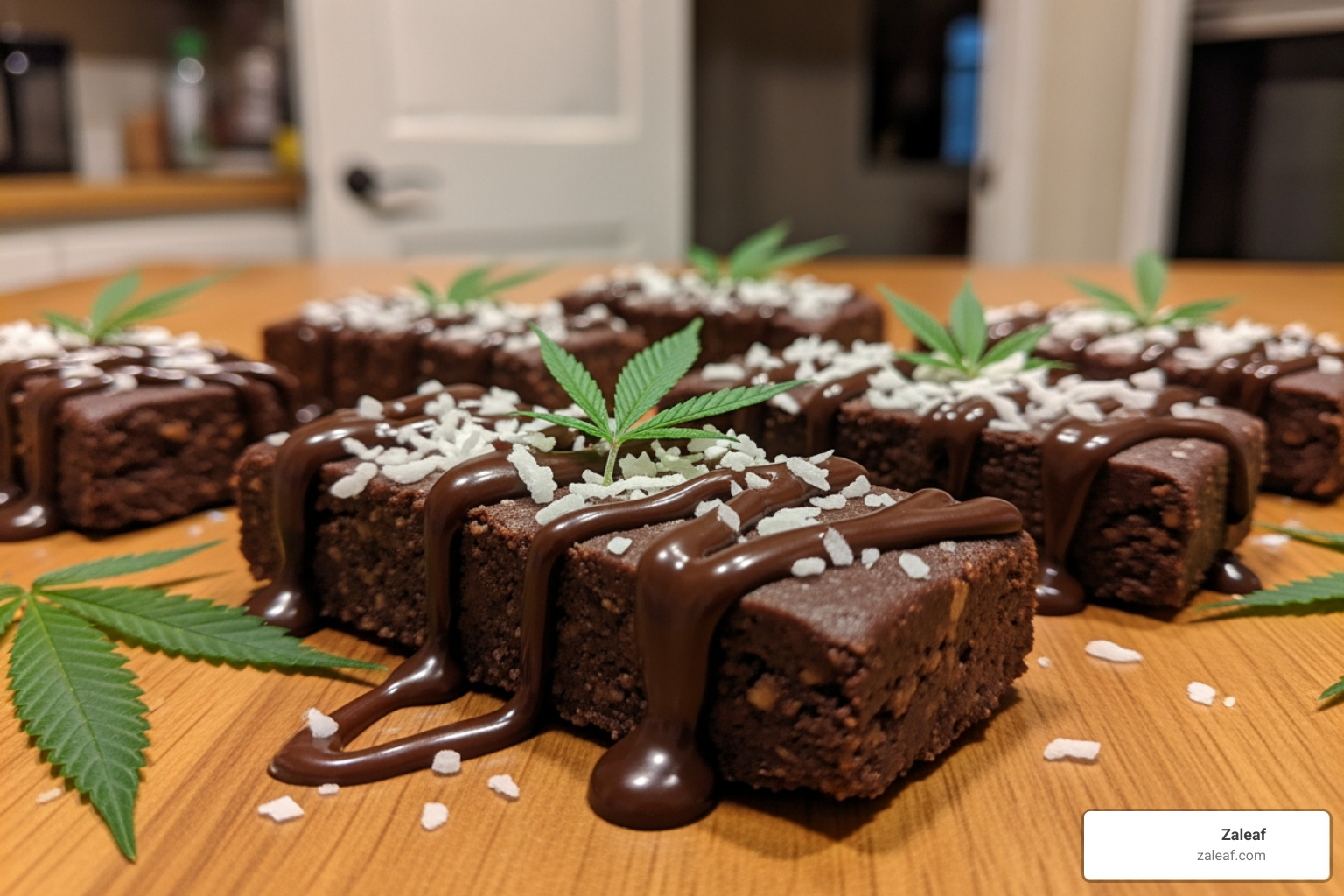
The cannabis coconut oil chocolate recipe is one of the most popular ways to make homemade edibles — and for good reason. It's beginner-friendly, precise, and delicious.
Here's the quick version:
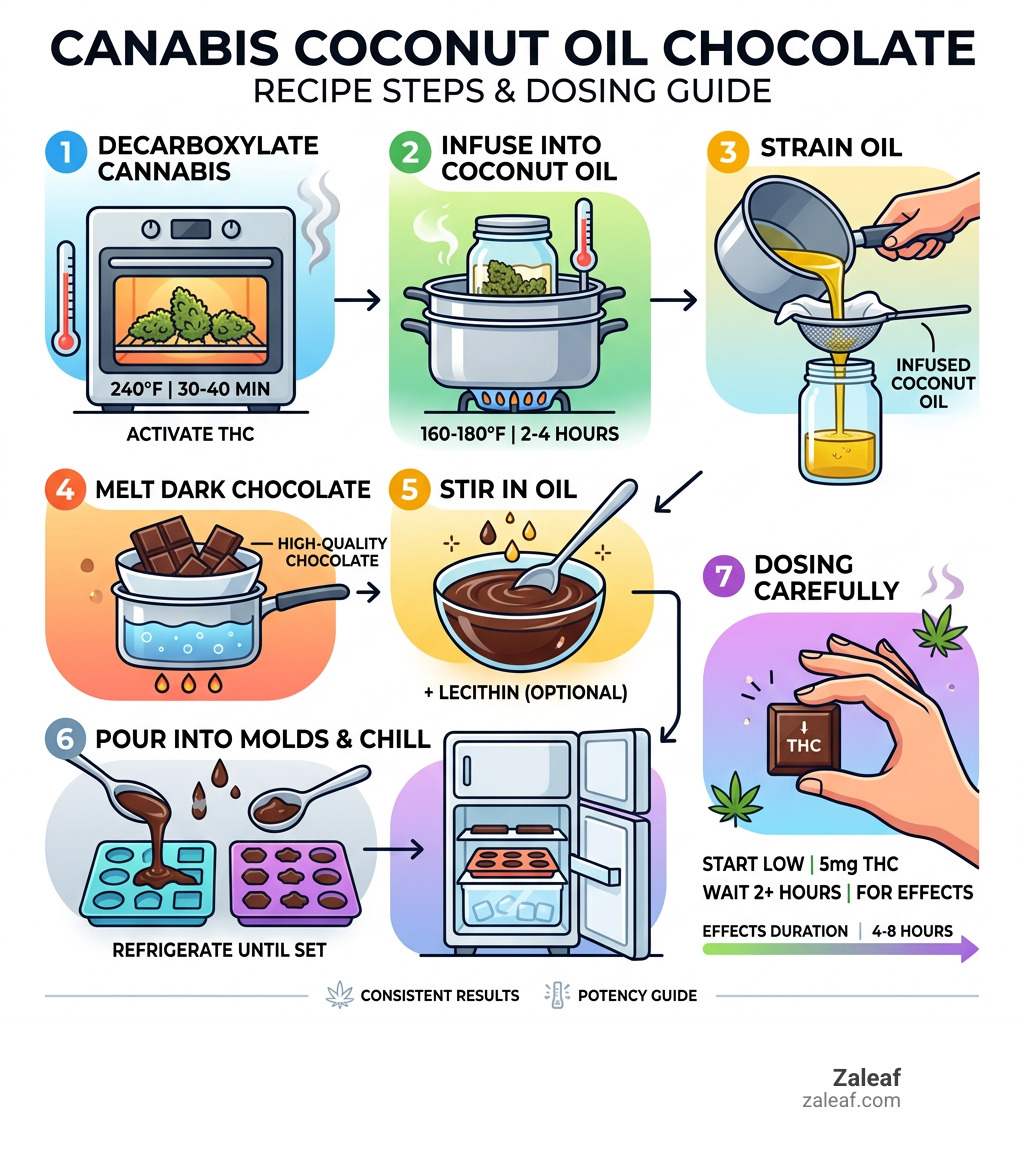
- Decarboxylate your cannabis at 240°F for 30-40 minutes to activate THC
- Infuse decarboxylated cannabis into coconut oil at 160-180°F for 2-4 hours
- Strain the oil through cheesecloth into a clean jar
- Melt high-quality dark chocolate using a double boiler
- Stir in your infused coconut oil (and optional lecithin)
- Pour into silicone molds and refrigerate until set
- Dose carefully — start with 5mg THC and wait at least 2 hours
Coconut oil is the ideal fat for cannabis infusions. It can extract up to 82% of cannabinoids, making it more efficient than most alternatives. Combined with quality chocolate, it produces a smooth, potent edible you can dose with confidence.
Edibles work differently than smoking. Effects take 30 minutes to 2 hours to kick in and can last 4-8 hours. Starting low is not optional — it's essential.
I'm Max Shemesh, owner of Zaleaf, and I've spent years in the hemp and cannabinoid industry developing and refining high-quality formulations — including perfecting the cannabis coconut oil chocolate recipe for consistent, reliable results. In this guide, I'll walk you through every step so you can make professional-quality infused chocolates safely at home.
Cannabis coconut oil chocolate recipe terms to know:
Why Coconut Oil is the Best Fat for Infusions
When we talk about making the ultimate cannabis coconut oil chocolate recipe, the choice of fat isn't just a culinary preference; it's a matter of chemistry. We often get asked why we prefer coconut oil over traditional butter or other vegetable oils. The answer lies in the molecular structure of the oil itself.
Cannabinoids like THC and CBD are lipophilic, meaning they love fat. However, they don't just bond with any fat equally. Coconut oil is unique because it is incredibly high in saturated fats—specifically Medium-Chain Triglycerides (MCTs). These saturated fats provide a robust "binding site" for cannabinoids. Research indicates that coconut oil is capable of extracting up to 82% of the available cannabinoids from your flower, which is significantly higher than most other household fats.
Beyond its efficiency, coconut oil offers several practical benefits for your cannabis coconut oil chocolate recipe:
- Shelf Stability: Coconut oil has a remarkably long shelf life and is resistant to oxidation. This means your infused chocolates won't go rancid as quickly as those made with butter.
- Texture: At room temperature, coconut oil is semi-solid, which helps the chocolate maintain its structure.
- Dietary Versatility: It is naturally vegan and dairy-free, allowing you to share your creations with a wider range of friends.
- Flavor: It adds a very subtle, sweet undertone that complements dark chocolate beautifully, often masking the "earthy" or "grassy" taste of the cannabis more effectively than butter.
Coconut Oil vs. Butter for Infusions
| Feature | Coconut Oil | Butter |
|---|---|---|
| Extraction Efficiency | Up to 82% | Approx. 60-70% |
| Fat Type | 90% Saturated (High MCT) | 63% Saturated |
| Shelf Life | Very Long (1-2 years) | Short (weeks in fridge) |
| Dietary Profile | Vegan / Dairy-Free | Dairy-based |
| Melting Point | 76°F (24°C) | 90-95°F (32-35°C) |
If you want to dive deeper into the science of oil making, check out our guide on from bud to bottle: making cannabis-infused oil.
Preparing Your Infusion: Decarboxylation and Oil Making
Before you can start your cannabis coconut oil chocolate recipe, you must prepare your "canna-oil." You cannot simply throw raw cannabis flower into melted chocolate and expect to feel the effects. Raw cannabis contains THCA (tetrahydrocannabinolic acid), which is non-psychoactive. To turn it into the THC we know and love, we need to apply heat. This process is called decarboxylation.

The Decarboxylation Process
We recommend the "Low and Slow" method to preserve the delicate terpenes that give each strain its unique flavor and effect profile.
- Preheat: Set your oven to 240°F (115°C). Precision is key here; if you have an oven thermometer, use it!
- Prepare: Coarsely grind your cannabis. You don't want a fine powder, as that makes straining difficult later. Aim for the consistency of dried oregano.
- Bake: Spread the flower evenly on a parchment-lined baking sheet. Bake for 30 to 40 minutes. You’ll know it’s ready when the color shifts from vibrant green to a light, toasted brown, and the aroma becomes nutty and pungent.
For those interested in the chemical specifics, you can view this scientific research on decarboxylation temperatures to see how THCA converts over time.

The Infusion Step
Once your flower is decarbed, it's time to marry it to the coconut oil.
- The Ratio: A standard potent infusion uses 1/2 cup of coconut oil for every 7 grams (1/4 ounce) of flower. If you want a milder experience, you can increase the oil or decrease the flower.
- The Method: We love the Mason Jar method because it keeps the smell contained. Place your oil and decarbed flower in a mason jar and seal it tightly.
- The Heat: Place the jar in a water bath (crockpot or a pot on the stove) and keep the water at a gentle simmer (around 160-180°F). Let it infuse for 2 to 4 hours.
- The Strain: Use a French press or a fine cheesecloth to strain the oil. Pro tip: Don't squeeze the cheesecloth too hard! While it's tempting to get every last drop, over-squeezing can push excess chlorophyll into your oil, giving it a bitter, "green" taste.
Step-by-Step Cannabis Coconut Oil Chocolate Recipe
Now that you have your potent golden oil, it's time for the fun part: the chocolate. Making chocolate at home can feel intimidating, but with a few professional tricks, you'll have glossy, snap-worthy bars in no time.
The most important tool in this cannabis coconut oil chocolate recipe is the double boiler. Never melt chocolate directly over a flame; it will scorch and become grainy. If you don't have a double boiler, simply place a glass or stainless steel bowl over a pot of simmering water, ensuring the bottom of the bowl does not touch the water.
For a deeper look at the chemistry of chocolate, see our weed chocolate complete guide.
Essential Ingredients for Your Cannabis Coconut Oil Chocolate Recipe
To make approximately 24-30 standard-sized chocolates, you will need:
- 12 oz High-Quality Dark Chocolate: Look for "couverture" chocolate if possible, or high-quality bars with at least 60% cacao. Avoid cheap chocolate chips, as they often contain stabilizers that prevent smooth melting.
- 1/4 cup Cannabis-Infused Coconut Oil: This is your "magic" ingredient. Ensure it is at room temperature or slightly warmed so it blends easily.
- 1 tsp Sunflower Lecithin: This is our "secret weapon." It acts as an emulsifier, helping the oil and chocolate bond perfectly while also increasing the bioavailability of the THC.
- 1 tsp Pure Vanilla Extract: To enhance the chocolate's natural sweetness.
- A Pinch of Sea Salt: To balance the flavors and mask any lingering herbal notes.
The Method
- Melt: Place 2/3 of your chocolate in the double boiler. Stir frequently until it reaches about 110°F.
- Seed: Remove from heat and stir in the remaining 1/3 of the chocolate. This "seeding" process helps temper the chocolate, giving it a professional shine.
- Infuse: Once the chocolate is smooth and cooled slightly (to about 90°F), slowly stir in your cannabis coconut oil, lecithin, and vanilla. Stir gently but thoroughly for 2-3 minutes to ensure the THC is evenly distributed.
- Mold: Pour the mixture into silicone molds. Tap the molds gently on the counter to release any air bubbles.
- Set: Place in the refrigerator for at least 1 hour.
Customizing Your Cannabis Coconut Oil Chocolate Recipe
The beauty of this recipe is its flexibility. Here are some ways to make it your own:
- CBD Version: Simply swap your high-THC flower for a CBD-rich strain during the oil-making process. This is perfect for relaxation without the psychoactive high. Learn more about your guide to CBD chocolate effects.
- Vegan Swaps: Ensure your dark chocolate is dairy-free. Most high-percentage dark chocolates are naturally vegan.
- Flavor Toppings: Before the chocolate sets, sprinkle the back with crushed almonds, dried raspberries, or a dusting of matcha powder.
- Nutty Additions: Stir in chopped pecans or walnuts for a "Nutty Cocoa Bite" texture.
Dosing, Safety, and Storage for Homemade Edibles
The biggest mistake beginners make with a cannabis coconut oil chocolate recipe is improper dosing. Because homemade flower varies in potency, your oil might be stronger than you expect.
Calculating Potency
If you use 6 grams of flower at 20% THC, you have 1,200mg of potential THC. If your infusion process is 80% efficient, your 1/2 cup of oil contains roughly 960mg of THC. If you use 1/4 cup of that oil to make 24 chocolates, each chocolate will have approximately 20mg of THC.
We always recommend a starting dose of 5mg. If it's your first time, eat a quarter of a chocolate and wait.
Storage and Safety
- Label Everything: This is the most critical safety step. Always label your containers with the date, the type of infusion, and the estimated MG per piece.
- Child-Proofing: Store your chocolates in a locked container or a high shelf. They look exactly like regular candy, and we must ensure they stay away from children and pets.
- Fridge vs. Freezer: Because of the coconut oil, these chocolates can get soft at room temperature. Store them in an airtight container in the fridge for up to 3 months, or in the freezer for up to 6 months.
For more on consumption safety, read chocolate edibles 101.
Frequently Asked Questions about Cannabis Chocolates
Should I add lecithin to my cannabis coconut oil?
Yes, we highly recommend it! Lecithin is a phospholipid that helps fats and water-based ingredients (like the solids in chocolate) stay bonded. Beyond texture, it acts as a "bio-delivery" agent. It helps your body absorb the cannabinoids more efficiently, which can lead to a slightly faster onset and a more consistent experience. Sunflower lecithin is generally preferred over soy lecithin as it is non-GMO and cold-pressed.
How long do the effects of cannabis chocolates last?
Unlike smoking, which hits the bloodstream almost instantly, edibles must be processed by your liver. This converts Delta-9 THC into 11-Hydroxy-THC, which is often reported to be more potent and have a longer duration. You can expect the effects to peak around the 2-3 hour mark and last anywhere from 4 to 8 hours. Factors like your metabolism, what you've eaten that day, and your tolerance will all play a role.
Why did my chocolate seize or turn white?
If your chocolate suddenly turns into a clumpy, gritty mess, it has "seized." This usually happens because a tiny drop of water got into the bowl. Water causes the sugar and cocoa to clump together. Always ensure your tools are bone-dry.
If your chocolate develops white streaks or spots after cooling, that is called "bloom." It’s either "fat bloom" (the coconut oil separating) or "sugar bloom" (moisture evaporating). While it looks unappealing, the chocolate is still perfectly safe to eat! Proper tempering and the use of lecithin help prevent this.
Conclusion
Mastering the cannabis coconut oil chocolate recipe is a rewarding journey that blends culinary art with cannabis science. By using high-quality coconut oil, properly decarboxylating your flower, and following the rules of tempering, you can create a therapeutic and delicious treat that rivals any professionally made product.
At Zaleaf, we believe that the best edibles start with the best ingredients. That’s why we specialize in products that enhance specific cannabinoid and terpene profiles for mood-specific effects. All our products are 100% legal, 3rd party lab-tested, and shipped discretely to your door—no medical card required.
Whether you're looking for a relaxing CBD-rich evening or a more uplifting experience, our flower and concentrates are the perfect starting point for your home infusions. Ready to take your edible game to the next level? Master your homemade edibles with our comprehensive guide and start your infusion journey today!