

Calm or Chaos? The Truth About Marijuana for Anxiety
Why So Many Are Turning to Marijuana for Anxiety
Marijuana for anxiety is a popular alternative treatment, and it's easy to see why. Anxiety disorders affect 31% of U.S. adults, yet less than half receive traditional treatment, leading many to seek new solutions.
Quick Answer: Can Marijuana Help with Anxiety?
- CBD (cannabidiol) appears to reduce anxiety at all tested doses without a "high."
- THC (tetrahydrocannabinol) can help at low doses but may increase anxiety at higher doses.
- CBD-dominant products are generally safer for anxiety relief than high-THC options.
- Individual response varies based on body chemistry, dosage, and product type.
- It's not a cure—cannabis offers temporary relief and works best with therapy and lifestyle changes.
The relationship between cannabis and anxiety is complex. While some find relief, others experience nervousness or paranoia. The outcome often depends on the specific compounds (cannabinoids and terpenes), the dose, and your unique body chemistry.
Research shows THC has a "biphasic effect"—low doses can be calming, while high doses can increase anxiety. CBD, however, consistently shows anxiety-reducing properties without psychoactive effects. My name is Max Shemesh, Owner & CEO of Zaleaf. My mission is to provide clear, science-backed information to help you steer cannabis for wellness.
Understanding the Key Players: How THC and CBD Affect Anxiety
Your body has a built-in network for managing stress and mood called the endocannabinoid system (ECS). It uses receptors, primarily CB1 (in the brain) and CB2 (in the immune system), to maintain balance.
When you use marijuana for anxiety, cannabinoids like THC and CBD interact with these receptors. However, they do so in very different ways, which explains their distinct effects on anxiety.

The Biphasic Nature of THC
THC is the compound known for its psychoactive "high," but its relationship with anxiety is complicated. It has a "biphasic effect," meaning its impact changes with the dose.
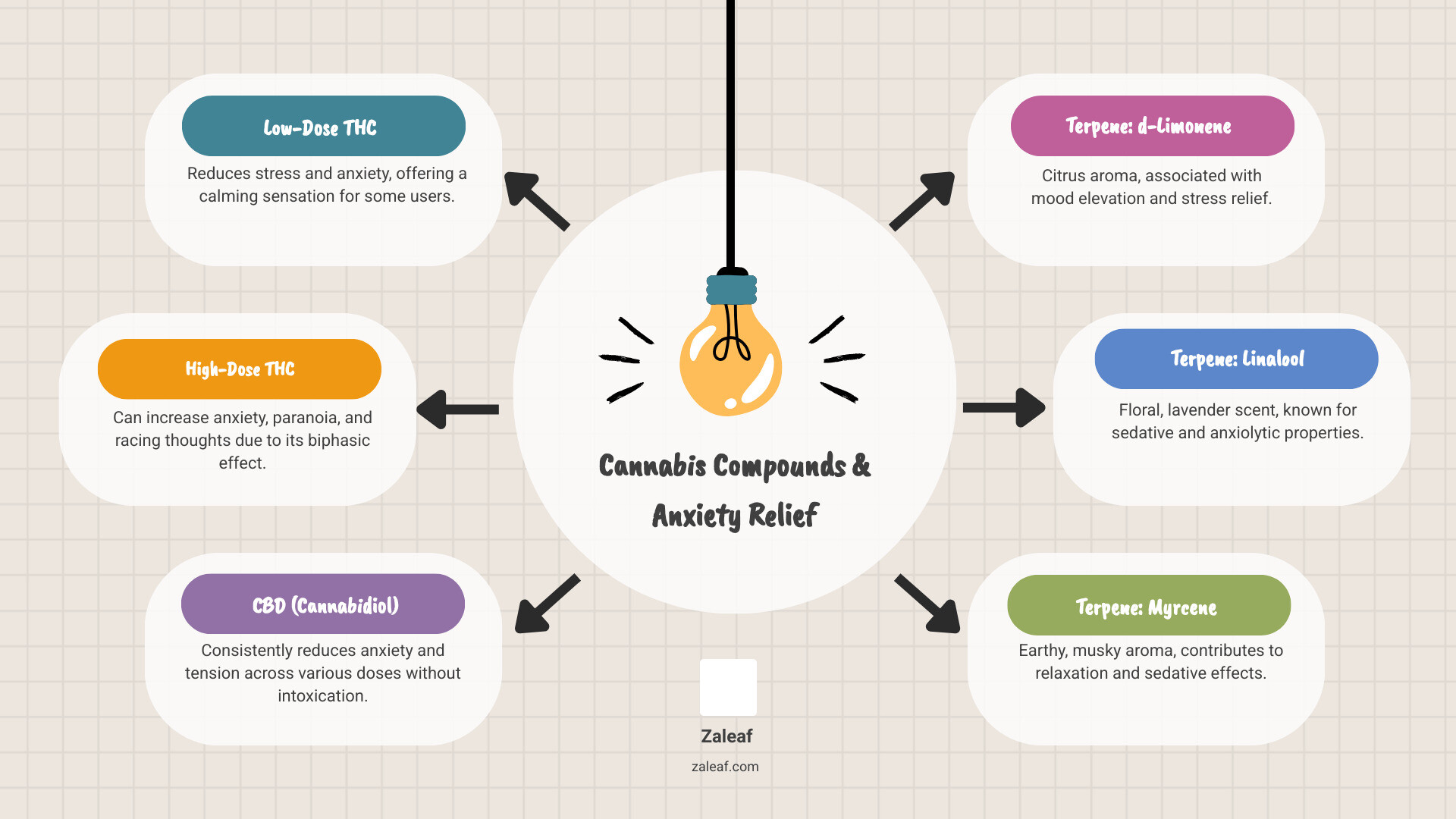
- Low Doses: THC can bind to CB1 receptors and reduce stress, promoting relaxation. Research from the University of Illinois confirms that low-dose THC can relieve stress.
- High Doses: The effect can flip, leading to paranoia, racing thoughts, and increased heart rate. This is a significant risk, as modern cannabis products can contain 20-30% THC or more.
For those with anxiety, high-THC products are often a gamble.
The Calming Power of CBD
CBD is non-intoxicating, so it won't make you feel high. Unlike THC, CBD appears to consistently reduce anxiety across all tested doses. It works by modulating the ECS and influencing serotonin receptors, which are key to mood regulation. This can lead to a general decrease in tension without psychoactive side effects.
Recent research found that CBD-dominant products were associated with less tension and paranoia compared to THC-dominant ones, making CBD a much safer starting point for anxiety relief.
The Entourage Effect: Terpenes and Synergy
Cannabis contains more than just THC and CBD. Terpenes, the aromatic compounds in plants, also play a crucial role. They work with cannabinoids in an "entourage effect," where the combined effect is greater than the sum of its parts.
For anxiety, key terpenes include:
- D-Limonene (citrus): Shown to reduce anxiety and paranoia when combined with THC.
- Linalool (lavender): Known for its sedative and relaxing properties.
- Myrcene (hops, mangoes): Provides muscle-relaxant and sedative effects.
At Zaleaf, we formulate our products with specific cannabinoid and terpene profiles to leverage the entourage effect for targeted mood support. To learn more, see our guide on Finding Peace: The Role of Vape Pens in Managing Anxiety.
The Evidence: What Research Says About Marijuana for Anxiety
While personal stories are compelling, it's important to look at what scientific research reveals about marijuana for anxiety—and the results are mixed.
A systematic review of medicinal cannabis for anxiety found that over 90% of studies reported positive outcomes. However, the same review highlighted serious limitations, including a high risk of bias and a lack of standardized information on dosage and product form. This makes it difficult to draw firm conclusions. We need more rigorous, long-term studies to understand the full picture.
Effectiveness for Different Anxiety Disorders
High-quality studies show that cannabis doesn't work the same for every type of anxiety.
- Encouraging Results: For Generalized Anxiety Disorder (GAD), Social Anxiety Disorder (SAD), and Post-Traumatic Stress Disorder (PTSD), about 70% of the best studies reported positive improvements. CBD has shown particular promise for social anxiety.
- Negative Results: For Obsessive-Compulsive Disorder (OCD) and some cases of SAD, about 30% of high-quality studies reported that cannabis sometimes made symptoms worse.
This shows that your specific condition and body chemistry are crucial factors.
Comparing Marijuana for Anxiety to Traditional Treatments
Anxiety disorders affect nearly a third of U.S. adults, but barriers like cost and stigma prevent many from seeking help. Traditional treatments include medications (like SSRIs or benzodiazepines) and talk therapy (like CBT).
While effective, these medications can have side effects like drowsiness or a risk of dependence. Many people explore marijuana for anxiety for its potentially milder side effect profile. However, cannabis should be seen as a supplemental tool, not a replacement for therapy. It can provide temporary symptom relief, but it doesn't build the long-term coping skills that therapy does.
Long-Term Considerations of Using Marijuana for Anxiety
We lack sufficient long-term studies, but there are known considerations for sustained use:
- Tolerance: Your body may adapt over time, requiring higher doses for the same effect. This is risky with THC, as higher doses can increase anxiety.
- Dependence: Psychological dependence is possible, especially if cannabis is used to avoid underlying issues. Mindful use and tolerance breaks are important.
- Cognitive Effects: Acute use can impair memory and concentration. The long-term cognitive effects of therapeutic use are still being studied.
For now, cannabis is best viewed as one part of a broader wellness strategy. Learn more in our guide on Cannabis for Wellness: Exploring Its Role in Relaxation, Pain, and Stress.
Your Guide to Using Cannabis for Anxiety Relief
If you're ready to explore marijuana for anxiety, the golden rule is to "start low and go slow." Begin with the smallest possible dose and gradually increase it until you find your minimum effective dose—the sweet spot that provides relief without unwanted side effects. Your endocannabinoid system is unique, so what works for someone else may not work for you.
The Importance of THC:CBD Ratios
The ratio of THC to CBD is the most critical factor in how a product will affect your anxiety.
- CBD-Dominant: High in CBD with little to no THC, these are the safest bet for anxiety. They offer relief without a "high" and have a low risk of increasing paranoia.
- Balanced 1:1: With equal parts THC and CBD, these offer a middle ground. The CBD buffers THC's psychoactive effects, creating a milder experience with anxiety relief.
- High-THC: These require the most caution. While low doses can reduce stress, high doses can easily trigger panic and paranoia, making anxiety worse.
Here's a quick comparison:
| Product Type | THC:CBD Ratio | Potential Effects on Anxiety |
|---|---|---|
| High-CBD | Very Low THC, High CBD | Consistent anxiety reduction, tension relief, no intoxication. Less paranoia. |
| Balanced 1:1 | Equal THC & CBD | Mild relaxation, some anxiety relief, reduced psychoactivity compared to high-THC. |
| High-THC | High THC, Low CBD | Low doses may reduce anxiety; high doses can increase anxiety, paranoia, racing thoughts. |
Choosing the Right Product for You
The product form affects how quickly it works and how long it lasts.
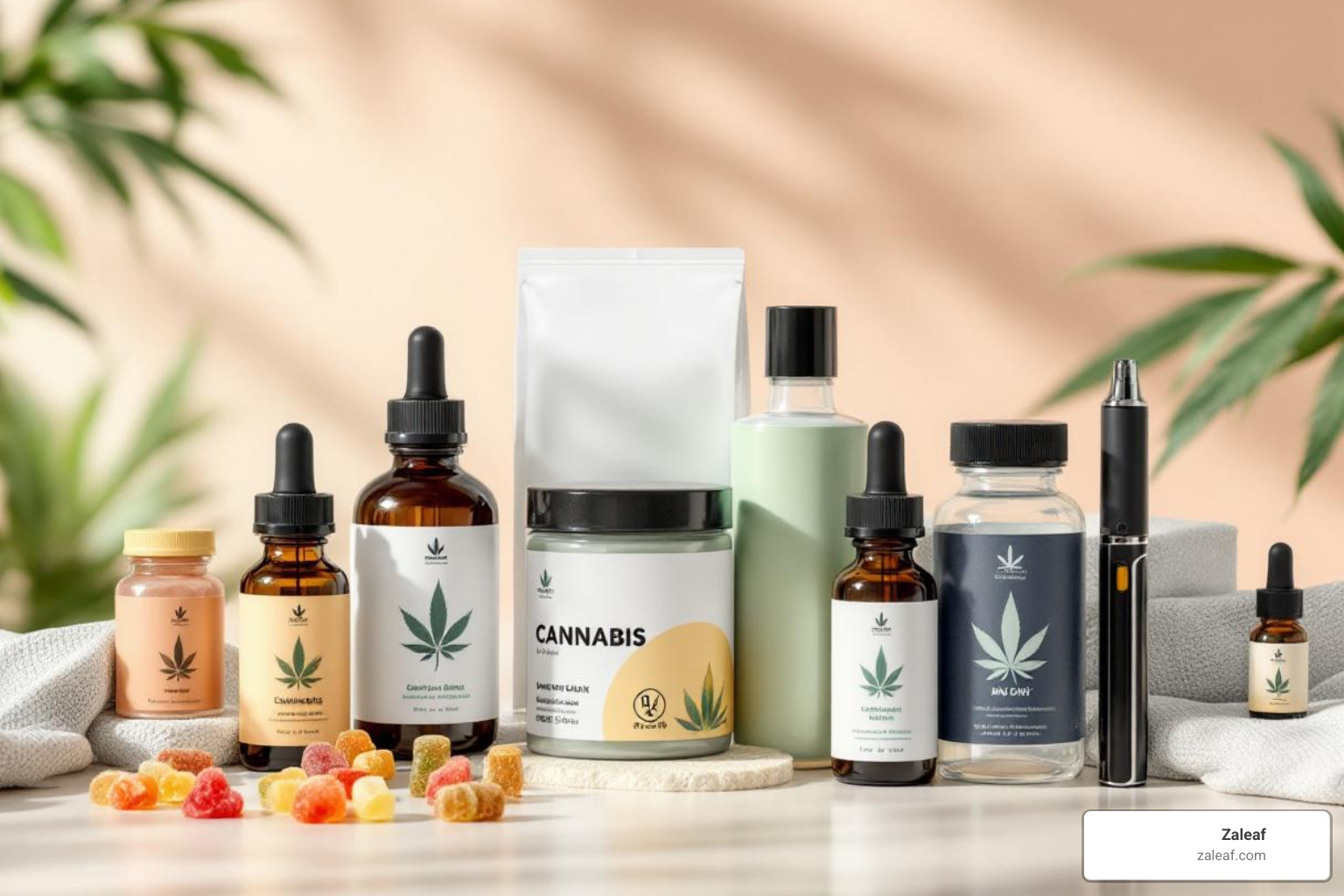
- Vape Pens: Offer fast-acting relief within minutes, ideal for acute anxiety. Effects last 1-3 hours.
- Gummies: Provide long-lasting relief (4-8+ hours) but take longer to kick in (30-120 minutes). They are discreet and offer precise dosing.
- Tinctures: Offer the most flexibility. Taken under the tongue, effects begin in 15-45 minutes. The dose can be adjusted drop by drop, giving you precise control.
At Zaleaf, our products are formulated with specific cannabinoid and terpene profiles for mood-specific effects. Every product is third-party tested for purity and potency, ensuring you get consistent, reliable relief.
Weighing the Risks: Who Should Be Cautious?
While marijuana for anxiety can be a powerful tool, it's not for everyone. Certain individuals should be cautious or avoid it altogether.
First and foremost, talk to a healthcare professional before starting cannabis, especially if you take other medications. For example, combining cannabis with anti-anxiety drugs like benzodiazepines can cause excessive drowsiness and disorientation. A doctor can help you steer potential interactions safely.

Potential Side Effects
Even at appropriate doses, cannabis can have side effects, particularly with high-THC products. Be aware of:
- Increased heart rate and paranoia: THC's most notorious side effects, which can mimic or worsen anxiety.
- Confusion or disorientation: Especially for new users or with high doses.
- Drowsiness: Can interfere with daily activities.
- Dry mouth and dry eyes: Common but generally mild annoyances.
- Increased appetite ("the munchies"): A well-known effect of THC.
CBD has a much more favorable side effect profile, consistently reducing anxiety without these unwanted effects.
Populations at Higher Risk
Certain groups face higher risks and should be especially careful:
- Adolescents: The developing brain is vulnerable to THC, which can impact cognitive development and increase the risk of problem use.
- Pregnant or breastfeeding individuals: Cannabis use is not recommended due to unknown effects on fetal and infant development.
- Individuals with a family history of psychosis: High-THC cannabis has been linked to the onset of psychotic disorders in genetically predisposed people.
- Those with pre-existing psychiatric disorders: Cannabis can interact with other conditions or medications. Professional medical guidance is essential.
At Zaleaf, your safety is our priority. We are transparent about these risks and provide rigorous 3rd party testing on all products so you know exactly what you're getting.
Frequently Asked Questions about Marijuana for Anxiety
Asking questions is a key part of making informed choices for your wellness. Here are answers to some of the most common questions we receive about marijuana for anxiety.
Can marijuana cure my anxiety?
No, marijuana for anxiety is not a cure. It can provide powerful temporary symptom relief, but it doesn't address the root causes of an anxiety disorder. Think of cannabis as a tool in a larger wellness toolbox. Lasting change typically comes from a combination of therapy (like CBT), lifestyle adjustments, and sometimes traditional medication. Cannabis works best as a supportive element alongside these strategies, not as a replacement.
Is it better to use Indica or Sativa for anxiety?
The traditional advice is that relaxing Indicas are better for anxiety than energizing Sativas. However, modern cannabis science shows this is an oversimplification. What matters more are the specific cannabinoid and terpene profiles. A "Sativa" with calming terpenes like linalool and a balanced THC:CBD ratio could be more effective for anxiety than a high-THC "Indica."
At Zaleaf, we focus on the chemical composition of our products to create predictable, mood-specific effects. However, personal chemistry varies, which is why we always recommend starting with a low dose to see how your body responds.
Will I become addicted to using cannabis for anxiety?
Cannabis is generally considered less addictive than alcohol or some prescription drugs, but dependence and addiction (Cannabis Use Disorder) are possible.
Dependence is when your body adapts to a substance, leading to withdrawal symptoms like irritability or trouble sleeping if you stop. Addiction is a more serious, compulsive use despite negative consequences. The risk is higher with frequent, high-THC use or if you're using cannabis to numb yourself rather than as a functional tool.
Mindful usage is key. Pay attention to why you're using it and take regular tolerance breaks. If you feel your use is becoming problematic, it's important to seek help from a healthcare professional.
Conclusion: A Path to Calm
Finding relief from anxiety is a personal journey, and educating yourself is a powerful first step. We've seen that the relationship between marijuana for anxiety is complex, but the key takeaways are clear.
THC has a dual role: calming at low doses but anxiety-inducing at high doses. CBD offers a more consistent path to calm without the psychoactive risks. Success lies in finding the right dosage and ratio for your unique body, which is why the "start low and go slow" approach is essential.
Cannabis is a tool, not a cure. It provides temporary relief and works best alongside therapy and healthy lifestyle changes. Be mindful of the risks, especially if you are in a high-risk group, and always consult a healthcare provider before starting.
At Zaleaf, our mission is to provide access to high-quality, third-party tested products you can trust. We formulate our products with specific cannabinoid and terpene profiles for mood-specific effects like anxiety relief. With 100% legal options, discrete shipping, and no medical card required, we make it easier to find your path to calm.
Your well-being is in your hands. We're here to support your journey with clear information and reliable products. Ready to start? Explore our full range of products for wellness and relaxation.