

From Slushies to Vapes: The Rise of Blue Raspberry and Guava Blue Razz
Why Blue Raspberry Liquid Has Taken Over Everything From Candy to Cannabis
Blue raspberry liquid is a concentrated or ready-to-use flavoring that delivers the iconic sweet-tart taste found in slushies, candies, vapes, and beverages. Here's a quick breakdown of what you need to know:
- What it is: A flavoring liquid made to replicate the bold, tangy taste of blue raspberry candy
- Common forms: Flavor concentrates, syrups, water enhancers, and cannabinoid-infused liquids
- How it's used: Mixed into drinks, vapes, edibles, baked goods, and frozen treats
- Key ingredients: Typically vegetable glycerin (VG), propylene glycol (PG), natural or artificial flavors, and colorants like FD&C Blue #1
- Typical mix rate: Around 8% in DIY recipes for concentrates
- Why people love it: Nostalgic, versatile, and visually striking — that electric blue color is hard to ignore
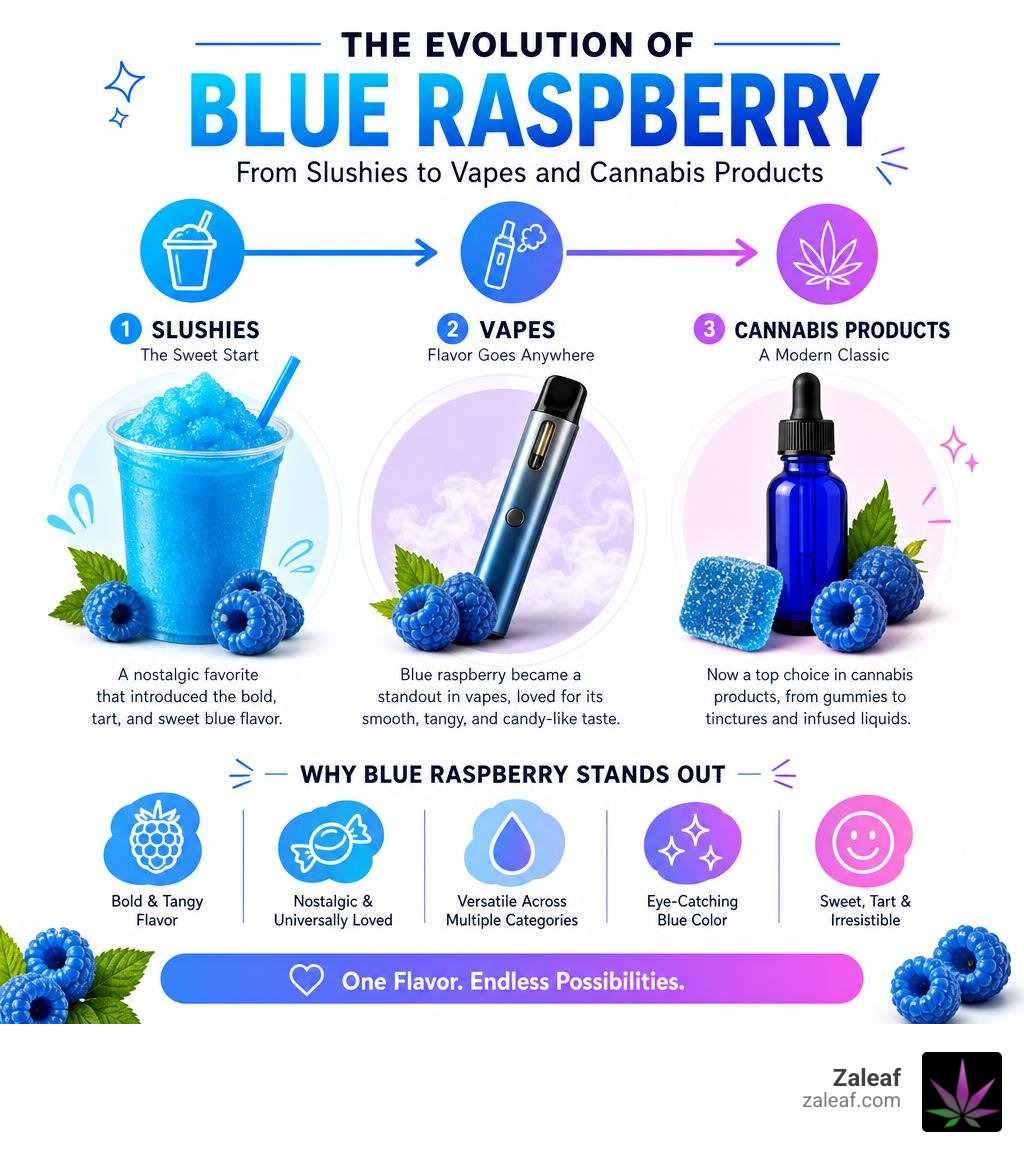
Few flavors hit the way blue raspberry does. It's tart enough to make you pucker, sweet enough to keep you coming back, and that vivid blue color makes any drink or product impossible to miss. From childhood slushie memories to modern vape cartridges and hemp-infused products, blue raspberry has quietly become one of the most versatile and in-demand flavor profiles across food, beverage, and cannabis categories.
The flavor doesn't actually come from any single fruit in nature. It's a crafted combination — bright raspberry notes layered with something almost blueberry-like — and that uniqueness is exactly what makes it so addictive and so widely used.
I'm Max Shemesh, CEO of Zaleaf, and my work formulating and sourcing premium cannabinoid products has given me hands-on experience pairing high-quality blue raspberry liquid profiles with effective hemp-derived formulations. That background shapes everything you'll find in this guide.
Blue raspberry liquid word roundup:
The Versatility of Blue Raspberry Liquid in Modern Food and Beverage
The food and beverage industry has long been obsessed with the vibrant appeal of blue raspberry. Go to any local convenience store, movie theater, or craft cocktail bar, and you are bound to see a glowing, electric-blue option on the menu. The flavor profile is characterized by a "candy-forward" raspberry taste, often balanced with a sharp citric or malic acid kick that mimics the tanginess of under-ripe berries.
This distinct flavor profile has allowed blue raspberry liquid to break out of the slushie machine and find a home in sophisticated beverage programs. Mixologists and beverage developers use it to add both a splash of bold berry flavor and an eye-catching pop of color. Classic syrups have become staples in coffee shops and soda bars for making "dirty sodas," Italian sodas, and colorful lemonades. Because these high-quality syrups are formulated to be dairy-friendly, they mix perfectly into milk-based drinks and mocktails without curdling, making them incredibly versatile tools for creative drink makers.
Formulating with Blue Raspberry Liquid Concentrates
For those working on the manufacturing side—or DIY enthusiasts crafting their own recipes—concentrated flavor liquids offer a level of control that pre-sweetened syrups cannot match. These highly concentrated flavorings are used in everything from confectionery and baking to hard seltzers and vape formulations.
When formulating with professional concentrates, such as Blue Raz Liquid Flavoring Concentrate | Flavorah, creators must approach the process with precision. Unlike standard grocery store syrups, commercial concentrates are incredibly potent. A tiny amount goes a long way:
- Beverage bases: Adding just 0.25% to 0.4% of a premium concentrate to a beverage base is often enough to establish an authentic, full-bodied blue raspberry character.
- Confectionery and Gummies: For lollipops, gummies, and hard candies, a usage rate of 0.3% to 0.5% in the mixture delivers that nostalgic candy punch.
- Hard Seltzers: In alcohol or seltzer production, adding 0.2% to 0.3% post-fermentation provides a clean flavor without throwing off the gravity of the brew.
Because these professional-grade concentrates are water-soluble and heat-stable, they maintain their flavor integrity even when subjected to the high temperatures required for baking cupcakes or boiling sugar for hard candies.
Ready-to-Use Blue Raspberry Liquid Water Enhancers vs. Concentrates
It is important to distinguish between commercial flavor concentrates and ready-to-use consumer products like liquid water enhancers. While both are technically "liquids," they serve entirely different audiences and purposes.
A consumer water enhancer is designed for convenience. It is highly diluted compared to a professional concentrate, pre-sweetened (often with zero-calorie sweeteners like sucralose or stevia), and formulated to be squirted directly into a glass of water. For example, popular zero-calorie blue raspberry water enhancers on the market typically offer around 24 servings per 1.62 fl oz bottle, providing an easy, portable way to enjoy that classic slushie flavor on the go.
In contrast, professional flavor concentrates contain no sweeteners, preservatives, or colorants unless specifically added for a target application. They are pure flavor compounds suspended in carrier liquids like propylene glycol or vegetable glycerin.
The differences between these two formats are summarized in the table below:
| Feature | Ready-to-Use Water Enhancers | Professional Flavor Concentrates |
|---|---|---|
| Primary Audience | Everyday consumers | DIYers, bakeries, and manufacturers |
| Sweeteners | Pre-sweetened (often sugar-free/sucralose) | None (must be added separately) |
| Coloring | Pre-colored (vibrant blue) | Usually clear (unless specified) |
| Concentration Level | Low (requires a generous squirt per glass) | Extremely high (measured in drops or <1% of recipe) |
| Storage Requirements | No refrigeration needed | Cool, dark storage; shelf-stable |
| Typical Applications | Water, simple mocktails | Vapes, baking, gummies, craft brewing, syrups |
For those who prefer a middle ground—such as a clean, organic liquid syrup for home sodas or specialty baking—options like Blue Raspberry Syrup, Organic – Nature's Flavors utilize natural colors and organic gum acacia to deliver a premium, clean-label alternative to artificial options. Meanwhile, traditional commercial options like Blue Raspberry Flavored Syrup - Monin - Monin US rely on pure cane sugar and FD&C Blue #1 to achieve that signature brilliant blue hue and sweet-tart finish.
Technical Specifications of VG-Dominant Flavor Concentrates

When working with blue raspberry liquid in a professional or DIY capacity, understanding the technical specifications of your ingredients is crucial for achieving consistent results. Many high-quality flavor concentrates are formulated to be vegetable glycerin (VG) dominant.
Vegetable glycerin is a natural carbohydrate derived from plant oils. It is thick, sweet, and highly viscous. Propylene glycol (PG), on the other hand, is a much thinner, tasteless liquid that is exceptionally good at carrying complex flavor molecules. In many blue raspberry formulations, a VG-dominant base is preferred because it lends a natural, subtle sweetness that rounds out the sharp, acidic edges of the raspberry flavor. However, because VG is highly viscous, it behaves differently during mixing and measuring than water- or PG-based liquids.
Mixing Ratios and Specific Gravity
To achieve perfect flavor balance without over-flavoring (which can lead to a chemical or soapy taste), you must pay close attention to mixing ratios and specific gravity.
- Suggested Mix Percentage: For a standard VG-dominant blue raspberry concentrate, a suggested starting mix percentage is 8% in your final recipe. This means if you are making a 100ml batch of liquid, 8ml should be the flavor concentrate, with the remaining 92ml consisting of your base carrier liquids (such as additional VG, PG, or active ingredients).
- Specific Gravity: The specific gravity of a typical blue raspberry concentrate sits around 1.16 g/ml. Because specific gravity dictates how much a liquid weighs relative to its volume, mixing by weight (using a sensitive digital scale) is far more accurate than mixing by volume (using syringes or pipettes). Knowing that 1ml of your concentrate weighs exactly 1.16 grams allows you to scale up recipes with perfect mathematical precision.
Flavor Profiles and Pairing Combinations
The magic of blue raspberry lies in its complexity. A high-quality concentrate is rarely just "raspberry." It is an artistic blend of several distinct flavor notes:
- The Body: A rich, sweet raspberry base that provides the foundation.
- The Tang: A sharp, citric or malic acid kick that mimics the mouth-watering tartness of sour candy.
- The Sweetener: Subtle back-notes of cotton-candy fluff or spun sugar that smooth out the throat hit and leave a lingering sweetness.
If you are looking for a highly specific, nostalgic candy profile, products like Blue Raspberry Candy Flavoring | Sweet & Tangy Taste are specifically engineered to replicate the exact taste of childhood sour belts and hard candies.
To create truly unique recipes, we recommend blending blue raspberry with complementary flavors. Here are some of the most successful pairing ratios:
- Blue Raspberry & Cotton Candy (2:1 ratio): Amplifies the sugary, whimsical notes of the liquid, perfect for sweet tooths.
- Blue Raspberry & Menthol or Mint (5:1 ratio): Delivers an icy, refreshing finish reminiscent of a frozen blue slushie on a hot summer day.
- Blue Raspberry & Lemonade (1:1 ratio): Pushes the tartness to the forefront, creating a puckery, refreshing beverage profile.
- Blue Raspberry & Grape (1:1 ratio): A deep, dark fruit combination that balances the bright high notes of the raspberry with the rich, sweet low notes of grape.
Safety, Storage, and Regulatory Considerations

Because highly aromatic concentrated flavor liquids contain volatile organic compounds, proper handling and storage are essential to preserve their flavor profile and ensure safety. Flavor molecules are prone to evaporation; if left exposed to the air, the lighter, fruitier top notes will escape, leaving you with a flat, dull liquid.
Best Practices for Shelf-Life and Preservation
To maximize the shelf-life of your blue raspberry liquid concentrates and syrups, follow these industry best practices:
- Store in a Cool, Dark Environment: Exposure to direct sunlight and high temperatures accelerates oxidation and degrades both the flavor compounds and any active ingredients (such as cannabinoids in infused liquids). A pantry, drawer, or climate-controlled storage cabinet is ideal.
- Limit Bottle Openings: Every time you open a bottle of concentrate, you introduce oxygen and allow volatile flavor molecules to escape. Keep the bottle tightly sealed when not in use, and avoid leaving the cap off during long mixing sessions.
- Opt for Glass Storage: For long-term storage of pure concentrates, amber glass bottles are superior to plastic. Glass is non-reactive and protects the liquid from UV light degradation.
- Color Retention: If your liquid contains natural colorants (like spirulina used in some organic formulations), storing the liquid in a dark place is even more critical, as natural blues and reds fade quickly when exposed to light.
Regulatory Compliance and Ingredient Safety
Whether you are manufacturing products for commercial sale or mixing for personal use, safety and regulatory compliance should always come first.
When sourcing flavor concentrates, ensure they are made from FEMA GRAS (Flavor and Extract Manufacturers Association - Generally Recognized as Safe) ingredients approved for ingestion. Furthermore, look for formulations that are free from added diacetyl and acetyl propionyl—compounds that, while safe to eat, are associated with respiratory risks when heated and inhaled.
For commercial beverage formulations, choosing certified ingredients is key. Look for products like Blue Raspberry Beverage Infusion — Amoretti, which is TTB approved (making it legal for use in commercial alcoholic beverages), Kosher Pareve, Vegan, Non-GMO, and preservative-free. Using certified, high-quality ingredients ensures that your final product is safe, compliant, and accessible to consumers with diverse dietary needs.
Blue Raspberry vs. Other Fruit Flavors: Market Demand and Versatility
In the competitive landscape of fruit flavors, blue raspberry occupies a unique psychological space. While natural flavors like strawberry, cherry, and grape are highly popular, they are often associated with medicinal products (who doesn't remember the taste of cherry cough syrup?).
Blue raspberry, however, has almost zero medicinal associations. From its inception, it has been purely associated with fun, indulgence, and leisure—think amusement parks, summer vacations, and candy shops. This nostalgic connection gives it a massive psychological advantage in the market.
Furthermore, blue raspberry is incredibly versatile. It can be easily adapted to fit different product categories:
- The Sour Category: By increasing the malic acid content, it becomes a face-puckering sour candy flavor.
- The Sweet Category: By blending it with vanilla or cotton candy notes, it turns into a smooth, dessert-like treat.
- The Icy Category: When paired with cooling agents, it mimics the exact sensation of a frozen beverage.
This adaptability is why we see blue raspberry consistently ranking as a top-three flavor in the vape, beverage, and active cannabinoid spaces.
Frequently Asked Questions about Blue Raspberry Liquids
What does blue raspberry taste like?
Blue raspberry does not taste like a single fruit found in nature. Instead, it is a sweet-tart hybrid flavor. It combines the bright, tangy, and slightly acidic profile of a ripe red raspberry with the sweeter, mellower undertones of a blueberry, finished with a distinct sugary "candy" note.
Does blue raspberry liquid require refrigeration?
Most commercial flavor concentrates, water enhancers, and sugar-based syrups do not require refrigeration after opening and are perfectly shelf-stable at room temperature. However, some organic syrups (which avoid artificial preservatives) or specialized cannabinoid-infused liquids may require refrigeration after opening to maintain optimal color, flavor, and active ingredient stability. Always check the label of your specific product.
How do you mix blue raspberry concentrates?
For professional or DIY flavor concentrates, we recommend starting with a low usage rate—typically between 1% and 4% for highly potent water-soluble concentrates, or up to 8% for VG-dominant formulations. Always mix by weight using a digital scale for the most accurate and repeatable results, and let the mixture "steep" or rest for a few days to allow the flavor notes to fully homogenize.
Conclusion
From its humble beginnings as a creative way to color frozen slushies, blue raspberry liquid has evolved into a powerhouse flavor profile that spans the culinary, beverage, and cannabinoid worlds. Its unique balance of tart raspberry, sweet blueberry, and nostalgic candy notes makes it an absolute favorite for creators and consumers alike.
At Zaleaf, we understand the power of a perfect flavor profile. We specialize in crafting 100% legal cannabis products that combine top-tier flavor experiences with advanced cannabinoid and terpene profiles engineered for specific, mood-enhancing effects. Whether you are looking to wind down after a long day or spark your creative energy, our products undergo rigorous third-party lab testing to ensure purity, potency, and safety. Plus, we make the process entirely hassle-free: no medical card or ID is required, and we deliver straight to your door with fast shipping and discrete packaging.
Ready to explore the intersection of nostalgia and modern wellness? Read more on Zaleaf News to discover our latest formulations, flavor guides, and product releases.